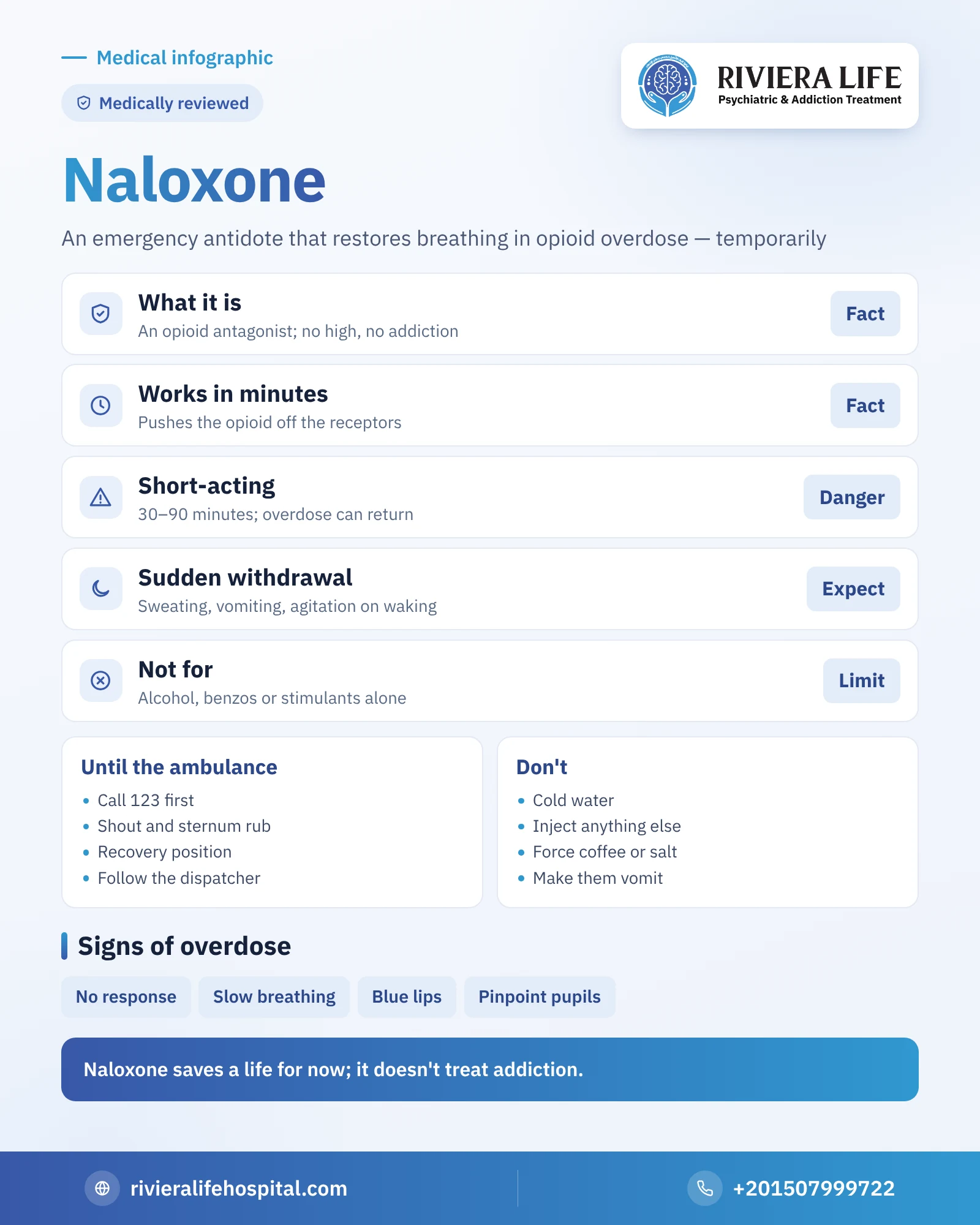
Naloxone is an emergency medicine that reverses the effect of an opioid overdose, such as heroin, morphine, tramadol and methadone, restoring breathing to someone whose breathing had almost stopped. It works within minutes, but its effect is temporary, and it never replaces calling the ambulance on 123 and taking the person to hospital. This article is a rescue guide for the family: what naloxone is, how it works, how to recognize an overdose, what to do in the first minutes, and what to expect after the person wakes.
What is naloxone?
Naloxone is an opioid antagonist, meaning it binds to the opioid receptors in the brain without activating them, pushing the narcotic substance off them. It isn’t a drug of abuse, doesn’t cause a high or addiction, and has almost no effect on someone who hasn’t taken opioids. In some countries it is known by brand names including Narcan for the nasal spray.
Its role is limited and clear: saving a life in an emergency moment. It doesn’t treat addiction, doesn’t prevent relapse, and isn’t suitable for detox.
Why does an opioid overdose kill?
Opioids calm the breathing center in the brainstem. With an excess amount breathing slows and weakens until it stops, so oxygen in the blood falls and the brain and heart start to be damaged within minutes. The danger increases in well-known situations:
- Returning to use after a period of abstinence, such as leaving detox, hospital or prison, because tolerance has fallen.
- Mixing opioids with alcohol, sedatives or pregabalin, mixtures that are widespread in Egypt.
- A substance of unknown strength or adulterated with stronger substances such as fentanyl.
- The first days of methadone treatment or raising its dose quickly.
- A child or a person without tolerance taking an opioid medicine found at home.
The article on the harms of opioids explains the other physical and psychological risks of this family.
How do you recognize an overdose?
Families often think the person is deeply asleep. The difference is that a sleeper wakes when called loudly or when pressure is applied to the breastbone, while someone with an overdose doesn’t respond or barely responds.
Call an ambulance on 123 immediately if you see
Don't wait for them to wake up on their own, and don't leave them alone.
- No response to loud calling or shaking
- Very slow, irregular or stopped breathing
- Unusual snoring or a gurgling sound
- Blue lips or nails and cold skin
- Very small pupils, like a pinhead
| Sign | Deep sleep | Possible overdose |
|---|---|---|
| Response | Wakes when called or touched | Doesn’t respond or barely responds |
| Breathing | Regular | Very slow, irregular or gurgling |
| Lip color | Normal | Bluish or grey |
| Body | Warm | Cold and completely limp |
How does naloxone work?
Naloxone binds to opioid receptors more strongly than most opioids, temporarily pushing them off. Within minutes the breathing center starts working again, and in many cases the person gradually regains consciousness. But it doesn’t remove the drug from the body; the substance is still in the blood, waiting for naloxone’s effect to end so it can return to the receptors.
How long does its effect last, and why isn’t it enough on its own?
Naloxone’s effect is relatively short, lasting roughly half an hour to an hour and a half depending on the route of giving and the case. Many opioids, however, especially methadone and long-acting forms, have effects that last many hours. So the person may wake then return to a coma and stopped breathing shortly after. This is the most important reason why the ambulance and observation in hospital are essential even if the person seems completely fine, and the medical team may need to give naloxone more than once.
What do you do until the ambulance arrives?
- Call the ambulance on 123 immediately, and say clearly that the person isn’t breathing well and that you suspect an overdose.
- Try to wake them by calling loudly and pressing on the breastbone.
- If they are breathing, put them on their side in the recovery position so they don’t choke if they vomit.
- If breathing has stopped, follow the ambulance dispatcher’s instructions on the phone, as they may guide you through resuscitation.
- If you have naloxone prescribed to you and you have been trained in it by the doctor or pharmacist, follow the instructions written on the pack.
- Stay beside them, and collect any medicines or packs you found to hand to the paramedics.
Avoid the widespread myths: don’t put them in cold water, don’t inject them with any solution or other substance, don’t force them to drink coffee or salt, and don’t try to make them vomit. These actions waste precious minutes and may cause injuries or choking. And don’t fear that calling the ambulance will cause the person trouble; the top priority at this moment is that they stay alive.
What happens after naloxone is given?
In someone dependent on opioids, naloxone causes sudden withdrawal: they may wake confused or angry, with sweating, chills, vomiting, diarrhea, aches and a racing heart. These symptoms are unpleasant but rarely life-threatening, and most importantly they are breathing again. Deal with them calmly, explain what happened, and stop them from using any substance to ease the withdrawal, because that may bring them back to an overdose as soon as naloxone’s effect ends. The details of these symptoms are in the article on opioid withdrawal symptoms.
What forms does naloxone come in?
- Injection: into a vein, muscle or under the skin; the form usually used by emergency departments and ambulance teams.
- Nasal spray: designed for non-specialists to use, and available without prescription in a number of countries.
- Within a buprenorphine combination: where its role is to deter injecting the medicine, not rescue, as the buprenorphine guide explains.
Is naloxone available in Egypt?
Naloxone is used in hospitals and emergency departments in Egypt, while the availability of forms intended for home use, such as the nasal spray, may be limited and vary from time to time and from pharmacy to pharmacy. If someone in your family uses opioids or is receiving treatment with them, ask the treating doctor about the available options and a suitable emergency plan. In all cases, calling the ambulance on 123 is the step that has no substitute.
Is naloxone safe if opioids aren’t the cause?
Usually yes; it doesn’t harm someone who hasn’t taken opioids. But it also won’t help them: it doesn’t reverse the effect of alcohol alone, benzodiazepines, or stimulants. When a mixture is suspected, it may restore part of the breathing if the mix contains an opioid, while the effect of the other substances remains, which is why hospital is always essential.
Naloxone isn’t a treatment for addiction
Someone who survives an overdose then needs real treatment, because the likelihood of it recurring is high. The article on opioid addiction treatment explains the stages of treatment and the medicines used. And don’t confuse naloxone with naltrexone: the first is for instant rescue, and the second is a long-acting medicine to prevent relapse after detox.
The family’s role after surviving an overdose
The following hours and days are a rare opportunity; someone who came close to death is sometimes more ready to talk about treatment. Avoid blame and shouting, speak in the language of worry, not accusation, and ask for an appointment for a specialist assessment before everything goes back to how it was. Look after yourself too, as the rescue scene may leave a psychological mark on those who lived through it. You will find practical guidance for daily dealings in the guide on how to deal with a heroin addict.
Painkiller overdose: when does naloxone help and when doesn’t it?
The word “painkillers” groups medicines that are completely different in overdose danger, and telling them apart changes what must be done. Naloxone works with opioid painkillers only.
- Opioid painkillers such as morphine, codeine and tramadol: their first danger is breathing slowing until it stops, and here naloxone helps. With tramadol, seizures may occur that naloxone doesn’t treat, so the ambulance is always essential.
- Non-opioid painkillers such as paracetamol: their damage hits the liver, and the person may seem fine in the first hours then deteriorate after a day or more. Naloxone doesn’t help with them at all.
- Anti-inflammatories such as ibuprofen: they harm the stomach and kidneys, and naloxone doesn’t reverse their effect.
The danger increases when a person takes more than one painkiller on the same day without the doctor’s knowledge, or combines the painkiller with alcohol or sedatives.
The safe rule: don’t wait for symptoms to appear and don’t try to treat the person with home remedies; call the ambulance on 123, give the name of the medicine if you know it, and keep its pack to show the doctor. To learn the names of opioid painkillers and their risks see types of opioid painkillers, and for the signs by substance see drug overdose.
How can Riviera Life help you?
If your relative survived an overdose, don’t wait for the second. At Riviera Life our consultants in psychiatry and addiction treatment carry out a confidential assessment, and detox begins under round-the-clock medical supervision, followed by a medication and psychological treatment plan that includes the family and follow-up. The first consultation is free.
Read also
- Methadone: uses and risks
- The harms of opioids and the risks of overdose
- The heroin guide
- The opioids guide
- Drug overdose: signs by substance and what to do until the ambulance
Questions many people ask
No. Naloxone doesn't activate opioid receptors and gives no high, so it doesn't cause addiction and isn't misused for getting high.
Narcan is a well-known brand name for a nasal spray containing naloxone, designed for non-specialists to use in emergencies in countries where it is available.
Yes, always. Naloxone's effect is shorter than that of many opioids, so the person may return to a coma and stopped breathing shortly after, and needs observation in hospital.
Yes, fentanyl is an opioid and responds to naloxone, but it is very strong and the person may need more than one dose given by the medical team, so the ambulance is essential.
It doesn't reverse the effect of alcohol or benzodiazepines alone, but it does no harm if given. When mixed with an opioid it may restore part of the breathing, and hospital remains essential.