Chlorpromazine is the first antipsychotic medicine known to medicine. It appeared in the 1950s and changed the shape of psychiatric treatment. In Egypt it is sold as Neurazine, it is also known worldwide as Largactil, and it is sold in some Arab countries as Dormazine. It is still used for its strength in calming agitation and treating schizophrenia and mania, and because it has non-psychiatric uses such as severe nausea and stubborn hiccups. But it is first-generation, and so it causes visible drowsiness, dryness, constipation and sun sensitivity. We explain the medicine here as it is, without doses, as starting, adjusting and stopping are all done with the doctor.
What is chlorpromazine?
It belongs to the conventional antipsychotics of the low-potency class, meaning it needs a relatively larger amount of medicine to block dopamine receptors, but in return it blocks many other receptors: histamine, so it causes drowsiness; acetylcholine, so it causes dryness and constipation; and adrenaline, so it lowers blood pressure. This “spread” explains its long list of side effects, but it also explains its usefulness in calming agitation and severe insomnia. It is available as tablets, syrup and injections. We write about this family of medicines and their differences in the article on antipsychotics.
What is it used for?
Schizophrenia and psychosis
It eases hallucinations, delusions and disordered thinking, and works well with many patients, although newer medicines are often easier on movement. It may remain an option in cases that need strong calming. The article on psychosis treatment covers the general picture of treatment.
Mania and acute agitation
In episodes of severe mania or agitation accompanied by danger, doctors make use of its strong calming effect, usually in hospital and under observation.
Other medical uses
Doctors sometimes prescribe it for severe nausea and vomiting when other medicines don’t work, for hiccups that continue for days, and in some cases to calm symptoms at the end of life. In all these cases the doctor decides the duration and amount.
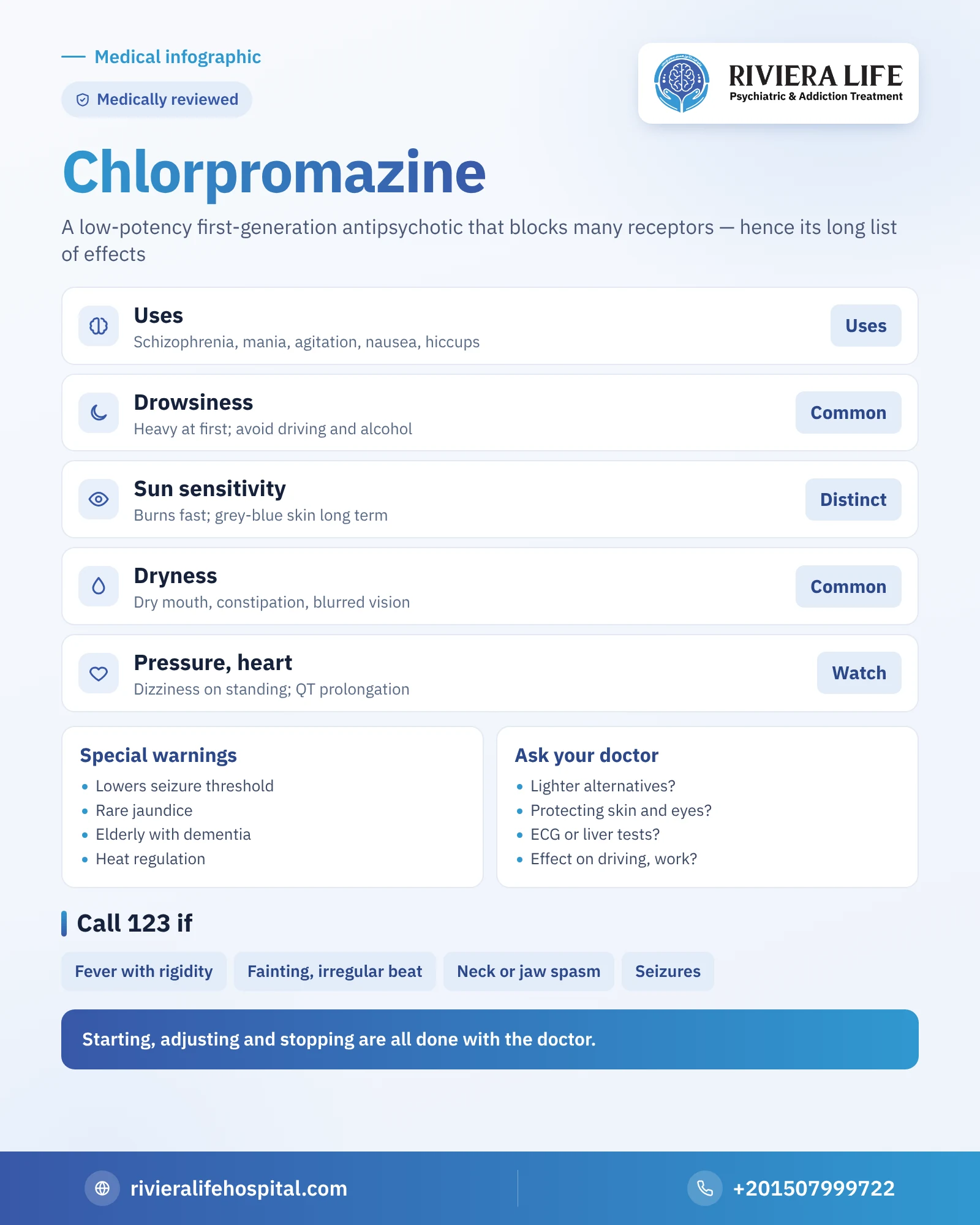
Drowsiness and sedation
This is the most prominent thing the patient notices in the first days: heavy drowsiness, slow thinking and difficulty waking in the morning. Some of it eases with time, and the doctor sometimes tries to put most of the medicine in the evening. This means:
- Not driving or operating dangerous machinery before knowing the medicine’s effect.
- Caution with alcohol and sedatives, because they multiply the sedation.
- Paying attention to a patient who works or studies, as the doctor may need to reconsider.
Sun sensitivity and skin discoloration
Chlorpromazine stands out among antipsychotics in that some patients’ skin becomes very sensitive to light, so it burns quickly after brief sun exposure. In the long term a grey color tending to blue may appear on areas exposed to the sun, and the eye may be affected by small deposits found on examination. In a sunny country like Egypt, protection becomes part of treatment: high-protection sunscreen, clothes that cover the skin, sunglasses, and avoiding the peak heat. Anyone who notices a change in their skin or vision should tell their doctor and not wait.
Dryness, constipation and difficulty urinating
The anticholinergic effect means:
- A dry mouth that may harm the teeth, so mouth care and drinking water help.
- Constipation that may become severe in older people, and must be followed up rather than ignored.
- Blurred near vision.
- Difficulty urinating in those with an enlarged prostate.
Blood pressure and the heart
Blood pressure drops on standing up quickly, causing dizziness that may lead to a fall, especially in older people in the first days. The medicine may cause a faster pulse, and it may also prolong the QT interval on the heart tracing to a significant degree in those with heart disease or taking other medicines with the same effect. That is why the doctor must know everything you take.
The movement effect
Although chlorpromazine is milder in this respect than the strong first-generation medicines, it may cause stiffness, tremor, restlessness and a sudden spasm in the neck muscles. In the long term tardive dyskinesia may appear, which is repeated movements of the mouth and tongue, so the doctor examines movement regularly. Compare it with a strong medicine of the same generation in the article on haloperidol.
A quick comparison with the second generation
| Aspect | Chlorpromazine | Second-generation medicines |
|---|---|---|
| Sedation | Clear | Varies, and higher with quetiapine and olanzapine |
| Dryness and constipation | Common | Less in general, and more severe with clozapine |
| Sun sensitivity | Known | Rare |
| Movement effects | Moderate | Usually less |
| Weight and blood sugar | May increase | Vary |
Special warnings
- Seizures: it lowers the seizure threshold, so someone with a history of epilepsy needs special supervision.
- The liver: it rarely causes jaundice, so the doctor is told if the eyes or skin turn yellow.
- Older people with dementia: an official warning of an increased risk of death and stroke when antipsychotics are used for dementia behaviors.
- Pregnancy and breastfeeding: a decision shared with the doctor.
- Heat: it may weaken the body’s ability to control its temperature in hot weather.
Among the rare and dangerous effects is a reaction combining fever, stiffness and disturbed consciousness, which the article on neuroleptic malignant syndrome explains.
Call an ambulance on 123 immediately if you see
Or go to the nearest emergency department if someone taking chlorpromazine shows:
- A high temperature with severe muscle stiffness and confusion
- Fainting or severe, irregular palpitations
- A sudden spasm in the neck or jaw, or difficulty swallowing or breathing
- Seizures
- Deep drowsiness or slow breathing after taking too much
- Yellow eyes with abdominal pain
Does chlorpromazine cause addiction?
It causes no craving and no high, and isn’t considered one of the addictive medicines. However, some people misuse it for its sedating property, which is dangerous especially with sedatives and alcohol because it may slow breathing. Stopping it suddenly after long use may cause nausea, insomnia and involuntary movements, and risks the psychosis returning. Tapering according to the doctor’s plan is the rule.
What does the family notice in the first weeks?
The calming effects appear before any improvement in the psychotic symptoms themselves: the patient sleeps more, agitation calms and tension falls, then hallucinations and delusions recede over weeks. Drowsiness at this stage doesn’t mean the medicine is only “sedating” the patient; it is part of how it works.
But attention is needed on specific matters: the patient standing up slowly from bed to avoid falling, drinking water regularly, getting used to sunscreen from the first day, and monitoring bowel movements. If the drowsiness conflicts with study or work, the matter should be brought to the doctor instead of stopping or reducing the medicine secretly, because the doctor has several options, including changing the timing or moving to another, less sedating medicine.
When is the old medicine the right choice?
A medicine being old isn’t a flaw in itself. For someone whose condition has been stable on it for years without troublesome effects, a hasty switch may be more dangerous than keeping it. On the other hand, someone who complains of sedation, dryness, constipation or sun sensitivity may find something more suitable among the newer medicines. The decision is built on the patient’s history and test results, not on the medicine’s age.
Questions to ask your doctor
- Is chlorpromazine still the most suitable for my condition, or are there lighter alternatives?
- How do I protect my skin and eyes from sun sensitivity?
- When do I need a heart tracing or liver tests?
- How do I deal with dryness and constipation?
- What is its effect on driving, work and study?
How can Riviera Life help you?
If your relative is taking an old medicine and can’t bear its drowsiness or effects, book the free first consultation at Riviera Life in Sheikh Zayed. The consultant psychiatrist reviews the whole plan and looks for a better balance between controlling symptoms and daily life, in complete confidentiality and with round-the-clock medical supervision.
More from the psychiatric medications guide
- Antipsychotics: first and second generation, side effects and follow-up
- Haloperidol
- Psychiatric medications: types and uses
- Schizophrenia: the complete guide
Questions many people ask
A trade name used in Egypt for chlorpromazine, a first-generation antipsychotic prescribed under a psychiatrist's supervision.
Because it may make the skin burn faster in light. Protection with sunscreen, covering clothes and sunglasses is advised.
It has a clear sedative effect because it blocks histamine, but it isn't a sleep medicine and isn't used for simple insomnia.
Yes, doctors sometimes prescribe it for severe nausea and persistent hiccups when other options have failed.
It isn't considered addictive, but misusing it for sedation or with sedatives and alcohol is dangerous to breathing. It shouldn't be stopped suddenly.