Healthy ways to increase GABA exist, but they are quieter than supplement adverts promise: regular sleep, movement, slow breathing, meditation or yoga, reducing caffeine, and treating anxiety and insomnia properly. The faster road many people take, which is alcohol, sedatives and pregabalin, does raise GABA’s effect, but pays the price later in the form of tolerance, dependence and rebound anxiety. This article ranks the methods by strength of evidence, explains what counts as exaggeration, and when what you feel is anxiety that needs treatment rather than an adjustment to brain chemistry.
Before any method: what can you expect?
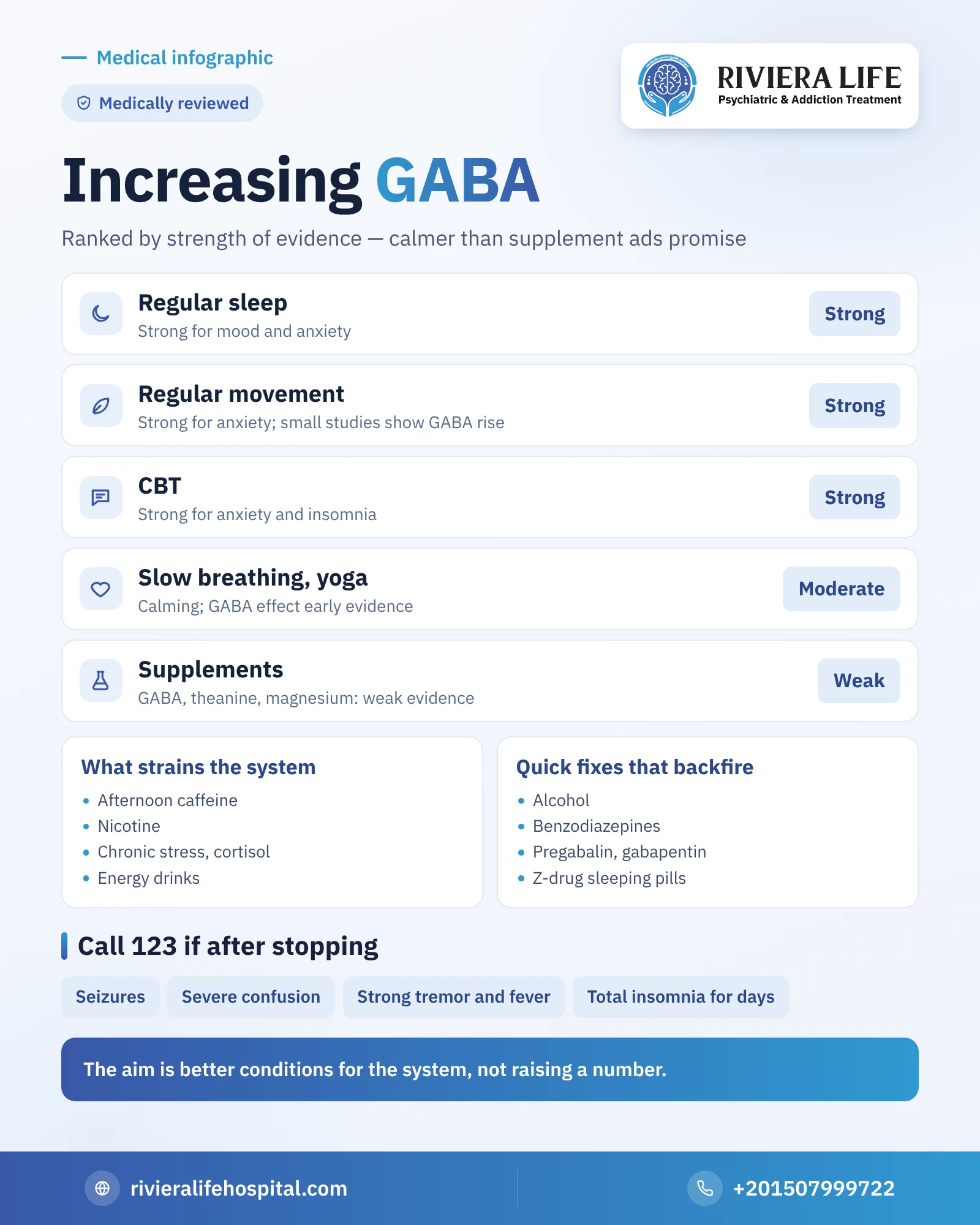
GABA is the main inhibitory neurotransmitter in the brain, working as brakes that calm the activity of nerve cells, as the GABA guide explains. You can’t measure its level with an ordinary test, and you don’t know whether it is “low” in you. Most of what you read about raising it relies on small studies or indirect measurements. So the reasonable goal is to improve the conditions in which this system works better, not to raise a number. And if you suffer from severe anxiety or chronic insomnia, these habits support treatment and don’t replace it; for a deeper understanding of the relationship between anxiety and the neurotransmitter, see GABA and anxiety.
A quick summary by strength of evidence
| Method | Strength of evidence | Note |
|---|---|---|
| Regular sleep | Strong for improving mood and anxiety | The effect on GABA isn’t directly measured |
| Regular movement | Strong for anxiety, moderate for GABA | Small imaging studies point to a rise |
| Slow breathing and relaxation | Moderate for calming | Lowers the activity of the alert nervous system |
| Meditation and yoga | Weak to moderate | Some small studies point to increased GABA |
| Reducing caffeine and alcohol | Strong for sleep and anxiety | Indirect improvement |
| Cognitive behavioral therapy | Strong for anxiety and insomnia | The main treatment in many cases |
| GABA, theanine and magnesium supplements | Weak or insufficient | Need caution about interactions |
Sleep: the foundation that can’t be replaced
Good sleep resets the circuits affected by stress, and insomnia raises anxiety the next day, so you enter a cycle. Fix your wake-up time even on holidays, reduce strong light and screens an hour before sleep, make the room dark and relatively cool, and avoid long naps. If insomnia continues, cognitive behavioral therapy for insomnia is among the strongest options available, and it is usually offered before pills, as in the insomnia guide.
Regular movement
Small studies using spectroscopic imaging have pointed to a rise in GABA in some brain areas after exercise, but the samples are small and the results aren’t conclusive. The effect of exercise in lowering anxiety and improving sleep, however, is much better proven. You don’t need a hard program: a brisk half-hour walk on most days, swimming, or light resistance exercises twice a week. Choose what you will keep doing. Someone with panic attacks who fears a racing heart during exertion should start gradually. For more on the effect of movement on mood, see how to increase endorphins naturally.
Slow breathing and relaxation
An out-breath longer than the in-breath stimulates the vagus nerve, which slows the heart and eases the stress response. Try, for example, breathing calmly through the nose and letting the air out slowly through the mouth for five minutes, once or twice a day, not only when upset. There is no conclusive evidence that this raises GABA itself, but the calming effect on the body is documented. Progressive muscle relaxation techniques help those who tense their body without noticing. These are tools for dealing with symptoms, not a substitute for treatment if anxiety is a chronic disorder.
Meditation and yoga
Some small studies have shown a rise in GABA after a yoga or meditation session, and other studies have shown improvement in anxiety and sleep. The evidence is still preliminary, but the risks of these two methods are low and their cost small, so they are suitable for those inclined towards them. Regularity matters more than intensity: ten minutes a day is better than two hours a month.
Food and supplements: where is the truth?
GABA, theanine, magnesium, valerian and other tablets are sold with big promises. The honest picture is as follows:
- Oral GABA: it isn’t clear that it crosses the blood-brain barrier in sufficient amounts, and the evidence for its effect on anxiety or sleep is weak.
- Theanine: an amino acid in tea; small trials point to mild calm, without sufficient evidence for treating anxiety.
- Magnesium: may help someone with a proven deficiency, and may harm people with kidney disease.
- Valerian, kava and ashwagandha: their evidence is inconsistent, some have been linked to effects on the liver in rare cases, and they may interact with sedatives.
- Fermented foods: contain amounts of GABA, but the effect on the brain isn’t established.
Ask the pharmacist or doctor before any supplement, especially if you take antidepressants, sedatives or epilepsy medicines, or are pregnant or breastfeeding. This article doesn’t recommend any dose.
What wears out the calming system in your brain?
Part of “increasing GABA” is actually stopping what works against it. Caffeine blocks adenosine receptors, delaying sleepiness and raising tension, and anyone who drinks coffee, then an energy drink in the afternoon, and then complains of insomnia knows the cycle. Nicotine is a stimulant that gives temporary relaxation followed by tension. Chronic stress keeps the body on alert and raises cortisol, and we have gathered practical steps for dealing with it in how to lower cortisol. The least you can do this week is stop caffeine after midday, replace the last drink with water or light tea, and watch the effect on your sleep.
Methods that seem fast and turn against you
Alcohol, benzodiazepines, Z-drug sleeping pills, pregabalin and gabapentin all calm the body through GABA or in ways close to it. Some, such as alcohol and benzodiazepines, enhance GABA directly. This speed is exactly what sets the trap: the brain adapts and needs a larger amount, and when it wears off anxiety and insomnia surge back stronger than at the start, and dangerous withdrawal symptoms may appear. These reasons are detailed in GABA and addiction, benzodiazepine withdrawal symptoms, pregabalin and alcohol and sleeping pill addiction.
Call an ambulance on 123 immediately if you see
After suddenly stopping alcohol, benzodiazepines or sleeping pills following long use:
- A seizure or epileptic fit
- Severe confusion, hallucinations or delirium
- Strong tremor, sweating, raised temperature and a racing heart
- Acute anxiety with total insomnia for several days
And don’t reduce or stop the medicine yourself if you use it on prescription, as gradual reduction is set by the doctor.
When is it anxiety that needs treatment?
If anxiety is with you most days for more than six months, stops you sleeping, working or facing social situations, or if panic attacks appear, this deserves assessment. The first line in treating anxiety is cognitive behavioral psychotherapy and medicines from the antidepressant class chosen for this purpose, not alcohol or sedatives. The details of the options are in anxiety treatment. And if it becomes clear that you depend on a sedative substance to sleep or calm down, ask for help before the dependence worsens.
How can Riviera Life help you?
The doctors at Riviera Life assess the causes of anxiety and insomnia and the substances you take, and set a safe reduction plan when needed under round-the-clock medical supervision and in complete confidentiality. The first consultation is free: +201507999722.
More from the GABA guide
Questions many people ask
There is no ordinary test that measures GABA in the brain, and it can't be judged as low from symptoms. In research it is measured with specialized imaging.
The evidence is weak, and it isn't clear that oral GABA reaches the brain in sufficient amounts. Consult a doctor or pharmacist before any supplement, especially with medicines.
Theanine may give mild calm in small studies, but the evidence for treating anxiety or raising GABA isn't sufficient.
Because they strengthen GABA temporarily, then the brain adapts so anxiety and insomnia rise when they wear off, dependence develops, and withdrawal may be dangerous.
Cognitive behavioral therapy is among the strongest options, and the doctor may prescribe suitable medicines. No medicine should be started or stopped except with the doctor.