Hydrocodone is an opioid painkiller sold in the United States in hundreds of millions of prescriptions a year, usually combined with paracetamol or ibuprofen, and it is also found in some cough syrups. In Egypt, however, it is rare in pharmacies and isn’t considered a familiar medicine. Even so, many search for it after hearing its name in series and opioid news, or when travelling or being treated abroad. This article explains what hydrocodone is, how it differs from codeine and oxycodone, what its risks are, and what to do if dependent on it.
What is hydrocodone?
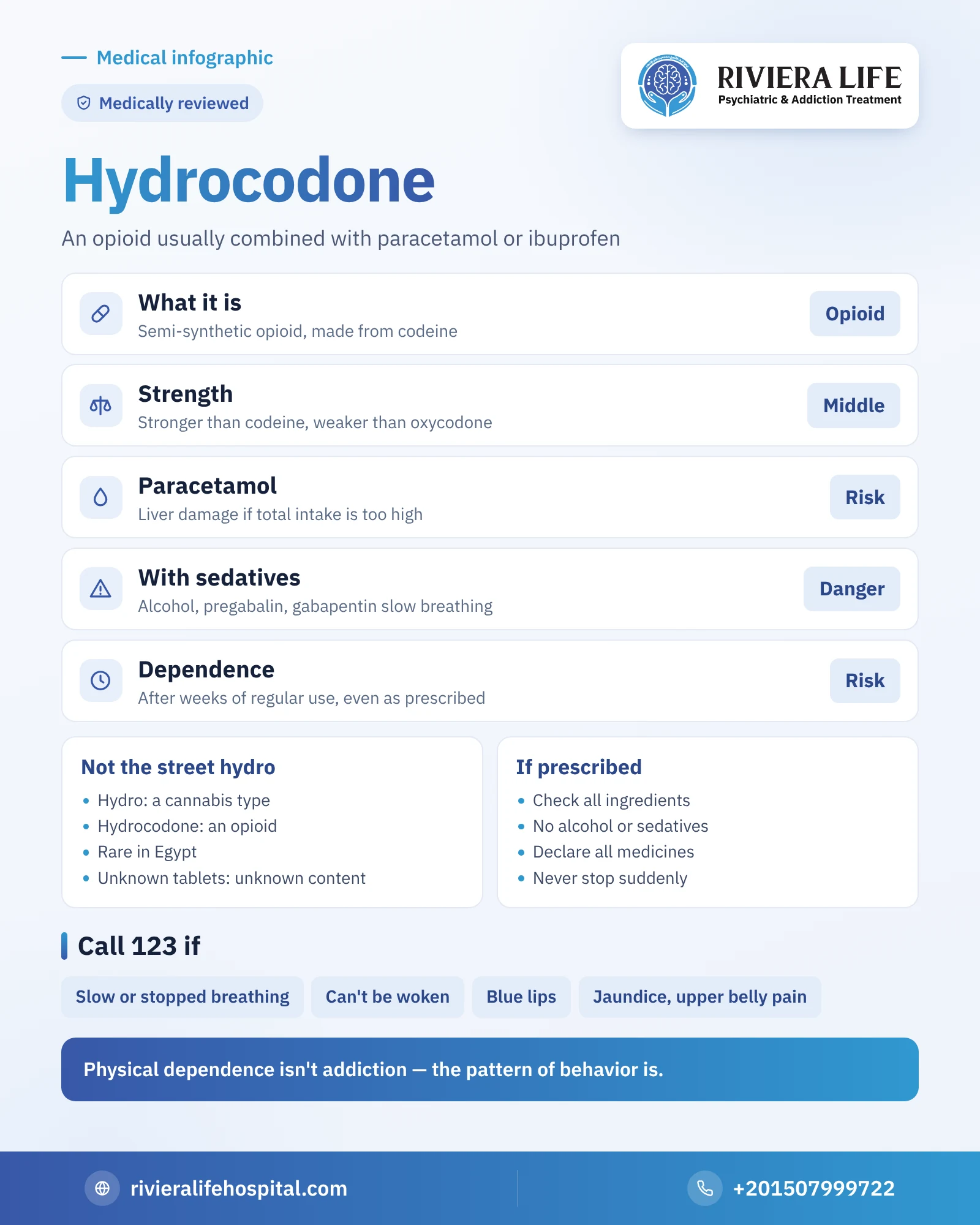
It is a semi-synthetic opioid prepared from codeine or thebaine, and is considered stronger than codeine and less strong than oxycodone in medical use. It acts on the same opioid receptors as morphine, so it relieves pain, suppresses cough and causes relaxation and drowsiness. In most countries it is classified among strictly controlled medicines.
It isn’t the “hydro” some young people trade on the Egyptian street; that name is usually used for a type of cannabis that has nothing to do with opioids. So always check what is meant before you read or ask.
Its commercial forms and what it is mixed with
Hydrocodone is rarely sold alone. Most of what is prescribed are combinations that join it with another substance:
- With paracetamol: for pain after surgery, tooth extraction and injuries. Paracetamol adds the risk of liver damage if the total a person takes from all sources is too high.
- With ibuprofen: adding the stomach and kidney risks known for painkillers of this family.
- With cough or allergy substances: in syrups and tablets prescribed for severe cough in some countries.
- Extended-release tablets for chronic pain in special forms for which the doctor requires close follow-up.
These combinations mean the patient may be taking two or three substances while believing they are taking one medicine. That is why the drug leaflet stresses reading the ingredients of every other medicine they take.
Its medical uses
It is prescribed for moderate to severe pain that ordinary painkillers aren’t enough for, and in some countries for a cough that doesn’t respond to anything else. Modern guidelines prefer its use to be short-term, and limited to those for whom alternatives don’t work. US health authorities have restricted the use of opioids for cough because of their risks, especially in children and teenagers.
How does the body handle it?
The liver breaks down hydrocodone through two main pathways. One turns it into hydromorphone, a stronger opioid, via the enzyme CYP2D6, and the other turns it via the enzyme CYP3A4 into a less active substance. That is why its effect differs from person to person depending on genes and accompanying medicines. Some medicines, such as certain antibiotics and antifungals, may raise its level in the blood and increase the risk of poisoning and slowed breathing, and some antidepressants may change the share of the first pathway. Its life in the body is only a few hours, which is why stopping symptoms appear early in someone used to it.
How does it differ from codeine and oxycodone?
| Point of comparison | Codeine | Hydrocodone | Oxycodone |
|---|---|---|---|
| Strength | Weak | Moderate | Strong |
| Best-known use | Mild pain and cough | Pain after surgery and cough | Severe and chronic pain |
| Availability in Egypt | Syrups and combination tablets | Rare | Limited |
| Usual combination | With paracetamol or cough substances | With paracetamol or ibuprofen | Alone or with paracetamol |
For more on the weakest of the three see the article on codeine, and on the strongest the article on oxycodone.
Common risks
The most prominent are drowsiness, dizziness, nausea, constipation, itching and dry mouth. With combination tablets, the risk of paracetamol to the liver is added, and its symptoms may only appear late, so stop any additional painkiller and see the doctor if yellowing, upper abdominal pain or severe nausea appears. Long use may cause weak sexual drive and mood changes. And hearing may weaken in some people who take large amounts of it for a long time, a warning that has appeared in drug leaflets.
Overdose and dangerous interactions
As with other opioids, the greatest danger is breathing slowing until it stops. The risk increases with alcohol, sedatives, sleeping pills, pregabalin and gabapentin, as these medicines weaken breathing through a different mechanism so the effects multiply. In an overdose with combined preparations, liver toxicity from paracetamol is added, so the case needs a hospital even if the person seems fine after surviving.
Call an ambulance on 123 immediately if you see
After taking hydrocodone or any combined opioid medicine.
- Slow or irregular breathing, or stopped breathing
- Difficulty waking the person or loss of consciousness
- Very small pupils and blue lips
- Repeated vomiting with yellowing or upper abdominal pain after taking a combined painkiller
Dependence and withdrawal
Hydrocodone causes tolerance and physical dependence with regular use for weeks, even at prescribed doses. On stopping suddenly, symptoms appear such as anxiety, sweating, a runny nose, yawning, muscle aches, cramps, diarrhea and insomnia. They are usually unpleasant and not life-threatening in healthy people, but the strong craving may push towards going back, and after a period of stopping the body’s ability to tolerate the previous amount falls, so the risk of overdose rises. The article on opioid withdrawal symptoms explains the stages of withdrawal and their duration.
How do we tell natural dependence from addiction?
Physical dependence doesn’t mean addiction. Someone who took the painkiller for weeks after surgery may have stopping symptoms, but they stop if the medicine is withdrawn gradually and don’t seek it after its reason has ended. Addiction, on the other hand, shows in using the medicine for something other than pain, increasing the amount without consulting, lying to family and doctors to secure the medicine, and decline in work and relationships. Getting the medicine from more than one source is also a risk behavior. Reviewing the causes of opioid addiction helps you understand who is most at risk.
Treating dependence on hydrocodone
It is usually managed as with other opioids: a comprehensive assessment of the health condition and other substances, then a gradual reduction or withdrawal under medical supervision, and the doctor may add medicines such as buprenorphine depending on the case, and treat the original pain by alternative means. This is followed by psychological and behavioral therapy that addresses the reasons for use, such as anxiety, insomnia, depression or an old injury. The stages in detail are in opioid addiction treatment.
Advice for those prescribed a medicine containing hydrocodone
- Ask the pharmacist about all the medicine’s ingredients, and count with them every other painkiller you take so paracetamol isn’t doubled.
- Don’t mix it with alcohol, sedatives or sleeping pills.
- Tell the doctor about all your medicines before starting any new antibiotic or antifungal.
- Don’t give it to anyone in your family, as it doesn’t suit every body, and it isn’t given to children except by a doctor’s decision.
- Changing the amount or stopping is done in agreement with the doctor who prescribed it, not suddenly.
Pregnancy, breastfeeding and children
Opioids aren’t advised during pregnancy except by a clear medical decision, as regular use may expose the fetus to withdrawal symptoms after birth. During breastfeeding, part of the medicine may pass to the baby and cause drowsiness or slowed breathing, so each case is discussed with the doctor. Major health authorities are cautious about using medicines containing hydrocodone in children and teenagers, especially to treat cough.
Warning signs the family can spot
The family sees what the patient doesn’t. Pay attention if you notice unusual drowsiness during daytime hours, changes in medicine times, packs running out faster than they should, mood swings, isolation and decline at work or study, and repeated excuses to ask for a new prescription. Calm talk without accusation opens the door to treatment more than confrontation, and it is better to start with a question about the pain itself and whether the medicine still relieves it.
More from the opioids guide
- Opioids: the complete guide
- The harms of opioids
- How long opioids stay in the body
- Opioid addiction treatment
Questions many people ask
No. The word hydro in slang is usually used for a type of cannabis, while hydrocodone is an opioid medicine dispensed on prescription. Always check what is meant.
Yes, it is stronger than codeine and less strong than oxycodone in usual medical use. The effect varies between people depending on genes and accompanying medicines.
Because combining an opioid painkiller with a non-opioid one gives better relief. But this adds the risk of liver damage if the total paracetamol from all sources is too high.
It is rare in Egyptian pharmacies and more common in the United States. Any tablet offered under its name from an unlicensed source should be considered of unknown content.
No. Stopping suddenly after regular use causes exhausting withdrawal symptoms. Agree a gradual reduction plan with the doctor who prescribed it.