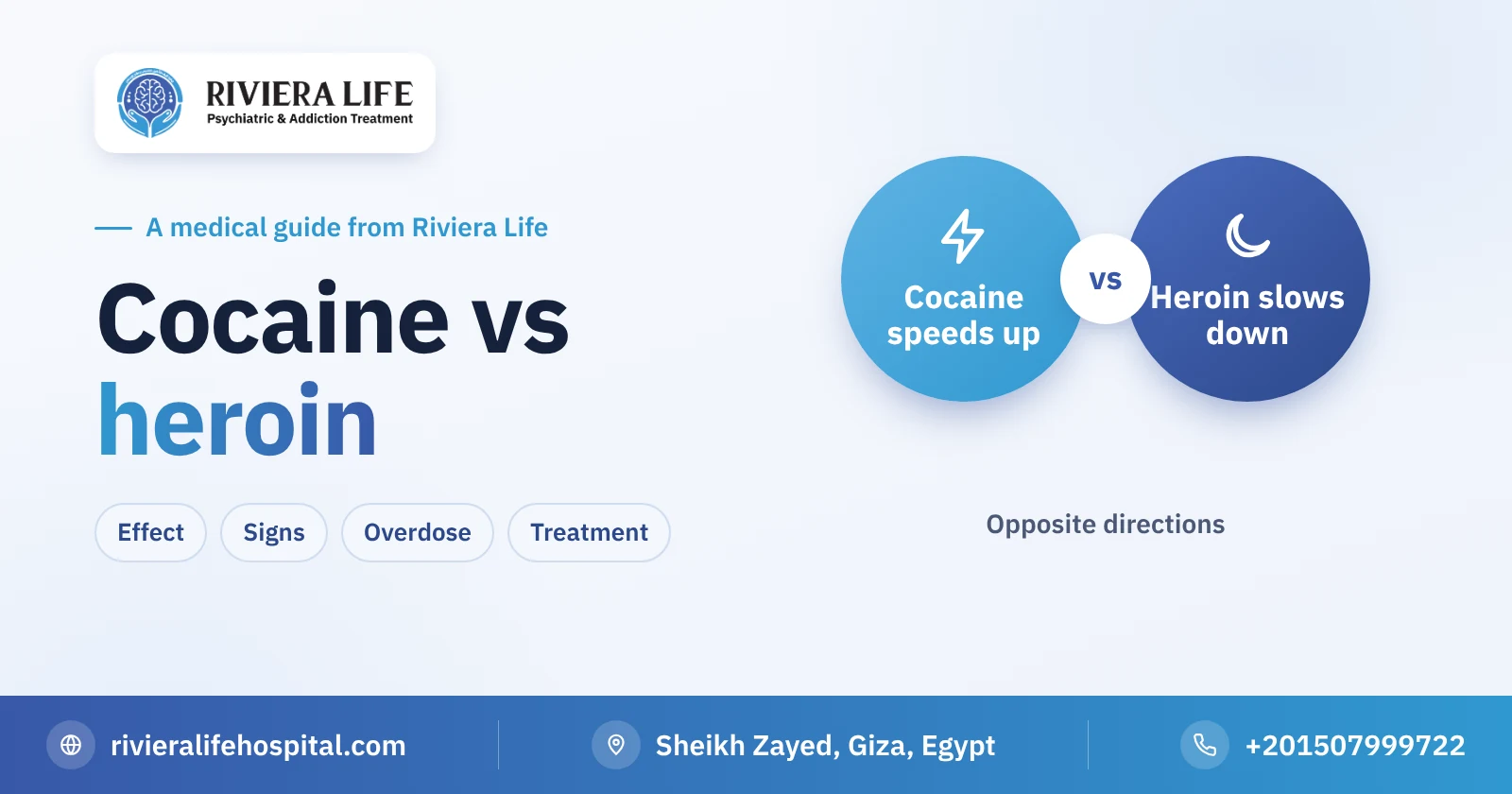
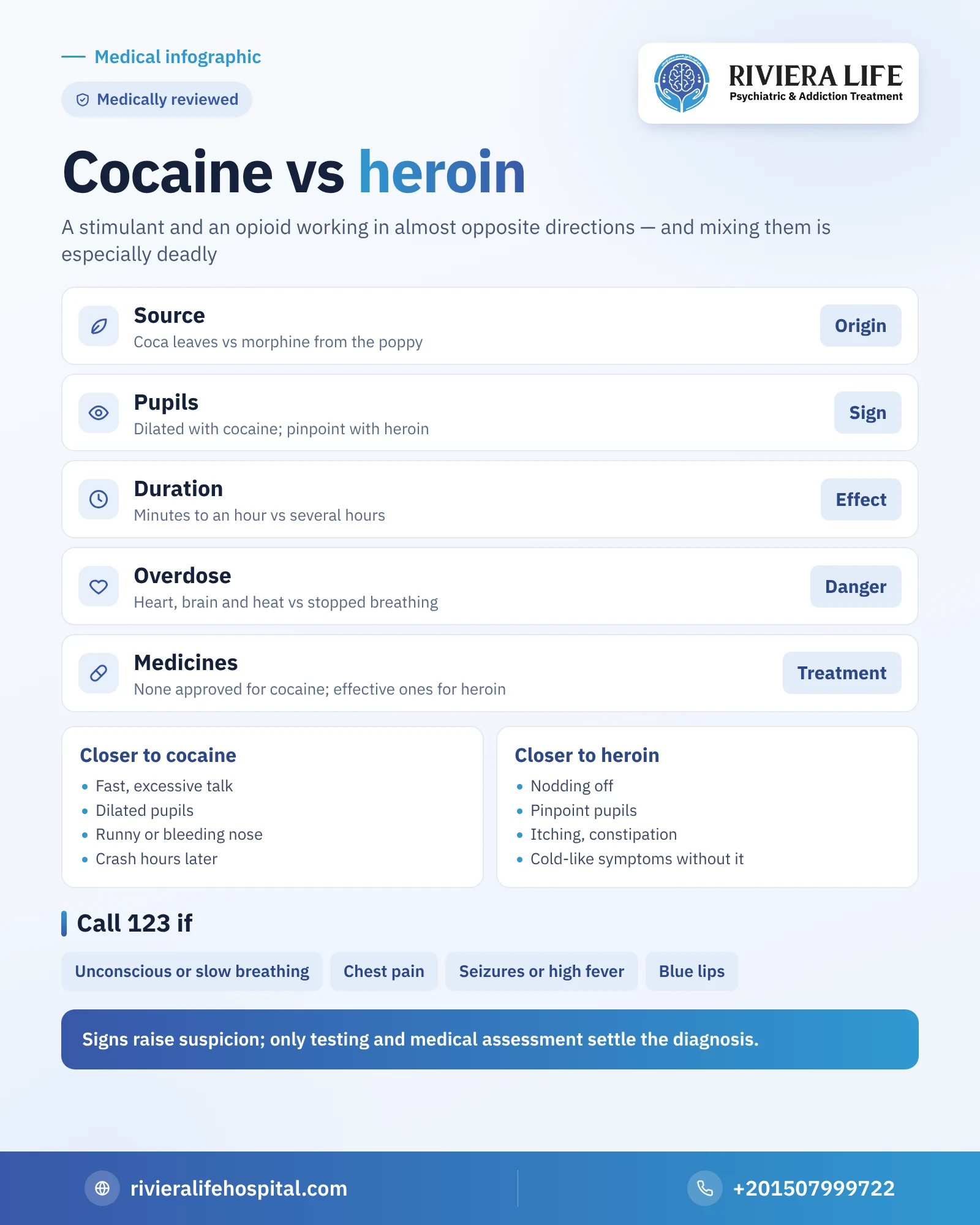
Cocaine and heroin are two names often mentioned together, and some may think they are similar because both are “strong drugs”, expensive and come as a powder. But the difference between cocaine and heroin is fundamental: they work in almost opposite directions. Cocaine is a stimulant that speeds up the body and brain, and heroin is a depressant opioid that slows them down. This difference is reflected in everything: the signs the family sees, the form an overdose takes, the nature of withdrawal, and the method of treatment. This article compares the two substances point by point, and explains why mixing them is among the most dangerous things that can happen.
The difference between cocaine and heroin in brief
| Point of comparison | Cocaine | Heroin |
|---|---|---|
| Source | Leaves of the coca plant | Morphine extracted from the poppy |
| Family | Stimulants | Opioids |
| General effect | Activity, alertness and excess confidence | Calm, drowsiness and detachment from surroundings |
| Pupils | Dilated | Very constricted |
| Duration of effect | Short, from minutes to about an hour | Longer, several hours |
| Most dangerous in overdose | The heart, brain and high temperature | Breathing stopping |
| Withdrawal | Mainly psychological: crash, depression and intense craving | Physical and psychological: pain, diarrhea, vomiting and insomnia |
| Approved addiction treatment medicines | No approved medicine yet | Available and effective |
How does each work in the brain?
Cocaine prevents nerve cells from reabsorbing dopamine and noradrenaline after their release, so these substances accumulate between cells and keep stimulating the brain. The result is a strong surge of energy, euphoria and confidence, accompanied by a faster heart rate and higher blood pressure.
Heroin, on the other hand, turns into morphine in the brain, binding to opioid receptors to relieve pain and give a deep sense of comfort and warmth, while at the same time depressing the breathing centers in the brainstem. Despite the different routes, both substances end at the same point: flooding the brain’s reward system with dopamine, which is what makes both highly addictive.
Methods of use and the risks they add
Cocaine is usually snorted, and may be smoked in the form of crack or injected; smoking and injecting deliver it to the brain within seconds, increasing the intensity of the high and the speed of addiction. With repeated snorting the lining of the nose becomes irritated and bleeds, and the nasal septum may erode over time. Heroin is injected, smoked or snorted, and injecting in particular adds the risk of blood-borne infections, damaged veins and skin infections. With both substances the biggest risk remains not knowing the purity of the substance and what it was mixed with, as a dose that seems ordinary may contain a much stronger substance.
Their effect on mental health
Cocaine is linked to bouts of anxiety, panic and suspicion of others, and large doses or continuous use for days may reach psychotic symptoms such as feeling watched or hearing voices, as well as aggression and quick temper. Each bout of use is followed by a drop in mood that may be severe. Heroin is linked more to depression, loss of motivation and withdrawal from social life, which increases during withdrawal periods. In both cases assessment needs a careful examination of the mental state, because co-occurring disorders are common and affect the success of treatment.
Do they differ in how long they show in tests?
Cocaine usually shows in a urine test through a substance derived from it that stays about two to four days after use, and the period may be longer with heavy use. Heroin shows as morphine for roughly one to three days. Each has a different test strip; the opioid strip doesn’t detect cocaine and vice versa. Heroin details on this point are in our article on how long heroin stays in the body.
How can the family tell the signs of the two substances apart?
The substance can’t be identified with confidence from its appearance alone, as both may be a white or brownish powder, and may be mixed with other substances. But the person’s behavior gives different clues:
Signs closer to cocaine
- Fast, excessive talk, and unusual enthusiasm or irritability.
- Dilated pupils, and little sleep and eating.
- A frequently runny or bleeding nose with snorting.
- A sharp mood swing hours later, in which activity turns into exhaustion and depression.
Signs closer to heroin
- Drowsiness, heavy eyelids and repeated dozing while sitting or talking.
- Very constricted pupils, and slow speech.
- Itching, constipation and loss of interest in appearance.
- Cold-like symptoms when the substance is absent, such as yawning, sweating and a runny nose.
These signs help raise suspicion, not make a diagnosis; testing and medical assessment are what settle the matter. For full details on the signs of heroin see our article on heroin addiction symptoms.
Which leads to addiction faster?
Both cause addiction quickly, but in two different ways. Cocaine’s effect is very short, pushing repeated doses many times in a single night to chase the high and escape the crash that follows, and this intermittent pattern entrenches psychological addiction quickly. Heroin adds to that clear physical dependence within weeks, so use becomes a daily necessity to avoid withdrawal symptoms. That is why it isn’t right to say one of them is “lighter”; each is dangerous in its own way.
Overdose: two different dangers
A heroin overdose is usually silent: the person falls asleep and their breathing slows until it stops, their lips turn blue, and their pupils are very constricted. Here the medicine naloxone can save their life if given in time.
A cocaine overdose, however, is loud: chest pain, a fast or irregular heartbeat, a very high temperature, seizures, and agitation or panic, and it may end in a heart attack or a stroke even in young people. There is no medicine that reverses cocaine’s effect as naloxone does with heroin, so treatment is emergency care to protect the heart and brain and lower the temperature.
Call an ambulance on 123 immediately if you see
In both cases don't wait, and don't leave the person alone.
- Loss of consciousness, or very slow or stopped breathing
- Severe chest pain or an irregular heartbeat
- Seizures or a very high temperature
- Blue lips, or severe agitation and loss of contact with reality
Why is mixing cocaine and heroin so dangerous?
Some users turn to combining the two substances, thinking each “balances” the other. The truth is that cocaine temporarily masks the drowsiness and breathing depression caused by heroin, so the person feels fine and takes a larger amount. But cocaine’s effect wears off much faster, leaving heroin alone at full strength, and breathing may stop suddenly after everything seemed fine. At the same time cocaine strains the heart, so the body is exposed to two opposite pressures together. That is why many deaths are linked to combining the two substances, or to cocaine being mixed with other opioids without the user knowing.
The difference in withdrawal symptoms
On stopping cocaine the person goes through a crash stage that includes severe exhaustion, long sleep and increased appetite, then depression, anxiety and intense craving that may continue for weeks. The physical symptoms are relatively mild, but the depression may be deep and need close follow-up.
Heroin withdrawal, on the other hand, is physical and psychological together, and starts within hours of the last dose with symptoms such as muscle pain, diarrhea, vomiting, insomnia and chills, peaking in the first days. The details of its stages are in our article on heroin withdrawal symptoms.
How does treatment differ?
Heroin addiction treatment has an important advantage: approved medicines that ease withdrawal and craving and reduce relapse, used alongside psychotherapy and rehabilitation, as our article on heroin addiction treatment explains. Cocaine still has no approved medicine for treating addiction, so treatment relies mainly on cognitive behavioral therapy, programs that motivate and reward abstinence, treating accompanying depression and anxiety, and relapse prevention.
If the person uses both substances together, the plan needs a careful assessment that deals with each: safe withdrawal from heroin, follow-up of mood after cocaine, and treatment that targets the multiple-use pattern itself. You can learn about cocaine in detail on the cocaine page.
The legal position in Egypt
Cocaine and heroin are both narcotic substances criminalized under Egyptian law, and their possession, use and trafficking are punished. But the law allows someone who comes forward on their own asking for treatment to receive it, and treatment in specialist hospitals is confidential.
More from our heroin guide
- Heroin: the complete guide
- The harms of heroin on the body and brain
- The causes of heroin addiction
- How to deal with a heroin addict
- Cocaine vs amphetamine: mechanism, duration of effect, the heart and the crash
Questions many people ask
Both are dangerous in different ways; heroin threatens breathing arrest and strong physical dependence, and cocaine threatens the heart and brain and may cause a heart attack or stroke even in young people.
Cocaine is usually linked to activity, rapid speech and dilated pupils, and heroin to drowsiness, pinpoint pupils and slow speech. But appearance and behavior aren't enough for a diagnosis; testing and medical assessment settle the matter.
Because cocaine temporarily masks the breathing depression caused by heroin, then its effect wears off faster, leaving heroin at full strength so breathing may stop suddenly, with extra strain on the heart.
There is still no approved medicine for treating cocaine addiction; treatment relies on cognitive behavioral therapy, incentive programs, treating accompanying depression and relapse prevention, unlike heroin, which has approved medicines.
No; cocaine withdrawal is mainly psychological, including exhaustion, depression and intense craving, while heroin withdrawal is physical and psychological, including pain, diarrhea, vomiting and insomnia.