Loneliness and social isolation seem two faces of one thing, but they aren’t. Loneliness is a painful feeling that your relationships are fewer than you need or weaker than you wish, while isolation is a real situation in which your contact with people is reduced. They may come together: one person may live in a large family and feel harsh loneliness, while another lives alone and doesn’t feel it. Major health bodies link chronic loneliness and isolation with heart disease, depression and dementia. Here we explain the difference between loneliness and solitude, their effect on health, their link with depression and addiction, who is most at risk, how to get out of them, and when you need a specialist.
Loneliness and social isolation: what is the difference?
Social isolation is measured from the outside: how many people do you meet? How often do you talk to someone? Do you have someone to turn to in a crisis? Loneliness is measured from the inside: do you feel that someone understands you and cares about you?
So an expatriate student in a new city may be both isolated and lonely, a wife surrounded by her husband’s family may not be isolated but lonely because no one listens to her, and an elderly man who lives alone with neighbors who visit him daily may be isolated in his living situation but not lonely.
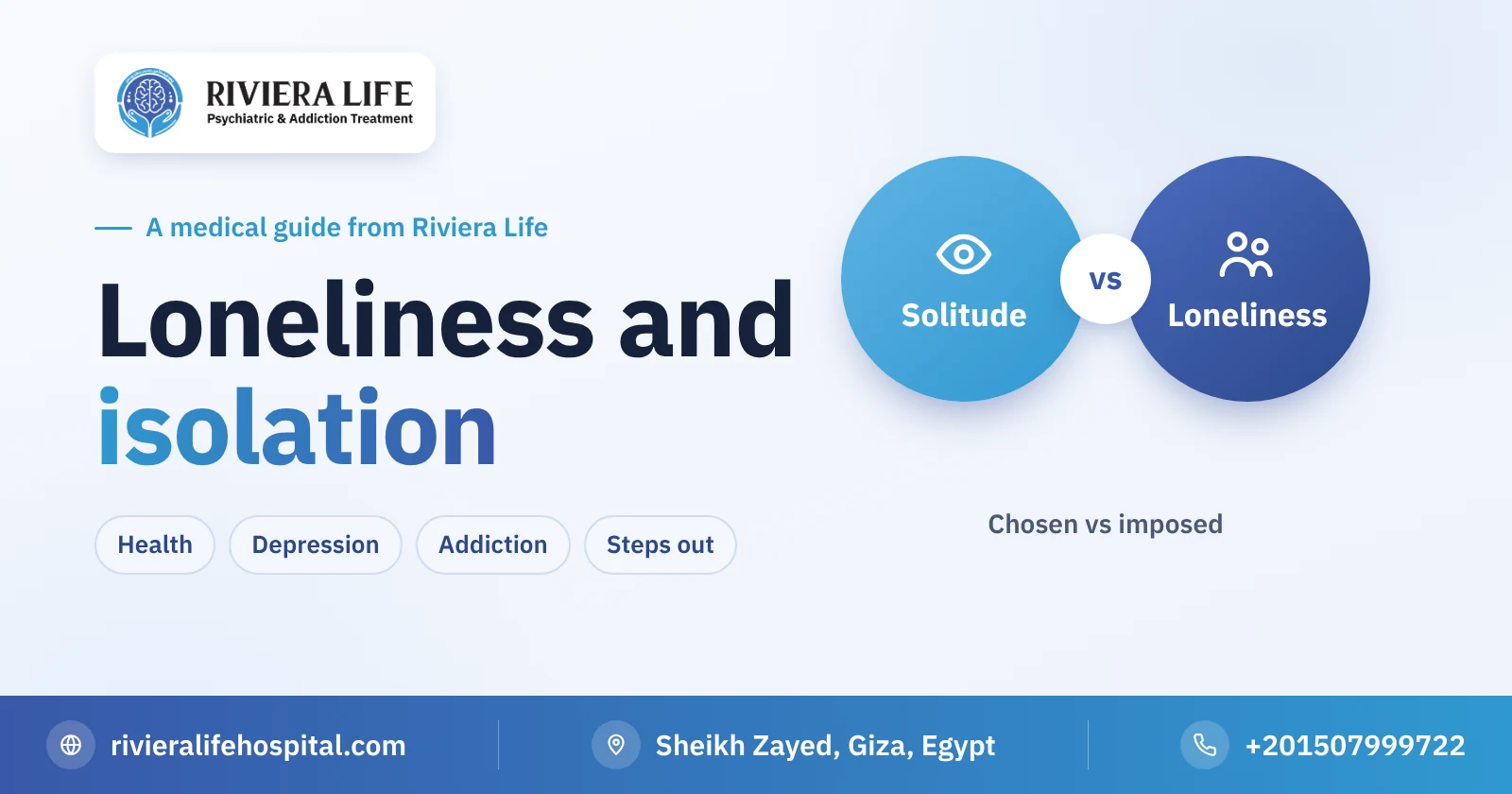
Loneliness and solitude: not the same thing
| Aspect | Solitude | Loneliness |
|---|---|---|
| Choice | You choose it willingly | Imposed on you, or felt despite yourself |
| Feeling | Calm, rest and renewal | Pain, emptiness and longing for closeness |
| Duration | Ends when you want | May last and become chronic |
| Effect | Benefits thinking and creativity | Harms mood and health if it continues |
Solitude is a healthy need. An hour alone with a book or a quiet walk isn’t a problem. The problem is when loneliness becomes a permanent state you don’t choose.
How does loneliness affect health?
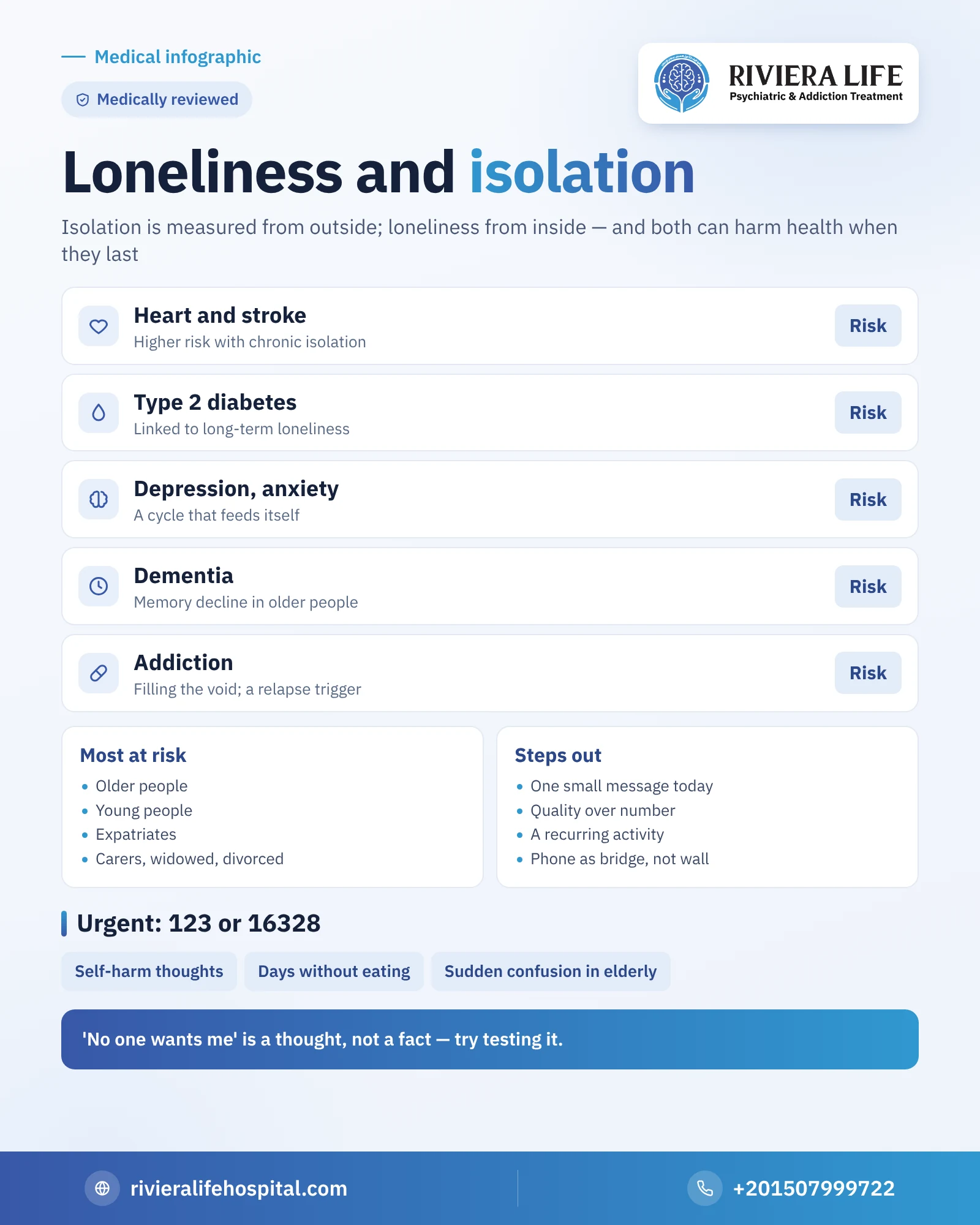
The US Centers for Disease Control and Prevention indicate that isolation and loneliness are linked to an increased risk of:
- Heart disease and stroke.
- Type 2 diabetes.
- Depression and anxiety.
- Dementia and memory decline in older people.
- Early death.
Researchers explain part of this by chronic loneliness keeping the body in a state of alert, so sleep is disturbed and the stress hormone rises, which the article on symptoms of high cortisol explains. A lonely person may also neglect their eating, movement and treatment appointments, because no one notices.
Loneliness and depression: a cycle in which each feeds the other
Long loneliness is a known risk factor for depression. And depression in turn pushes towards withdrawal: the person stops answering calls, excuses themselves from visits, and convinces themselves that no one wants them. So loneliness increases, and depression increases.
The difference between them is that loneliness usually eases when the person finds a real relationship, while depression remains even in the presence of people, with loss of pleasure and disturbed sleep and appetite. If you recognize yourself in this description, the article on depression symptoms helps you understand what is happening.
Loneliness and addiction
Some lonely people turn to what fills the void quickly: a hash cigarette every night, alcohol, a sedative, or long hours on the phone and games. These things ease the feeling temporarily, but increase isolation in the long run, because the person replaces people with them. And in recovery from addiction itself, loneliness is one of the strongest relapse triggers, which is why treatment programs focus on building a real support network. The article on internet addiction explains how virtual contact sometimes becomes a substitute that deepens loneliness instead of treating it.
Who is most at risk of loneliness?
Older people
Retirement, the death of a life partner, children travelling, and weakening hearing or mobility. All of this gradually narrows the circle of contact. The World Health Organization considers the isolation and loneliness of older people a public health priority. An older person may hide their loneliness so as not to be a burden, so it shows as repeated physical complaints, forgetfulness or loss of appetite.
Young people
It may seem strange, but young people are among those who feel lonely most. Hundreds of followers on social media don’t mean a single friend you can call in the middle of the night. And constant comparison with pictures of other people’s lives increases the feeling of exclusion. It sometimes mixes with social anxiety, when a young person wants contact but fear of being judged stops them.
Expatriates
The Egyptian worker in the Gulf, the student who moved to Cairo, or the family that emigrated to a country with a different language. Losing the familiar network all at once, with work pressure and sending money to the family, may turn being away from home into deep loneliness that the person hides in cheerful calls home.
Others
The recently divorced and widowed, carers of someone with a chronic illness, those who work from home, and those living with an illness or disability that limits going out. And those who withdraw gradually after long burnout in which they neglected all their relationships.
Practical steps to get out of loneliness
- Start with a very small step: one message to an old friend today. Don’t wait to feel like it first.
- Choose quality, not number: one sincere relationship is more useful than ten superficial acquaintances.
- Join a recurring activity: a gym, a class, volunteering, or a circle at the mosque or church. Repetition creates familiarity.
- Give something to others: helping an elderly neighbor or a new colleague eases your loneliness and theirs.
- Make the phone a bridge, not a wall: use it for a voice call or arranging a meeting, not for silent scrolling.
- Watch the thoughts that keep you away: “no one wants me” is a thought, not a fact. Try testing it.
- Look after the basics: regular sleep, and going out daily into the sun and the street, even for ten minutes.
Are you lonely? Questions to help you notice
This isn’t a diagnostic tool, but questions that help you see the picture clearly:
- Is there at least one person you can call in a crisis without embarrassment?
- When was the last time you talked to someone about something that really matters to you?
- Do you feel empty even when you are among people?
- Have you started declining meetings more than accepting them?
- Do you usually spend the evening in front of a screen because there is no alternative?
If you find most of your answers lean towards loneliness, this doesn’t mean something is wrong with you, but that a basic human need hasn’t been met yet.
How do you help a lonely relative?
Call regularly without a reason. Invite them to simple things: coffee, a walk, or a family lunch. For older people specifically, help them use video calls, and make sure their hearing and eyesight are checked, because weakness in them isolates more than we think. And don’t say “go out and meet people” as if it were easy; better to go out with them.
When should you seek help?
Ask for a psychological assessment if loneliness lasts for months despite your attempts, is accompanied by sadness, loss of pleasure and disturbed sleep, you start relying on alcohol, sedatives or drugs to bear it, or intense fear of people stops you from any contact. Cognitive behavioral therapy helps modify the thoughts that deepen withdrawal, and build communication skills gradually.
Seek urgent help immediately if you see
Call the ambulance on 123 or the mental health hotline 16328, or go to the nearest emergency department.
- Thoughts of self-harm or that no one would miss you
- Completely stopping eating or leaving the room for days
- Sudden confusion or forgetfulness in an older person who lives alone
And if loneliness has brought you to thoughts of death, the article on suicidal thoughts was written for you specifically.
How can Riviera Life help you?
At Riviera Life our consultant psychiatrists assess whether loneliness alone is the problem, or whether there is depression, social anxiety or dependence on a substance behind it. We set a plan that starts from your real circumstances, with a family program if you wish. The first consultation is free and confidential.
Read also
Questions many people ask
Loneliness isn't a psychiatric disorder in itself, but if it lasts it is linked to depression, anxiety and physical health problems.
Yes, loneliness is an inner feeling of missing closeness and understanding, and it can happen in the middle of a large family if real connection is absent.
It may help if used as a bridge to real meetings and calls, but silent scrolling and comparison may deepen the feeling of loneliness.
With regular calls, frequent short visits, help with video calls, and making sure hearing and eyesight are checked.
If it lasts for months with sadness and loss of pleasure, is accompanied by reliance on substances or sedatives, or intense fear prevents any contact.