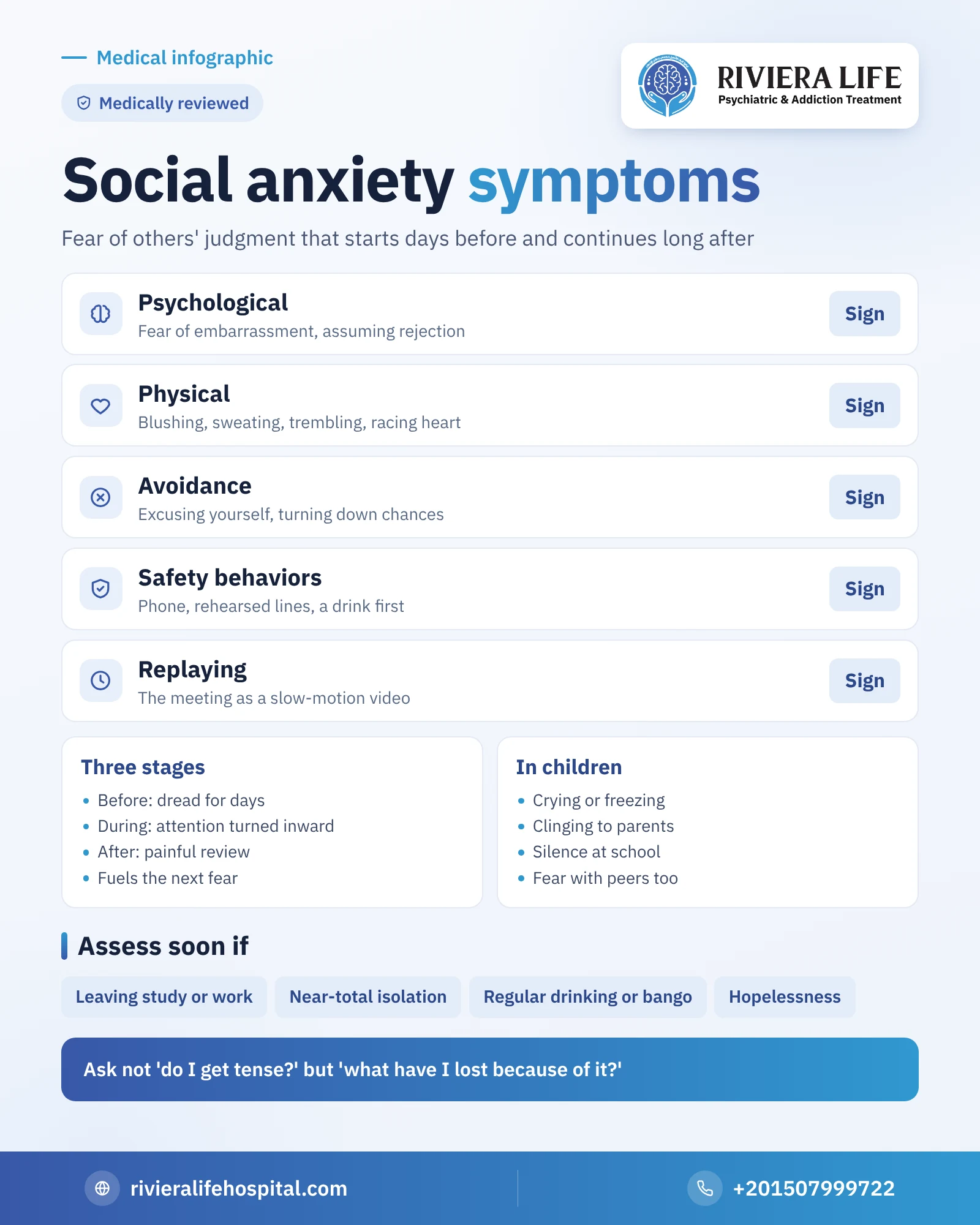
Social anxiety symptoms combine an inner fear of others’ judgment, physical signs such as blushing, sweating and trembling, and behavior that revolves around avoidance or taking cover. What distinguishes them is that they aren’t limited to the moment of the situation, but begin days before it and continue after it as a painful review of everything that was said. This article helps you recognize the signs in yourself or someone you love, and explains when they become worth a specialist assessment. Remember that reading the symptoms is for recognition, not diagnosis; diagnosis is made by a doctor or psychologist.
Where do the symptoms usually appear?
The situations that trigger fear vary from person to person, but they revolve around one idea: being under observation. Among the most common:
This article is about the signs alone. For a full introduction to the condition, its causes and types, see the social anxiety guide, and for the steps of treatment see social anxiety treatment.
- Meeting new people or starting a conversation with a stranger.
- Answering the phone or making a call, especially to an official body.
- Eating, drinking or writing while someone is watching.
- Taking part in a meeting or lecture, or asking a question in front of colleagues.
- Entering a room full of seated people, or walking past a crowded café.
- Using a public toilet, or returning an item to a seller.
Psychological symptoms: what goes on in the head
The thinking side is the heart of the disorder. The person lives with the conviction that their flaws are exposed to everyone, and that any small mistake will be noticed and held against them. Among the things patients describe most:
- Intense fear of embarrassment or looking stupid or weak.
- Worry that others will notice the signs of their tension themselves, as if everyone can see their hand trembling.
- Assuming that another person’s silence or passing glance means rejection or mockery.
- Difficulty concentrating during conversation, because a large part of attention is busy monitoring oneself.
- Realizing the fear is exaggerated, while being unable to stop it, something many adults share.
Physical symptoms
The body responds as if facing real danger. The face and neck flush, the palms sweat heavily, the hands or voice tremble, the mouth goes dry, the heart races, and the person may feel nausea, a knotted stomach or an urgent need to use the toilet. Some people feel their mind suddenly “goes blank” so they can’t find the words. In some, the arousal may reach a full panic attack in a particular social situation. The paradox is that these signs themselves become a new source of fear, so the person fears blushing more than they fear the situation.
Behavioral symptoms: avoidance and safety behaviors
Outright avoidance is the clearest sign: excusing oneself from weddings and invitations, dropping a course that requires a presentation, and turning down a better job because it involves meeting clients. But many don’t avoid; they attend while “fortified”. These are what therapists call safety behaviors, including:
- Standing in a far corner and being busy with the phone the whole time.
- Preparing and memorizing sentences in advance, or speaking quickly to end the conversation.
- Wearing high-necked clothes to hide blushing, or gripping a cup tightly to hide trembling.
- Avoiding eye contact, or attending with a friend who does the talking.
- Having an alcoholic drink or a sedative pill before the meeting.
These behaviors seem like protection, but they stop the person discovering they would have got through the situation without them, and may make them actually seem reserved, confirming their fears.
Three stages: before, during and after
Before the situation
Anticipatory anxiety that may start days or weeks before, with imagined scenarios of failure and insomnia the night before the appointment. Sometimes this waiting is harder than the situation itself.
During the situation
Attention turned inward: how does my voice sound? Did they notice my sweat? So part of the conversation is lost, and the performance comes out weaker than it really is.
After the situation
A long review of what happened, focusing on the embarrassing moments and magnifying them. One patient says he spends the night “replaying the meeting like a slow-motion video” to find every mistake. This review plants fear for the next situation.
What do the symptoms look like at work and university?
At work the sufferer may seem a quiet, hard-working employee, but they arrive late to meetings or miss them, send an email instead of calling, refuse to represent their team in front of clients, and avoid the lunchroom. They may miss promotions they deserve because they mean more visibility. At university they choose seats in the back row, don’t ask when they don’t understand, avoid courses with oral discussion, or postpone their graduation project because presenting to the committee terrifies them. Those around usually read this behavior as laziness or lack of ambition, while behind it is a fear that drains the person.
Signs in children and teenagers
A child doesn’t usually say “I’m afraid of others’ evaluation”. Their fear may show as crying, tantrums, freezing or clinging to a parent, or complete silence in class even though they talk fluently at home. Doctors require that the anxiety appears among peers, not only with adults. A teenager, however, may refuse to go to school, citing repeated headaches or stomach aches on mornings of the school assembly, or withdraw from friends and live all their relationships through the screen. A sudden change in grades, or refusing activities they used to love, deserves parents’ attention.
The difference between shyness and social anxiety
Shyness is a common personality trait: a shy person hesitates at first then joins in, and doesn’t pay a big price in their life. Social anxiety, however, is marked by the intensity of the fear and its persistence over long months, usually six months or more, and by a tangible price the person pays in their study, work or friendships. The most important question isn’t “do I get tense?” but “what have I lost because of this tension?”. Social anxiety also differs from agoraphobia, which revolves around fear of difficulty escaping, and from panic attacks that come without a social trigger, as we explain in the article on types of anxiety.
Questions to help you reflect on your condition
These questions aren’t a diagnostic test, but they help you organize your thoughts before talking to a specialist:
- Does fear of embarrassment stop you from things you really want, such as a job, study or friendship?
- Do you spend days worrying before an occasion or meeting, and hours reviewing it afterwards?
- Do you rely on fixed tricks to get through situations, such as the phone, a friend or a drink?
- Has this pattern lasted for long months without improving over time?
If your answer is yes to more than one question, it is worth asking for an assessment. Symptoms intertwined with persistent sadness and loss of pleasure may point to accompanying depression that also needs attention.
Signs that call for a quick assessment
Some signals mean the matter has gone beyond the waiting stage: dropping out of study or work, near-total isolation at home, regularly drinking alcohol or smoking bango to bear meetings, and talk of hopelessness or that life is meaningless. In these cases the person shouldn’t be left alone with it.
Seek urgent help immediately if you see
Call the ambulance on 123 or go to the nearest emergency department, and stay close to the person.
- Thoughts or talk of self-harm or ending life
- Loss of consciousness or slow breathing after alcohol or sedatives
- Complete withdrawal with refusing food and drink for days
How can Riviera Life help you?
We know the first step, the call itself, may be the hardest part. That is why you can start with us with a message, then a free first meeting with a consultant psychiatrist, in complete confidentiality, which determines whether what you suffer from is social anxiety or something else, and suggests a suitable plan. The details of the available options are in the article on social anxiety treatment.
More from the social anxiety guide
- Social anxiety: the complete guide
- The causes of social anxiety
- Types of social anxiety
- Social anxiety treatment
- Avoidant personality: how it differs from social anxiety, its signs and treatment
- Phobia: the complete guide
- The introverted personality: a trait or a disorder, and how to tell it from phobia
- Selective mutism in children: why they talk at home and go silent outside
- Social anxiety test: instant result
Questions many people ask
Not on its own, as blushing happens to many people. It becomes significant when accompanied by intense fear of it being noticed and avoiding situations because of it for a long time.
Yes, some sufferers attend occasions and seem normal, but they rely on hidden tricks and suffer intense anxiety before and after.
It may show as crying, freezing, clinging to parents, silence at school or refusing to go there, provided the fear appears with peers and not only with adults.
A panic attack may happen in a social situation the person fears. The difference from panic disorder is that the attack here is triggered by a specific evaluation situation and doesn't come suddenly without cause.
When the fear lasts for months and makes you lose opportunities at work, study or in relationships, or you rely on a drink or a pill to bear meetings.
Social shyness is a temperament trait that makes a person reserved in new situations, but they usually adapt and carry on with life. Social anxiety is intense fear of negative evaluation that drives avoidance and disrupts study, work or relationships.