A midlife crisis is a period of anxiety and re-evaluation that usually comes between the forties and the early sixties, when a person asks themselves: is this what I really wanted? And how much time is left? It isn’t a medical diagnosis in the official classifications, and not everyone goes through it. But it is a real description of what many experience of distress, boredom, impulsivity, nostalgia and fear of aging. It may be a chance to reorganize life, and it may hide depression, anxiety or an addiction that needs treatment. Here we explain the signs, the causes, the difference between it and depression, and what helps.
What exactly is a midlife crisis?
It is a psychological transition stage more than an illness. In our thirties we run towards goals: a job, marriage, a home and children. In our forties and fifties we turn around and see that some goals were achieved and didn’t give us what we expected, that some won’t be achieved, and that bodies and parents are changing. This turning around awakens questions about meaning and lost choices. Some studies indicate that life satisfaction may fall in the middle years then rise again in many people afterwards, but this differs from person to person and from society to society.
Signs of a midlife crisis
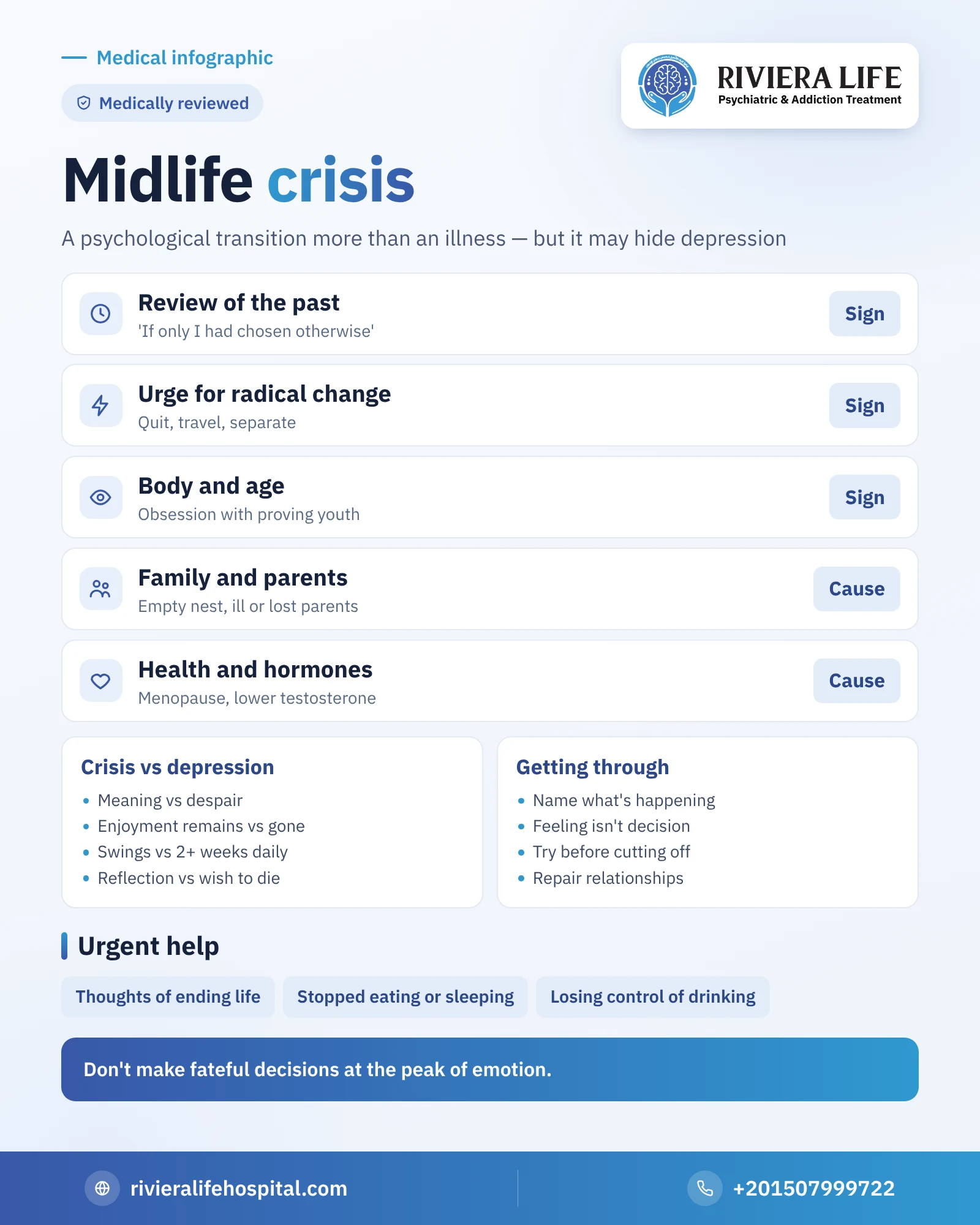
- A recurring feeling of boredom or emptiness even though circumstances are “stable”.
- A painful review of the past: “if only I had chosen otherwise”.
- A sudden desire for radical change: quitting work, travelling, starting a project, or separating.
- Preoccupation with the body, appearance and age, or an obsession with proving youth.
- Irritability, sensitivity and quick temper with the wife, children or colleagues.
- Attraction to new relationships or adventures that weren’t in your nature.
- Unusual spending or buying things that symbolize youth.
- A change in sleep, appetite and energy.
- An increase in drinking, smoking or using sedatives.
Why does it happen?
- Reviewing achievements: comparing what we dreamed of with what was achieved.
- Work pressure: stagnation in position, fear of being let go, or the rise of younger people. And if exhaustion goes on, see burnout.
- Family changes: children leaving and a quieter house, teenagers draining patience, or tension in the marriage.
- Parents: the illness or death of parents reminds a person of their own end.
- Health: the appearance of diabetes, blood pressure or joint pain, and a decline in fitness.
- Hormonal changes: menopause in women, and a gradual decrease in the male hormone in some men, both of which may affect mood and sleep.
- Financial pressure: children’s fees, treatment and big commitments.
A man’s crisis and a woman’s crisis: do they differ?
The common picture of a man at this stage: a new car, a relationship outside marriage, or leaving the job. In reality the most common form is quieter: silence, isolation, irritability and excess in work or drinking, because a man may find it hard to talk about his weakness. A woman, on the other hand, may go through the stage with menopause and caring for children and parents all coming together, so exhaustion, anxiety and the feeling that she has lost her role or herself appear. This is a generalization, as individual differences are greater than the differences between the sexes.
The difference between a midlife crisis and depression
| Aspect | Midlife crisis | Depression |
|---|---|---|
| The dominant idea | Questions about meaning and choices | Despair and a feeling of helplessness and guilt |
| Enjoyment | The ability to enjoy things remains, with boredom or a thirst for change | Enjoyment of most things disappears |
| Energy and sleep | May be disturbed but improve with positive situations | Exhaustion and disturbed sleep or appetite most of the time |
| Duration | Swings lasting months that may calm down | Two weeks or more of daily symptoms |
| Thoughts of death | Reflection on age and the end | A wish to die or that the family is better without them may appear |
The two may overlap, and the crisis may turn into depression. So if the sadness goes on, read depression symptoms and the difference between sadness and depression, and see a specialist.
When the crisis turns into harmful decisions
The danger isn’t in the questions but in hasty decisions: leaving a stable job in a moment of anger, infidelity that destroys a family, debts to buy youth, or drinking that turns into dependence. That is why we advise a simple rule: don’t make fateful decisions at the peak of emotion, and talk with someone you trust or a specialist before you act. Whoever turns to alcohol to numb the emptiness will find in the article on alcohol addiction symptoms signs that warn of the start of dependence, and the effect of addiction on marriage explains what may result from it.
Ask for urgent help immediately if you see
Men in midlife may hide their pain for a long time, and these signs don't count as a passing crisis.
- Thoughts of death, of ending life, or that your absence is better for your family
- Stopping eating and sleeping or a severe deterioration in daily functioning
- Drinking or drug use that is increasing and getting out of your control
- Severe panic attacks or a sudden unexplained change in thinking or behavior
Call an ambulance on 123 or go to the nearest emergency department, or call the mental health hotline 16328, and tell someone close to stay with you. The article on suicidal thoughts explains what should be done and what can help.
How do you get through this stage?
- Name what is happening: saying “I’m in a stage of review” is lighter than “my life is a failure”.
- Separate the feeling from the decision: you can feel the desire to run away without running away.
- Write your life on paper: what do I really love and what has weighed on me? And what small change can I try first?
- Try before cutting off: a course, a hobby, volunteer work or a side project tests your desire before you change your whole life.
- Take care of your body: a regular check-up, regular sleep and daily movement, as much distress is linked to physical tiredness.
- Repair relationships: an old friend, an honest session with your husband or wife, or real time with the children.
- Look for a new meaning: mentoring a younger person, or getting involved in work that benefits people, gives a feeling of value away from comparison.
- Reduce stimulants and alcohol: they give passing relief and increase irritability and insomnia.
The role of the spouse and children
The hardest thing about this crisis is that those around see the person “has changed” and take it personally. Try to ask instead of accusing: “I notice you’re not at ease, do you want to talk?” and avoid mocking his age or behavior. Set clear limits if his decisions start to harm the family financially or emotionally, and suggest a joint psychological consultation session. And remember that patience doesn’t mean accepting any behavior.
When is psychotherapy needed?
If sadness or anxiety continues for two weeks or more with an effect on work, sleep and relationships, or painful thoughts about life appear, or reliance on alcohol or sedatives increases. Psychotherapy helps in organizing thoughts and defining values and goals, and the doctor may recommend medicine when depression or anxiety is present (see the anxiety guide). Medicine isn’t started or stopped except under the doctor’s supervision.
How does Riviera Life help you?
At Riviera Life in Sheikh Zayed, a consultant psychiatrist meets you and helps you distinguish between a passing crisis and a disorder that needs treatment, in complete confidentiality. And if drinking or drug use is behind the crisis, the addiction treatment program with family support is available. The first consultation is free: +201507999722.
More from the mental health guide
Questions many people ask
It isn't an official diagnosis, but a stage of review and anxiety some people go through. It may overlap with depression or anxiety that needs assessment.
Usually between the forties and the early sixties, but there is no set age and not everyone goes through it.
In the crisis the ability to enjoy remains alongside questions about meaning, while in depression despair and loss of pleasure dominate for two weeks or more.
Yes, and it may overlap with the changes of menopause and the pressures of caring for children and parents, so it appears as exhaustion and anxiety.
Ask calmly instead of accusing, set limits if his decisions harm the family, suggest a psychological consultation, and don't ignore signs of depression or addiction.