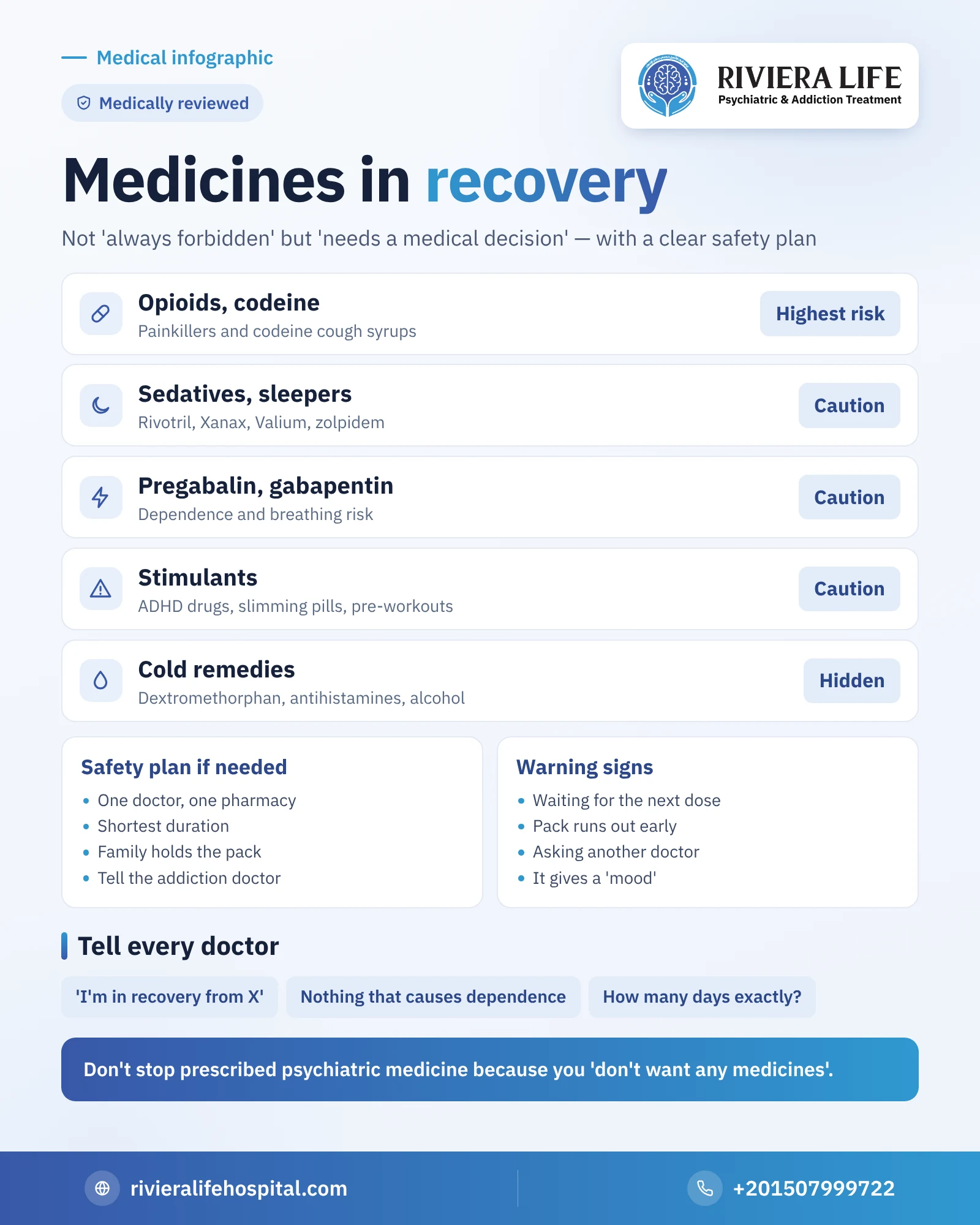
Medicines to avoid in addiction recovery aren’t a single fixed list, but classes of medicines that affect the brain in a way resembling the substance the person used, or that carry the risk of new dependence. The most important are opioid painkillers and cough medicines containing codeine, sedatives and sleeping pills, pregabalin and gabapentin, stimulants, and some cold medicines and syrups containing alcohol. The more accurate phrase here is “needs a medical decision”, not “always forbidden”, as some of these medicines may be needed in surgery or severe pain, but with a clear plan your doctor knows. This article explains the classes, what to tell each doctor or pharmacist, and how to protect your recovery without depriving yourself of treatment you need.
Why does someone in recovery need special caution with medicines?
A brain that has lived for years with a drug keeps a strong memory of its taste and effect. When a medicine enters the body that works on the same receptors, it may wake this memory even if it was taken for a real medical reason. There are three reasons for caution:
- Cross-dependence: a medicine chemically close to the old substance may bring back dependence through a side door, such as someone recovered from tramadol taking a cough syrup with codeine.
- Igniting craving: a sudden feeling of relaxation or energy reminds the brain of use, so the urgent craving returns after it had calmed.
- Reduced tolerance: after a period of abstinence the body becomes more sensitive, so an ordinary sedative medicine with remnants of another substance may weigh on breathing.
This differs from the question “do psychiatric medicines cause addiction?”, discussed in the article on are psychiatric medicines addictive. Here we are talking about every medicine someone in recovery may come across, at the dentist, in the emergency department or from the pharmacy shelf.
Opioid painkillers and codeine cough medicines
This class is the most dangerous for someone recovered from heroin, tramadol, opium or codeine itself, and it is also the one that most often reaches them unintentionally. It includes the strong painkillers written after operations, fractures or wisdom tooth extraction, some combined headache tablets, and cough syrups that include codeine. Many people in recovery return to use after an “innocent prescription” in which no one asked about their history. The details of codeine and its risks are in the article on codeine.
This doesn’t mean that someone in recovery should bear severe pain without treatment. The doctor can usually choose a painkiller from outside this class, or prescribe the opioid painkiller for very few days under follow-up if there is no alternative.
Sedatives and sleeping pills
This class includes the benzodiazepines known in Egypt by names such as Rivotril, Xanax and Valium, and the sleeping pills close to them such as zolpidem. They are often written for insomnia and anxiety after leaving drugs, which is exactly the stage in which someone in recovery is most susceptible to getting attached to them. Their danger is doubled with someone recovered from alcohol, because they work on similar systems in the brain. So if you complain of insomnia, ask your doctor for treatment that doesn’t carry a risk of dependence, and ask them about it frankly.
Pregabalin and gabapentin
Some people think of them as “light” nerve medicines, but pregabalin has become among the most misused medicines in Egypt, and gabapentin is close to it. Both medicines carry a particular risk of dependence in someone with a history with opioids or sedatives, and may weigh on breathing if combined with them. If you need treatment for nerve pain or anxiety, tell the doctor your history before they decide.
Stimulants and slimming and concentration medicines
Someone recovered from captagon, ice or cocaine needs caution with everything that stimulates the nervous system: some ADHD medicines, slimming tablets sold without supervision, “fat-burning” supplements and pre-workout drinks full of stimulants. The sudden feeling of energy and concentration may be the first step toward the old craving. And if the person in recovery really suffers from hyperactivity, its treatment is possible, but the psychiatrist is the one who decides the most suitable medicine and follows it.
Cold and cough medicines dispensed without a prescription
Here most people in recovery fall without noticing, because the product seems ordinary and is bought in a minute:
- Cough syrups containing dextromethorphan: misused in large amounts, and they have a separate article: dextromethorphan cough syrup.
- Sedating antihistamines: present in many night-time cold tablets, and cause drowsiness that may be enjoyed.
- Stimulating decongestants: may cause palpitations and tension resembling the effect of stimulants.
- Syrups and mouthwashes containing alcohol: very important for someone recovered from alcohol, so read the ingredients or ask the pharmacist for an alcohol-free alternative.
When does the doctor prescribe a medicine from these classes to someone in recovery?
Someone in recovery may need surgery, treatment of a fracture, cancer pain or a severe anxiety attack. In these cases the solution isn’t refusing treatment, but setting a safety plan before it:
- One doctor writes the medicine, and one pharmacy dispenses it.
- The shortest possible duration, with a set date for review and stopping.
- A family member keeps the pack and gives the medicine as the doctor wrote it.
- Informing the following addiction doctor before starting, so they tighten follow-up in that period.
- Getting rid of the extra amount as soon as it is no longer needed.
This rule also applies to someone for whom a prescribed medicine turned into a problem, whose story is told in the article on prescription drug addiction.
What do you tell the doctor, dentist and pharmacist?
Many hesitate to mention their history out of fear of embarrassment, but one sentence may protect years of recovery. It is enough to say, for example: “I’ve been in recovery from tramadol addiction for a year, and I need treatment that doesn’t contain opioid painkillers, sedatives or anything that causes dependence”. Then ask:
- Does this medicine contain a substance that affects mood or sleep or causes dependence?
- Is there a suitable alternative for my case?
- How many days exactly will I need it?
- Does it conflict with the medicines I take to treat addiction or my psychological condition?
You can also carry a short note on your phone with your current medicines and your treating doctor’s name, to show in the emergency department if you can’t speak.
Signs that the medicine has started taking the place of the substance
You and those around you should pay attention if any of the following appears while taking a medicine from these classes:
- Thinking about the time of the next dose before it’s due, or waiting for it eagerly.
- Increasing the amount without going back to the doctor, or the pack running out before its time.
- Asking another doctor for the same prescription.
- Feeling that the medicine gives a “mood”, not just relief from the symptom.
- The return of dreams of using or thinking about the old substance.
When these signs appear don’t stop the medicine suddenly on your own, as some medicines cause dangerous withdrawal. Contact your doctor to set the stopping plan, and see the relapse treatment program if the matter develops into use.
Does this mean all psychiatric medicines are forbidden?
No. Many antidepressants, mood stabilizers and some anxiety medicines don’t cause addiction, and may be an essential part of protecting someone in recovery from relapse, especially if they had depression or anxiety before or after use. The common mistake is for someone in recovery to stop their prescribed psychiatric medicine because they “don’t want any medicines”, so the symptoms that used to push them toward use return. Any adjustment of psychiatric medicines is made with the doctor who prescribed them, within the aftercare program.
How does Riviera Life help you?
The consultants in psychiatry and addiction treatment at Riviera Life set with each person in recovery a clear list of the medicines that need caution in their case, and contact the dentist or surgeon when needed to choose safe treatment. Aftercare includes follow-up of medicines after discharge, and a program for the family that teaches it how to keep the treatment and notice early signs. The hospital is licensed by the Ministry of Health, has fourteen years of experience, and medical supervision in it is continuous around the clock with complete confidentiality. The first consultation is free on +201507999722, and the hospital is in Sheikh Zayed, Giza.
More from the recovery guide
- Are psychiatric medicines addictive?
- Prescription drug addiction: how it starts with a prescription
- The aftercare program after addiction treatment
- The relapse treatment program
Questions many people ask
Yes, pain can be treated, but tell the doctor your history first so they choose a painkiller from outside the opioids if possible, or set a short, monitored plan if there is no alternative.
Some cough syrups contain codeine, dextromethorphan or alcohol, all of which may bring back craving or dependence. Ask the pharmacist about the ingredients and request a suitable alternative.
Don't stop it on your own. Many antidepressants don't cause addiction, and may protect you from relapse. Any change is made with the doctor who prescribed it.
Contact your doctor immediately and don't increase the amount or stop it suddenly, as some medicines need gradual reduction. This is an early sign that can be dealt with before it becomes a relapse.
Yes, as the dentist is among those who most often prescribe strong painkillers. Mentioning your history in one sentence is enough for them to choose treatment that doesn't put you at risk, and the information stays confidential.