The short answer
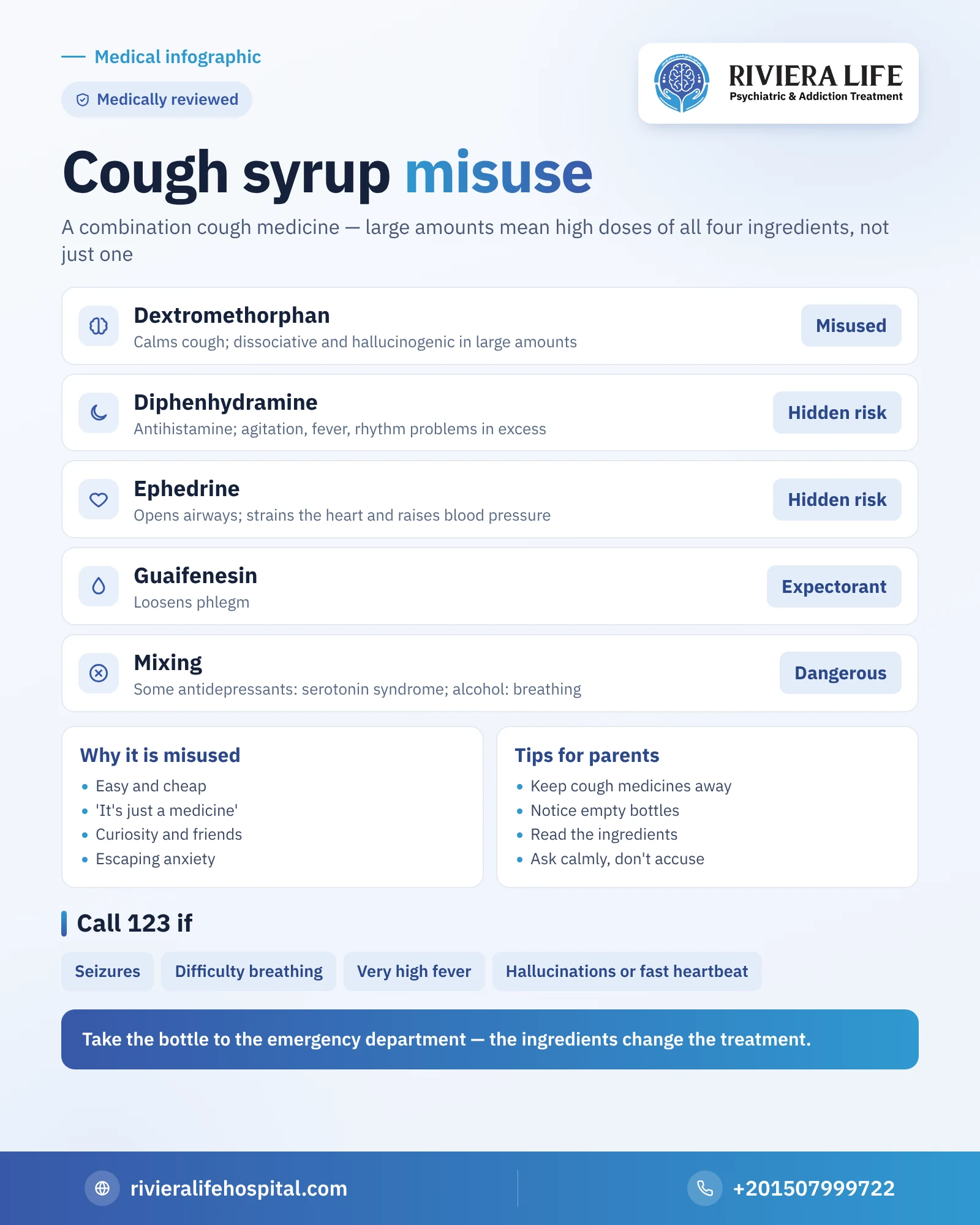
Tusskan syrup is a cough medicine combining four substances: dextromethorphan, which calms coughing; diphenhydramine, an antihistamine; ephedrine, which widens the airways; and guaifenesin, which loosens phlegm. It isn’t a drug in the usual sense when used at the written dose, but some young people drink it in large amounts looking for the effect of dextromethorphan on the brain, a dissociative effect resembling ketamine in some respects. And since the syrup is a combination, a large amount also means high doses of the other substances, with the risk of hallucinations, seizures, a racing heart and high temperature, and the risk of serotonin syndrome when mixed with some antidepressants.
- The misused substanceDextromethorphan
- The greatest riskLarge amounts, the combination formula and mixing
- TreatmentMedical assessment, then psychotherapy and relapse prevention
Many questions about “Tusskan syrup as a drug” come from parents who found several empty bottles in their son’s room, and from young people who heard that cough syrup “gets you high” and can be bought without a prescription. The real picture is that the problem doesn’t concern one brand name, but a substance found in dozens of cough medicines called dextromethorphan. This article explains what is in the bottle, why a safe medicine becomes dangerous when misused, how it differs from codeine syrup addiction, and when treatment is needed.
What is Tusskan syrup?
Tusskan is one of the cough medicines in circulation in Egypt, and contains four active substances, each with a role:
- Dextromethorphan: calms the cough center in the brain, and is used for an annoying dry cough.
- Diphenhydramine: an antihistamine that reduces allergy and runny nose, and causes drowsiness.
- Ephedrine: widens the airways and reduces congestion, and has a stimulant effect on the heart and nerves.
- Guaifenesin: helps loosen phlegm.
At the dose set by the doctor or the leaflet, the syrup remains a medicine for cold symptoms. The problem begins when it is drunk for another purpose.
Is Tusskan syrup a drug?
The precise answer: the syrup itself isn’t a drug, but one of its substances, dextromethorphan, produces in very large amounts a psychological effect completely different from its effect in treating cough. It then acts on brain receptors that dissociative substances such as ketamine act on, so the person feels detached from his body or from reality, with confusion in his sense of time and place, and hallucinations may appear. This is what those who misuse it are looking for, and it is also what makes it dangerous.
This differs from cough syrup containing codeine, as codeine is an opioid that causes physical dependence and withdrawal resembling opioid withdrawal. If the syrup in your home contains codeine, read treatment of codeine and cough syrup addiction.
Why is it misused?
- It is easy to get and cheap compared with drugs.
- The mistaken belief that it is “a medicine” so it can’t be dangerous.
- Curiosity, friends’ influence, and online clips describing experiences with it.
- Trying to escape anxiety, depression or emptiness.
Teenagers are the most vulnerable group, because the syrup is within their reach at home. You will find signs parents should watch for in our article on teen addiction.
Harms of cough syrup misuse
Harms of dextromethorphan in large amounts
- Dizziness, unsteadiness, blurred vision and difficulty speaking.
- Hallucinations and detachment from reality, and risky behavior may occur without awareness.
- Nausea, vomiting and heavy sweating.
- A racing heartbeat and raised blood pressure.
- Seizures, difficulty breathing and coma in severe cases.
Harms of the other substances in the combination syrup
Here is a danger many overlook: someone who drinks a large amount of combination syrup doesn’t only take a high dose of dextromethorphan. Diphenhydramine in large amounts may cause agitation, confusion, severe dryness, high temperature, heart rhythm disturbance and seizures, and ephedrine strains the heart and raises blood pressure. Some other cold medicines contain paracetamol, and large amounts of it may destroy the liver without clear symptoms at first.
The danger of mixing
Mixing dextromethorphan with some antidepressants, especially monoamine oxidase inhibitors, or with other substances that raise serotonin, may cause serotonin syndrome, an emergency. And mixing it with alcohol or sedatives increases the risk of slowed breathing. Details of the risks of combinations are in our article on mixing drugs.
When do you go to the emergency department immediately?
Call an ambulance on 123 or go to the nearest emergency department if someone who drank a large amount of cough syrup shows:
- Seizures, loss of consciousness or difficulty waking.
- Difficulty breathing.
- A very high temperature with stiffness or tremor.
- Severe agitation, frightening hallucinations or a very fast heartbeat.
Take the bottle or the medicine name with you, as knowing the syrup’s ingredients changes how it is treated. Overdose signs by substance are in our article on drug overdose.
Does it cause addiction?
Repeated use of cough syrup for its effect may turn into a compulsive pattern: the person increases the amount to get the same effect, thinks about it a lot, continues despite the harm, and after stopping feels anxiety, depression or insomnia and an intense urge to return. These are signs of a use disorder that deserves treatment, even if the physical withdrawal symptoms aren’t as violent as with opioids.
How is cough syrup addiction treated?
- A medical assessment that identifies the type of syrup, its ingredients and the amount used, and checks the heart and liver if needed.
- Follow-up of the first days after stopping, and treatment of any anxiety, insomnia or depression that may appear.
- Looking for an accompanying psychiatric disorder such as depression, anxiety or ADHD, and treating it.
- Individual and group psychotherapy that addresses the reason for turning to the substance and builds alternative ways of dealing with stress.
- Involving the family, organizing medicines at home, and regular follow-up to prevent relapse.
Advice for parents
- Keep cough and cold medicines out of teenagers’ reach, and notice bottles running out repeatedly.
- Read the ingredients of any cough medicine before buying it, and avoid repeating the same substance in more than one product.
- Don’t start the conversation with an accusation; ask calmly about what your son is going through.
- If it happens again, don’t wait; early assessment is easier and shorter.
How can Riviera Life help you?
Riviera Life receives cases of misuse of cough medicines and medicines dispensed without a prescription, starting with a confidential medical and psychological assessment, then a treatment plan suited to the patient’s age and circumstances, with a family program and follow-up after discharge. The first consultation is free and confidential on +201507999722.
Read also
- Codeine: its uses and addiction risks
- Ketamine addiction: how it starts and how it develops
- Hallucinogenic pills and types of hallucinogens
- The importance of early addiction treatment
Questions many people ask
The syrup is a cough medicine, not a drug, when used at the written dose, but the dextromethorphan in it produces a dissociative effect and hallucinations in very large amounts, which is why it is misused, and that use is dangerous.
Codeine is an opioid that causes physical dependence and opioid-like withdrawal, while dextromethorphan's effect in large amounts is dissociative, resembling ketamine in some respects, and both may turn into a pattern of use that needs treatment.
Common rapid tests don't usually target dextromethorphan, but some cough medicines may give a misleading initial result in some tests, so it is best to tell the lab about any medicine you take and ask for a confirmatory test when needed.
When seizures, loss of consciousness, difficulty breathing, very high temperature, agitation and hallucinations, or a very fast heartbeat occur; call an ambulance on 123 and take the medicine bottle with you.