Prescription drug addiction often begins with a sound medical prescription: a painkiller after an operation, a sedative for panic attacks, or pregabalin for nerve pain. Then the body needs a larger dose for the same effect, the medicine becomes a way to escape tension rather than to treat the illness, and fear of stopping appears. This article explains which medicines are most prone to this shift, how to tell expected physical dependence from addiction, the warning signs, safe use and disposal, and why no one should stop a medicine like this suddenly.
What is prescription drug addiction? Three words people confuse
- Misuse: taking the medicine at a dose, in a way or for a purpose other than what the doctor prescribed, or taking a medicine prescribed for someone else.
- Physical dependence: the body’s adaptation to the medicine so that withdrawal symptoms appear when it is stopped. It may happen even with correct use, and on its own doesn’t mean addiction.
- Addiction: loss of control and continuing despite harm, preoccupation with obtaining the medicine, and using it to change mood.
This distinction is important: an epilepsy patient who takes their medicine regularly isn’t an addict, but someone who hides the number of pills and looks for another doctor to write them more is on the dangerous road. Prescription drug addiction treatment follows the same foundations as drug addiction treatment in general.
The medicines most likely to cause addiction
| Family | Well-known examples | Medical use | Nature of the risk |
|---|---|---|---|
| Opioid painkillers | Tramadol, codeine, nalbuphine, morphine | Moderate and severe pain | Rapid tolerance, unpleasant withdrawal and risk of respiratory depression |
| Sedatives and sleeping pills | Rivotril, Xanax, Valium, zolpidem | Anxiety, panic, insomnia and seizures | Dependence with long use and withdrawal that may cause seizures |
| Prescribed stimulants | Methylphenidate and medical amphetamines | Attention deficit hyperactivity disorder | Misuse for staying up, studying and slimming |
| Nerve medicines | Pregabalin, gabapentin | Nerve pain, epilepsy and some anxiety cases | Euphoria at high doses and great danger with opioids |
Each family has a separate guide on our site: opioids, benzodiazepines, pregabalin, and gabapentin.
How does dependence start from a prescription?
The story repeats with different details. A young man has knee surgery and takes a strong painkiller for two weeks, and notices that the medicine doesn’t only remove pain but also calms work pressure. The pain ends and the second reason remains. Or a woman starts a sedative for a short period after the death of a relative, then the years pass and she can’t sleep without it.
The stages are usually: a medicine with a medical reason, then tolerance that reduces its effect, then increasing the dose without consultation, then using it for feelings rather than illness, then unpleasant withdrawal at every attempt to stop that pushes to continue. In many cases the matter turns into obtaining the medicine outside the prescription.
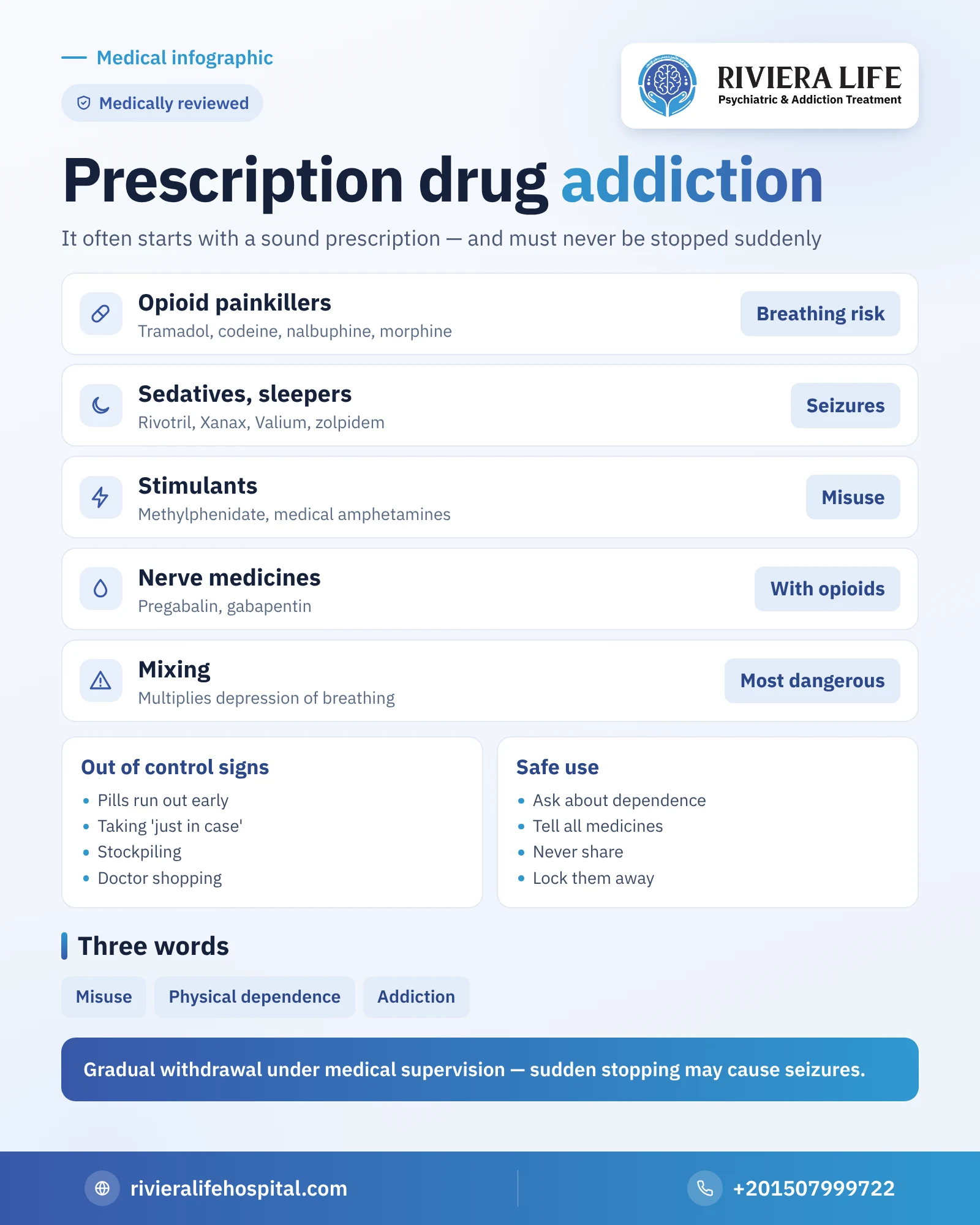
Signs that the medicine is out of control
- Pills running out before they are due, with repeated excuses such as loss or theft.
- Taking the medicine before difficult situations “just in case” even without symptoms.
- Severe anxiety when thinking about it running out, and stockpiling reserve amounts.
- Crushing the pills or using them in a way other than what the doctor prescribed.
- Obtaining the medicine from friends or from pharmacies without a prescription.
- Drowsiness, stammering or noticeable mood swings, and a decline at work and in relationships.
- Sharply defending the medicine and refusing any talk of reducing it.
Moving between doctors and pharmacies
Among the clearest signs of prescription drug addiction is what is known as doctor shopping: visiting more than one doctor to obtain multiple prescriptions for the same medicine, without any of them knowing about the other, or exaggerating the description of pain and insomnia to obtain a larger dose. It is often accompanied by moving between pharmacies so that no single pharmacist notices the frequent purchases.
If you notice this in a family member, it isn’t a “trick” that deserves anger so much as a symptom of an illness that needs treatment. Tell the treating doctor what you notice, as this protects the patient from conflicting prescriptions that may be deadly together.
Who is most vulnerable to prescription drug addiction?
- Someone with a previous history with alcohol or drugs, or whose family includes someone who suffered from addiction.
- Patients with anxiety, depression and chronic insomnia not treated in an integrated way.
- Chronic pain patients who rely on the painkiller alone without a comprehensive plan.
- Older people taking multiple medicines from different doctors.
- Students who use stimulants for studying or staying up.
The risk increases when the medicine is dispensed for a long period without periodic review, or when it is easily available at home.
The danger of mixing: a combination that may stop breathing
The most dangerous thing in prescription drug addiction isn’t one medicine but the combination. Opioid painkillers with sedatives, pregabalin, gabapentin or alcohol multiply depression of the nervous system and breathing. This combination specifically is widespread in Egypt among those who combine tramadol and pregabalin, and its details are in the article on the difference between pregabalin and tramadol.
Call the ambulance on 123 immediately if any of these appear
Especially after combining opioid painkillers with sedatives, pregabalin or alcohol.
- Severe drowsiness or difficulty waking
- Very slow or irregular breathing or unusual snoring
- Lips or fingertips turning bluish
- Very small pupils with confusion
- Seizures after suddenly stopping a sedative
Safe use of prescribed medicines
- Ask the doctor frankly: does this medicine carry a risk of dependence? And what is the expected duration?
- Tell them everything you take, including medicines from other doctors and supplements.
- Stick to the dose and duration, and don’t increase, decrease or stop except by the prescribing doctor’s decision.
- Don’t share your medicine with anyone, and don’t take someone else’s medicine however similar the symptoms.
- Avoid alcohol and any other sedative during treatment.
- Keep medicines in a locked place away from children and teenagers.
How do you dispose of extra medicines safely?
An old box of painkillers in a drawer at home may be a teenager’s first experience. Don’t keep medicines whose reason for use has ended. Ask the pharmacist about the disposal method available in your area. And if no take-back option is available, the US Food and Drug Administration recommends mixing the pills with an unappealing substance such as used coffee grounds, and putting them in a sealed bag before throwing them away, while removing personal details from the packaging.
How do you talk with a relative who is misusing their medicine?
The conversation here is harder than talking about drugs, because the person always replies that “the doctor is the one who wrote it”. Don’t argue about the prescription itself, but about what you notice: “I’ve noticed the box runs out before it’s due, and that you sleep a lot during the day, and I’m worried.” Offer to go together to the prescribing doctor or to a psychiatrist, and don’t try to take the medicine away from them or hide it, as stopping suddenly may be dangerous. And if the person is elderly, gather all their medicine boxes and ask for a comprehensive review, as this review often reveals two medicines from the same class written by two different doctors.
Treating prescription drug addiction: why not stop suddenly?
Suddenly stopping sedatives, pregabalin or gabapentin may cause severe withdrawal that can reach seizures, and stopping opioids is painful and raises the risk of relapse. That is why treatment is based on a medical assessment, then gradual withdrawal under the doctor’s supervision, treating the original cause such as pain or anxiety in safer ways, then psychotherapy and follow-up. You will find the details of each medicine in articles such as Rivotril addiction and tramadol addiction treatment.
How does Riviera Life help you?
Many who reach us have never bought a drug in their lives, but started with a prescribed medicine. The consultants in psychiatry and addiction treatment at Riviera Life assess all the medicines the patient takes, and set a gradual withdrawal plan under round-the-clock medical supervision, with treatment of the anxiety, pain or insomnia with which the road began. The first consultation is free and confidentiality is complete: +201507999722, Sheikh Zayed, Giza.
Read also
- Types of opioid painkillers: their names and risks
- Xanax addiction: why does it cause dependence quickly?
- Gabapentin addiction treatment
- The comprehensive opioids guide
- Nasal spray addiction treatment: how do you get out of rebound congestion?
- Anabolic steroids: harms, dependence and treatment
Questions many people ask
Not necessarily; physical dependence may happen with correct use, while addiction means loss of control, continuing despite harm and preoccupation with obtaining the medicine.
Opioid painkillers, sedatives from the benzodiazepine family, prescribed stimulants, pregabalin and gabapentin are the most linked to misuse, and the greatest danger is combining them.
That isn't advised, as suddenly stopping some medicines may cause severe withdrawal that can reach seizures, and any change is made under the doctor's supervision.
Ask the pharmacist about the available disposal method, or mix them with an unappealing substance in a sealed bag before throwing them away, and don't keep them or share them with anyone.
It depends on the type of medicine, the duration of use and combining more than one medicine, and the medical assessment determines whether outpatient withdrawal is enough or residence is needed.