
The relapse treatment program is a treatment path for those who have returned to using after a period of stopping, whether weeks or years. The program doesn’t repeat the previous treatment as it was, but begins with a specific question: why didn’t the first plan hold? Then it contains the current crisis safely, analyzes the chain of events that led to the return, and builds a new plan using relapse prevention tools drawn from the Matrix model. On this page: when the patient needs the program, the stages of relapse, the risk of overdose after abstinence, the treatment steps, the family’s role, and how Riviera Life provides it.
Does relapse mean treatment failed?
Addiction is a chronic illness prone to relapse, like high blood pressure or asthma. When a blood pressure patient goes back to salt and their pressure rises, no one says the medicine failed; the plan is reviewed. Relapse is the same: it is a signal that part of the plan needs adjusting, not a verdict that the patient is hopeless.
But this doesn’t mean taking it lightly. Every return carries new risks, and the later the intervention, the harder the way back. That is why the program deals with relapse seriously and without blame at the same time.
What is the difference between a slip and a relapse?
A slip is passing use, once or twice, followed by a quick return to commitment. A relapse is a return to the old pattern of use. The difference between them is usually what happens in the hours after the slip: does the patient tell their team and family and review what happened, or hide it and tell themselves “since I’ve made a mistake, there’s no point”? This last thought is what turns a slip into a full relapse.
When does the patient need the relapse treatment program?
- They have returned to regular use after previous treatment, even if the period of abstinence was long.
- Their short slips have recurred and they have started hiding them from their family.
- They have moved to a new substance instead of the old one, such as leaving heroin and starting tramadol or pregabalin.
- They have stopped attending follow-up or meetings, and their relationship with using friends has returned.
- They have been through a major crisis, such as a death, divorce or job loss, and have started talking about the substance again.
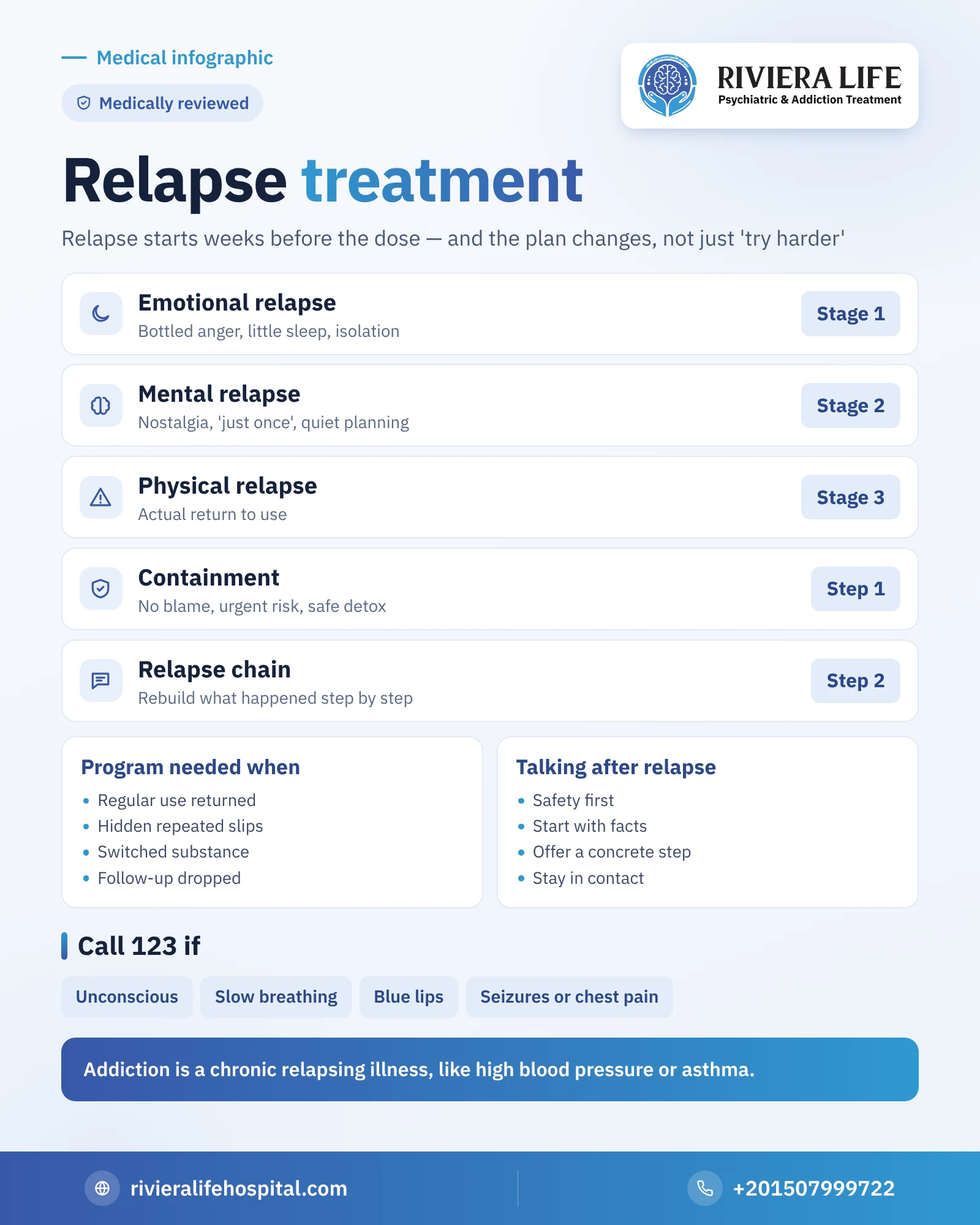
What are the stages of relapse?
Relapse doesn’t begin at the moment of the dose, but sometimes weeks before it. Many specialists divide it into three stages:
Emotional relapse
The person isn’t yet thinking about the substance, but they bottle up their anger, sleep little, eat irregularly, isolate themselves, and stop asking for help. From the outside everything looks normal.
Mental relapse
An inner struggle begins: part wants to use and part refuses. They remember the old days with nostalgia, downplay what happened, think about “just once”, and may start planning without admitting it to themselves.
Physical relapse
This is the actual return to use. Intervening in the first two stages is much easier than intervening here, which is why the program focuses on teaching the patient and family to notice them early.
Why is returning after abstinence dangerous?
After a period of stopping, the body’s tolerance to the substance falls. A patient who returns to the amount they were used to before treatment may suffer an overdose, and this is most dangerous with heroin and other opioids, and also with mixing them with sedatives, pregabalin or alcohol. The naloxone guide explains how the medicine that rescues from an opioid overdose is used.
Call an ambulance on 123 immediately if you see
Don't wait for them to wake on their own, and lay them on their side if they are breathing so they don't choke.
- Loss of consciousness and no response to calling
- Very slow or irregular breathing, or a strange snoring sound
- Blue lips and nails
- Seizures or severe chest pain after using stimulants
What are the stages of the relapse treatment program?
- Containment: admission without blame, assessment of urgent risk, and identifying the substances they returned to.
- Detox: under medical supervision when needed, and it may be harder than the first time if substances were mixed.
- Analyzing the relapse chain: rebuilding what happened step by step: when did the tension start? What was the first small decision? Where was the chance to stop?
- Reviewing the previous plan: what worked in it and is kept, and what was missing.
- Intensive psychotherapy: with relapse prevention tools drawn from the Matrix program and cognitive behavioral therapy.
- Screening for co-occurring disorders: untreated depression or anxiety is among the best-known causes of return, and the patient may need the dual diagnosis program.
- Involving the family: to rebuild trust and set a shared emergency plan.
- Aftercare: longer and more intensive follow-up than last time.
Are medicines used to prevent relapse?
It depends on the substance. With opioids the doctor may suggest a medicine that protects against return, and the naltrexone program offers one of these options. With alcohol there are medicines that reduce craving. With stimulants and hash, the main reliance is on behavioral treatment, with medicines for insomnia or depression if present. The decision is always individual after assessment.
What is different in the new plan?
The new plan doesn’t tell the patient to “try harder”. It changes specific things: perhaps they need residential treatment this time instead of the clinic, or a longer follow-up period, or a change of environment and friends, or treatment for an old trauma they didn’t talk about the first time. The patient writes their own list of personal warning signs, and a practical plan for each: what to do, who to call, and where to go.
How long does the program take?
There is no fixed length for all cases. It is determined by the type of substance, the length of the period of return, the severity of withdrawal, the presence of a psychiatric disorder, and the number of previous relapses. More important than the length of the intensive stage is the length of follow-up after it through the aftercare program.
What is the family’s role after relapse?
The family usually feels let down and angry, and this is understandable. But responses such as threats to throw them out or constant reminders of failure push the patient to hide, not to get treatment. In the family rehabilitation program parents learn how to set clear limits without humiliation, how to stop indirectly funding use, how to keep medicines at home safely, and what to do in an emergency.
Dealing with an addict after relapse: what to say and what to do?
The first question is safety, not reproach. Make sure the person is conscious and breathing normally, and if signs of an overdose appear, call the ambulance on 123 before any discussion. Then wait until the substance’s effect has worn off, as discussion with someone drunk or high goes nowhere.
- Start with facts: say “I noticed you’ve gone back to using and I’m worried about you”, instead of “you’ve failed again”.
- Ask about what came before the return: a disagreement, losing a job or meeting old friends. The answer helps the treatment team build the plan.
- Offer a specific step: an assessment appointment or a call with the hospital, instead of a general request to “stop”.
- Stay in contact: withdrawing from their life reinforces their sense of shame, and shame is the fuel of relapse.
And avoid threats you won’t carry out, covering for their absence at work, giving them money that could go on using, and talking about their relapse in front of relatives or children. And if the substance is alcohol, the details of limits and safety are in the guide on how to deal with an alcoholic.
After the crisis, commitment to the aftercare program after treatment helps fix the new plan in place, and a free first consultation is available to you in complete confidentiality.
One cause of relapse many overlook is a medicine dispensed for another reason, such as a strong painkiller or sedative, which is why we explain how to deal with it in medicines that need caution after recovery.
The right hospital for relapse treatment: how to choose
The right hospital for relapse treatment is the one that doesn’t repeat the previous treatment itself, but looks for why the first plan fell and treats it. Ask:
- Is what happened before the relapse analyzed in detail, or does treatment start from zero as if it were the first time?
- Is there safe detox for cases that returned mixing more than one substance?
- Is the patient screened psychologically for untreated depression, anxiety or trauma?
- Are medicine options to prevent return discussed when they suit the substance?
- Is the family trained on an emergency plan and the signs of overdose?
- Is follow-up after discharge longer and clearer than last time?
And don’t trust anyone who promises you with a guarantee that this will be the “last relapse”, or a final cure in days.
How Riviera Life meets these standards in relapse treatment
These are the details of what Riviera Life provides in this area:
- Official license: a hospital licensed by the Ministry of Health.
- Experience with complex cases: fourteen years and thousands of recovered cases.
- Understanding the causes of relapse: consultants in psychiatry and addiction look for the reason for the return.
- Round-the-clock supervision: for safe detox after the return, especially with mixed substances.
- A family program: to rebuild trust and set a shared emergency plan.
- Aftercare: extending after discharge to protect recovery.
- Complete confidentiality: so the patient doesn’t have to hide their relapse for fear of scandal.
Relapse isn’t the end of the road; start again with a free first consultation, or contact us on +201507999722 at any hour. We are based in Sheikh Zayed, Giza.
Read also
- The Matrix program for addiction treatment
- The aftercare program after treatment
- The naltrexone addiction treatment program
- The 12-step program for addiction treatment
- Drug craving: why it appears and how to deal with it
- Why addiction treatment fails: why it happens and how to avoid it
- Meditation in addiction treatment: the MBRP program, its exercises and when it is postponed