The difference between sadness and depression isn’t in the intensity of the tears, but in duration, reach and impact. Sadness is a natural reaction to a painful situation, coming in waves and easing with time, and some pleasure and ability to function remain with it. Depression, on the other hand, is a disorder that lasts two weeks or more most of the day, extends to all aspects of life, and shakes the person’s sense of their worth. And even grief over the loss of a loved one may sometimes turn into prolonged grief or depression that needs treatment. Here we set clear criteria to help you understand, without being a substitute for a doctor’s assessment.
Sadness: a healthy feeling, not an illness
Sadness is part of life. We grieve when we lose a job, fail an exam, a relationship ends, or someone we love falls ill. It is a feeling with a function: it makes us stop, reflect and seek closeness to others. A sad person may cry and lose their appetite for a day or two, but they laugh if a friend visits, enjoy a meal they love, and see that tomorrow may be better. And trying to silence sadness quickly, or considering it weakness, sometimes prolongs it instead of ending it.
Depression: when feeling stops moving
In depression mood doesn’t move in waves, but settles at the bottom. Patients describe a feeling of emptiness or heaviness more than sadness itself. Pleasure disappears even from things far from the cause of distress, sleep and appetite are disturbed, concentration falls, and thoughts appear such as “I’m worthless” or “I’m a burden”. This continues most of the day, most days, for at least two weeks. The full details of the symptoms are in the article on the symptoms of depression.
Five basic differences
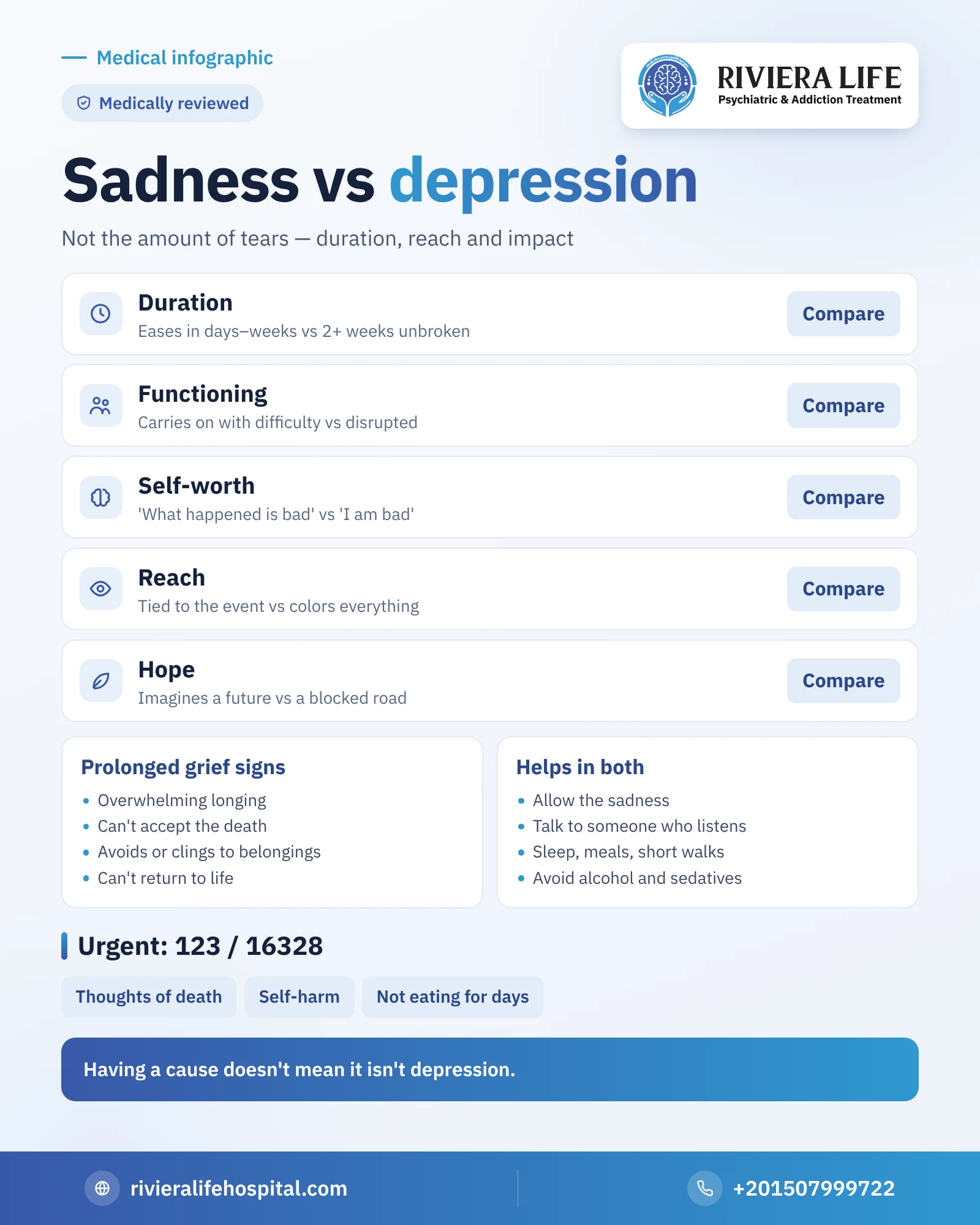
- Duration: sadness eases within days or weeks, while depression continues for two straight weeks or more without noticeable improvement.
- Daily functioning: the sad person carries on with their life with difficulty, while the depressed person’s work, study or self-care is disrupted.
- Self-esteem: the sad person sees what happened as bad, while the depressed person sees themselves as bad or a failure.
- Reach: sadness is linked to the situation, while depression colors everything, even what has nothing to do with the cause.
- Hope: the sad person imagines a future, while the depressed person sees the road blocked.
Comparison table of sadness and depression
| Point of comparison | Normal sadness | Depression |
|---|---|---|
| Cause | Usually linked to a clear event | May start with an event or without a visible cause |
| Shape of feelings | Waves that come with memories and then calm | Constant heaviness or emptiness most of the day |
| Pleasure | Moments of joy and laughter remain | Loss of pleasure in almost everything |
| Self-image | Usually preserved | A feeling of worthlessness and exaggerated guilt |
| Sleep and appetite | Affected temporarily | A clear disturbance that lasts weeks |
| Work and relationships | Difficulty while functioning continues | Noticeable disruption and withdrawal |
| Thinking about death | Longing for the deceased without a wish to self-harm | Thoughts of death or ending life may appear |
Grief for a loved one
Mourning is a special case. Someone who has lost a close person goes through strong waves of pain, triggered by a place, a smell or an occasion, and may hear the deceased’s voice or see them in a dream, and all this is normal in the first months. The first Eid or the anniversary of the death comes and the pain returns sharply, then calms. In our culture, the rituals of condolence, family gatherings and faith help many to bear the loss. There is no “date” by which grief should end, but the general direction is towards gradual easing.
When does grief become complicated or prolonged?
In a proportion of people grief doesn’t ease with time, but stays as sharp as in its first days. Modern medical classifications have recognized this condition under the name “prolonged grief disorder”, and it is considered when intense grief continues for a long time after the death, about a year in adults according to the American classification and shorter in children and teenagers, taking into account what is acceptable in the person’s culture. Among its signs:
- Overwhelming longing and constant preoccupation with the deceased that fills most of the day.
- Not believing or refusing the death after long months.
- Avoiding everything that reminds of the deceased, or on the contrary being unable to let go of any of their belongings.
- A feeling that part of oneself has died, or that life is meaningless.
- Being unable to return to work or relationships.
Mourning can also develop into a full depressive episode, and here the diagnosis isn’t rejected just because there is an understandable cause. And if the loss was traumatic and sudden, symptoms of post-traumatic stress disorder may also appear. Prolonged grief has a dedicated psychological treatment that differs from the usual treatment of depression.
When depression hides behind “ordinary sadness”
Many say “I’m just a bit upset” while they have been in a depressive episode for months, because they link it to a cause: work pressure, a marital problem, or ongoing psychological stress. Having a cause doesn’t mean what you are going through isn’t depression. The criterion is duration, severity and impact, not having an explanation. On the other hand, not every long sadness is depression; long grief over a big loss may be normal as long as it moves and eases, even slowly. And the reverse is also true: a person may seem smiling and successful while depressed inside.
What helps in both cases?
- Allow yourself to grieve, and don’t force yourself to seem fine quickly.
- Talk about what happened with someone who listens without judging or rushing you.
- Keep the basics of the day: sleep, meals and a short walk.
- Avoid alcohol and sedatives to escape the feeling, as they prolong sadness and may open the door to addiction.
- Postpone big decisions in the first weeks after a loss.
These steps are usually enough in normal sadness, but they don’t treat depression alone. The available treatment options are in the article on depression treatment, including non-medicine options for mild cases in the article on treating depression without medication.
How do you support someone close to you?
With a sad person, presence is usually enough: a visit, a ready meal, help with something practical, and readiness to hear the same story more than once. With a depressed person, though, presence alone isn’t enough, because they may not have the energy to ask for help or even accept it. Notice whether the dimming is increasing instead of easing, and clearly offer to accompany them to the doctor. And in both cases avoid phrases such as “what’s gone is gone”, “others have bigger problems” or “you have to be stronger than this”, as they make them feel alone in their pain. And don’t be afraid to ask them directly whether they are having thoughts of harming themselves.
When should you seek help?
Seek an assessment from a psychiatrist if the distress continues for more than two weeks without improvement, your daily life is disrupted, you have lost pleasure in everything, a feeling of worthlessness dominates you, or a long time has passed since the loss without the pain easing. Diagnosis comes only from a doctor or psychologist, and the visit doesn’t necessarily mean you are “ill”, but that you want to understand what is happening.
Seek urgent help immediately if you see
Call an ambulance on 123 or go to the nearest emergency department, and you can seek guidance from the mental health hotline 16328.
- Thoughts of death or a wish to join the deceased
- Thinking of self-harm
- Stopping eating and drinking for days
How does Riviera Life help you?
At Riviera Life in Sheikh Zayed, the consultant psychiatrists help you distinguish between normal sadness, depression and prolonged grief, and suggest what really suits you: simple follow-up, psychotherapy, or a more comprehensive plan, in complete confidentiality. The first consultation is free on +201507999722.
More from the depression guide
- Depression: the complete guide
- The symptoms of depression
- Types of depression
- Teen depression
- Cherophobia: the fear of happiness, its causes and how to get past it
- The feeling of failure: where it comes from and how to separate the event from your identity
- The PHQ-9 depression test
Questions many people ask
There is no fixed length, but normal sadness comes in waves and eases gradually. Low mood most of the day for two weeks or more with life disrupted calls for an assessment.
Yes, an understandable cause doesn't prevent the diagnosis if the symptoms of a depressive episode are complete. The doctor distinguishes normal mourning from depression.
A condition in which grief for the deceased remains intense and disabling for a long time after the death without easing, with overwhelming longing and difficulty accepting the loss. It has a dedicated psychological treatment.
Not necessarily; crying is a natural part of sadness. What matters is the duration, loss of pleasure, feeling worthless and the effect on daily life.
Normal sadness isn't usually treated with medicine; support and time are enough. But if it turns into depression, the doctor decides the right treatment.