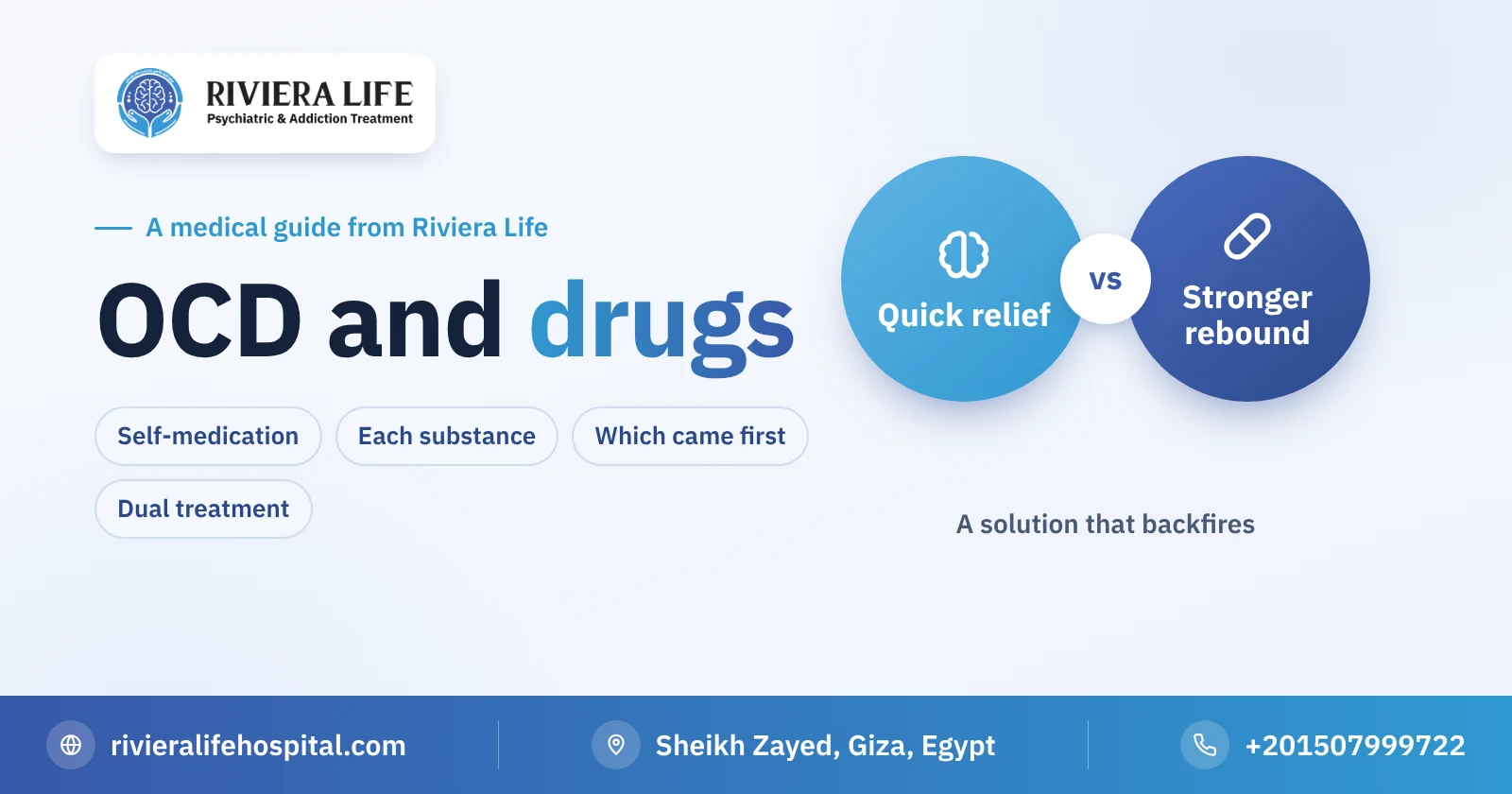
OCD and drugs meet along two roads: a person with thoughts and rituals they can’t bear turns to a substance that calms them, and a person using a substance finds their life turning into rituals and preoccupations resembling OCD. In both cases the substance seems like a quick solution and then becomes part of the problem, because the relief it gives is short and its price is stronger anxiety and a harsher rebound. This article covers the relationship between the two: why some people with OCD escalate to substance use, what each substance does to intrusive thoughts, and how the two disorders are treated together. Only the psychiatrist makes the diagnosis after a full assessment.
Why does a person with OCD turn to a substance?
Imagine a young man who spends three hours daily washing and checking, and no one at his work knows. He sleeps little, wakes exhausted and fears being found out. One night a friend gives him a pill or a hashish cigarette and says it “switches the brain off”, and he feels his first relief in months. This story is the one that recurs most: self-medication. The motive isn’t enjoyment, but escaping a thought that won’t stop, shame about the rituals, and long insomnia.
The risk increases when treatment is delayed. OCD is diagnosed on average years after it begins, and during these years the patient learns to put out anxiety by any available means, and in Egypt the available means are often pills, hashish or alcohol.
OCD and drugs: what does each substance do to intrusive thoughts?
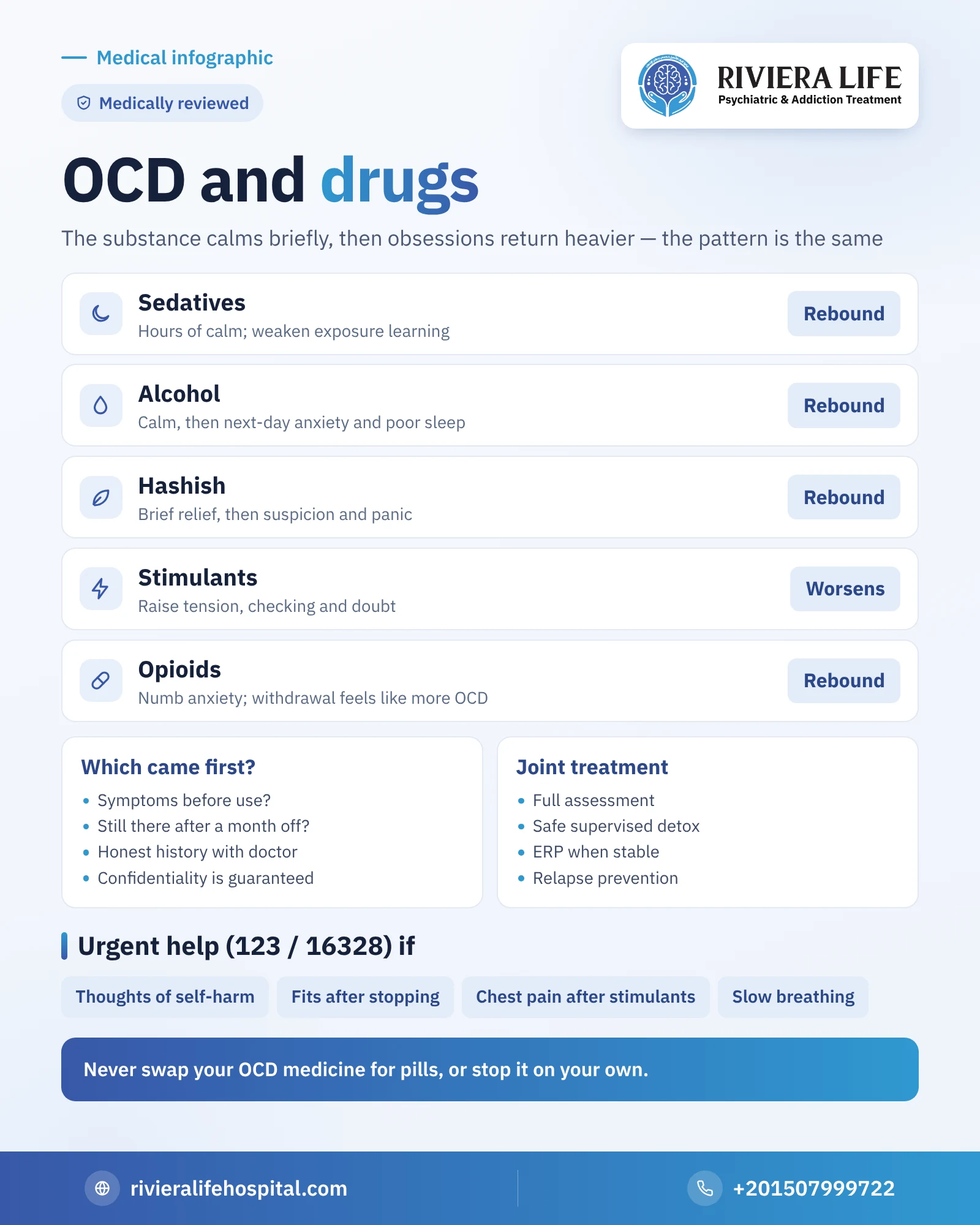
The picture differs by substance, but the pattern is the same: brief calm, then a stronger return.
- Sedatives and sleeping pills (benzodiazepines): ease anxiety for hours, but don’t treat OCD, and may weaken learning during psychotherapy, because exposure needs facing anxiety, not numbing it. With dependence, withdrawal itself becomes a new source of anxiety. See the harms of benzodiazepines.
- Alcohol: calms at first, then raises anxiety the next day and worsens sleep, and many drink to silence the thought only for it to return heavier. It also interacts with OCD medicines.
- Hashish and marijuana: some feel relief and then notice increased suspicion and tension, and fear of contamination or of causing harm may turn into full panic. The details are in the harms of marijuana.
- Stimulants such as Captagon and ice: raise tension and alertness and worsen suspicion and checking, and may cause repetition of acts with no understandable purpose; this isn’t OCD in the medical sense but a substance effect.
- Opioids and tramadol: numb the feeling of anxiety, but withdrawal from them is full of tension and insomnia, so the patient imagines their OCD has increased.
True OCD or substance-induced OCD?
This is a point doctors care about a lot. Some substances, during use or during withdrawal, produce repetitive thoughts and compulsive behavior, most of which disappear weeks after stopping. In others, OCD was present years before the substance. The doctor distinguishes them with a simple question: did the symptoms begin before the substance use or after it? And do they continue with abstinence for a month or more? The answer determines the treatment plan, so the history given to the doctor must be frank, as medical confidentiality is guaranteed.
The compulsive ritual and compulsive use: a deceptive similarity
Both repeat despite the wish to stop, and both relieve tension. But the difference matters. In OCD the patient feels no pleasure, performs the ritual to ward off a specific fear, and their mind rejects it. In an addictive disorder, use begins seeking pleasure or relief, then intense craving and dependence lead it even when there is no enjoyment. They may exist together in the same person, each feeding the other: obsessions pushing to the substance, and a substance worsening the obsessions. In the dual diagnosis program they are treated in one plan.
The relationship with anxiety and depression
OCD rarely stands alone in this story. Anxiety, panic attacks and depression often accompany it, and each of them is a known cause of substance use in itself. That is why the whole patient is looked at, not a single symptom. You can review OCD and depression and depression and addiction to understand the wider cycle.
What increases the risk of the two combining?
- Diagnosis and treatment of OCD delayed for years.
- Shame about rituals and isolation that push towards self-numbing.
- Chronic insomnia that makes sleeping pills the first thing to come to mind.
- Substance use in the family or among friends.
- Untreated accompanying depression or panic.
- Getting psychiatric medicines without a prescription or follow-up.
How are the two disorders treated together?
A good plan deals with both at the same time, and usually goes like this. First, a comprehensive assessment that identifies the substances used, for how long, and which came first. Then safe detox under medical supervision if there is dependence, because withdrawal from sedatives and alcohol may be dangerous and isn’t tried at home. After that, psychotherapy with exposure and response prevention begins gradually once the patient is stable, with medication chosen by the doctor if needed, and most common OCD medicines don’t cause addiction. Finally, a relapse-prevention program and long follow-up. You will find details of psychological and medication treatment for OCD in OCD treatment.
A common mistake is for the patient to stop their OCD medicine themselves because they are “an addict”, or to replace it with pills. Changing or stopping any psychiatric medicine is done with the treating doctor only.
Are OCD medicines themselves a danger?
Many patients ask this question for fear of swapping one addiction for another. The main medicines in OCD treatment are selective serotonin reuptake inhibitors, and they differ from sedatives in that they give no high, aren’t craved, and don’t need escalating doses to work. But they take weeks before their benefit appears, have side effects the doctor discusses, and stopping them suddenly may cause unpleasant symptoms. As for sedatives, if prescribed for a patient with a history of substance use, it is for a short period with clear limits, by the doctor’s decision alone.
Preventing relapse after recovery
The chances of returning fall when the patient learns the following: to notice early the nights when insomnia and the pressing thought return, to know an alternative plan for anxiety other than the substance, to continue following psychotherapy even after symptoms improve, to keep regular sleep and movement, and to stay away from places of use and its friends. A single stumble doesn’t mean the plan has collapsed; it means returning to the doctor early instead of keeping silent.
Seek urgent help immediately if you see
Call an ambulance on 123 or go to the nearest emergency department, and you can contact the mental health hotline on 16328, in case of:
- Thoughts of self-harm or ending life
- Severe tremor, seizures, confusion or hallucinations after suddenly stopping alcohol or sedatives
- Chest pain, high temperature or severe agitation after using stimulants
- Severe drowsiness, or slow or weak breathing after combining sedatives or opioids
What does the family do?
Don’t start with accusation. Ask calmly what your son or wife is trying to calm, as you will often find behind the substance a suffering they haven’t disclosed. Don’t take part in rituals or punish them, and don’t cancel a medicine a doctor prescribed without asking them. Make sure the case isn’t left to attempts at stopping suddenly. Seek an assessment covering both sides, and cooperate with the therapist on the family plan.
How can Riviera Life help you?
At Riviera Life in Sheikh Zayed, Giza, a hospital licensed by the Ministry of Health with fourteen years of experience, consultants in psychiatry and addiction assess the psychiatric disorder and substance use together, and detox takes place under round-the-clock medical supervision and in complete confidentiality, with a family program and follow-up after discharge. The first consultation is free on +201507999722.
More from our OCD guide
- OCD: the complete guide
- OCD and panic attacks: the relationship, the difference and treatment
- The psychological, physical and social harms of OCD
- The dual diagnosis program for treating addiction and a psychiatric disorder together
Questions many people ask
No, they ease anxiety for only a few hours and don't treat the mechanism of OCD. With continued use they may weaken psychotherapy and add the problem of dependence.
In many it increases tension and suspicion and may trigger panic, even if some feel temporary relief. The effect differs from person to person and the risk is great.
Ask yourself whether the symptoms began before the substance, and whether they continue after a month of abstinence. The doctor determines this after a full assessment.
The common selective serotonin reuptake inhibitors don't cause addiction in the familiar sense. Don't stop them suddenly; stopping is done under the doctor's supervision.
Yes, and this is usually best. The plan starts with safe detox, then psychological and medication treatment and relapse prevention within one program.