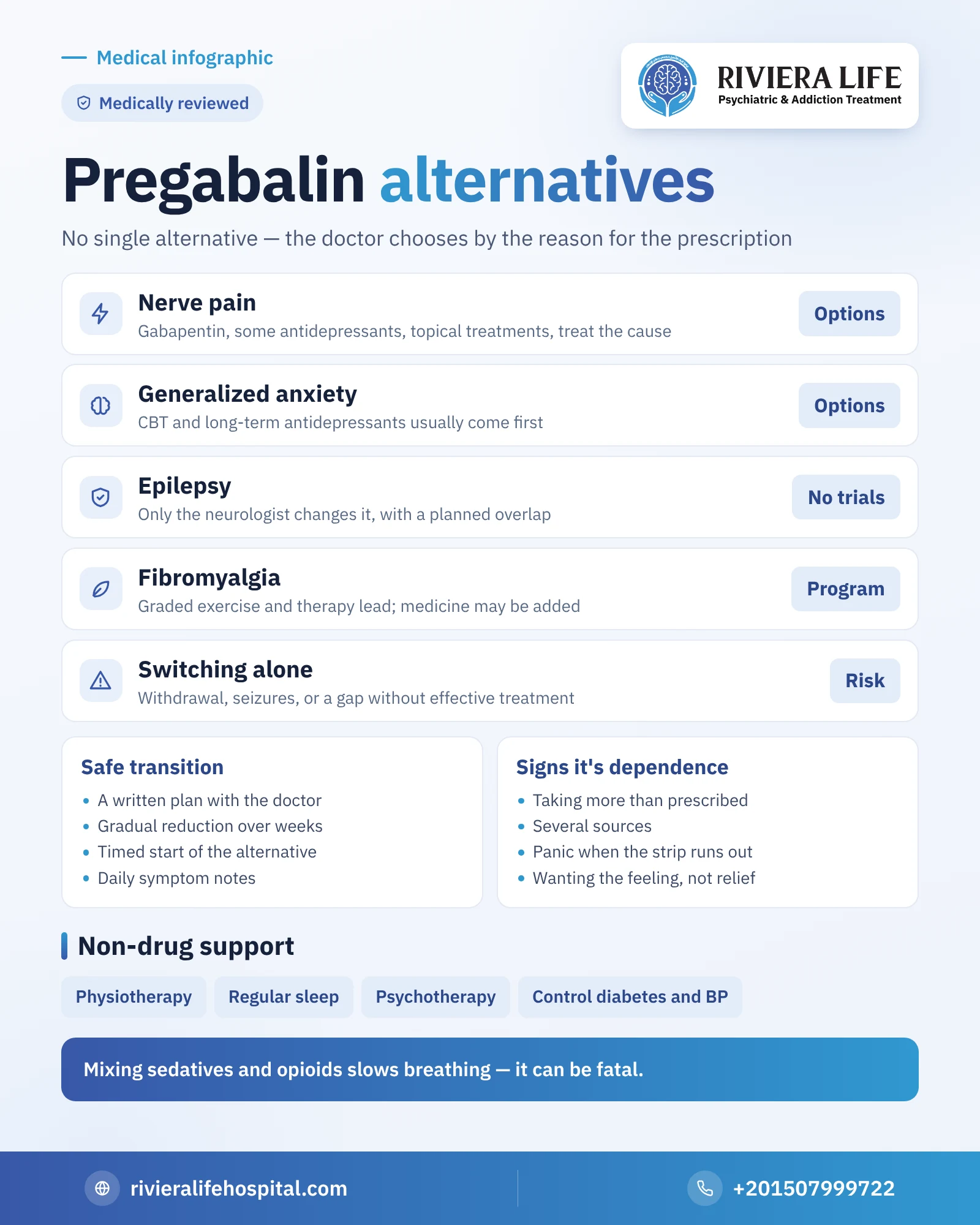
There is no single “pregabalin alternative” that suits everyone, because the doctor chooses the alternative according to the reason the medicine was prescribed: nerve pain has options, anxiety has other options, epilepsy is governed by the neurologist alone, and fibromyalgia relies on movement and psychotherapy as much as on medication.
This article sets out these options in general terms without any doses, for you to discuss with your doctor. And the rule with no exceptions: don’t stop pregabalin or replace it with another medicine without the doctor who follows you. And if your question about an alternative is because you can no longer stop, you need treatment for dependence, not a new medicine.
Why do people look for an alternative to pregabalin?
The reasons vary, and each reason leads down a different path:
- Troublesome side effects such as dizziness, drowsiness, weight gain and swollen feet.
- Difficulty getting it after tighter controls on dispensing it in Egypt.
- Pregnancy or planning a pregnancy, or kidney disease that requires reviewing the medicine.
- Pain or anxiety not improving despite sticking to treatment.
- Fear of addiction after reading or hearing stories about it.
- Needing the medicine in increasing amounts, a sign that deserves a special pause.
The first rule: the alternative is determined by the reason for the prescription
Pregabalin is one medicine used for more than one condition, but its alternatives aren’t the same. A medicine that works as an alternative in nerve pain may not be suitable for epilepsy, and what helps with anxiety may not ease pain. So the first question the doctor asks isn’t “what is the strongest alternative?” but “why are you taking pregabalin in the first place? And what didn’t work with it?”. Then they take into account your age, kidney and liver function, the other medicines you take, and your history with sedatives and narcotic substances.
Nerve pain: what might the doctor discuss?
Nerve pain caused by diabetes, a slipped disc or shingles doesn’t respond well to ordinary painkillers, so special classes of medicine are used for it. Among the general options the doctor may raise:
- Gabapentin: from the same family as pregabalin, and carrying many of its properties and risks. The differences between them are explained in our article on pregabalin and gabapentin.
- Some antidepressants: such as amitriptyline from the tricyclic class, or duloxetine, used here for their effect on pain pathways, not only on mood.
- Topical treatments: such as capsaicin or local anesthetic creams or patches, when the pain is in a specific area.
- Treating the cause: controlling sugar, treating pressure on the nerve, or physiotherapy, which is sometimes more important than any medicine.
In limited cases the doctor may turn to a stronger painkiller for a short period, but this is a decision that needs careful assessment of the risk of dependence. Our article on the strongest painkiller alternative to tramadol sets out the logic of choosing a painkiller by type of pain.
Generalized anxiety disorder
In some countries pregabalin is approved for generalized anxiety disorder, but it usually isn’t the first choice. Doctors usually start with psychotherapy, especially cognitive behavioral therapy, and with classes of antidepressants used for anxiety in the long term. There may be other medication options decided by the psychiatrist according to the case. Sedatives from the benzodiazepine family, however, are used cautiously and for short periods because they carry a clear risk of dependence, and replacing pregabalin with them may mean swapping one problem for another. To learn when pregabalin is used for anxiety, see our article on pregabalin and anxiety, and for the full treatment options, our article on anxiety treatment.
Epilepsy: the condition that doesn’t allow experimenting
When pregabalin is part of epilepsy treatment, any change to it is the neurologist’s decision alone. There are many antiepileptic medicines, and the doctor chooses between them according to the type of seizures, age, other medicines and the possibility of pregnancy. The move from one medicine to another is usually done with a planned overlap, so the patient isn’t left without protection. Stopping suddenly may trigger repeated or prolonged seizures, a real danger not worth the gamble.
Fibromyalgia
Also known as fibromyalgia syndrome, it is marked by widespread pain, fatigue and disturbed sleep. Modern medical guidelines put graded exercise and psychotherapy at the front of the plan, such as cognitive behavioral therapy and acceptance and commitment therapy. The doctor may add some antidepressants such as amitriptyline or duloxetine to ease pain and improve sleep. In other words, the alternative here may be an integrated program more than a pill.
What all alternatives share: non-drug methods
Whatever the reason for the prescription, there are methods that reduce the need for medication and support any alternative treatment:
- Physiotherapy and regular exercise suited to the condition.
- Organizing sleep, because lack of sleep magnifies both pain and anxiety.
- Psychotherapy to learn how to deal with chronic pain and tension.
- Controlling chronic diseases such as diabetes and high blood pressure.
- Reducing caffeine, smoking and alcohol.
Why shouldn’t you switch the medicine alone?
Moving from pregabalin to something else isn’t just stopping one pill and starting another. A body used to pregabalin may show withdrawal symptoms on stopping quickly: insomnia, anxiety, sweating, nausea and headache, and the risk of seizures may rise. Some alternatives interact with other medicines, need tests before starting, or take weeks for their effect to appear. And if you stop pregabalin and start the alternative on the same day, you may go through a period without effective treatment and with withdrawal symptoms at the same time, and think the alternative has failed. The details of these symptoms are in our article on pregabalin withdrawal symptoms.
How is a safe transition usually done?
The doctor sets a written plan that usually includes: gradual reduction of pregabalin over weeks, starting the alternative at a calculated time that may overlap with the reduction, and follow-up appointments to assess pain or anxiety and side effects. The doctor sets the speed of reduction according to how long and how much the medicine has been used and the patient’s condition. It helps to note your symptoms daily during this period so you can present the full picture at follow-up.
The doctor may sometimes decide that the most suitable alternative is nothing at all: that the pain or anxiety has improved enough to stop gradually without a new medicine, relying on physiotherapy or psychotherapy. In other cases they may simply adjust the timing or amount to reduce side effects instead of switching. In other words, the question of an alternative may end with an answer you didn’t expect, and this is a natural part of the plan.
When looking for an alternative is a sign of dependence
This is the most important point in the article. Some of those who ask about a pregabalin alternative aren’t suffering from pain or anxiety, but are looking for something that gives them the same feeling after the capsule has become hard to obtain. So they turn to gabapentin, tramadol, sedatives or unknown pills from outside the pharmacy. This isn’t a therapeutic alternative, but a move from one substance to another, often at greater risk, because many of these substances slow breathing, and combining them can be fatal.
Among the signs that say the problem is dependence and not a need for an alternative: taking larger amounts than prescribed, getting the medicine from more than one source, intense anxiety when the strip runs out, and continuing despite problems at work or at home. In this case the right treatment is safe gradual withdrawal with psychotherapy, which is explained in our article on pregabalin addiction treatment.
Questions to ask your doctor before any change
- What is the aim of the alternative: less pain, fewer side effects, or greater safety in pregnancy?
- Does the alternative carry a risk of dependence? And how will we monitor it?
- How will I reduce pregabalin? And what do I do if withdrawal symptoms appear?
- When should I expect the new medicine’s effect to appear?
- Does it conflict with my other medicines or with my kidney or liver condition?
How can Riviera Life help you?
If the matter has gone beyond choosing a medicine to real difficulty stopping, the consultants in psychiatry and addiction treatment at Riviera Life set a gradual withdrawal plan under round-the-clock medical supervision, and deal with the original pain or anxiety at the same time, in complete confidentiality. The first consultation is free on +201507999722.
More from our pregabalin guide
- Pregabalin: the complete guide
- Pregabalin and gabapentin: the difference and which suits
- Pregabalin addiction treatment
- Pregabalin and sex
- The difference between Lyrolin and pregabalin: one brand name, one active substance
Questions many people ask
There is no single alternative that is best for everyone; the doctor chooses it according to the reason for the prescription, age, kidney function, other medicines and the patient's history with sedatives.
It is from the same family and is sometimes used in its place, but it carries similar risks, including misuse, and switching between them without a doctor isn't right.
This isn't recommended. The transition usually needs gradual reduction and careful timing for starting the alternative, otherwise withdrawal symptoms or seizures in epilepsy patients may appear.
In some cases yes, such as physiotherapy, graded exercise and cognitive behavioral therapy, especially in chronic pain, fibromyalgia and anxiety, and they are usually used alongside medication.
When the aim is to get the same feeling rather than treat a medical condition, or with increasing amounts and anxiety when the medicine runs out. Then treatment for dependence is needed, not a new medicine.