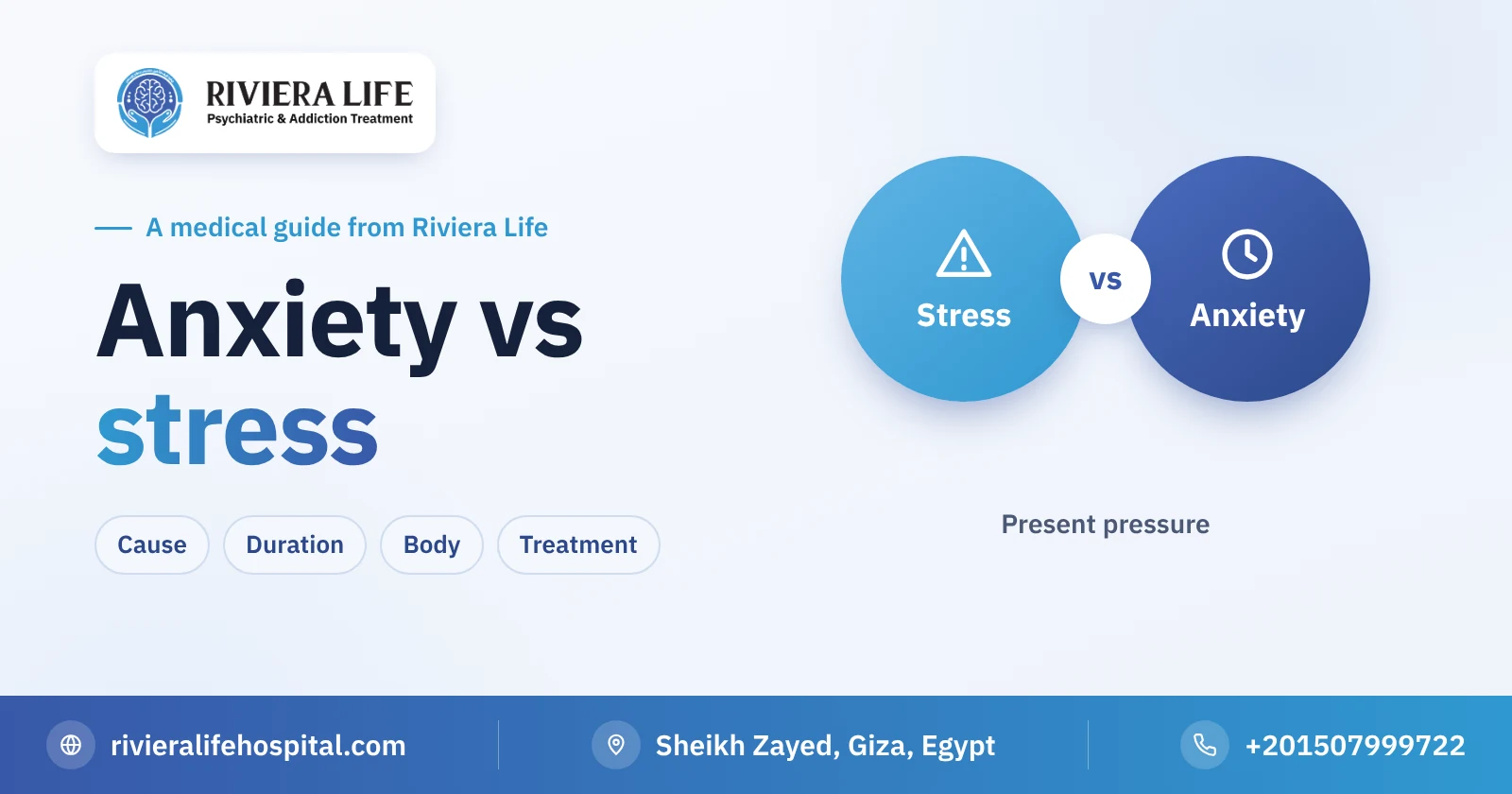
The difference between anxiety and stress is that stress is a response to a present and known pressure, which usually fades when its cause ends, while anxiety is fear or apprehension that continues even after the situation ends, or even without a clear situation at all. The two share palpitations, muscle tension and difficulty sleeping, which is why people confuse them. Understanding the difference isn’t a luxury; stress is usually solved by easing the pressure, while pathological anxiety needs structured psychological treatment. Here we compare the two states, explain when stress turns into anxiety, and what to do in each case.
Anxiety vs stress: a simple definition of each
Stress is the body’s and mind’s reaction to an external demand or pressure: an exam, a deadline, a disagreement or debts. It has a cause you can point your finger at, and usually a beginning and an end.
Anxiety is fear of something that might happen, or sometimes of nothing specific. It can stay burning after the pressure has gone, and feeds on “what if”. When it exceeds a reasonable severity and duration and disrupts life it is called an anxiety disorder, and you can learn its types in the article on types of anxiety.
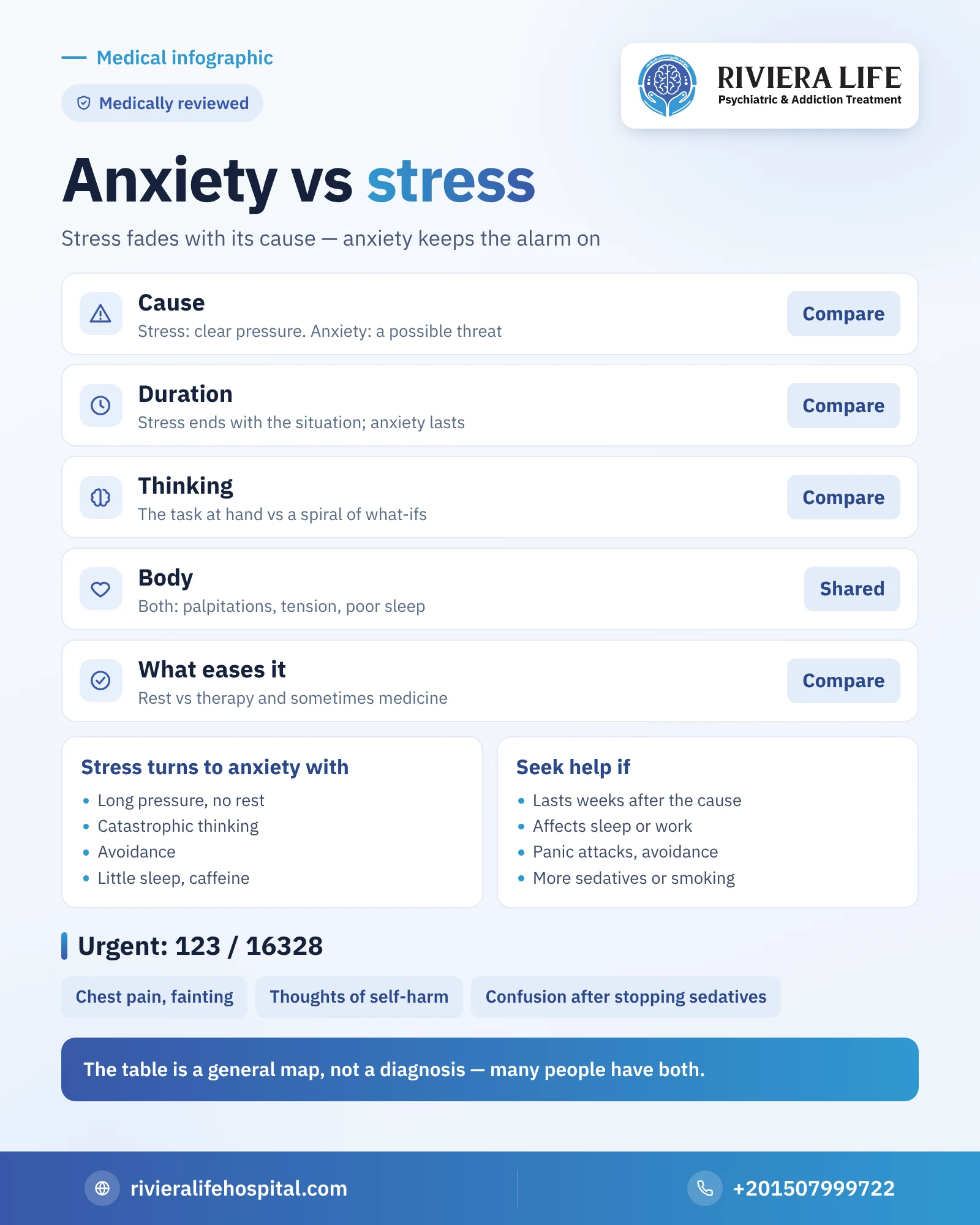
Comparison table
| Point of comparison | Stress | Anxiety |
|---|---|---|
| Cause | Clear external pressure | Thinking about a possible threat, and there may be no clear cause |
| Duration | Usually fades when the situation ends | Continues for weeks and months even though the situation has ended |
| Main feeling | Pressure, exhaustion and irritability | Fear, apprehension and a sense of coming danger |
| Thinking | Busy with the current task | A spiral of “what if” and expecting the worst |
| The body | Headache, muscle tension and tiredness | Palpitations, chest tightness, trembling, sweating and sometimes panic attacks |
| What eases it | Rest, organization and solving the problem | The pressure ending is often not enough; psychological training and perhaps medicine are needed |
| Effect on life | Usually temporary | May prevent work, travel and relationships |
This table is a general map, not a diagnosis. Many people have both together, and only a doctor or psychologist can make the diagnosis.
What happens in the body? The confusing similarity
In both cases the brain activates the “fight or flight” response, and the body releases adrenaline and cortisol. The heart speeds up, the muscles tense, digestion changes and sleep quality suffers. The essential difference is what comes after: once stress ends the body returns to calm, while in anxiety the alarm keeps running even when there is no danger. For a detailed read on the hormones of this response, see adrenaline and anxiety and noradrenaline and stress.
How does stress turn into anxiety?
Not all stress turns into anxiety, but some circumstances open the door:
- Long pressure without rest: such as exhausting work, caring for a sick person or a prolonged financial crisis.
- Catastrophic thinking: when you turn “I have a hard task” into “I’ll fail and lose everything”.
- Avoidance: escaping the situation brings instant relief but convinces the brain that it really is dangerous.
- Lack of sleep and caffeine: both make the alarm easier to set off.
- Genetic predisposition and temperament: explained in detail in the causes of anxiety.
If you notice the pressure has ended and you are still tense weeks later, or that fear appears for no reason, this is a sign that it has gone beyond stress.
How do you deal with stress?
Because stress is linked to a cause, the focus here is on the cause and the body:
- Identify the source of pressure, order tasks by importance and delegate what can be delegated.
- Make sure to take short breaks during work and get enough sleep.
- Do regular physical activity, as it uses up stress hormones.
- Talk to someone you trust instead of keeping it in.
- Learn to say “no” when demands exceed your energy.
For more on the symptoms and handling pressure, see the article on psychological stress, and for the hormonal side, how to lower cortisol.
How do you deal with anxiety?
Rest alone isn’t enough for persistent anxiety, which is why treatment relies on:
- Cognitive behavioral therapy: examining frightening thoughts and gradually facing avoided situations.
- Training the body to calm down: slow breathing and muscle relaxation regularly, not only in a crisis.
- Reducing avoidance: every time you face the situation, the brain learns it is less dangerous.
- Medicine when needed: the doctor may prescribe suitable medicines when symptoms are severe or psychotherapy isn’t enough, and no medicine is started or stopped without the doctor.
The full details are in the article on anxiety treatment.
Quick questions to help you tell them apart
Ask yourself calmly, and remember that the answers don’t diagnose but bring the picture closer:
- If what is pressuring me ended tomorrow, would I really rest, or would anxiety about something else appear?
- Can I name the source of stress in one sentence, or is the fear floating without a name?
- Do I avoid places or tasks because they set off fear even if there is no real danger in them?
- Do I spend my time on “what if” instead of “what will I do”?
- Do the people around me say I’m exaggerating, while I know I can’t stop?
The closer your answers are to floating fear, avoidance and symptoms continuing after the cause has gone, the more likely it is anxiety that deserves assessment. And if physical symptoms dominate, reading about psychosomatic disorders may help you.
A common situation: an employee preparing for an important presentation is stressed for a week, then improves after it succeeds. Another’s presentation ends successfully, but the next day he starts worrying about the annual review, his reputation, his health and his children’s future. The first is stress linked to an event, and the second is an anxiety pattern that moves from subject to subject.
Common mistakes when confusing the two
- Settling for a holiday for chronic anxiety: rest eases it for a week, then the symptoms return.
- Calling normal stress an illness: stress before an important occasion is normal and doesn’t need treatment.
- Turning to sedatives: because they soothe the symptoms, not the causes, and may cause dependence.
- Believing physical symptoms always mean an organic illness: the opposite can happen too. If symptoms are new or come with chest pain, get a medical examination first.
- Staying silent because everyone is stressed: when what the person is living through may be anxiety that deserves treatment.
Can they occur together?
Yes, and it often happens. A period of financial or study pressure begins and stress symptoms appear, then the mind shifts into a constant state of apprehension about everything that might go wrong. And someone with chronic anxiety may live moments of intense stress with any added pressure. So don’t try to put yourself sharply in one box; what matters is to ask: is what I’m going through temporary and understandable, or has it become a pattern that lives with me and is growing? Your answer decides whether arranging your life is enough or you need specialist help. And there is no shame in early consultation; it is cheaper and easier than waiting until symptoms pile up.
When should you seek help?
- The feeling has continued for more than a few weeks after the cause has gone.
- It has affected sleep, work or relationships.
- Panic attacks or increasing avoidance of ordinary situations have appeared.
- Use of alcohol, sedatives or smoking to calm down has increased.
- It is accompanied by deep sadness or hopelessness.
Seek urgent help immediately if you have
Call an ambulance on 123 or go to the nearest emergency department, and you can contact the mental health hotline 16328 for:
- Chest pain, severe shortness of breath or fainting
- Thoughts of harming yourself or ending your life
- Confusion, hallucinations or seizures after stopping alcohol or sedatives
How does Riviera Life help you?
The consultant psychiatrists at Riviera Life in Sheikh Zayed distinguish passing stress from an anxiety disorder, and set a suitable treatment plan in complete confidentiality. The first consultation is free on +201507999722.
More from the anxiety guide
- Anxiety: the complete guide
- Anxiety symptoms: psychological and physical signs
- Psychosomatic disorders: when the body speaks the language of anxiety
- Anxiety vs obsessive-compulsive disorder
- The psychological stress test: instant result
Questions many people ask
Stress is a reaction to a present, clear pressure that usually fades when it ends, while anxiety is fear or apprehension that continues after the situation ends or without a clear cause.
It can if pressure lasts long without rest, or catastrophic thinking, avoidance and lack of sleep take over. If symptoms continue for weeks after the cause has gone, seek an assessment.
Both cause palpitations, muscle tension and difficulty sleeping; the difference is in persistence and cause. If symptoms are new or come with chest pain, check the heart first.
It usually eases stress, but chronic anxiety often returns afterwards because it doesn't depend on pressure alone. Cognitive behavioral therapy helps, and the doctor may add medicine when needed.
Look for consultants who distinguish passing stress from an anxiety disorder, a structured psychotherapy plan, medicine only when needed, and full confidentiality. Riviera Life in Sheikh Zayed meets these criteria, with a free first consultation.