Drug withdrawal pain, especially from opioids and tramadol, is real, not acting: aching in the bones and joints, cramps in the muscles and abdomen, and tingling and restlessness in the legs that prevent sleep. It can be treated safely under medical supervision, with medicines the doctor chooses according to the case, alongside non-drug measures that ease the feeling of pain. Trying to dull the pain with tramadol, pregabalin or any painkiller from the pharmacy, however, is one of the most common reasons withdrawal fails and use resumes. This article explains why withdrawal hurts, how doctors deal with the pain, and what can be done safely.
Why do the days of withdrawal hurt?
Opioids are originally powerful painkillers. When a person uses them for a long time, their nervous system adapts, reducing production of the natural painkillers the brain makes, such as endorphins, and raising the sensitivity of pain pathways to balance the substance’s effect. If the substance stops suddenly, the raised sensitivity remains without cover. That is why the patient feels everything hurts more than usual, and an old back or tooth pain the drug was hiding may flare up.
Added to this is excess activity in the part of the nervous system that puts the body on alert in times of danger, so sweating, chills, a racing pulse and muscle tension appear, all of which increase the feeling of pain.
Where does the pain appear and what causes it?
| Site of pain | How the patient describes it | Main cause |
|---|---|---|
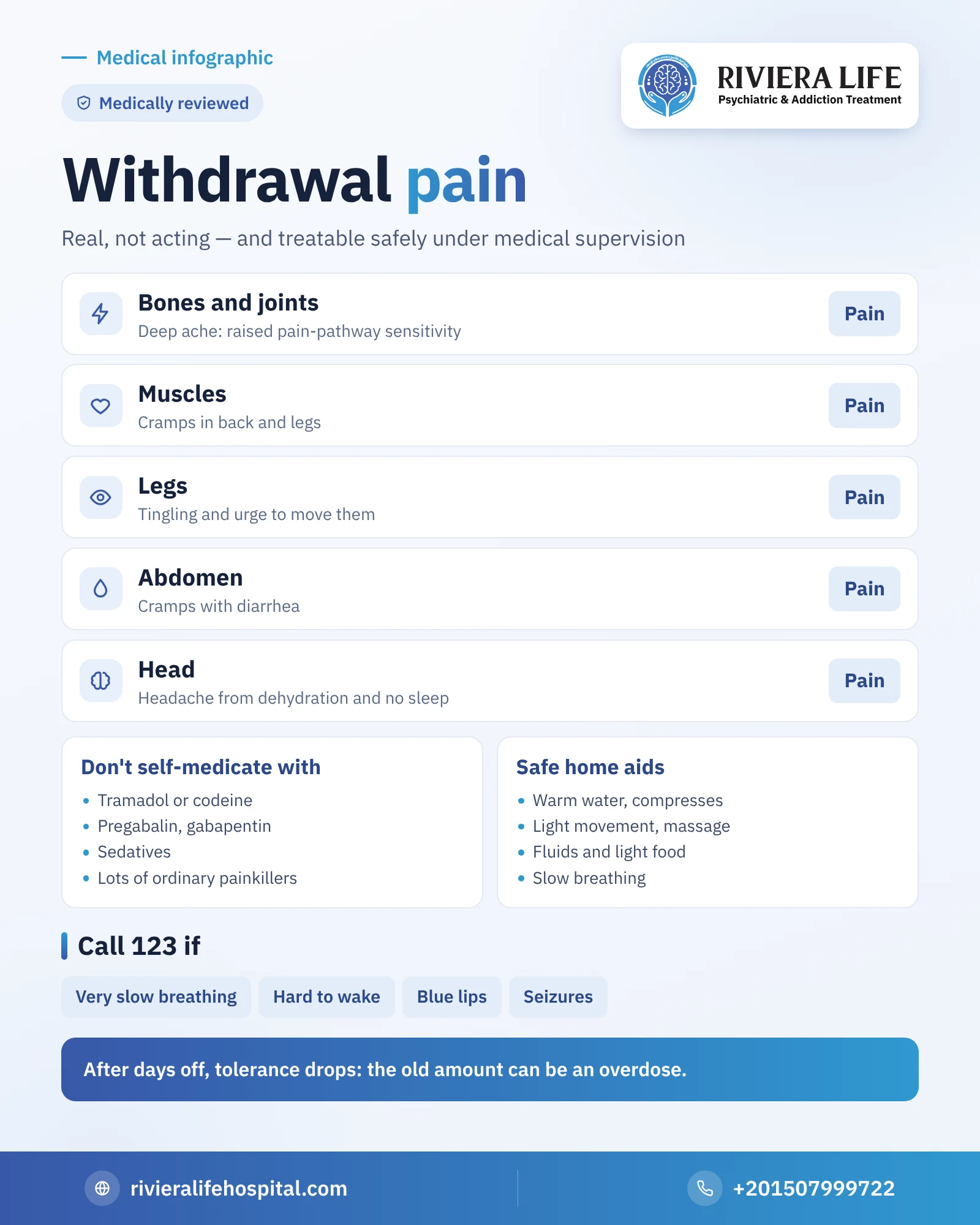
| Bones and joints | A deep ache “in the bone” | Raised sensitivity of pain pathways |
| Muscles | Tension and cramps, especially in the back and legs | Excess nervous activity and lack of sleep |
| Legs | Tingling and a restless urge to move them | A well-known sign of opioid withdrawal |
| Abdomen | Cramps with diarrhea | Bowel movement returning after being suppressed |
| Head | Headache | Dehydration, lack of sleep and tension |
Roughly how long does the pain last?
The pain is usually strongest in the first days then eases gradually, and this varies by substance. With heroin and morphine it starts early and peaks within a few days; with tramadol the pain may mix with anxiety and tingling symptoms specific to it; and with methadone it is delayed and lasts longer. The timelines for each substance are in opioid withdrawal symptoms and tramadol withdrawal symptoms; here we focus on the pain itself and how to ease it.
How does the doctor treat withdrawal pain?
There is no single “pain medicine”. The doctor looks at the substance, the duration of use, the state of the liver, kidneys and stomach and any other medicines, then chooses from several directions:
- Treating the cause itself: in some cases of opioid addiction the doctor starts one of the approved addiction treatment medicines, such as buprenorphine or methadone, then reduces it gradually or continues it within a program. This prevents the pain at its root instead of chasing it.
- Calming the nervous alert: medicines that reduce sweating, chills and physical tension, such as clonidine, with monitoring of blood pressure and pulse.
- Non-opioid painkillers: chosen by the doctor according to the state of the stomach and liver, with the doctor setting their duration.
- Treating accompanying symptoms: medicines for cramps, diarrhea and nausea, and treatment for insomnia that carries no risk of dependence.
- Fluids and salts: because dehydration multiplies headache and muscle cramps.
The plan varies a lot from one patient to another, which is why we don’t give doses or names for self-use. What suits a young man with a healthy liver may harm a patient with an ulcer or hepatitis.
Why shouldn’t you dull the pain yourself?
At home, the easiest solution that occurs to the patient or family is a strong painkiller from the pharmacy or “a pill to calm him”. This is where the problems begin:
- Tramadol and codeine: both are opioids, so taking them to ease withdrawal restores dependence instead of ending it. And tramadol in large amounts may cause seizures.
- Pregabalin and gabapentin: many in Egypt turn to them to ease withdrawal aches, but they carry a risk of new dependence, and may depress breathing with remaining opioids or sedatives.
- Sedatives: combining them with any opioid is one of the most dangerous mixtures for breathing.
- Ordinary painkillers in excess: too much paracetamol may harm the liver, and anti-inflammatories may harm the stomach, especially with vomiting and eating little.
For those looking for an alternative to tramadol for real ongoing pain, the article on tramadol alternatives by type of pain explains the logic of choosing with the doctor.
The risk of overdose after days of withdrawal
After a few days of stopping, the body’s tolerance drops quickly. So if the pain intensifies and the patient goes back to their old amount “just once to get relief”, this amount may be more than they can now tolerate.
Call an ambulance on 123 immediately if you see
After taking an opioid, painkiller or sedative during or after withdrawal:
- Very slow or irregular breathing, or unusual snoring
- Difficulty waking the patient or loss of consciousness
- Lips or limbs turning bluish
- Very small pupils with severe drowsiness
- Seizures
Non-drug measures that ease the pain
- Warm water: a warm bath or shower relaxes the muscles and eases chills.
- Warm compresses: on the lower back, legs and abdomen.
- Light movement: a short walk inside the house or simple stretches, as lying down for long increases stiffness.
- Gentle massage: for the legs and shoulders, especially before sleep.
- Fluids and light food: to reduce headache and cramps.
- Slow breathing: a calm breath in and a longer breath out for a few minutes eases the tension that comes with stress.
- Occupying attention: talking with a supportive person or a light series, because focusing the mind on pain magnifies it.
Anxiety doubles the feeling of pain
Fear of pain increases it. A patient who expects the coming night to be “hell” tenses their muscles and watches every twinge, so they feel it more. Knowing the pain is temporary and has an end, and that there is a team who will step in if it intensifies, eases a real part of it. That is why psychotherapy starts early, even with short sessions that teach the patient how to deal with the pain without panic.
The family has an important role here. The calm sentence “We know it hurts, it will ease within days, and the doctor is with us” helps more than excessive pity that pushes towards looking for a painkiller, and more than dismissiveness that tells them they are exaggerating. And lack of sleep clearly increases pain, so preparing a quiet, dark room and reducing stimulants in the evening helps.
Those who started using because of chronic pain
Some patients started tramadol or an opioid painkiller to treat back, joint or nerve pain, then the treatment turned into addiction. Their original pain returns after withdrawal, and they may think there is no solution except going back to the substance. The truth is they need two plans together: addiction treatment, and a plan to treat chronic pain in ways that don’t restore dependence, with a pain, orthopedic or neurology doctor taking part. This plan may include physiotherapy, exercise and non-opioid medicines the doctor chooses, and sometimes psychotherapy for the chronic pain itself, because long-lasting pain and depression feed each other.
Beware promises of “painless withdrawal in a day”
Adverts are spreading that promise to finish withdrawal in hours under anesthesia, or with a single injection, without any pain. Safe withdrawal reduces pain a lot, but it doesn’t remove the brain’s need for time to adapt, and doesn’t replace treating the addiction itself. Any promise of withdrawal with no pain at all, guaranteed in a day, deserves a question before paying: what happens after the patient wakes up?
And if symptoms such as insomnia, tension and mood swings continue after the physical pain ends, this is a different stage, which we explained in post-acute withdrawal symptoms.
How can Riviera Life help you?
Detox at Riviera Life is managed under round-the-clock medical supervision, and our consultants in psychiatry and addiction treatment set each patient a plan to ease pain and symptoms according to the substance and their health, with monitoring of breathing, blood pressure and pulse. Treatment doesn’t stop when the pain ends, but continues into rehabilitation, the family program and aftercare. The hospital is licensed by the Ministry of Health, has fourteen years of experience, and confidentiality is complete. The first consultation is free on +201507999722 at any time, and the hospital is in Sheikh Zayed, Giza.
More from the opioids guide
- The complete opioids guide
- Opioid withdrawal symptoms
- Tramadol withdrawal symptoms
- Opioid addiction treatment
Questions many people ask
Because during use the body reduced its natural painkillers and raised the sensitivity of pain pathways. On stopping, the sensitivity stays high for a while, so the patient feels more pain until the nervous system regains its balance.
No, tramadol is an opioid, and taking it to ease withdrawal restores dependence instead of ending it. The doctor chooses a suitable treatment that doesn't prolong the addiction.
Some use it on their own for this, but it carries a risk of new dependence, and may depress breathing with opioids or sedatives. It is used only if the doctor decides on it within a clear plan.
It is usually strongest in the first days then eases gradually, and its duration varies by substance and length of use. Mild aches and disturbed sleep may last longer in some cases.
Warm water, compresses, light movement, massage, drinking fluids and calm breathing ease part of the pain. But withdrawal itself is best done under medical supervision.