Post-acute withdrawal symptoms are waves of insomnia, tension, mood swings, poor concentration and craving to use. They appear after acute withdrawal ends, and may last weeks or months. Doctors call them post-acute withdrawal syndrome or protracted withdrawal, and many people in recovery go through them without knowing their name, so they think treatment has failed. This article explains why they happen, what they look like, roughly how long they last, and how the patient and their family can deal with them so they don’t turn into a relapse.
What are post-acute withdrawal symptoms?
After stopping a substance, the body goes through two stages. The first is acute withdrawal, which lasts from days to about two weeks for most substances, dominated by clear physical symptoms such as sweating, vomiting and bone pain. The second begins after the body calms down, and its symptoms are mostly psychological and neurological. A brain that has long been used to a substance that changes its chemistry needs much longer to regain its balance, especially in the dopamine, stress and sleep systems.
This stage doesn’t affect every person in recovery to the same degree. It is clearer after long use and large amounts, and after substances such as alcohol, opioids, sedatives, stimulants and hash.
The best-known post-acute withdrawal symptoms
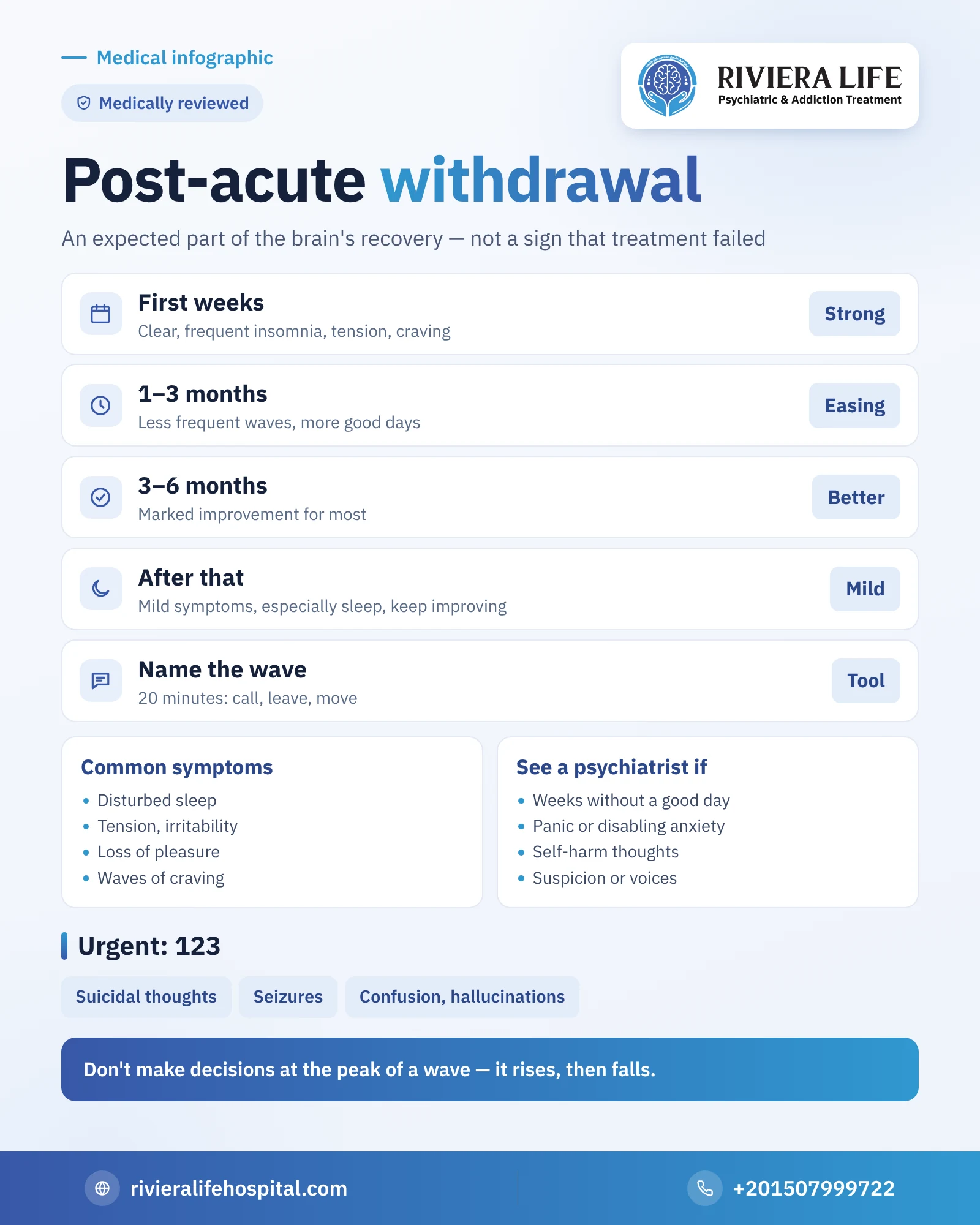
- Disturbed sleep: difficulty falling asleep, repeated waking or disturbing dreams, sometimes dreams about using.
- Tension and anxiety: a feeling of distress and suffocation for no clear reason, and irritability over small situations.
- Mood swings: a good day followed by a heavy day without warning, with sadness or listlessness.
- Loss of pleasure: the things that used to make the patient happy seem dull for a while.
- Poor concentration and memory: forgetfulness, distraction and difficulty completing usual tasks.
- Tiredness and low energy: exhaustion out of proportion to effort.
- Waves of craving: a sudden longing for the substance that comes and goes.
- Sensitivity to stress: slight pressure seems bigger than it is.
One of its most important symptoms is strong craving, which has its own article explaining how it works and how to deal with it moment by moment: drug craving.
Why do the symptoms come in waves?
One of the most confusing things for a person in recovery is that the symptoms don’t disappear steadily. A calm week passes and they think it is over, then insomnia and tension suddenly return. This wave-like pattern is well known at this stage. A wave may be set off by specific things, such as lack of sleep, pressure at work, a family disagreement or passing a place linked to using, and sometimes it comes for no visible reason. Knowing that the wave is expected and temporary eases half its effect, because the patient doesn’t interpret it as failure.
How long do post-acute withdrawal symptoms last?
There is no fixed timetable, and the duration varies with the substance, the length of use, mental health, sleep and the support available. But the general picture doctors describe is roughly as follows:
| Period | What usually happens |
|---|---|
| The first weeks after acute withdrawal | Clear, recurring symptoms: insomnia, tension and craving |
| One to three months | Less frequent waves, and more good days |
| Three to six months | Marked improvement in most people in recovery, with waves further apart |
| After that | Mild symptoms may remain in some cases, especially sleep, and continue to improve with time |
And if you want a picture of the recovery of the organs themselves, such as the liver, heart and hormones, this is the subject of the article on when the body returns to normal after quitting drugs.
How do they differ by substance?
Alcohol and sedatives
Insomnia and anxiety are among their most prominent symptoms, and disturbed sleep may last longer after alcohol than after others. With sedatives such as Rivotril and Xanax, gradual reduction under medical supervision is essential from the start, because acute withdrawal itself can be dangerous.
Opioids
After heroin, tramadol and methadone, many complain of tiredness, insomnia, loss of pleasure and craving for a while. The most dangerous aspect is that the body’s tolerance falls after stopping, so if a wave of craving comes and the patient goes back to their old amount, they become at risk of an overdose.
Stimulants
After ice, Captagon and cocaine, listlessness, loss of pleasure and excessive sleep dominate at first, then mood swings and poor concentration.
Hash
Disturbed sleep, vivid dreams and irritability may continue for weeks after stopping long-term daily use.
Is it a relapse? When are the symptoms a sign of something else?
Post-acute withdrawal symptoms aren’t a relapse, but they are among the things that most pave the way for one if not dealt with. On the other hand, not every psychological symptom after stopping is part of this stage. Seek an assessment from a psychiatrist if:
- Sadness and loss of pleasure continue for weeks on end without good days in between, as it may be depression that needs specific treatment.
- Panic attacks or anxiety appear that stop you going out or working.
- Thoughts appear about self-harm or that life is meaningless.
- Suspicions, voices or strange thoughts unfamiliar to you appear.
Some psychiatric disorders existed before use and then showed clearly after stopping, and treating them is part of preventing relapse, not something separate from it.
Seek immediate help if you have
Call an ambulance on 123 or the mental health line 08008880700 for:
- Thoughts of self-harm or suicide
- Seizures while stopping alcohol or sedatives
- Severe confusion or hallucinations
- A return to using a large amount after a period of abstinence
How do you deal with post-acute withdrawal symptoms?
Sleep first
Fixed times for sleeping and waking, reducing caffeine after the afternoon, and keeping the phone away from the bed. And don’t turn to sleeping pills or sedatives on your own, as some of them bring dependence back through another door. If insomnia continues, the doctor is the one who chooses the right treatment.
An organized day
Empty time magnifies every symptom. Having work, study or clear daily tasks, even simple ones, gives the brain a rhythm that helps it recover.
Movement and food
Daily walking or any moderate physical activity improves mood and sleep. Regular meals and drinking enough water ease tiredness and the mood swings linked to hunger.
Naming the wave
When you feel tension or craving, tell yourself that this is one of the waves of post-acute withdrawal and it will pass. Then do something specific for twenty minutes: call a supportive person, leave the place, or move. The wave rises then falls, and what matters is not to make a decision at its peak.
Psychotherapy and follow-up
Cognitive behavioral therapy sessions and group sessions teach the person in recovery how to deal with these symptoms instead of running from them. And the doctor may add a medicine in certain cases, such as severe sleep disturbance, depression, or strong craving for alcohol and opioids. This is the role of the aftercare program.
The family’s role at this stage
Many families think their son “is done” as soon as he leaves hospital, so they are upset by his irritability, disturbed sleep or listlessness, and interpret them as using or stubbornness. Understanding this stage changes how to respond:
- Treat the swings as an expected symptom, not an accusation that needs proof.
- Help him with an organized day without suffocating supervision.
- Watch for the real danger signs: withdrawing from everyone, going back to using friends, or money disappearing.
- Take part in family sessions if available, as they teach you what to say and what not to say.
A more comprehensive guide for the family is in the article on dealing with a recovering addict.
As for the physical pains of the first days of withdrawal, from bone and muscle pain to headaches, and safe ways to ease them, they have their own article: treating drug withdrawal pain.
How does Riviera Life help you?
At Riviera Life, treatment doesn’t end when acute withdrawal ends. The consultants in psychiatry and addiction treatment follow the patient in the following weeks and months, and treat insomnia, anxiety and accompanying depression when they appear. The hospital offers a family program and aftercare that help get through the waves of this stage without relapse, in complete confidentiality. The hospital is licensed by the Ministry of Health, and has fourteen years of experience. The first consultation is free on +201507999722 at any time, and the hospital is in Sheikh Zayed, Giza.
More from the recovery guide
- The stages of addiction recovery
- Drug craving
- The relapse treatment program
- When the body returns to normal after quitting drugs
Questions many people ask
Yes, tension, insomnia and mood swings are among the best-known symptoms of the post-withdrawal stage, and usually come in waves that lessen over time. But if they are severe or persistent, show them to the doctor.
They vary with the substance and length of use, but are clearest in the first weeks and months, then gradually improve in most people in recovery within about six months.
No. They are an expected part of the brain's recovery after long use. The real danger is that the patient interprets them as failure and goes back to the substance.
Don't take sleeping pills or sedatives on your own, as some bring dependence back. Start by regulating sleep, and if insomnia continues, the doctor chooses the right treatment.
Post-acute withdrawal symptoms come and go in waves with good days in between. Persistent sadness for weeks without improvement may be depression that needs assessment and specific treatment.