Anxiety and addiction feed each other. Many start with anxiety they can’t find treatment for and find quick relief in a substance, then discover that the substance itself creates stronger anxiety, especially in the hours of rebound and withdrawal, so they go back to it. Others start using for a different reason, then anxiety appears as a side effect of the substance or of a life that narrows because of it. What matters is to know that the two disorders are treated together, and that the anxiety that seems endless during withdrawal usually eases with time and the right treatment. Only a psychiatrist can make the diagnosis after an assessment.
How does the cycle interlock?
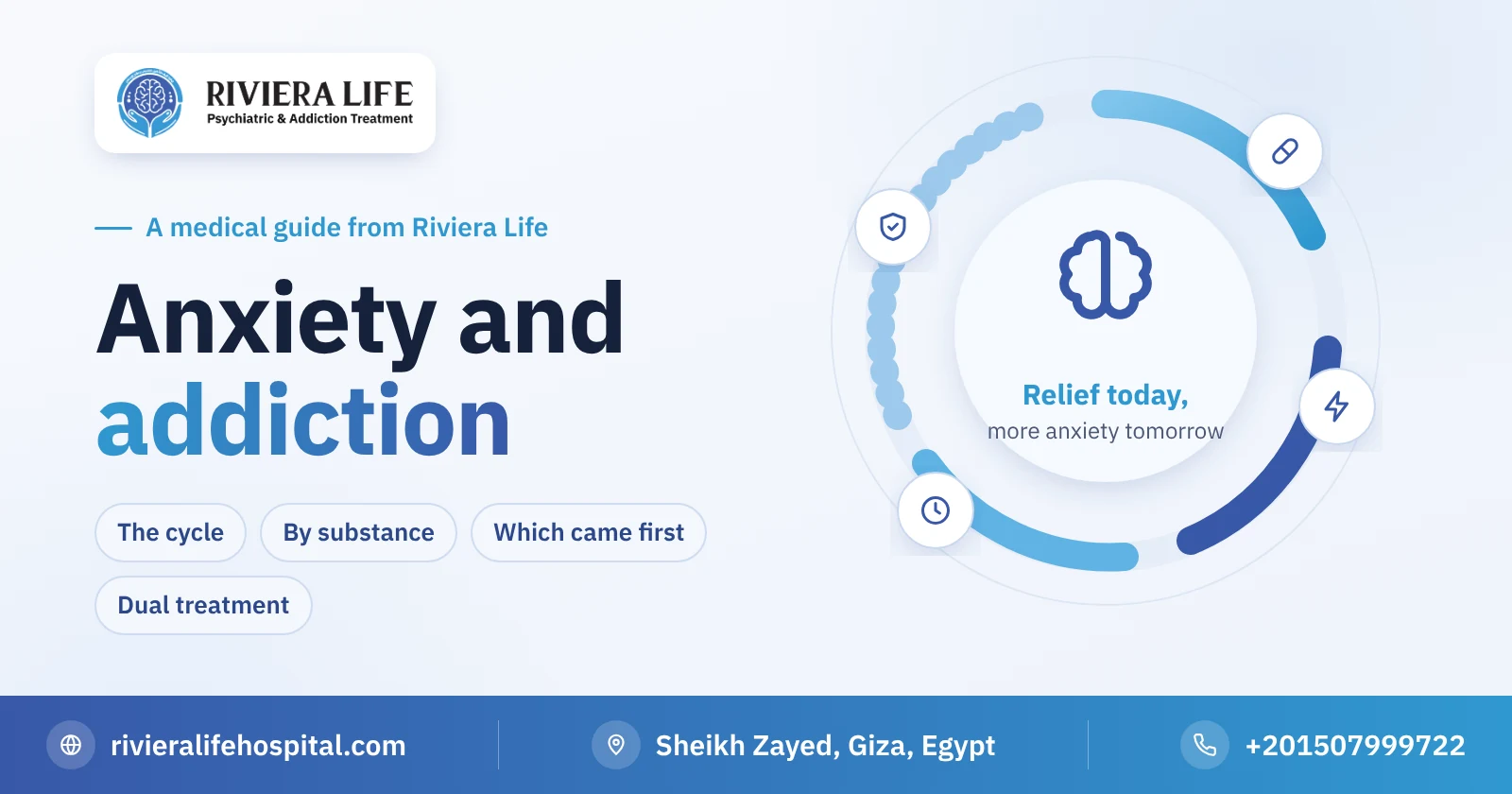
The first path: anxiety, then a substance. Someone who suffers palpitations and dark thoughts before every meeting tries a sedative, a drink or hash, feels relief and thinks they have found the solution. With each time the same dose has less effect and the need grows. The second path: a substance, then anxiety. Someone who uses a stimulant, hash or opioids finds their body disturbed when the effect wears off; the heart races, the mouth dries and the mind tenses, so they interpret this as anxiety and use to calm down. In both cases the substance plays the role of a loan repaid with interest: relief today in exchange for greater anxiety tomorrow.
The anxiety different substances create
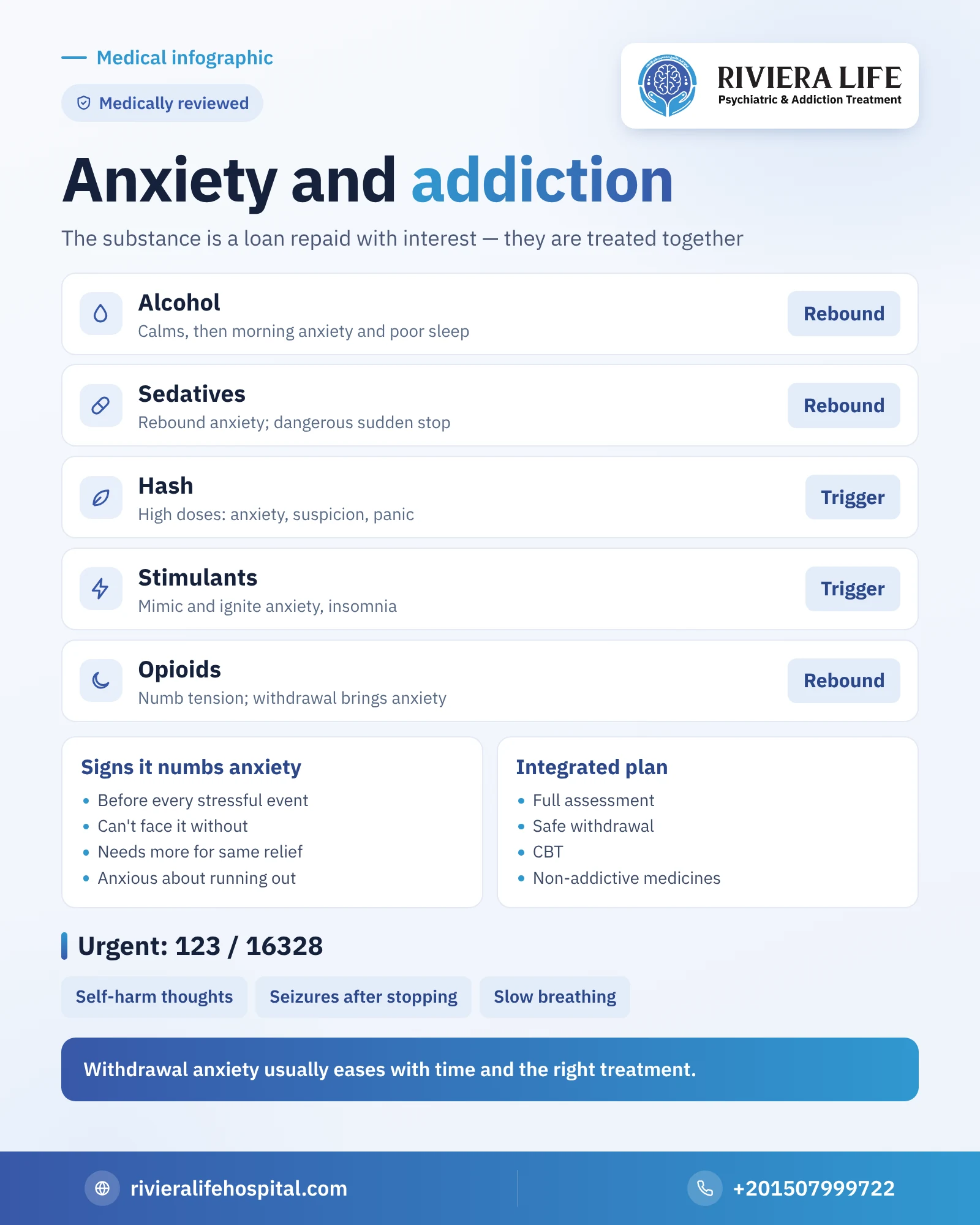
- Alcohol: calms at first, then raises anxiety the next morning and spoils sleep, and increases tension with repetition. Withdrawal from it can cause trembling and severe anxiety. You will find the full picture in the alcohol guide.
- Sedatives and sleeping pills: ease anxiety temporarily, but stopping them brings it back stronger, which is called rebound anxiety. And stopping suddenly may cause dangerous withdrawal, as in benzodiazepine withdrawal symptoms.
- Hash and marijuana: the user may sometimes feel relief, but high doses and continuous use are linked to increased anxiety, suspicion and panic attacks.
- Stimulants (Captagon, ice, cocaine): raise heart rate and alertness, mimic anxiety and may trigger it, with insomnia, suspicion and tension.
- Opioids and tramadol: numb the feeling of tension, but withdrawal from them carries anxiety, insomnia and unpleasant physical disturbance.
- Caffeine and excessive stimulants: aren’t always an addiction in the pathological sense, but they increase anxiety symptoms in those who overdo them.
Which came first: anxiety or the substance?
The answer changes the plan, and it isn’t easy to answer just by remembering. The doctor asks: did the anxiety appear in childhood or adolescence before any use? Does it continue weeks after complete stopping? Does it appear only in rebound times? If it began before use and continues with abstinence, it is usually an independent anxiety disorder that needs specific treatment. If it began with the substance and eased weeks after stopping, it is an effect of the substance or of withdrawal. Often it is both together, which is why one shouldn’t settle for withdrawing the substance and neglect the anxiety, nor treat the anxiety and ignore the use. The types of anxiety themselves are explained in types of anxiety.
Anxiety during withdrawal: what happens and how long does it last?
One of the things that most frightens people in recovery is that anxiety intensifies in the first days after stopping: palpitations, sweating, insomnia and fears without cause. This is an expected part of the brain’s readjustment, and it usually peaks within days or weeks depending on the substance and then gradually calms, but some symptoms may last longer with dependence on sedatives.
This anxiety doesn’t mean your case is hopeless or that you won’t be able to bear life without a substance. The danger is that withdrawal is interpreted as “the original anxiety has returned”, justifying a return to the substance. That is why withdrawal is carried out under medical supervision, and the doctor may use supporting medicines and set a gradual plan, not one the patient sets for themselves.
Types of anxiety that recur in addicts
The most common are generalized anxiety, panic attacks, explained in the article on panic attacks, social phobia that pushes some to the substance before socializing, health anxiety and repeated checking, and post-traumatic stress disorder in those who have lived through harsh experiences. Each type needs a treatment design that suits it. Among the things that also explain the cycle is what happens in the body with stress hormones, as the article on adrenaline and anxiety explains.
How are anxiety and addiction treated together?
The integrated plan rests on four overlapping stages.
- Comprehensive assessment: determines the substances, the duration, and the accompanying physical and psychological illnesses.
- Safe withdrawal: under medical supervision, especially with alcohol and sedatives because withdrawal may threaten life.
- Psychotherapy: cognitive behavioral therapy to face fears and learn breathing, relaxation and managing thoughts, which is the foundation of anxiety treatment.
- Medicine when needed: the doctor chooses medicines that mostly don’t cause dependence, and may avoid dependence-causing sedatives in someone with a history of use.
The patient is then followed up with a relapse prevention plan. And if the problem is with a particular sedative, the applied example is in the article on Xanax addiction treatment.
Signs that the substance has become a way to numb anxiety
- You turn to it before every situation that worries you: a meeting, an interview, a family gathering, travel.
- You feel you can’t face these situations without it, and avoid them if you don’t have the substance with you.
- You need a larger amount over time to get the same relief.
- You worry about the substance running out more than you worry about the original matter.
- You notice that anxiety on days without the substance is higher than before you started using.
If you find more than one sign, show your case to a psychiatrist. Early acknowledgment saves you years of going round the same cycle.
How does the family deal with a relative who has both?
The hardest thing is that the family sees the use clearly and doesn’t see the anxiety behind it. Try to start by listening, not by confronting: “You’re tense these days; what’s weighing on you?” is more useful than “you’re an addict”. Don’t threaten or punish them for withdrawal, and don’t hide from them that treatment is possible and confidentiality is guaranteed. And when they accept assessment, attend the family session to learn how to support them during withdrawal and after.
What can you do alongside treatment?
Small regular habits help: sleep at fixed times, daily movement even if just half an hour’s walk, cutting down caffeine, slow breathing exercises in moments of tension, a support group or a trusted person to talk to, and staying away from places and people linked to use. And don’t change or stop your medicines without going back to your doctor, as stopping some medicines suddenly causes complications.
Seek urgent help immediately if you see
Call an ambulance on 123 or go to the nearest emergency department, and you can contact the mental health hotline 16328 for:
- Thoughts of self-harm or ending life
- Seizures, confusion, hallucinations or severe tremor after suddenly stopping alcohol or sedatives
- Chest pain, severe shortness of breath or fainting during a panic attack of unknown cause
- Severe drowsiness and slow breathing after combining sedatives or opioids
How does Riviera Life help you?
At Riviera Life in Sheikh Zayed, Giza, the consultant in psychiatry and addiction assesses anxiety and use together, withdrawal takes place under round-the-clock medical supervision, and psychotherapy, a family program and follow-up after discharge are provided, in complete confidentiality, with a Ministry of Health license and fourteen years of experience. Call for a free first consultation on +201507999722, and learn about the dual diagnosis program.
More from the anxiety guide
- Anxiety: the complete guide
- Anxiety symptoms: psychological and physical signs
- GABA and anxiety: is anxiety a lack of the brain’s brakes?
- Depression and addiction: the relationship and how they are treated together
- Social phobia and addiction: when the temporary solution becomes a second problem
Questions many people ask
It may be a cause in some cases, as some people use substances to numb anxiety. But it isn't the only cause; heredity, environment and early experiences take part.
Rebound anxiety and withdrawal symptoms happen because the brain has got used to the substance. It is managed with a gradual plan with the doctor, and the sedative isn't stopped suddenly.
The doctor asks about when it started, whether it came before use, and whether it continues weeks after stopping. Distinguishing between them determines the treatment plan.
It is better to treat them together in one plan. It usually starts with safe withdrawal, then psychological and medical treatment and relapse prevention.
Yes, many of the main anxiety medicines don't cause dependence in the known sense, and the doctor chooses them according to the case. Don't start or stop a medicine without consultation.