Aripiprazole, known by the brand name Abilify, is a second-generation antipsychotic that differs from its peers in how it works: it is a “regulator” of dopamine, not just a “blocker”. Because of this it is lighter on weight, blood sugar and prolactin than many medicines in its class, but it comes with its own problems, most notably motor restlessness that may be misread as anxiety, and an official warning about urges such as gambling, shopping and eating. It is prescribed for schizophrenia, mania and as an add-on to an antidepressant. No doses here; starting, adjusting and stopping all happen with the doctor.
What is aripiprazole and how does it work?
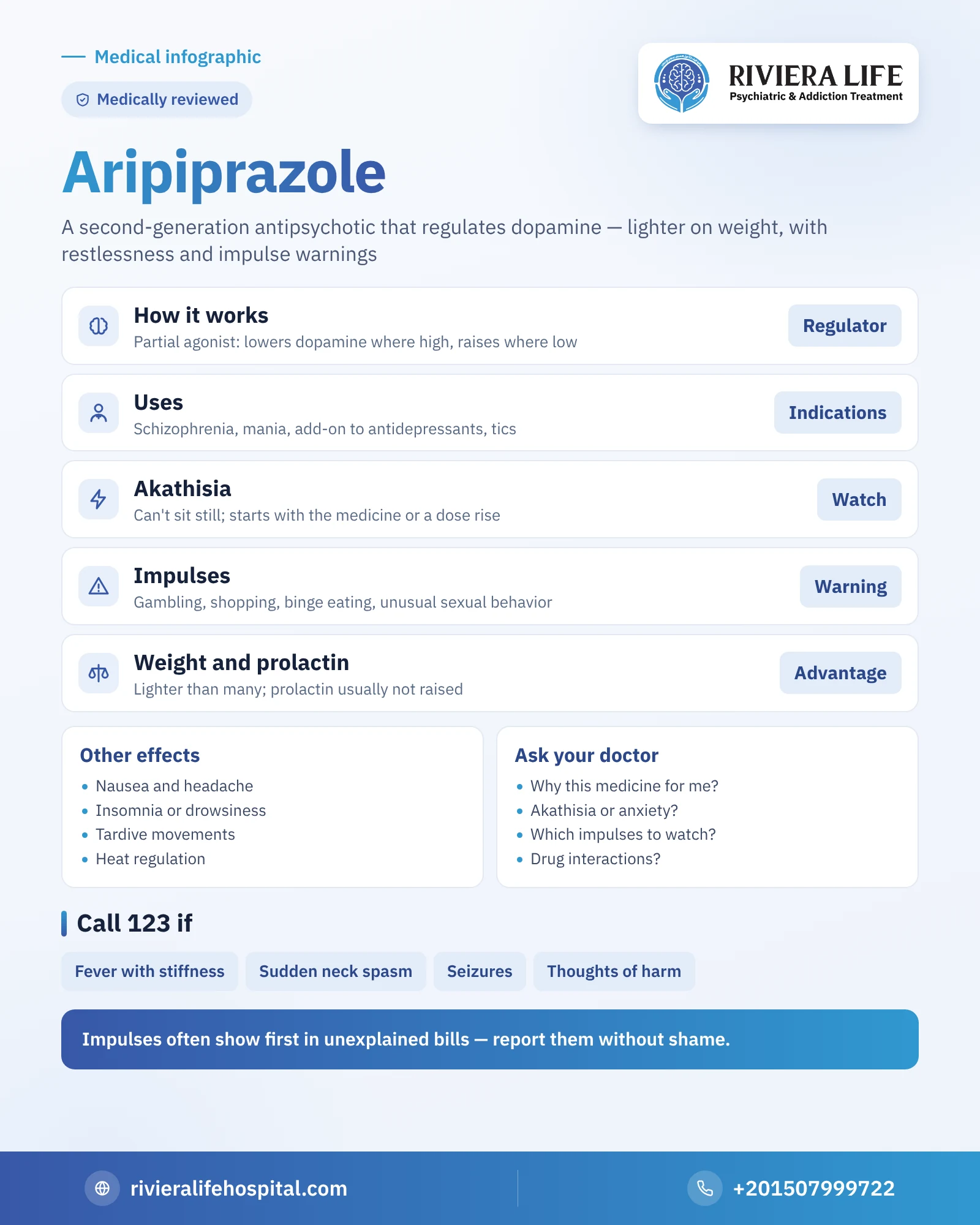
The medicine binds partially to dopamine type 2 receptors, so it works a lot like a light dimmer: where dopamine is high it lowers its effect, and where it is low it raises it slightly. This property, called “partial agonism”, explains two things: its weak effect on prolactin (it may even lower it in those in whom it was raised by another medicine), and its being mostly non-sedating. It is available as tablets, orally dissolving tablets and liquid, and as a long-acting injection given in the clinic. It is compared with others in our article on antipsychotics.
What is aripiprazole used for?
Schizophrenia
To control hallucinations and delusions and prevent relapse. It suits many who don’t tolerate weight gain or prolactin effects with other medicines. The full treatment context is in our article on schizophrenia treatment.
Mania in bipolar disorder
It is used in manic or mixed episodes, and sometimes for prevention. The full picture of the plan is in our article on bipolar disorder treatment.
As an add-on to an antidepressant
When an antidepressant alone isn’t enough, the doctor may add a small dose of aripiprazole to boost the response. Here the antidepressant warnings for young people apply, so the doctor monitors mood and thoughts closely in the first weeks.
Other uses
For children and teenagers: irritability with autism, and involuntary movements and sounds (tics) in Tourette syndrome. These uses are decided by a specialist doctor.
Motor restlessness: the misunderstood symptom
The best-known movement effect of this medicine is restlessness (akathisia): a distressing inner feeling of being unable to settle. The person gets up and sits down, walks around the room, shakes his legs, and complains of an unexplained “inner tension”. Its problem is that the family may think it is anxiety or relapse so the disturbance grows, and the doctor may raise the dose thinking the symptoms have worsened, so the restlessness increases. The distinguishing sign is that it begins when the medicine is started or increased. The solution is to tell the doctor precisely: “I haven’t been able to sit still since I started the medicine”, so he may adjust the plan or add something to ease it. In cases of severe restlessness the suffering is sometimes linked to harmful thoughts, so don’t wait long.
The impulse warning: gambling, shopping and eating
Drug regulators have issued a warning that aripiprazole may cause hard-to-resist impulsive urges in a few users:
- Compulsive gambling, including betting by phone.
- Excessive spending and shopping.
- Unusual binge eating.
- Increased or unusual sexual behavior.
The patient often doesn’t link this to the medicine, but feels ashamed and hides it. The family often notices it first: unexplained bills, debts, or a sudden change in behavior. These urges usually recede after the medicine is adjusted or stopped by the doctor’s decision, so what matters is reporting them without guilt.
What sets it apart from others?
| Aspect | Note about aripiprazole |
|---|---|
| Weight and blood sugar | Generally less effect than olanzapine and clozapine, though it doesn’t exempt from measuring |
| Prolactin | Doesn’t usually raise it, and may lower it |
| Drowsiness | Less than quetiapine, and may cause insomnia in some |
| Restlessness | More noticeable than with other medicines |
| Interactions | Affected by medicines that act on liver enzymes, such as some antidepressants |
Other side effects and warnings
- Nausea, headache and dizziness: common at the start and usually ease.
- Insomnia or drowsiness: varies from person to person.
- Tardive involuntary movements: repetitive movements of the mouth and tongue after long use, which is why the doctor examines movement regularly.
- Metabolism: weight, blood sugar and lipids are reviewed periodically even though its effect is small.
- Older people with dementia: an official warning of increased risk of death and stroke when antipsychotics are used for dementia behaviors.
- Body temperature: the ability to regulate it may weaken in hot weather.
Among rare serious effects is a reaction combining fever, stiffness and disturbed consciousness, which we cover in our article on neuroleptic malignant syndrome.
Call an ambulance on 123 immediately if you see
Or go to the nearest emergency department if someone taking aripiprazole shows:
- High fever with severe stiffness, sweating and confusion
- A sudden spasm in the neck or jaw, or difficulty swallowing or breathing
- Seizures or fainting
- Deep drowsiness or difficulty waking after taking too much
- Thoughts of harming oneself or others; for psychological support, the mental health hotline 16328
Is aripiprazole addictive?
It isn’t known to cause addiction in the usual sense, and it doesn’t give a high. But some patients stop it suddenly when they feel better, so the symptoms return within weeks. And because the medicine has a long life in the body, relapse may be delayed, so the family thinks all went well. Any stopping is gradual and follows the doctor’s plan.
Aripiprazole and substance use
Alcohol increases dizziness and drowsiness and weakens judgment. Hashish and stimulants rekindle psychosis and may weaken the medicine’s effect. And if your relative has both psychosis and substance use, dual treatment is more successful than treating one of them, as our article on schizophrenia and addiction explains.
Children, teenagers and pregnancy
In young people the medicine is used in specific cases, including severe irritability with autism, and it requires regular measurement of weight, height, blood pressure and blood sugar because the teenager is still growing. The doctor may prescribe aripiprazole for a teenager going through a first psychotic or manic episode, in which case the family is a partner in observation. Pregnancy and breastfeeding aren’t settled by guesswork: a woman consults her doctor before planning a pregnancy or as soon as she discovers it, because stopping suddenly may expose her to a relapse more dangerous than the medicine itself in some cases.
How is response assessed?
The time varies with the purpose: irritability and insomnia may improve within days, while psychosis needs weeks, and boosting an antidepressant usually shows after two weeks or more. And because the medicine’s life in the body is relatively long, its levels stabilize slowly, which is one reason the doctor doesn’t change the plan quickly. Record what you notice on a simple sheet: sleep, restlessness, mood and any new behavior. These notes are more accurate than memory in a visit lasting minutes.
Questions to ask your doctor
- What makes this medicine different from others for my condition? Did you choose it because of weight or prolactin?
- How do I tell medicine-related restlessness from anxiety, and what do I do if it appears?
- What signals of impulsivity should alert me and my family?
- Do my other medicines change the level of this medicine in my body?
- Is it useful in my case as an add-on to an antidepressant? And for how long?
How can Riviera Life help you?
If your relative shows restlessness or a strange change in financial behavior or impulsivity after starting the medicine, don’t wait. Book the free first consultation at Riviera Life in Sheikh Zayed so a psychiatry consultant can review the medicine and its schedule, with complete confidentiality, round-the-clock medical supervision and a family support program.
More from our psychiatric medicines guide
- Antipsychotics: first and second generation, side effects and follow-up
- Olanzapine
- Antidepressants
- Schizophrenia: the complete guide
Questions many people ask
Its effect on weight and blood sugar is less than many medicines in its class, but it may increase weight in some patients, so the doctor keeps measuring.
An inner feeling of being unable to settle, with a lot of movement and leg shaking. It differs from anxiety and begins when the medicine is started or increased, and the doctor should be told so the plan can be adjusted.
Drug regulators have warned of compulsive urges such as gambling, shopping and eating in a few users. They usually improve when the medicine is adjusted by the doctor's decision.
It doesn't usually raise it, and may lower it in those in whom it was raised by another medicine.
It is sometimes used for irritability with autism and for tics, by the decision of a specialist doctor with monitoring of weight and growth.