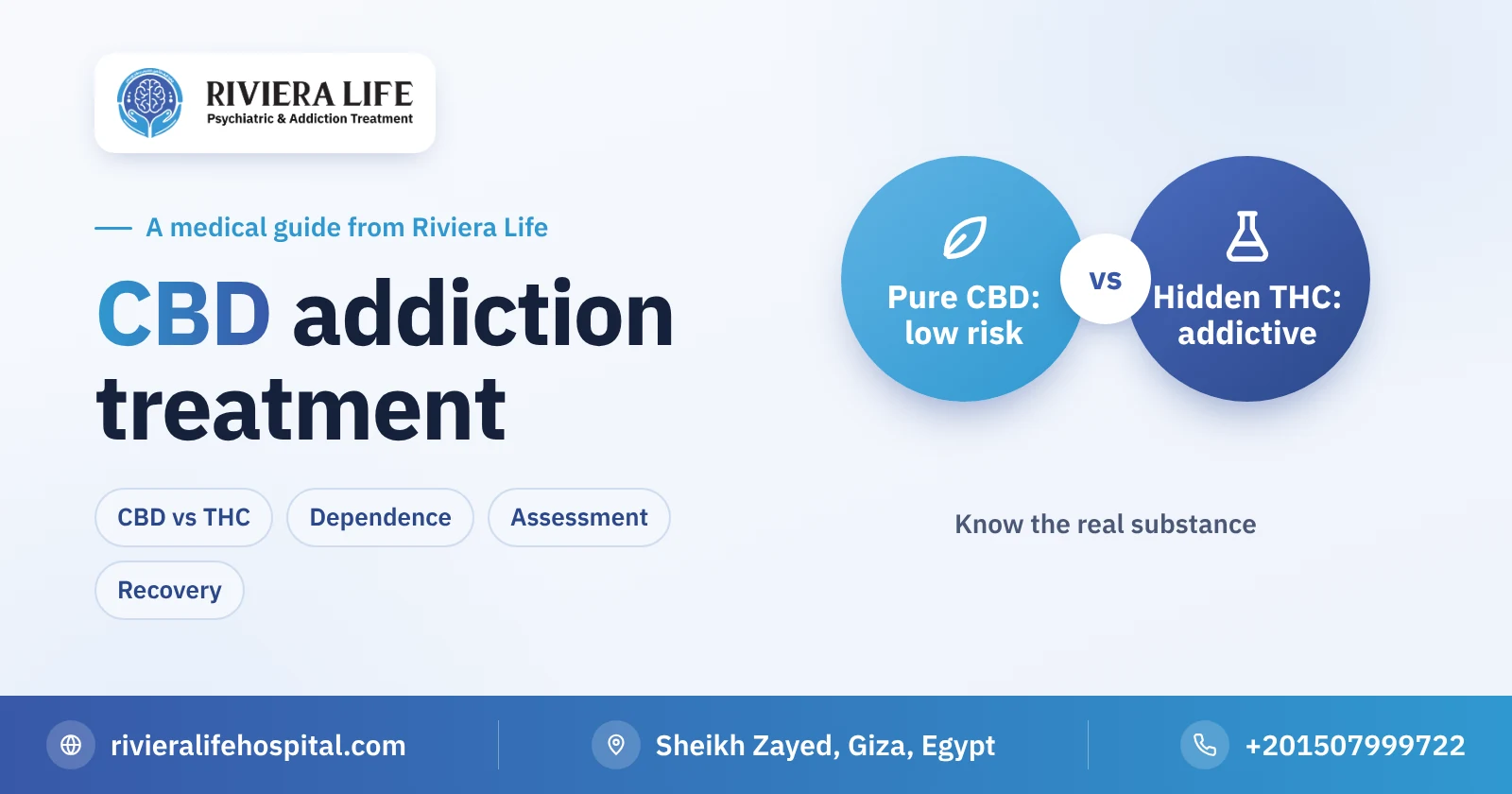
Cannabidiol (CBD) is a compound extracted from the cannabis plant, sold in oils, sweets and capsules with promises of calming anxiety and improving sleep. The honest question that any talk of “CBD addiction treatment” should begin with is: is the problem CBD itself? Scientific reviews, including a World Health Organization review, indicate that pure CBD doesn’t cause a high and has low addiction potential.
But many products in circulation contain THC, the substance responsible for the “high” in hashish and marijuana, and some people become psychologically dependent on any product that calms their anxiety. In this article we help you find out what is really happening, when you need treatment, and what it looks like.
What is CBD and how does it differ from hashish?
The cannabis plant contains dozens of compounds, the best known being two: tetrahydrocannabinol (THC), which changes perception and mood and causes addiction, and cannabidiol (CBD), which doesn’t cause this effect. CBD has one clear approved medical use so far: a medicine extracted from it to treat rare and severe types of epilepsy in children, under close medical supervision. As for its use for anxiety, insomnia and pain, the evidence is still limited or inconclusive.
To understand the difference between the various forms of cannabis in Egypt, you can refer to the bango page and the marijuana page.
Does CBD cause addiction?
Pure CBD doesn’t activate the brain’s reward system the way drugs do, and available studies haven’t shown that people misuse it or suffer clear physical withdrawal from it. But three situations make the question realistic:
- The product isn’t what it says: tests of products sold as CBD oil found that some contain undeclared THC, or an amount of CBD different from what is on the package.
- Psychological dependence: a person with chronic anxiety links their calm to the drops or sweets, panics if they run out, and increases the amount without a clear aim.
- A cover for hashish: some young people justify a smell or cannabis products to their family as “just CBD”.
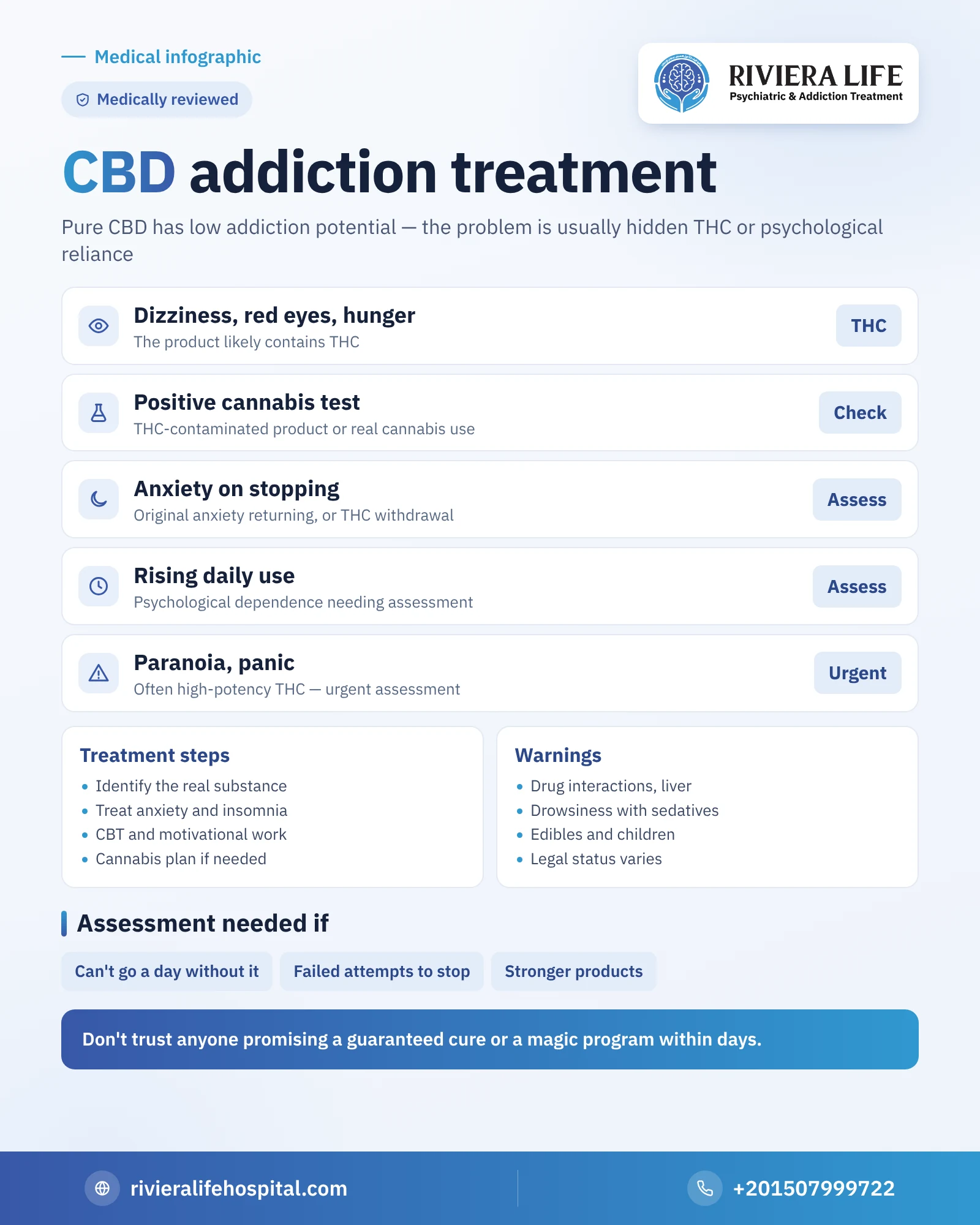
How do you know where the problem lies?
| What you notice | The most likely explanation |
|---|---|
| Dizziness, red eyes, laughter or intense hunger after use | The product contains THC |
| A positive cannabis drug test despite using only CBD | A THC-contaminated product, or actual cannabis use |
| Severe anxiety, insomnia or irritability on stopping | The original anxiety returning, or THC withdrawal |
| Increasing daily use without clear benefit | Psychological dependence that needs assessment |
| Suspicion, strange thoughts or panic attacks | Usually high-potency THC, and needs urgent assessment |
If an unexpected test result appears, the reference article on tests and the limits of their accuracy is drug testing.
Signs that call for a specialist assessment
- The person can’t spend a day without the product, and spends a lot of time and money getting it.
- A decline in study or work, or withdrawal from the family.
- Using “stronger” products or smoking cannabis flowers on the pretext that they are rich in CBD.
- Anxiety or depression symptoms that increase despite use.
- Failed attempts to stop.
What happens on stopping?
Someone who used pure CBD usually doesn’t suffer any notable physical withdrawal, and what they usually feel is the return of the anxiety or insomnia they were treating. But if the product contains a significant amount of THC, irritability, insomnia, loss of appetite, disturbing dreams and a desire to go back may appear, which is the picture explained in marijuana withdrawal symptoms.
How is CBD addiction treated?
Identifying the real substance
The doctor starts by learning the product, its source and how it is used, and may request a test to clarify whether THC is present. This step changes the whole plan: psychological dependence on a relatively safe product differs from a cannabis addiction hidden in a bottle of oil.
Treating the reason the person uses it
Anxiety, insomnia and chronic pain are what most push people to CBD. Treating these conditions with proven methods removes the need for it. You can look at the options for anxiety treatment with psychotherapy and medicines.
Psychological and behavioral therapy
Cognitive behavioral therapy breaks the link between calm and the product, and teaches alternative skills for regulating stress and sleep. Motivational interviewing is especially useful with young people who don’t see a problem.
Treating cannabis addiction if present
If it becomes clear that actual use includes hashish or marijuana, treatment moves to the full cannabis addiction plan explained in marijuana addiction treatment.
Follow-up and relapse prevention
Regular sessions for a sufficient period, with a plan for stressful times, and reviewing any new supplement or product with the doctor before using it.
Warnings many people don’t notice
- CBD may interact with other medicines, including some epilepsy medicines and anticoagulants, and may affect liver enzymes.
- It may cause drowsiness, so it isn’t combined with sedatives or alcohol without consultation.
- Sweets containing cannabis are a danger to children if eaten by mistake, because they look like ordinary sweets.
- The legal status of cannabis products differs between countries, and a product containing THC may be treated as a narcotic.
Can CBD be used to treat hashish addiction?
Some research is studying this possibility, but the results are still preliminary, and there is so far no approved treatment for cannabis addiction based on CBD. The practical danger is that a young person buys a product thinking it is a treatment and gets THC at a dose they don’t know, so the addiction continues under a different name. That is why CBD isn’t used within a treatment plan except by a clear medical decision and with a product of known source.
The family’s role
The family shouldn’t start with accusations, nor accept the phrase “it’s natural and safe” without asking. Ask calmly about the product, its source and the reason for using it, and suggest seeing a doctor to assess the anxiety or insomnia itself, as this is an easier way into the conversation than talking about addiction.
The right hospital for CBD addiction treatment: how to choose
The right hospital for CBD addiction treatment is one that distinguishes precisely between psychological dependence on a low-risk product and hidden cannabis addiction, and treats the anxiety behind use. Ask:
- Does it carry out an assessment that identifies the actual substance instead of relying on the product’s name?
- Does it treat the accompanying anxiety and insomnia with proven methods?
- Does it have experience in treating cannabis addiction if it turns out to be present?
- Does it offer psychotherapy that suits young people and involves the family?
- Does it review drug interactions and liver function when needed?
And don’t trust anyone who promises a guaranteed cure or a magic program within days.
How Riviera Life meets these standards
Here is how these criteria are met at Riviera Life:
- A licensed hospital: by the Ministry of Health for psychiatry and addiction treatment.
- Precise assessment: consultants in psychiatry and addiction determine whether the problem is psychological dependence or cannabis addiction.
- Treating anxiety and insomnia: with psychotherapy and suitable medicines instead of unreliable products.
- Fourteen years of experience: and thousands of recovered cases, including hashish and marijuana cases.
- Round-the-clock supervision: for those who need inpatient care because of acute psychiatric symptoms.
- Complete confidentiality: protecting the young person and their family.
- Family and aftercare: a program for parents and follow-up after treatment ends.
There is no fee for your first consultation, our line +201507999722 is open all day, and we are based in Sheikh Zayed, Giza.
Read also
- Hashish: the complete guide
- Hydro addiction: high-potency cannabis
- Marijuana addiction and how it develops
- Herbal addiction treatment: the facts and the risks
Questions many people ask
Pure CBD doesn't get you high. If you feel dizzy or notice a change in perception after using it, the product most likely contains a significant amount of THC.
Common tests look for THC metabolites, not CBD. But products contaminated with THC may give a positive result, which is why any unexpected test needs a medical assessment.
Dependence on it usually doesn't need a specific medicine; treatment focuses on psychotherapy and treating the original anxiety or insomnia. The doctor may prescribe a medicine for an accompanying condition if needed.
This idea is being studied in research, but it isn't an approved treatment so far. Using it without supervision may hide continued use of products containing THC.
Choose a licensed hospital that identifies the actual substance rather than relying on the product's name, treats the anxiety and insomnia behind use with proven methods, has experience with cannabis addiction, and involves the family. Riviera Life in Sheikh Zayed meets these criteria, and the first consultation is free and confidential.