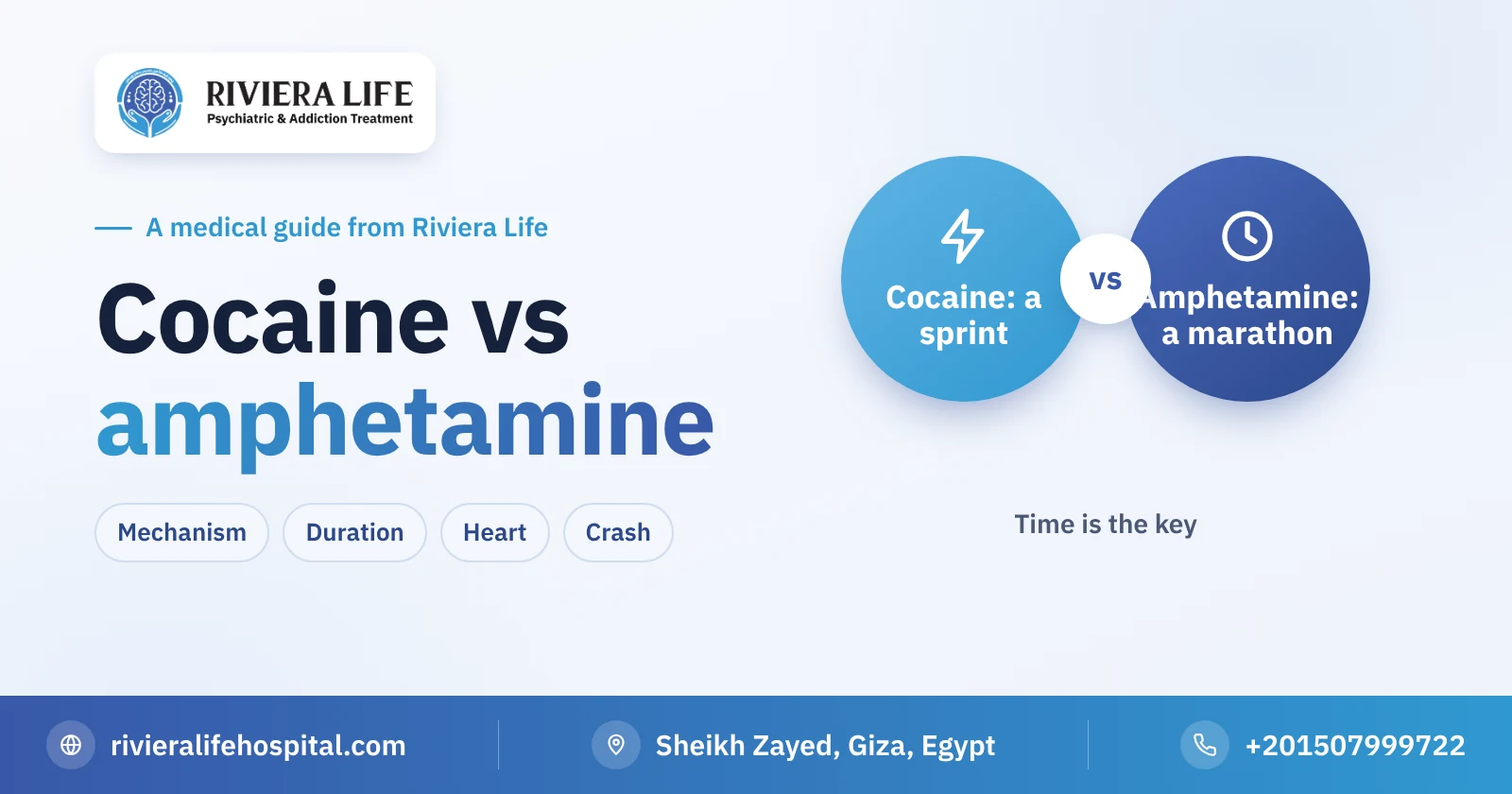
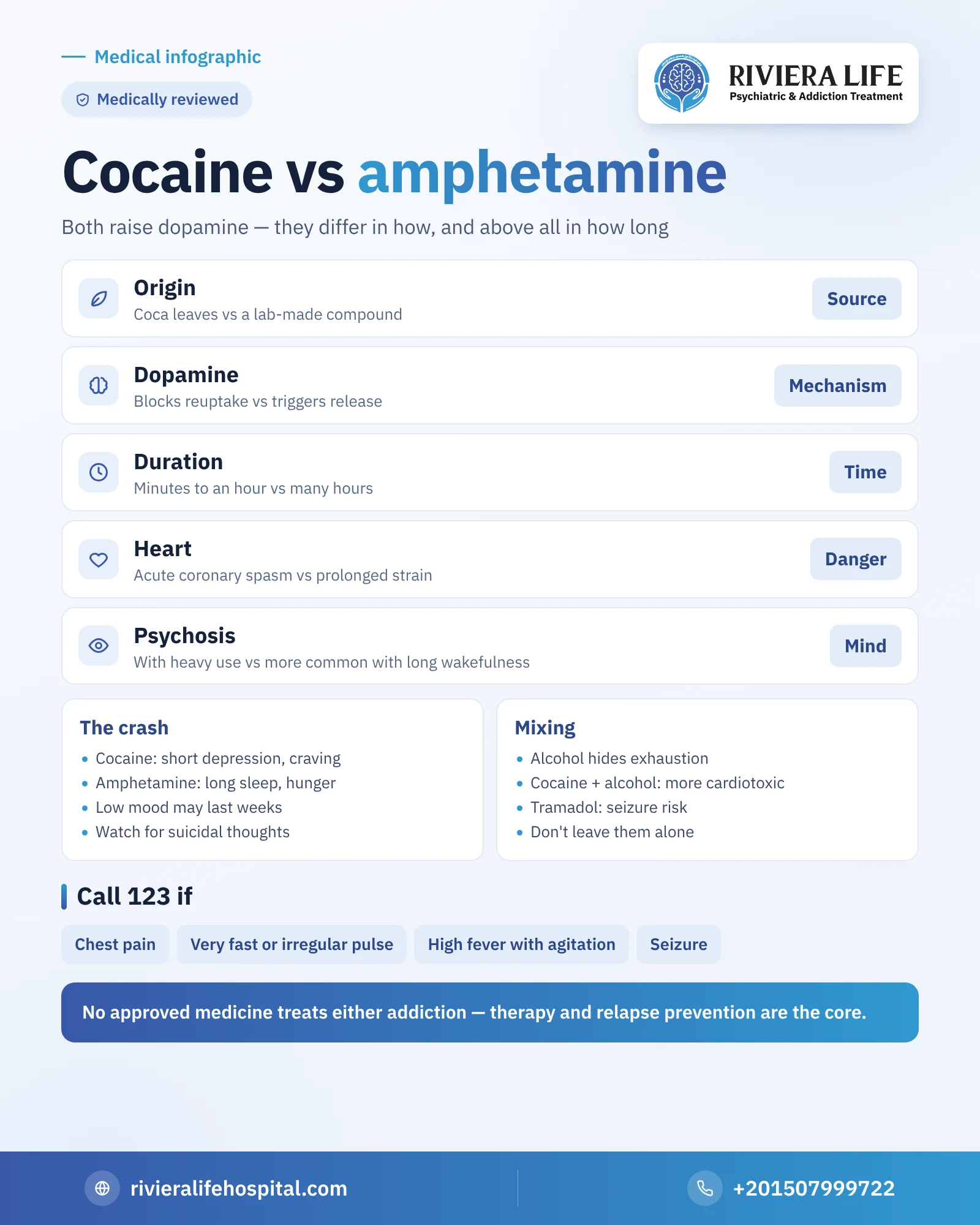
The difference between cocaine and amphetamine doesn’t show in the first feeling, as both are powerful stimulants that raise dopamine in the brain and give energy, confidence, wakefulness and reduced appetite. It shows in the method: cocaine prevents dopamine from returning to the cell so it stays in the space between cells, and its effect is very short. Amphetamine pushes the cells to release dopamine and blocks its reuptake, so its effect lasts much longer. This is reflected in the duration of effect, the nature of the crash and the shape of the danger to the heart and mind, which are the points we compare here.
The difference between cocaine and amphetamine in a table
| Point of comparison | Cocaine | Amphetamine |
|---|---|---|
| Origin | Extracted from the leaves of the coca plant | A chemically manufactured compound |
| How it affects dopamine | Blocks its reuptake so it accumulates | Triggers its release and blocks its reuptake |
| Duration of effect | Short, from minutes to about an hour depending on the method of use | Much longer, lasting hours |
| Urge to repeat | Strong and fast because the effect fades quickly | Strong but at a slower rhythm |
| Medical use | Very rare, as a local anesthetic in some operations | Derivatives are used for ADHD and narcolepsy on prescription |
| Danger to the heart | Narrowing of the coronary arteries, rhythm disturbance and chest attacks | Prolonged rise in blood pressure and pulse and strain on the heart muscle |
| Psychosis | Possible with repeated or high doses | More common with prolonged use and staying awake |
| The crash after the effect | Depression, exhaustion and strong craving | Exhaustion, hunger, long sleep and depression that may last |
The origin: a plant and chemistry
Cocaine is extracted from the leaves of the coca shrub in South America, and reaches the Arab region as a smuggled white powder. Our cocaine guide page presents this picture. Amphetamine has no plant; it is made in laboratories, and its family has several faces: prescription-controlled medical tablets for ADHD, and illicit pills of unknown composition sold under names such as captagon. Our amphetamines guide introduces the whole family, and our article on methamphetamine vs amphetamine explains the difference within it.
The key to the difference: time
Cocaine reaches the brain quickly, especially if smoked or snorted, and its effect fades just as quickly. This short rhythm creates a harsh cycle: a quick high, then a sharp crash, then intense craving that pushes towards repeating it soon after. Amphetamine stays in the body longer, so the effect lasts hours, accompanied by long wakefulness and going without food and sleep, then the collapse comes when the effect ends. Cocaine drains in a short, repeated sprint, and amphetamine drains in a long marathon. Both rhythms exhaust the body, but by two different means.
The heart and blood vessels
Both speed up the pulse, raise blood pressure and narrow blood vessels, but cocaine is distinguished by an acute effect on the coronary arteries and a disturbance in the heart’s electrical activity, so a chest attack or dangerous rhythm disturbance may happen even in young people and on the first occasion. Amphetamine presses on the heart for a longer period, so with repetition the heart may enlarge and weaken, and the risk of stroke increases in those with high blood pressure. Details of the harms are in the harms of cocaine and the harms of amphetamine.
The mind: psychosis, anxiety and paranoia
Both may cause anxiety, panic attacks, paranoia and delusions that someone is watching or pursuing. With amphetamine, especially with staying awake for days, hallucinations and delusions appear more commonly and may persist after the substance has gone in some users. With cocaine, bouts of paranoia appear during periods of heavy use. In both cases the person shouldn’t be argued with about their delusions or confronted violently; instead secure the place and ask for medical help.
Call an ambulance on 123 immediately if you see
After cocaine, amphetamine or any stimulant mix, and don't leave the person alone.
- Chest pain or severe shortness of breath
- A very fast or irregular pulse, or fainting
- A very high temperature with agitation or confusion
- A seizure or loss of consciousness
- Hallucinations or violent behavior putting them or others at risk
The crash and withdrawal
Neither cocaine nor amphetamine has a loud physical withdrawal like opioids, but the psychological crash is severe. After cocaine comes a short state of depression, anxiety and intense craving, which extends for weeks in regular users. After amphetamine comes exhaustion, long sleep and severe hunger, then low mood and lack of drive that may continue for weeks. In both cases the risk of suicidal thoughts is present and requires follow-up. You will find the stages in cocaine withdrawal symptoms and amphetamine withdrawal symptoms.
Addiction: why does cocaine seem more quickly seductive?
The faster a substance reaches the brain and the faster it fades, the greater the likelihood of repetition. Smoked or snorted cocaine achieves this, so some people fall into dependence after a relatively short time of regular use. Amphetamine also creates dependence, often linked to performance: staying awake for work, study or driving, so at first it seems “useful” and then turns into a need. Neither should be considered milder; each steals control in its own way.
What does the same night look like with each?
Imagine two people staying up until dawn. The first, with cocaine: starts enthusiastic and talkative, then their mood drops after a short time so they repeat the dose again and again, and anxiety, sweating, a dry nose or chest pain escalate, and the night ends with what they had used up while they are exhausted and tense.
The second, with amphetamine: stays active for many hours without hunger or sleepiness, working, driving or talking non-stop, then suddenly collapses into a deep sleep for a whole day, and wakes hungry and depressed. This picture explains why some people appear in the emergency department with an acute chest attack after cocaine, and others with dehydration, high temperature and agitation after long amphetamine wakefulness. These are signs for suspicion, not diagnosis.
When combined with alcohol or other substances
Many combine the stimulant with alcohol to soften the effect or to drink more without drowsiness. This deceives the body: alcohol hides the sense of exhaustion and drunkenness, and the stimulant hides drowsiness, so awareness of danger is delayed. With cocaine and alcohol together, a compound forms in the liver that is more toxic to the heart than either alone. If tramadol or sedatives join them, the chances of seizures and slowed breathing after the stimulant’s effect fades increase. That is why someone who has combined more than one substance shouldn’t be left alone in the following hours.
The difference in testing
The usual tests look for cocaine’s products, which stay in urine for a relatively short period, and for amphetamines on a strip of their own, and amphetamine usually has a longer window. The approximate details are in how long cocaine stays in the body and how long amphetamine stays in the body, which offer general ranges, not promises.
Treatment: no approved medicine for either
There is no approved medicine that treats stimulant addiction itself. Treatment rests on assessing the heart and mental health, monitoring the crash, sleep and mood, treating depression or psychosis if it appears, then cognitive behavioral therapy, a reward system and a relapse-prevention plan with the family’s participation. Someone who combines the two stimulants or adds alcohol or sedatives to them needs a more careful assessment. Details of the two paths are in cocaine addiction treatment and amphetamine addiction treatment.
The legal position in Egypt
Cocaine is a narcotic substance whose possession and trading are criminalized. Amphetamine and its derivatives are listed in the schedules, and their medical preparations are dispensed only on prescription. In all cases the patient has the right to ask for treatment at a licensed hospital in complete confidentiality.
When should you ask for help?
- If staying awake or concentrating can no longer be achieved without the substance.
- If chest pain or palpitations appeared after use, even once.
- If bouts of paranoia or hallucinations recur.
- If severe depression or thoughts of self-harm appear during the crash, ask for urgent help.
- If attempts to stop fail or the amount increases.
The consultants in psychiatry and addiction treatment at Riviera Life assess stimulant use under round-the-clock medical supervision and in complete confidentiality, and the first consultation is free on +201507999722.
More from our cocaine guide
- Cocaine: the complete guide
- The difference between cocaine and heroin
- Cocaine addiction symptoms
- Cocaine and sex
Questions many people ask
Cocaine blocks dopamine reuptake and its effect is short, while amphetamine triggers dopamine release and blocks its reuptake, and its effect is much longer.
Both are dangerous; cocaine is linked to chest attacks and acute rhythm disturbance, and amphetamine to prolonged strain on the heart and high blood pressure, and neither should be considered milder.
Its derivatives have prescription medical uses such as ADHD, while the illicit pills in circulation are of unknown composition and are considered a narcotic substance.
There is no approved medicine to treat cocaine or amphetamine addiction; treatment relies on medical and psychological follow-up, cognitive behavioral therapy and relapse prevention.
Call an ambulance on 123 immediately and don't leave the person alone, as chest pain, palpitations or fainting after stimulants is an emergency.