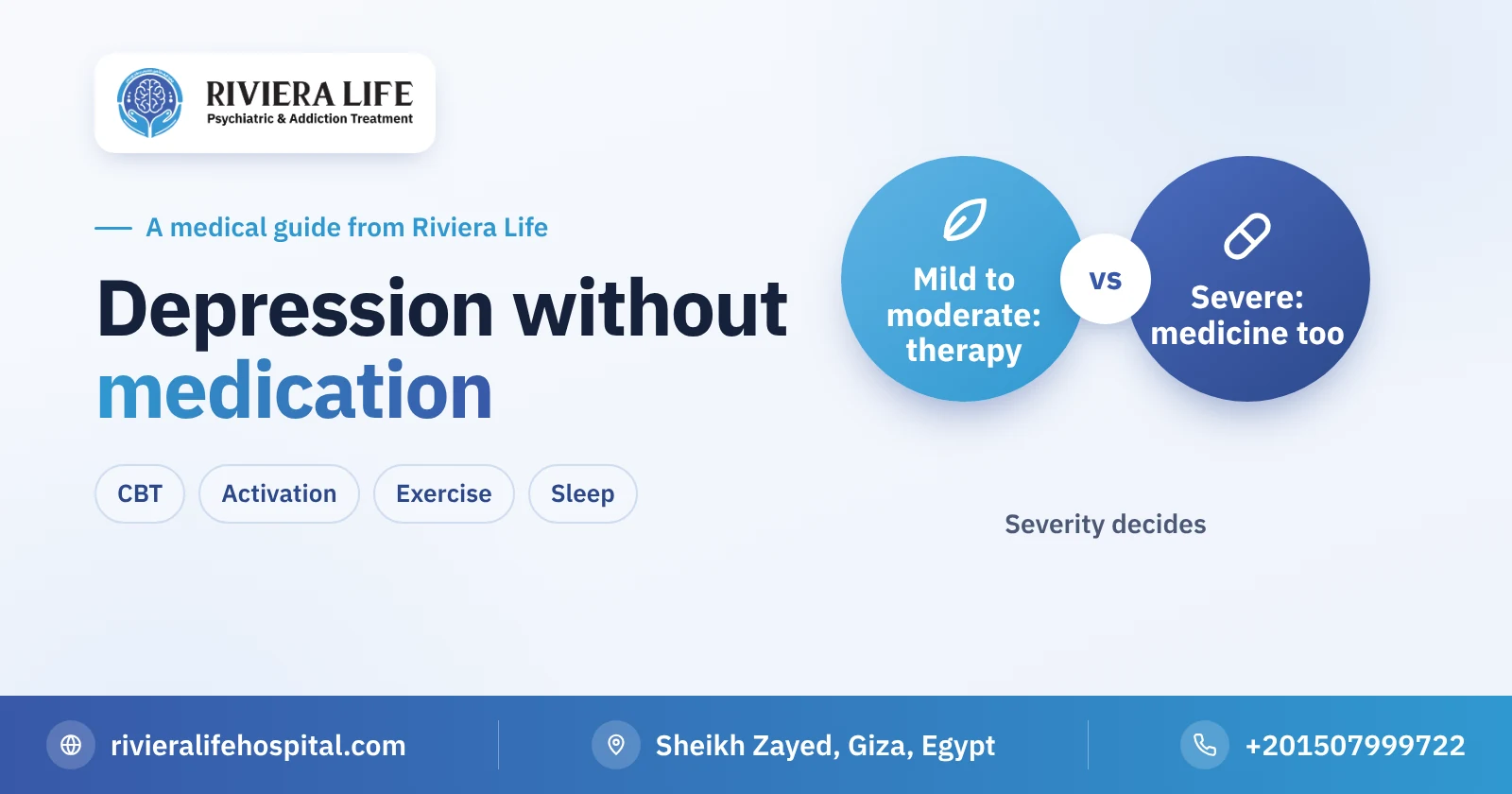
Treating depression without medication is a real, evidence-based option, but it doesn’t suit every case. In mild depression and many moderate cases, structured psychotherapy together with physical activity, regulated sleep and social contact may be enough. But severe depression, or depression accompanied by suicidal thoughts or psychotic symptoms, usually needs medicine. This article explains when the non-drug route is suitable, what really helps, and where its limits lie, frankly.
Can depression be treated without medicines?
Yes, in many cases. Medical guidelines in Britain and elsewhere put psychotherapy and structured physical activity among the first options for less severe depression, and leave the decision to the patient after they understand the alternatives. The right question isn’t “medicine or not?” but “how severe is my depression? What have I tried? And what do I prefer?”. This article doesn’t compare all treatment options; the full picture, including medicines and hospital, is in our article on depression treatment.
When is non-drug treatment suitable?
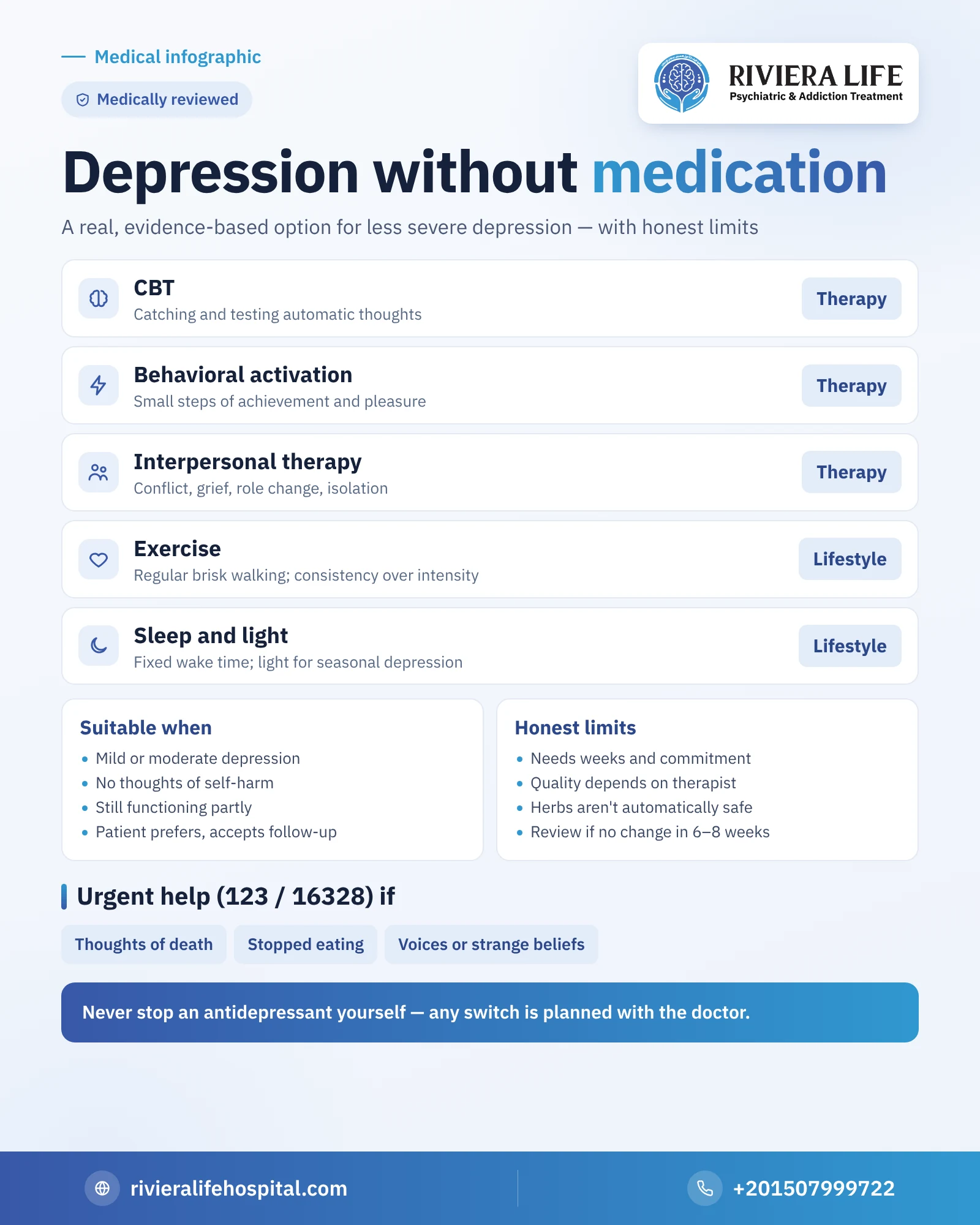
- Mild or moderate depression according to the assessment of a doctor or specialist.
- No thoughts of self-harm or suicide.
- The person is still able to do part of their daily tasks and attend sessions.
- The patient prefers to avoid medicine for an understandable reason, such as pregnancy, breastfeeding or a previous bad experience, and accepts follow-up.
- A first episode, or a previous history of responding to psychotherapy alone.
And when is medicine necessary?
The doctor leans strongly towards adding medicine when depression is severe: the patient doesn’t eat or doesn’t leave their bed, talks about death, or strange ideas appear, as in psychotic depression. Also when moderate depression persists despite good psychotherapy for several weeks, or when episodes recur. In these cases medicine isn’t a “defeat”, but what makes psychotherapy itself possible; someone who doesn’t sleep or concentrate finds it hard to benefit from sessions.
Cognitive behavioral therapy
It is the most studied psychotherapy in depression. In it the person learns to catch the automatic thoughts that feed sadness, such as “I failed at this so I’m a failure at everything”, then tests them against evidence and replaces them with a more balanced view. It usually lasts between about twelve and twenty sessions, with homework between sessions. One of its advantages is that its skills remain after it ends, which may reduce the chances of depression relapse. The details of its techniques are in our article on cognitive behavioral therapy.
Behavioral activation
Depression pushes towards withdrawal, and withdrawal deepens depression. Behavioral activation breaks this loop from the side of action, not thought: the person records their day hour by hour, then gradually adds small activities that give a sense of achievement or pleasure, even if they aren’t “in the mood”. A real example: a mother who stopped visiting her sister months ago starts with a ten-minute phone call, then a short visit, then a fixed weekly appointment. This treatment is simple in concept, and studies show its results in mild and moderate depression are close to full cognitive therapy.
Interpersonal therapy
This therapy focuses on relationships: an unresolved dispute with a spouse, grief over a loss, a major change in role such as retirement or motherhood, or isolation. The therapist chooses one or two problems with the patient and works on them over a set number of sessions. It especially suits those whose depression began after an event in their social life, and is used a lot with pregnant women and teenagers.
Exercise: a treatment, not general advice
Regular physical activity is among the non-drug measures with the most evidence in mild and moderate depression. A gym isn’t required; brisk walking for half an hour most days of the week is a good start, and organized groups add the benefit of contact and commitment. The secret is regularity, not intensity. Start with less than you think you can manage, ten minutes for example, then increase gradually. Anyone with heart or joint disease consults their doctor first.
Sleep and social contact
Insomnia and depression feed each other. It helps to fix a daily wake-up time, cut down long naps, keep the phone away from the bed, and avoid caffeine after mid-afternoon. And if insomnia persists, cognitive behavioral therapy for insomnia is better than sleeping pills in the long term. To learn about the relationship between melatonin and sleep, see our article on melatonin and sleep.
As for contact, parties and gatherings aren’t what is needed, but one or two people you talk to honestly each week. Isolation is one of the strongest things that prolong an episode, and a short call is better than nothing.
Light therapy in seasonal depression
For those whose episodes come in autumn and winter in a fixed pattern, sitting in the morning in front of a dedicated bright light device is among the effective non-drug options. The doctor sets its intensity and timing, and it needs caution in people with bipolar disorder and some eye diseases. Its details are in our article on seasonal depression.
The limits of treatment without medication, frankly
- Psychotherapy needs time, usually several weeks before a clear difference appears, and needs commitment to sessions and homework.
- Its quality depends on the therapist; general “venting” sessions aren’t structured cognitive therapy.
- Herbal supplements aren’t safe just because they are natural; St John’s wort, for example, interacts with many medicines including contraceptive pills, so it isn’t taken without consultation.
- If there is no tangible improvement within roughly six to eight weeks of regular treatment, it is time to review the plan, not to continue with it.
- Someone already taking medicine doesn’t stop it themselves to try the non-drug route. The switch, if suitable, is done gradually and decided with the doctor, because stopping suddenly may cause discontinuation symptoms or relapse. What you need to know about these medicines is in our article on antidepressants.
Seek urgent help immediately if you see
Non-drug treatment doesn't suit dangerous situations. Call an ambulance on 123 or go to the nearest emergency department, and you can ask for guidance from the mental health hotline on 16328.
- Thoughts of death or self-harm
- Stopping eating and drinking, or total inability to leave bed
- Hearing voices, or strange ideas about guilt or illness
Patients’ experiences of treating depression without medicines: what does the journey look like?
Those who read others’ experiences before starting want to know how long it takes, and whether they will really feel a difference. The honest answer is that improvement with psychotherapy comes gradually, and that the first weeks may be the hardest. These are the main stages most patients go through:
- The first sessions: talking about feelings and recording thoughts and activities may seem exhausting or useless, and some patients feel the homework between sessions is an extra burden on energy that is already low.
- After several weeks: many notice that the days are no longer all the same, that they have started catching negative thoughts before being dragged along by them, and that some interest in an activity they used to love returns.
- As the program is completed: the patient leaves with skills they use alone at any setback, and this is one of the most important advantages of psychotherapy in reducing the chances of depression returning.
The experience differs a lot according to the severity of depression. What someone who improved with exercise and cognitive therapy in mild depression relates doesn’t apply to severe depression with acute insomnia or suicidal thoughts; here it isn’t right to rely on non-drug treatment alone, as we explained in the section on its limits.
The right place for treating depression without medication: how to choose
The right place for treating depression without medication is one that actually offers structured psychotherapy, and at the same time knows when medicine is necessary and doesn’t hesitate to say so. Ask before you start:
- Does treatment start with an assessment of the severity of depression, ruling out bipolar disorder and physical causes?
- Do the therapists offer cognitive behavioral therapy, behavioral activation or interpersonal therapy with a clear plan and number of sessions?
- Do they measure improvement with regular scales rather than general impressions?
- Is there a psychiatrist who reviews the plan if there is no improvement?
- Do they involve the family and help regulate sleep and activity?
- Is urgent intervention available if suicidal thoughts appear?
And beware of any place that promises you recovery “without medicine whatever the case” or within a few days.
How Riviera Life meets these standards
These criteria are what Riviera Life offers its patients.
- A precise initial assessment: consultant psychiatrists determine the severity and rule out what resembles depression.
- Structured psychotherapy: cognitive, behavioral and interpersonal programs with clear goals.
- A shared decision: it is explained to you when non-drug treatment is enough and when medicine is advised.
- Long experience: fourteen years and thousands of recovered cases.
- Official licensing: a hospital licensed by the Ministry of Health.
- A family program and aftercare: to protect improvement after the sessions end.
- Round-the-clock supervision: for cases that need a safe inpatient stay.
- Complete confidentiality: at every stage of treatment.
The first consultation is free, and our team in Sheikh Zayed, Giza, is available around the clock on +201507999722.
More from our depression guide
- Depression: the complete guide
- Depression treatment and recovery steps
- Depression relapse and a prevention plan
- Cognitive behavioral therapy
- Fasting, mental health and recovery: who needs caution and how to protect your recovery
- Improving mood and happiness without drugs: natural, scientifically proven ways
Questions many people ask
Yes in many mild and moderate cases, with structured psychotherapy together with physical activity and regulated sleep. Severe cases, however, usually need medicine.
Many notice a difference within several weeks of regular sessions. If there is no tangible improvement within about two months, the plan is reviewed with the doctor.
Don't stop the medicine yourself. If moving to non-drug treatment is suitable, the doctor plans it gradually to avoid discontinuation symptoms and relapse.
They aren't safe just because they are natural; some interact with common medicines including contraceptive pills. They aren't taken without consulting the doctor.
Choose a place that starts with an assessment of severity, offers structured psychotherapy with a clear plan, measures improvement, has a psychiatrist who reviews the plan, and recommends medicine only when the case needs it. Riviera Life in Sheikh Zayed meets these criteria.