Fasting and mental health is a relationship with two faces. For many, fasting, especially in Ramadan, gives a sense of serenity, belonging and discipline, and may be a strong motivation for a new start. But for others it may upset sleep and mood, stir the desire for smoking or caffeine, bring back disordered eating thoughts, and conflict with medicine times. This article is for those recovering from depression, anxiety, addiction or an eating disorder, and for their families: how do they balance the desire to fast with the safety of recovery? It is general information that doesn’t replace the opinion of the treating doctor or asking trusted religious scholars.
What do we know about the effect of fasting on mood?
The scientific evidence is mixed and doesn’t allow a single verdict. Some studies report an improvement in the feeling of clarity, contentment and social connection among many fasters in Ramadan, and other studies report an increase in tension, drowsiness and irritability in the first days, especially for those whose sleep was turned upside down. As for intermittent fasting as a treatment for depression or anxiety, research on it is still limited and it shouldn’t replace proven medical treatment.
Doctors agree that the experience is affected by factors more important than abstaining from food itself: sleep, tension, caffeine, medicine times, and the nature of social support. That is why the effect differs from person to person and from year to year in the same person.
Does fasting regulate or upset sleep and mood?
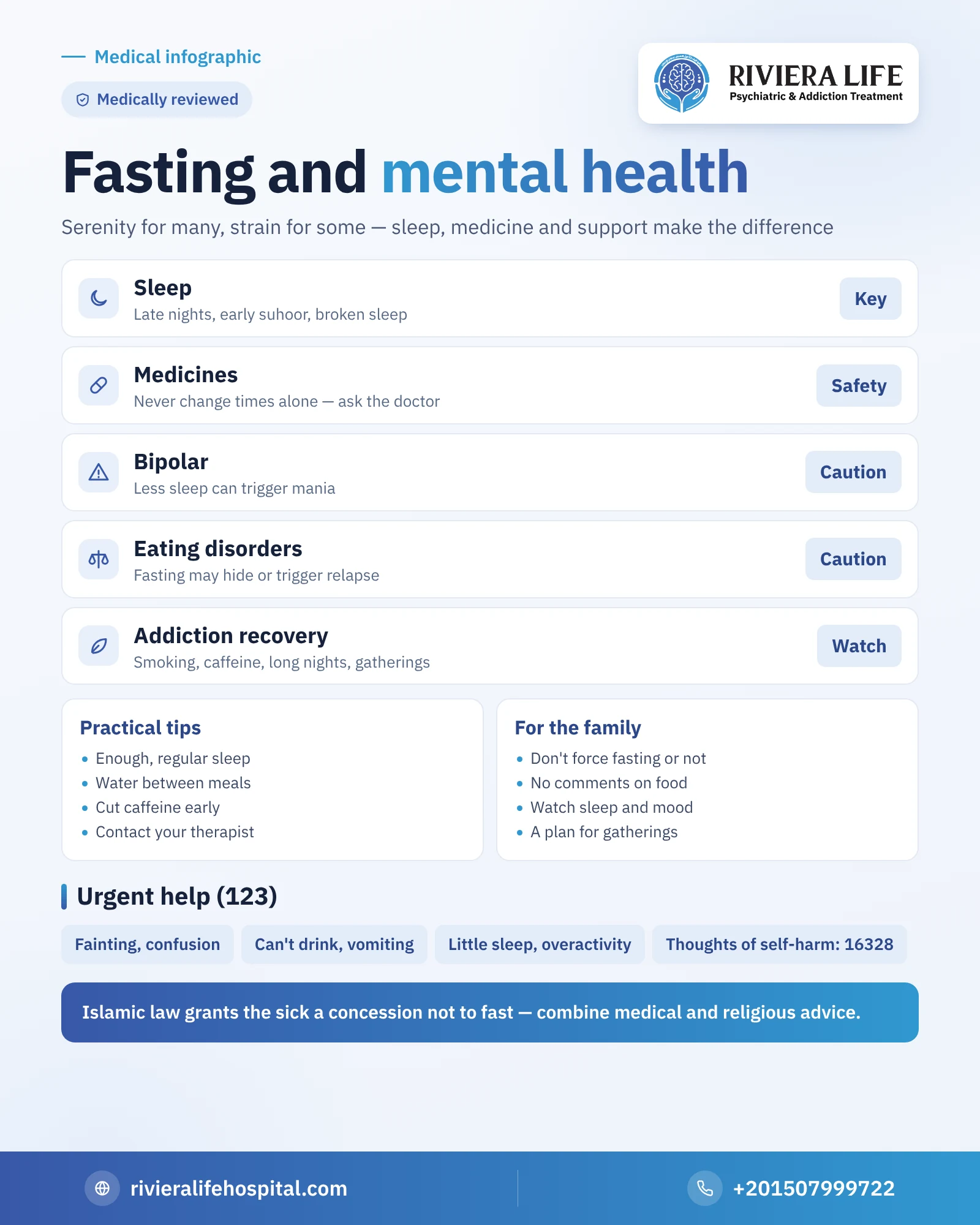
Eating and sleeping times change greatly in Ramadan: longer staying up, waking early for suhoor, and broken sleep. Sleep is a basic pillar of mood stability, especially for those with bipolar disorder, where lack of sleep is one of the best-known triggers of manic episodes. And someone with chronic insomnia may notice it getting worse. For deeper information on sleep disorders read the insomnia guide, and to learn about the hormone linked to sleep, melatonin and sleep.
Who needs special caution?
- Those recovering from an eating disorder: deliberate deprivation of food may be among the most dangerous triggers of relapse, and we dedicate a separate section to it.
- Those with bipolar disorder: because of sleep and the changed daily rhythm.
- Those taking psychiatric medicine regularly: because changing dose times without medical supervision may make the medicine lose its effectiveness or cause withdrawal and troublesome symptoms.
- Those with severe depression or thoughts of harm: exhaustion and deprivation may increase the symptoms, and the matter needs close follow-up.
- Those suffering from accompanying physical illnesses: such as diabetes and kidney and heart diseases, and pregnant and breastfeeding women, as they have medical considerations beyond mental health.
Psychiatric medicines and fasting: don’t adjust anything yourself
Many ask: should I stop the medicine in Ramadan? The safe answer: don’t change, stop or postpone any psychiatric medicine on your own. Some medicines can have their times moved to after iftar and before suhoor as suits and as the doctor decides, some need greater follow-up, and some may not suit fasting in some patients. The decision is individual and belongs to the doctor who knows your condition and treatment. It helps to read are psychiatric medicines addictive? to understand why sudden stopping isn’t right, and the details of antidepressant withdrawal symptoms.
Islamic law grants the sick person the concession not to fast, and whoever is hesitant is advised to talk with their doctor and with religious scholars they trust, combining medical and religious advice, without anyone pressuring them or the matter turning into a feeling of guilt.
Fasting and eating disorders: the risk of relapse
Fasting is a religious practice with spiritual meaning, and it isn’t what causes eating disorders. But someone recently recovered from bulimia, anorexia or compulsive eating may find in long abstinence an opportunity to hide the disordered behavior under an acceptable cover, or regain the obsession with controlling food and the body. Iftar may be followed by episodes of overeating then guilt and compensation. To learn the signs read the eating disorders guide.
Doctors advise those with a history of an eating disorder to discuss the matter with their treatment team before Ramadan. In many cases not fasting in the early stages of recovery, or fasting under follow-up, is advised. Seek an assessment immediately if you notice continued refusal to eat after sunset, deliberate vomiting, hiding food, or repeated fainting.
Seek urgent medical help (123) if there appear
Fasting doesn't justify ignoring these signs:
- Fainting, severe confusion or clouding of consciousness
- Inability to drink water with repeated vomiting or signs of severe dehydration
- Very little sleep with excessive activity and agitation and illogical thoughts
- Thoughts of self-harm or suicide, and call the mental health hotline 16328
Fasting on the journey of recovery from addiction
Some people in recovery welcome Ramadan as a spiritual opportunity to stay away from drugs, alcohol or smoking, and this is valuable motivation. But there are weak points that need attention:
- Smoking and caffeine: daytime abstinence stirs craving and irritability, then the faster may rush into excess after iftar. See quitting smoking and caffeine addiction.
- Staying up and emptiness: the long nights of Ramadan are a risky time for someone whose nights are linked to use or to old company.
- Company and occasions: banquets and gatherings may put the person in recovery in front of social triggers, so a ready plan for refusing is needed.
- Treatment medicines: someone taking medicines to treat addiction or prevent relapse doesn’t stop them or change their times without the doctor.
To learn the stages of recovery and the importance of support, read the stages of recovery from addiction.
Practical tips to protect mental health during fasting
- Make sure of enough sleep and regular times as much as possible, and don’t stay up until dawn every night.
- Drink enough water between iftar and suhoor, and eat balanced meals instead of sweets alone.
- Reduce caffeine gradually weeks before Ramadan if you depend on it, to avoid headaches and irritability.
- Have a safe social routine: iftar with a supportive family, group prayer, and charitable activities that fill the time.
- Contact your therapist before Ramadan and in the middle of it, and don’t wait until things get worse.
- If your mood weakens or signs of relapse appear, consider that a signal for assessment, not failure.
For the family: how do you support without pressure?
Don’t force anyone to fast or not to fast, and don’t hold them to account for their medical decision. Be cooperative in preparing a suitable suhoor, and a calm iftar without comparisons or comments on the amounts eaten, and pay attention to changes in sleep and mood. And if you have a relative recovering from addiction, agree with them on a plan for occasions and late nights, and tell them you are ready to support when needed.
When do you seek help?
Contact a psychiatrist if anxiety or depression increases in Ramadan, sleep collapses for days, a strong desire to relapse appears, disordered eating behavior returns, or you feel tension and confusion that hinder your life. And don’t postpone calling when there are thoughts of self-harm: the mental health hotline 16328, and the ambulance 123.
How does Riviera Life help you?
At Riviera Life the psychiatry and addiction consultants follow recovery cases throughout the year, and help the patient and their family organize treatment, sleep and support in difficult seasons, while respecting their values and beliefs. Round-the-clock medical monitoring is available, confidentiality is complete, and the program includes family support and follow-up after discharge. The first consultation is free on +201507999722 in Sheikh Zayed, Giza.
More from the recovery guide
- The stages of recovery from addiction
- The relapse treatment program
- The aftercare program
- Eating disorders: the complete guide
- Drugs in Ramadan and families’ religious questions about addiction
Questions many people ask
The effect varies; some fasters feel serenity and discipline, and others suffer from disturbed sleep and irritability, and the experience is affected by sleep, medicine and social support.
Don't stop it or change its times on your own, as the decision belongs to the treating doctor, who may move doses to suitable times or decide what suits your condition.
Fasting may be a trigger for relapse, and it should be discussed with the treatment team before Ramadan, and not fasting may be advised in the early stages of recovery.
It may be a strong motivation for a new start, but it is better within a treatment plan, while paying attention to staying up, smoking, caffeine and social occasions.
They need careful follow-up because lack of sleep and a changed daily rhythm are among the triggers of manic episodes, and any decision is made with the doctor.