Many look for happiness in a substance: a cigarette that calms, a pill that cheers, or a glass that makes them forget. The reason is that drugs give a quick burst of euphoria or relief, but they borrow it from the brain’s balance and then demand repayment with interest: anxiety, emptiness and a need for a bigger dose. Improving your mood without drugs is possible, but it is slower and calmer, and needs a daily structure, not a magic solution. Here we present ways backed by good scientific evidence that help mood and energy, explain what someone recovering from addiction can expect, and when the problem is depression that needs medical treatment, not general advice.
Why do drugs seem like a shortcut to happiness?
Narcotic and stimulant substances raise the brain’s reward signals far more than ordinary activities do, and with repetition the brain gets used to this level and lowers its natural response. So good food, time with friends and achievement become less bright, and the need for the substance grows. That is why it isn’t enough to tell someone at the start of quitting to “enjoy the simple things”. If you want to understand the mechanism in more detail, the article on dopamine and addiction explains it.
What can you expect when you build your mood without a substance?
- Natural happiness is calmer: it is ease and lightness, not a sharp high followed by a fall.
- Improvement is cumulative: you won’t notice it in a day, but it appears after weeks of regularity.
- Bad days come: their presence isn’t failure and doesn’t mean the method isn’t working.
- Someone quitting a substance needs extra time: the brain may go through a period of flatness and boredom after stopping that lasts weeks and sometimes months; it is temporary and usually improves. Articles such as dopamine withdrawal symptoms detail it.
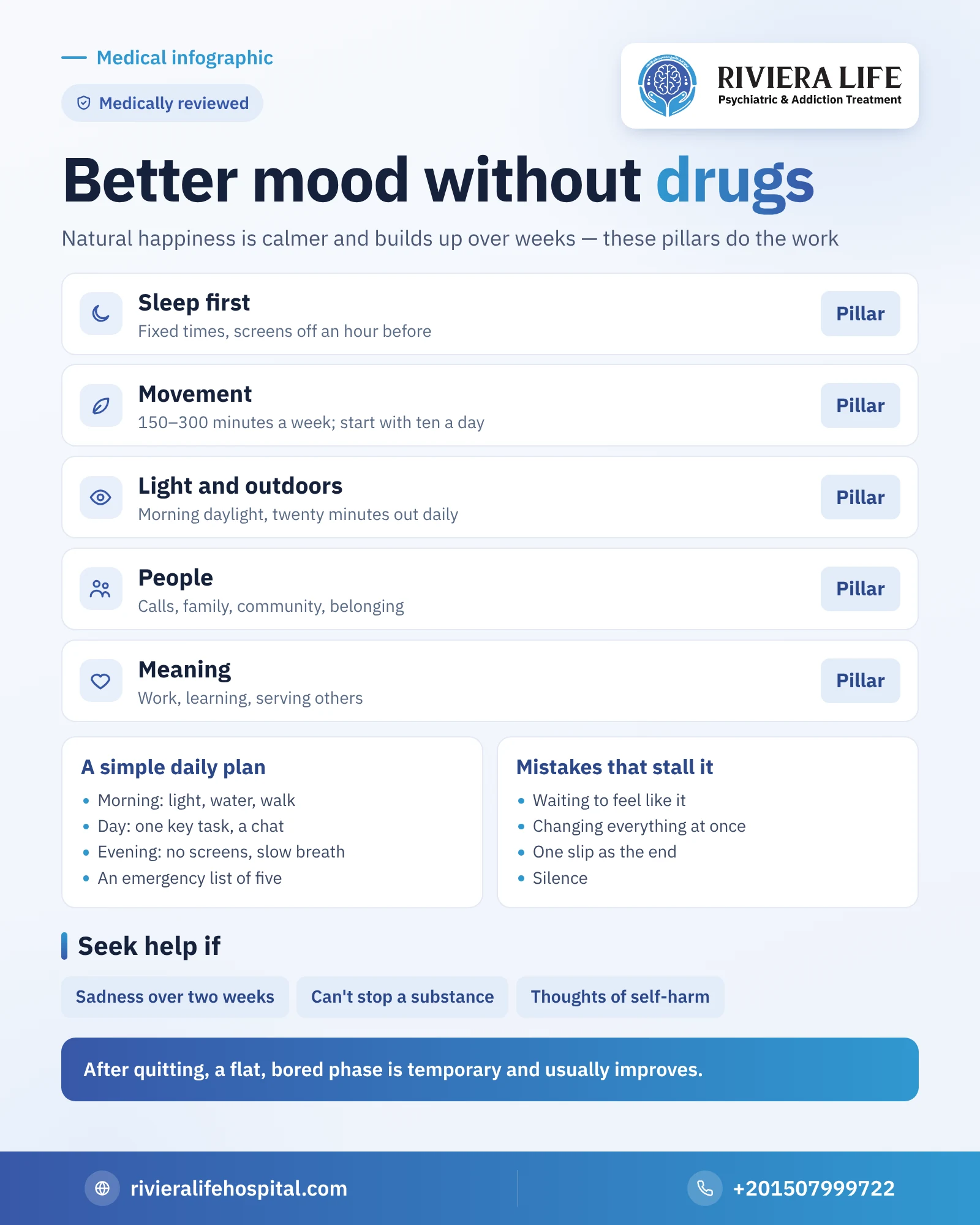
The pillars that really improve mood
1. Sleep first
Lack of sleep raises tension, weakens emotional control and increases cravings. Most adults need about seven hours or more. What helps: a fixed time for sleeping and waking even on holidays, putting screens away about an hour before sleep, and reducing caffeine after midday. For details, see melatonin and sleep and sleep disorders.
2. Movement
The World Health Organization recommends about 150 to 300 minutes a week of moderate activity for adults, or the equivalent in more intense activity. Brisk walking is enough to start. Movement stimulates endorphins, eases tension and improves sleep, and has a noticeable effect on mood in many people, even in mild and moderate depression as part of a treatment plan. Start with ten minutes a day, as what matters is continuing. The article on how to increase endorphins explains the details.
3. Light and getting out of the house
Exposure to daylight in the morning regulates the body clock and improves alertness and mood. Sitting in an open space, a garden, or near the Nile or the sea lowers tension for many people. Give yourself a daily outing, even for twenty minutes.
4. People
Good relationships are among the strongest sources of lasting pleasure. A call to a friend, a family gathering, praying in congregation, or a sports club all do what the substance doesn’t: they give belonging. If you feel isolated, the article on loneliness and social isolation suggests steps.
5. Regular eating
Jumping between hunger and quick sugars makes energy and mood swing. Regular meals that include protein, vegetables and enough water help stability. There is no miracle food that treats depression, and a doctor should be consulted first about any dietary supplement to avoid interactions with medicines.
6. Purpose and meaning
Momentary pleasure evaporates, but meaning stays. Work you do well, learning a skill, serving others, or responsibility towards your family all give you a reason to get up. Researchers link a sense of meaning with better mental health in the long run.
7. Calming the mind
Slow breathing, meditation, mindfulness and focused prayer reduce tension and help you notice craving without giving in to it. Start with five minutes a day, and don’t expect to feel relief the first time. The UK’s National Health Service (NHS) offers simple guidance on this.
What about “happiness hormones”?
The matter is often reduced to dopamine, serotonin, oxytocin and endorphins. These neurotransmitters really are important, but improving mood isn’t a matter of “raising” one of them with a trick. The most useful way is to practise the habits naturally linked to them: movement, light, connection, sleep and achievement. You can read happiness hormones to learn the role of each, and find more ideas in how to raise dopamine and how to raise serotonin.
Beware of substitutes that turn into a new addiction
Someone who leaves a substance and jumps to a quick substitute brings the problem back in another guise: endless gaming, compulsive shopping, excess sugar or energy drinks, or never-ending viewing. The question that reveals the difference: does this activity give me a wider life or narrow it? If you feel you have lost control over it, see social media addiction and caffeine and energy drink addiction.
A simple daily plan to start with
- Morning: waking at a fixed time, light, a glass of water and a short walk.
- During the day: regular meals, one important task you complete, and a conversation with someone you love.
- Evening: an activity you enjoy without a screen, slow breathing, and turning the lights off at a fixed time.
- An emergency list: write five things that calm you when craving or distress intensifies (a call, a walk, a shower, prayer, playing with the children), and put it somewhere visible.
Mistakes that stall improvement
- Waiting until you feel like it: motivation usually comes after you start, not before. Start with five minutes and the rest will follow.
- Changing everything in one day: a perfect plan collapses in the second week. Change one habit every two weeks.
- Treating a slip as the end of the road: if you miss a day of exercise or stay up late, go back the next day without beating yourself up.
- Relying on stimulants: coffee, energy drinks and cigarettes to make up for lack of sleep add tension to tiredness.
- Comparing yourself with curated pictures: people’s joy on the screen is selected, and may make your normal day seem sad.
- Silence: someone who keeps their distress to themselves for months suffers more, and talking to someone or a therapist changes the picture.
And for those living with someone who has quit a substance: don’t ask them to “be happy”, but share a simple activity with them, praise every day they stick to it, and watch for signs of depression, because they raise the risk of returning to the substance. Reading depression and addiction helps you with this link.
Try this plan for two consecutive weeks and then assess yourself: has your sleep improved? Has the morning become lighter? If nothing has changed despite sticking to it, that is a good signal to ask for a medical assessment instead of blaming yourself.
When isn’t general advice enough?
If sadness or loss of pleasure lasts two weeks or more, if you find you can’t stop a substance despite the harm, or if thoughts of self-harm come to you, you need professional help, not more patience. Depression is an illness with a treatment, and its treatment sometimes includes psychotherapy and sometimes medicine (see treating depression without medication). Someone taking a psychiatric medicine shouldn’t stop it in search of a “natural solution” except by their doctor’s decision. For someone quitting a substance, stopping some substances suddenly is dangerous and needs medical supervision. In emergencies: ambulance 123 and the mental health hotline 16328.
How can Riviera Life help you?
At Riviera Life in Sheikh Zayed, we help those worn out by substances and those with low mood to build a stable life: psychological and medical assessment, addiction treatment if present, follow-up after treatment, and involving the family. The first consultation is free and confidentiality is complete: +201507999722.
More from the mental health guide
Questions many people ask
Yes, but it is calmer and slower, and is built through habits of sleep, movement, relationships and meaning. After quitting, the brain may need weeks or months to regain its natural response.
There is no single way, but regular sleep, physical activity, exposure to light and social support are among the strongest pillars.
The World Health Organization recommends about 150 to 300 minutes a week of moderate activity for adults, and you can start with ten minutes a day.
There is no miracle supplement, and some interact with medicines, so a doctor should be consulted before any supplement.
If sadness or loss of pleasure lasts two weeks or more and affects daily life, or thoughts of self-harm appear. Then a medical assessment is needed.