Depression relapse is the return of symptoms after a period of improvement, and it is more common than most patients and their families expect. Roughly half of those who recover from a first episode may go through another episode in their life, and the chances rise with each new episode. But relapse usually doesn’t come suddenly: it is preceded by small signals that can be caught early, it has known triggers, and its chances can be greatly reduced with a written plan. This article is for those who have already improved and want to keep what they have reached.
What is meant by depression relapse?
Doctors distinguish between two close situations. The first is “relapse”, the return of symptoms in the first months after improvement, before recovery has fully settled, as if the episode itself hadn’t yet ended. The second is “recurrence”, a new episode appearing months or years after full recovery. The difference matters to the doctor because it changes the decision on the length of treatment, but the practical plan in both cases is similar: early attention and quick intervention. To learn the full symptoms of the episode itself, see the article on depression symptoms.
Depression relapse differs from psychosis relapse in its signs and how it is handled, so anyone caring for a person with schizophrenia or psychosis will find what concerns them in psychosis relapse.
Why does depression return after improvement?
Improvement doesn’t mean that everything that paved the way for the episode has disappeared. A genetic predisposition may remain, or a harsh pattern of thinking towards oneself, or unresolved pressures at home or at work. Research indicates that each episode leaves the brain a little more sensitive, so the next episode needs a smaller trigger to begin. That is why doctors deal with recurrent depression as a condition that needs long follow-up, like blood pressure, not as an event that ends when the symptoms end. The factors that make a person more vulnerable to depression in the first place are explained in the article on the causes of depression.
Who is most vulnerable to relapse?
- Someone who has been through two or more episodes before.
- Someone who improved only partially, with residual symptoms such as insomnia or loss of pleasure remaining.
- Someone who stopped medicine or psychotherapy early after feeling better.
- Someone whose first episode began at a young age, or whose episodes were severe.
- Someone with accompanying anxiety, or who uses alcohol or drugs.
- Someone living with ongoing pressures or isolation without a support network.
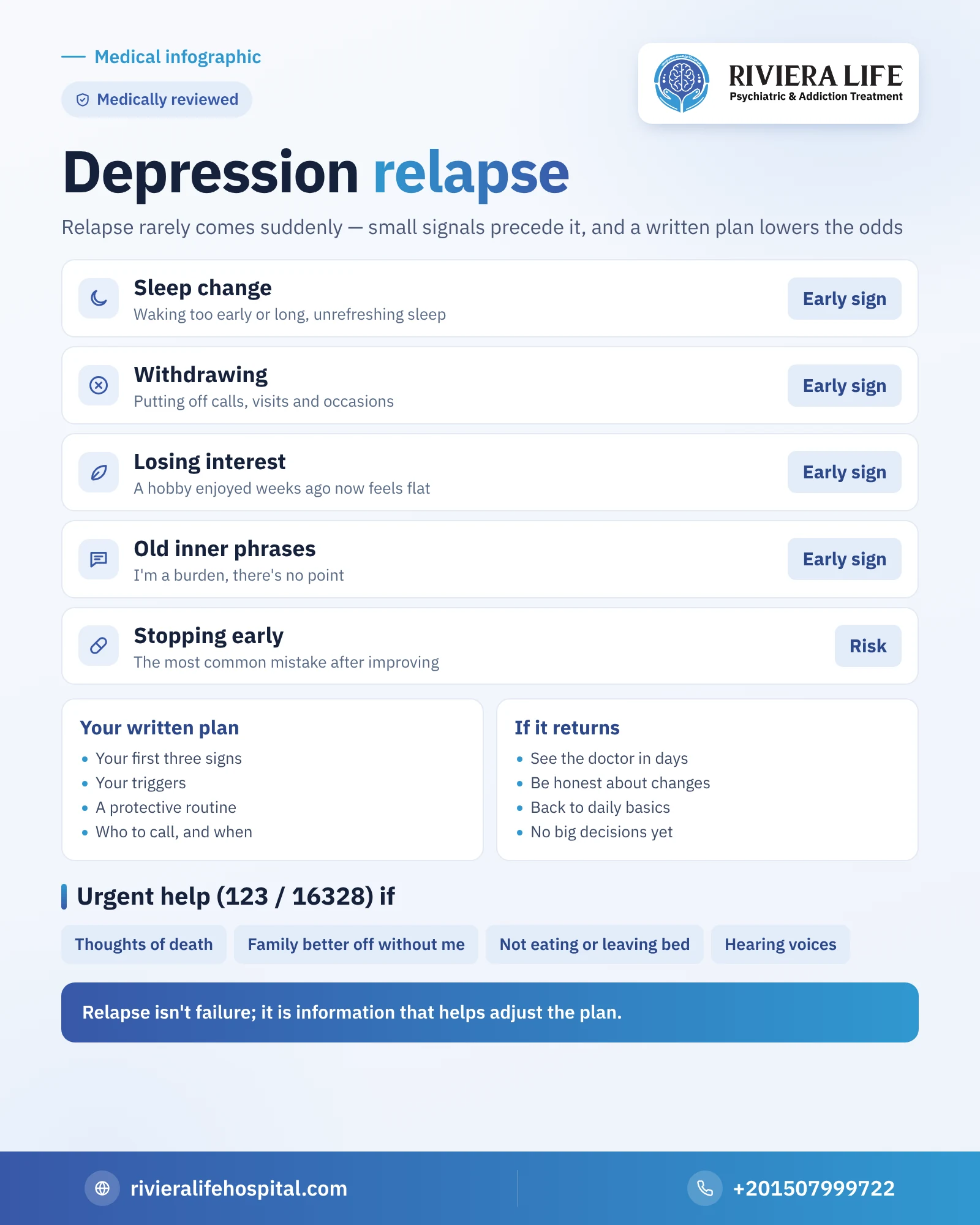
The early warning signs
The first signs are usually much milder than the full episode, which is why people ignore them. What helps is that each person has a “fingerprint” that repeats: what appeared first in the previous episode usually appears first in the next. Among the best-known of these signals:
- A change in sleep lasting more than a week: waking very early, or long sleep that doesn’t refresh.
- Putting off calls and visits and excusing oneself from occasions the person used to enjoy.
- Indifference towards a hobby or activity they found pleasure in weeks ago.
- The return of old inner phrases such as “I’m a burden” or “there’s no point”.
- Getting irritable faster than usual, or crying over small things.
- Relying more on coffee, cigarettes or sleeping pills to get through the day.
The husband, mother or close friend often notices these changes before the person themselves, so it helps to agree with someone you trust that they will calmly alert you when they see them.
Common triggers of relapse
A trigger isn’t a cause on its own, but it is the spark that ignites an existing predisposition. Among the most frequent in the clinic:
- Losses and transitions: the death of a relative, divorce, losing a job, or even a big positive change such as moving or marriage.
- Ongoing lack of sleep, as happens with a new baby or night shifts.
- Chronic disputes within the family.
- A chronic physical illness or long-lasting pain.
- Returning to alcohol, hash or sedatives, a relationship we explained in the article on depression and addiction.
- Particular seasons for those with a seasonal pattern, as in the article on seasonal depression.
Stopping treatment early: the most common mistake
The patient improves after weeks on an antidepressant, and says to themselves: “I’m fine now, why continue?” This very moment is the most dangerous. Improvement in the first months is fragile, and the medicine is what supports it. That is why medical guidelines usually recommend continuing the medicine for several months after symptoms go, and longer for those whose episodes have recurred, and the doctor sets the duration for each case.
There is another common confusion: someone who stops an antidepressant suddenly may feel dizziness, irritability and flu-like symptoms within days. These are discontinuation symptoms and not necessarily relapse, but they are unpleasant and can be avoided when stopping is done gradually under the doctor’s supervision. The fixed rule: don’t change the dose or stop the medicine yourself, even if you feel fully better. The details of the medicine classes are in the article on antidepressants.
The same applies to psychotherapy. Many stop their sessions after the first improvement, while the last sessions are the ones that build prevention skills.
A relapse prevention plan: how do you write it?
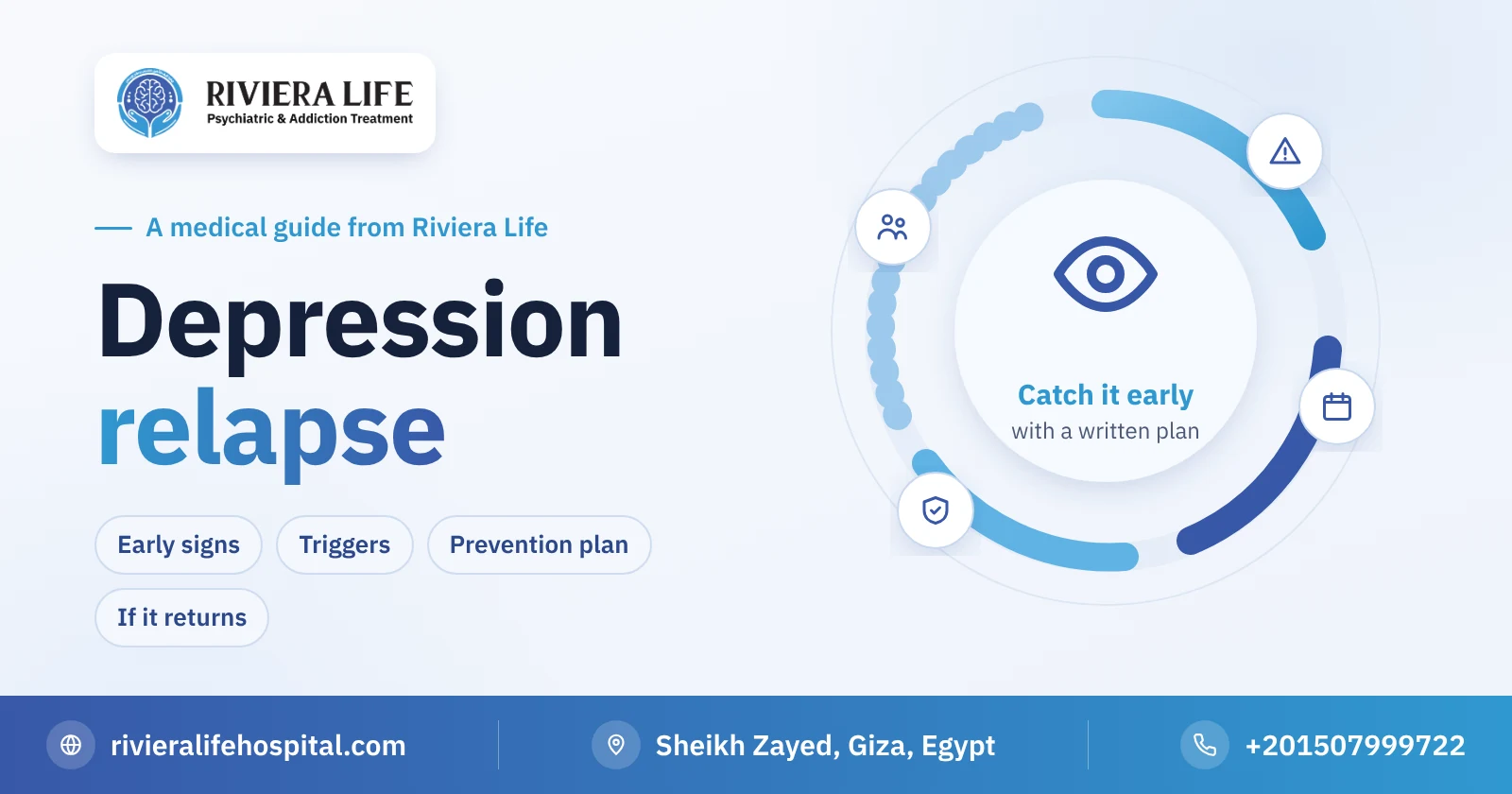
A good plan is a single sheet you write with your doctor or therapist while you are well, not in the middle of a crisis. It usually includes:
- Your personal signs: the first three signals that appeared in your previous episode.
- Your triggers: the situations you know weaken you, and how to prepare for them.
- A protective routine: fixed sleep times, physical activity, and weekly contact with someone close.
- First-level steps: what you do when you notice one signal for a week, such as increasing activity and asking for a follow-up session.
- Second-level steps: when you call the doctor directly without waiting for the appointment.
- Important numbers: the doctor’s number, a supportive person, and emergency numbers.
Give a copy to someone you trust, as having a witness makes carrying it out easier when willpower weakens.
Mindfulness-based cognitive therapy
This program was developed specifically for those whose episodes have recurred. It combines techniques of cognitive behavioral therapy with exercises in attention to the present moment, and trains the person to notice the first thoughts of a dip without being swept along by them. It is usually offered in groups over about eight weeks, and is supported by good evidence in those who have been through three or more episodes. It isn’t an automatic substitute for medicine; the doctor decides with the patient whether it is added or gradually replaces it.
What do you do if depression really does return?
The first thing doctors say: relapse isn’t failure and doesn’t mean treatment didn’t work. It is new information that helps adjust the plan. The practical steps:
- Contact your doctor within days, not weeks. Early intervention usually makes the episode shorter and milder.
- Be frank: did you stop the medicine? Did you go back to a substance? This information changes the decision.
- Go back to the basics of the day: sleeping and waking at a fixed time, regular meals, and a short outing every day.
- Don’t withdraw from people even if you want to, even with a short call.
- Avoid big decisions such as resigning or separating until your mood improves.
The doctor may adjust the medicine or add psychotherapy, and review the diagnosis: some people whose episodes recur have undiscovered bipolar disorder, which changes treatment completely.
Seek urgent help immediately if you see
Call an ambulance on 123 or go to the nearest emergency department, and you can ask for guidance from the mental health hotline on 16328.
- Repeated thoughts of death or ending life
- Talk that the family would be better off without them
- Completely stopping eating, drinking or leaving bed
- Strange thoughts or hearing voices with the depression
The family’s role in preventing relapse
The family isn’t a watchman, but a second pair of eyes. It helps a lot for them to know the agreed warning signs, and to ask gently instead of accusing: “I noticed you’re sleeping a lot this week, how are you?” instead of “Are you back at it?”. Avoid pressure to stop the medicine on the grounds that “psychiatric medicines cause addiction”, as this is among the things that most push patients to stop early. For more practical guidance, see the article on how the family deals with someone with a mental illness.
How can Riviera Life help you?
At Riviera Life in Sheikh Zayed, consultant psychiatrists review the history of previous episodes, set a written prevention plan with you, and follow treatment over the long term instead of only treating the current episode, involving the family when needed and with complete confidentiality. The first consultation is free on +201507999722.
More from the depression guide
- Depression: the complete guide
- Depression treatment and the steps of recovery
- Treating depression without medication: when is it enough?
- Medication for depression and anxiety: how the choice is made
- Depression and diabetes: a two-way relationship and how to break the cycle
Questions many people ask
Relapse is the return of symptoms in the first months after improvement, before recovery settles, while recurrence is a new episode after a period of full recovery. The doctor uses this difference in deciding the length of treatment.
Not necessarily; dizziness, irritability and flu-like symptoms after a sudden stop are usually discontinuation symptoms. But telling them apart from relapse needs the doctor, and stopping is done gradually under their supervision.
Guidelines usually recommend continuing for several months after symptoms go, and longer for those whose episodes have recurred. The doctor sets the duration according to each patient's history.
No, relapse is common in depression, and it is information that helps adjust the plan. Early intervention usually makes the episode shorter and milder.
There are no guarantees, but sticking to treatment, knowing the early signs and mindfulness-based cognitive therapy greatly reduce the likelihood for many patients.