The short answer
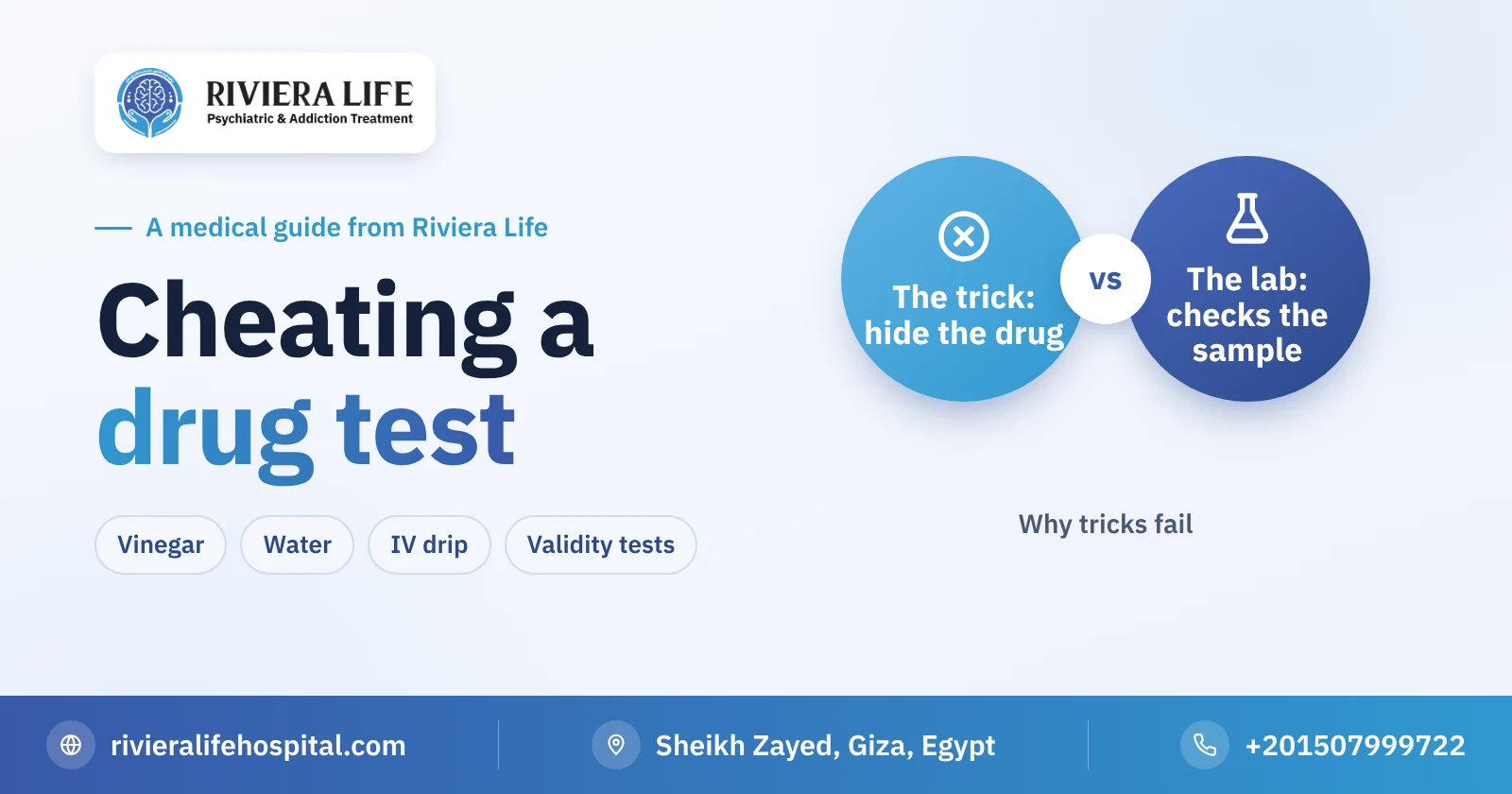
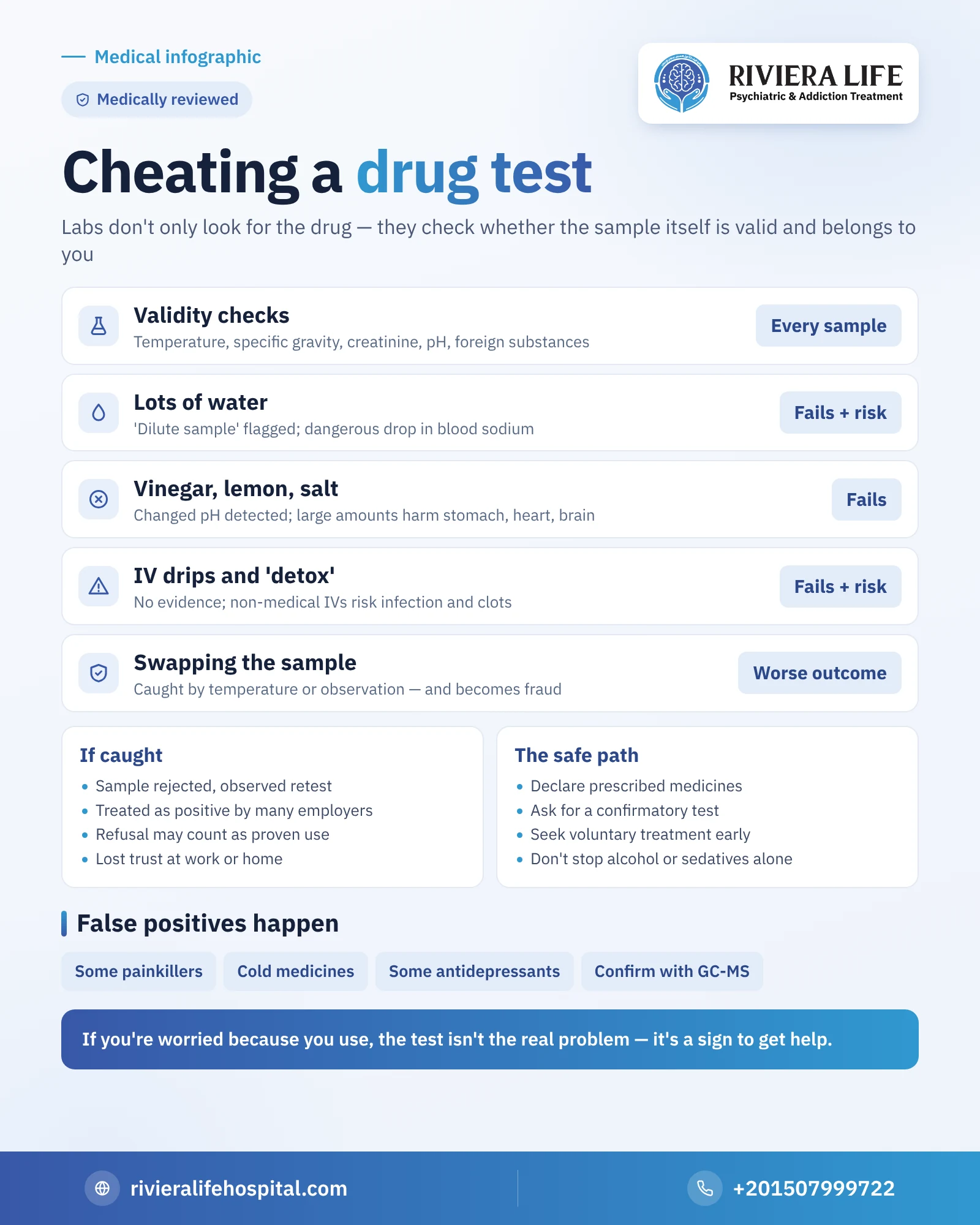
The widespread tricks for cheating a drug test, such as vinegar, lemon and salt, “IV drips” and cleansing drinks, drinking huge amounts of water, or swapping the sample, usually fail. The reason is that labs don’t only look for the drug; they check the validity of the sample itself: its temperature, specific gravity, creatinine level, acidity and the presence of foreign substances. A diluted or adulterated sample is rejected or treated as a positive result by many employers. Some of these tricks are dangerous to health. The path that really protects you: tell the lab about your prescribed medicines, and seek confidential voluntary treatment if you use.
- What does the lab check?The drug and the sample’s validity together
- The fate of an adulterated sampleRejection, a retest, or being treated as positive
- The safe alternativeDeclaring medicines, or confidential voluntary treatment
Every day hundreds of people type questions into Google such as “how to cheat a drug test”, “does vinegar stop hashish showing” and “blood-cleansing drip before a test”. Behind every question is a real story of worry: a job at stake, an engagement, a driving license, or fear of the family. This article won’t give you a trick, because the tricks don’t work as advertised, and some of them harm you. But it will explain frankly what happens to the sample inside the lab, why attempts are exposed, and what options really protect you.
What does the lab check besides the drug itself?
Many people think the test is one question: is there a drug in the sample or not? In fact serious labs, especially for workplace and official tests, ask another question first: is this a valid sample that really belongs to this person? That is why they check what is known as specimen validity, including:
- The sample’s temperature at the moment it is handed in, because fresh urine has a temperature close to body temperature.
- Specific gravity and creatinine level, which reveal a sample diluted with water.
- Acidity, which changes when vinegar, lemon or other things are added.
- The presence of oxidizing or foreign substances not found in normal urine.
- Color, smell and appearance.
Some providers collect the sample under direct observation, or in toilets with no water source and dyed toilet water. If the preliminary result is positive, a confirmatory test is done with precise equipment that identifies the substance itself, as our article on drug testing explains.
The common tricks: why do they fail?
Drinking huge amounts of water or diuretics
The idea is that diluting urine hides the substance. But a heavily diluted sample shows up immediately from specific gravity and creatinine, so it is marked “dilute sample” and a retest is requested, and many employers treat it as tampering. More dangerous still, drinking huge amounts of water in a short time may cause a sharp drop in sodium, a medical emergency that may lead to seizures and coma.
Vinegar, lemon and salt
Adding them to the sample changes its acidity or composition in a way the validity check picks up, so the sample is rejected. Drinking large amounts doesn’t flush the drug from the body, but may cause severe heartburn and stomach irritation, and taking large amounts of salt can be a real danger to the heart and brain.
“IV drips” and cleansing drinks and herbs
Solutions, herbs and drinks are sold promising to cleanse the blood or urine of drugs within hours. There is no scientific evidence that they reliably speed the drug’s exit, and most of what they do is dilute the urine, which is detected as above. Having intravenous fluids outside a hospital without a medical reason may cause infection, clots and salt imbalances, especially in heart and kidney patients.
Swapping or borrowing a sample
Someone else’s sample or a ready-made sample is usually exposed by temperature or observation, and carries consequences bigger than the positive result itself, because it turns the situation from a health problem into fraud on an official document.
Exercise, sauna and sweating
They don’t flush the substance out as fast as some imagine. In fact, some substances stored in fat, such as hashish, may temporarily rise in the blood as fat is burned. The details for each substance are in our guide to how long hashish stays in the body.
What happens if the attempt is discovered?
The consequences vary by provider, but are usually worse than admitting early:
- The sample is rejected and the test repeated under stricter observation.
- An adulterated or diluted sample is treated as a positive result under many workplace policies.
- In tests of government employees in Egypt, it is reported that refusing the test without an excuse may be treated as proof of use, as our article on the law and addicts in Egypt explains.
- Loss of trust, which is hard to regain at work, in an engagement or in the family.
Can a positive result appear when you haven’t used?
Yes, this sometimes happens, and here the solution isn’t a trick but the correct procedure. Some prescribed medicines may give a positive preliminary result, such as certain painkillers, cold medicines and antidepressants. So tell the lab before the test about every medicine you take, carry the prescription, and request a confirmatory test if the result is positive. The details of medicines that may cause this are in the false-results section of our article on drug testing.
If you use: the path that really protects you
If you are worried about the test because you actually use, the test isn’t your real problem, but a sign that things have reached a point that affects your life. Here are options better than any trick:
- Seeking voluntary treatment early. In Egypt, officials of the Fund for Drug Control have stated that an employee who comes forward for treatment before the screening campaign at their workplace is treated free and confidentially. The hotline is 16023, and the details are in free addiction treatment in Egypt.
- Consulting a doctor confidentially before any step. The doctor doesn’t report to the police; confidentiality is part of their work.
- Not stopping some substances suddenly on your own, such as alcohol, sedatives and pregabalin, because their withdrawal may be dangerous.
And if the test is for a member of your family, confronting them with the test result alone rarely works; it is better to read how to help someone addicted to drugs.
How can Riviera Life help you?
At Riviera Life we treat anyone who contacts us because of an upcoming test with the same seriousness and confidentiality as any patient: a calm assessment of the situation, a safe withdrawal plan if needed, and treatment that addresses the cause, not the result. The first consultation is free and confidential on +201507999722.
Read also
- I have a drug test coming up: what should I do?
- How long ‘chemical’ stays in the body and test accuracy
- The importance of early addiction treatment
- The effects of drugs: the complete guide
Questions many people ask
No. Adding it to the sample changes its acidity, so the validity check detects it and the sample is rejected, and drinking large amounts doesn't flush the drug from the body and may irritate the stomach.
There is no evidence of this; most of its effect is diluting the urine, which the lab detects. Having intravenous fluids outside a hospital without a medical reason can be dangerous.
It means the urine is less concentrated than normal, so a retest is usually requested, and some employers treat it as tampering or a positive result.
Brief exposure in an open place rarely reaches the positive threshold, but heavy exposure for long periods in a closed space may raise the result. A confirmatory test helps assess the situation.
Tell the lab before the test, carry the prescription, and request a confirmatory test if the preliminary result is positive, as it distinguishes the medicine from the drug.