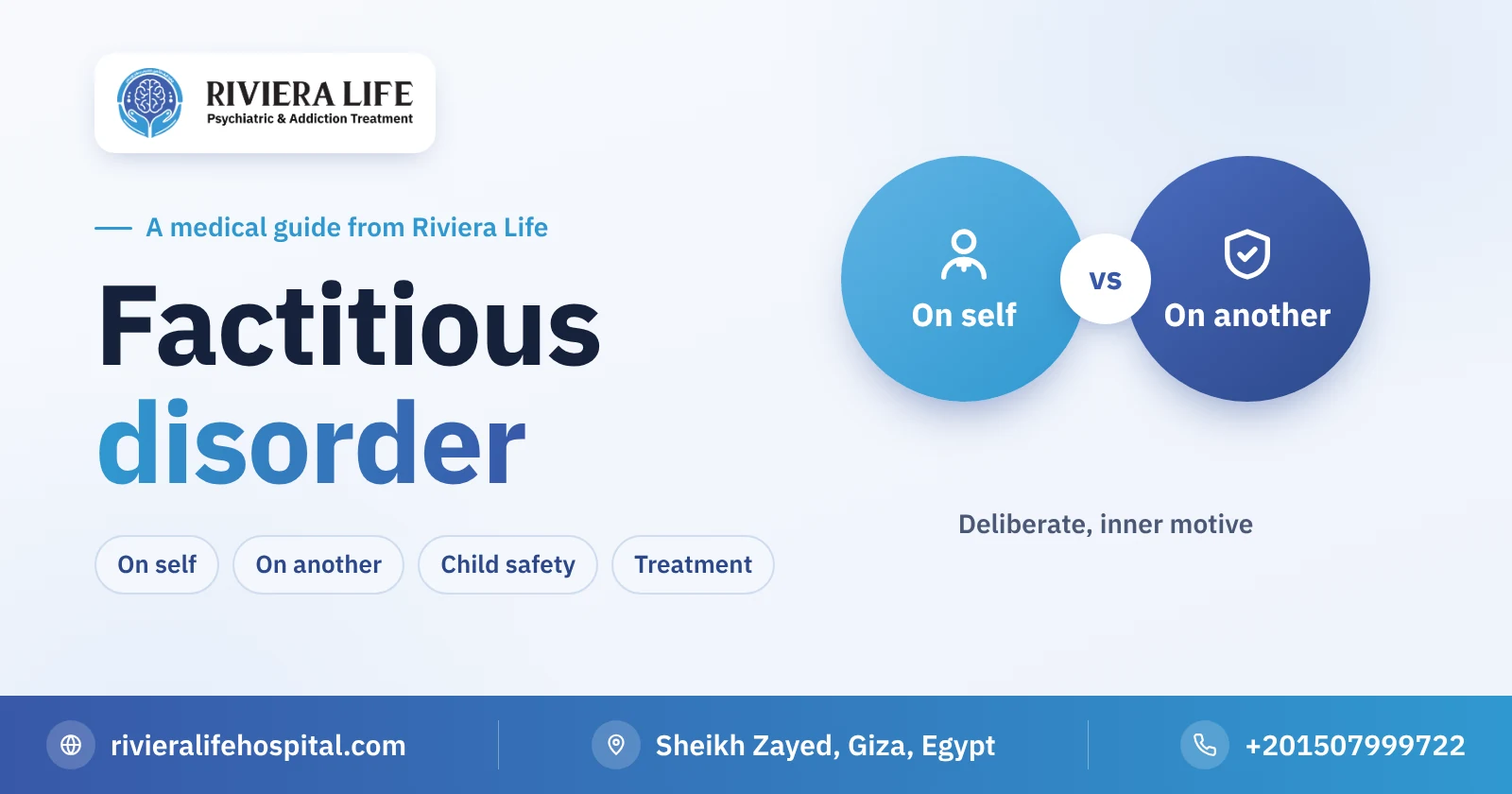
Factitious disorder is a psychological condition in which a person deliberately fabricates or causes symptoms of illness, then presents themselves to doctors as a genuine patient, without an obvious gain such as money or leave behind it. It may happen with oneself, and it may happen with another person under the care of the one fabricating, usually a child, which used to be called “Munchausen syndrome by proxy”. The condition is rare but serious, because the person may undergo real operations and injuries, and because a child exposed to it needs urgent protection. Here we explain its meaning, its types, how it differs from malingering and from health anxiety, and how doctors and the family act.
What is factitious disorder?
The core of the disorder is that the person falsifies symptoms or creates them covertly, with the intention of being seen as sick or injured. The motive is usually internal and psychological: the need for attention and care and for the role of the patient who is looked after. It isn’t a behavior that can be stopped by a decision, even though the act itself is done deliberately.
That is why the diagnostic manual classifies it among “somatic symptom and related disorders”, and divides it into two types: factitious disorder imposed on self, and factitious disorder imposed on another.
Imposed on self: how does it appear?
This type is linked to a pattern that doctors working in hospitals may recognize: a patient whose visits to the emergency department recur with dramatic symptoms, a long and complicated medical history across many hospitals, wide knowledge of medical terms, and symptoms that change or increase whenever tests are about to come back normal. The fabrication may take multiple forms, including reporting symptoms that don’t exist, falsifying results, or harming the body in ways that produce signs of illness.
We don’t mention methods of fabrication in detail here, as the aim is to inform, not to teach. It is enough to say that the results of this behavior may be real injuries, infections or surgical complications, and they may threaten life.
Imposed on another: when the victim is a child
In this type a person fabricates symptoms in another person who can’t defend themselves, and the best-known cases are a mother or female caregiver fabricating an illness for her child. The motive here too isn’t money, but gaining the role of the “self-sacrificing mother” and the attention of the medical team. This is considered a form of medical child abuse, and the victim is the child, not the one fabricating.
Some things that may catch the medical team’s attention, and that don’t indicate anything on their own:
- Symptoms that don’t match the test results and don’t improve with appropriate treatment.
- Symptoms that appear only when the caregiver is present and disappear in their absence.
- A long history of visits to different hospitals and centers and requests for many tests and operations.
- A caregiver who is very present and knowledgeable about medical details, and refuses the child’s discharge or any independent assessment.
Judgment in such cases isn’t the relatives’ business and isn’t left to hasty accusation; many anxious parents, or those who have a child with a rare illness, show these features without any fabrication. The decision belongs to a trained medical team and child protection authorities.
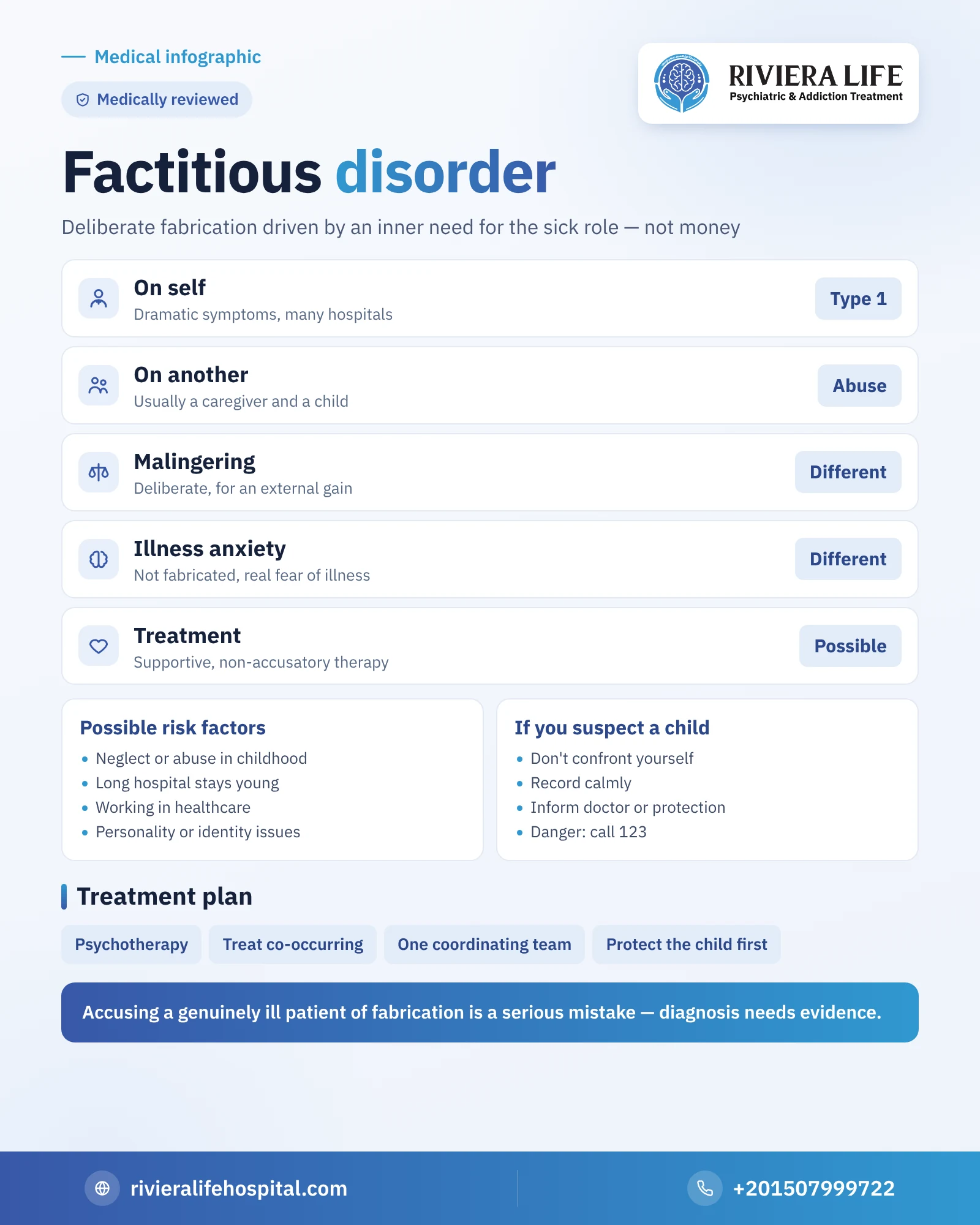
The difference from malingering, illness anxiety and psychosomatic symptoms
| Condition | Are the symptoms deliberately fabricated? | Motive |
|---|---|---|
| Factitious disorder | Yes | Internal and psychological: the sick role and attention |
| Malingering | Yes | A clear external gain such as compensation or evasion |
| Illness anxiety | No | A real fear of having an illness |
| Psychosomatic disorders | No | Real symptoms fed by psychological stress |
To distinguish it from unintentional functional neurological symptoms, read the article on conversion disorder. The two disorders are similar in that the symptoms aren’t medically explained, and differ in that fabrication is intentional while conversion isn’t.
Why does it happen? Likely factors
Doctors don’t know a single cause. Studies and clinical reports mention factors that recur in some people with the disorder, without being inevitable:
- A childhood with neglect, abuse or many illnesses that made illness the only way to receive affection.
- Experiences of serious illness when young or prolonged hospital admission.
- Working in the health field or close knowledge of the medical system.
- Personality or identity disorders and low self-esteem.
- Troubled relationships and a feeling of emptiness and loneliness.
The cost of fabrication on the body and life
Some people think the matter is “just a show”, but its toll is heavy. The patient undergoes invasive tests and operations they may not need, the effects of medicines, anesthesia and infections accumulate, and they may lose their job and relationships because the family is exhausted by their repeated episodes. Often the health system pays a large price in doctors’ time and hospital beds without knowing that behind all this is psychological pain.
As for the type imposed on another, medical reports indicate that some children suffer permanent complications, which is why doctors deal with it as a case of abuse requiring intervention, not merely a difference of opinion about treatment.
How is it diagnosed?
Diagnosis is difficult because the disorder is based on concealment, so the person usually doesn’t admit it. It begins with doctors’ suspicion when the story doesn’t match the results, so the medical history is gathered from different sources and every real organic cause is ruled out first. The conclusion should come after gathering sufficient evidence, not by assumption, as accusing a genuine patient of fabrication is a serious mistake. A psychiatrist takes part in the assessment.
Treatment: support, not harsh confrontation
Experience shows that harsh confrontation with the phrase “you are lying” pushes the patient to flee to another hospital, so the pattern repeats. That is why specialists tend towards a calm, non-accusatory approach that gives the patient a way out that preserves their dignity, and offers them psychological help without forcing them to confess. The plan includes:
- Psychotherapy: with the cognitive behavioral approach and therapy that works on identity, relationships and attachment, helping the patient find other ways to receive care.
- Treating accompanying disorders: such as depression, anxiety and personality disorders, and the doctor may prescribe medicine for them and it is only changed under their supervision. There is no medicine that treats the fabrication itself.
- Coordinating care: one doctor or one team takes over follow-up to reduce repeated unnecessary tests and surgeries.
- In the type imposed on another: the top priority is separating the child from the source of danger and protecting them, then treating the caregiver under psychological and legal supervision.
Improvement is possible but slow, and depends on the patient accepting treatment. The chance of success increases the more they feel understood rather than condemned. To learn about cognitive therapy you can read the article on cognitive behavioral therapy.
If you suspect a child is being subjected to this
- Don’t confront the caregiver yourself and don’t accuse them in front of the child.
- Record what you noticed calmly: dates, situations and contradictions, without conclusions.
- Inform the child’s doctor, the hospital administration or the authorities responsible for child protection.
- If the child is in immediate danger, call the ambulance immediately.
Call the ambulance on 123 immediately if any of these appear
Factitious disorder may threaten life; don't wait for a clinic appointment if one of the following signs appears.
- A child suddenly in a bad condition with suspicion that someone caused it
- A person who has physically harmed themselves, injected or taken something with the intention of causing illness
- Difficulty breathing, bleeding, loss of consciousness or severe pain
- Thoughts of ending one’s life, and you can also call the mental health hotline 16328
When should you seek psychological help?
If you find yourself fabricating or exaggerating symptoms to gain the attention of doctors or your family, know that this doesn’t make you evil, but indicates a deep need that requires treatment. An honest conversation with a psychiatrist is the first step, and it is governed by medical confidentiality. At Riviera Life the psychiatry consultants assess such cases in complete confidentiality and without judgment, and the first consultation is free. Read also when do you need a psychiatrist.
More from the somatic symptoms guide
- Conversion disorder: neurological symptoms without organic disease
- Illness anxiety: when worry about health becomes a disorder
- Psychosomatic disorders
- Personality disorders: the comprehensive guide
Questions many people ask
In both the fabrication is deliberate, but the malingerer seeks an external gain such as compensation or leave, while in factitious disorder the motive is internal and psychological: the sick role and attention.
In it a person fabricates symptoms in someone else in their care, usually a child, and it is considered a form of child abuse that requires protecting the child first.
Yes, the act is done deliberately, but the motive is deeply psychological and the person often can't stop it by a decision alone.
Yes, psychotherapy with a supportive, non-accusatory approach, treatment of accompanying disorders and coordination of medical care, and there is no medicine for the fabrication itself.
Don't confront the caregiver yourself; write down what you noticed and inform the child's doctor, the hospital administration or child protection authorities, and if the child is in immediate danger call the ambulance.