The relationship between hashish and sex is surrounded by talk passed around in cafés: that it makes sex “last longer”, heightens sensation and does away with tension. The medical reality is more complicated. Some users may notice a different feeling the first few times because their perception of time and touch changes, but in many studies regular use is linked to problems with erections, ejaculation and sperm quality, to menstrual disturbances in some women, and to a coolness that creeps into the marriage itself. This article explains how hashish affects men, women, fertility and pregnancy, what improves after stopping, and when you need a doctor.
Hashish and sex: why do some people think it improves sex?
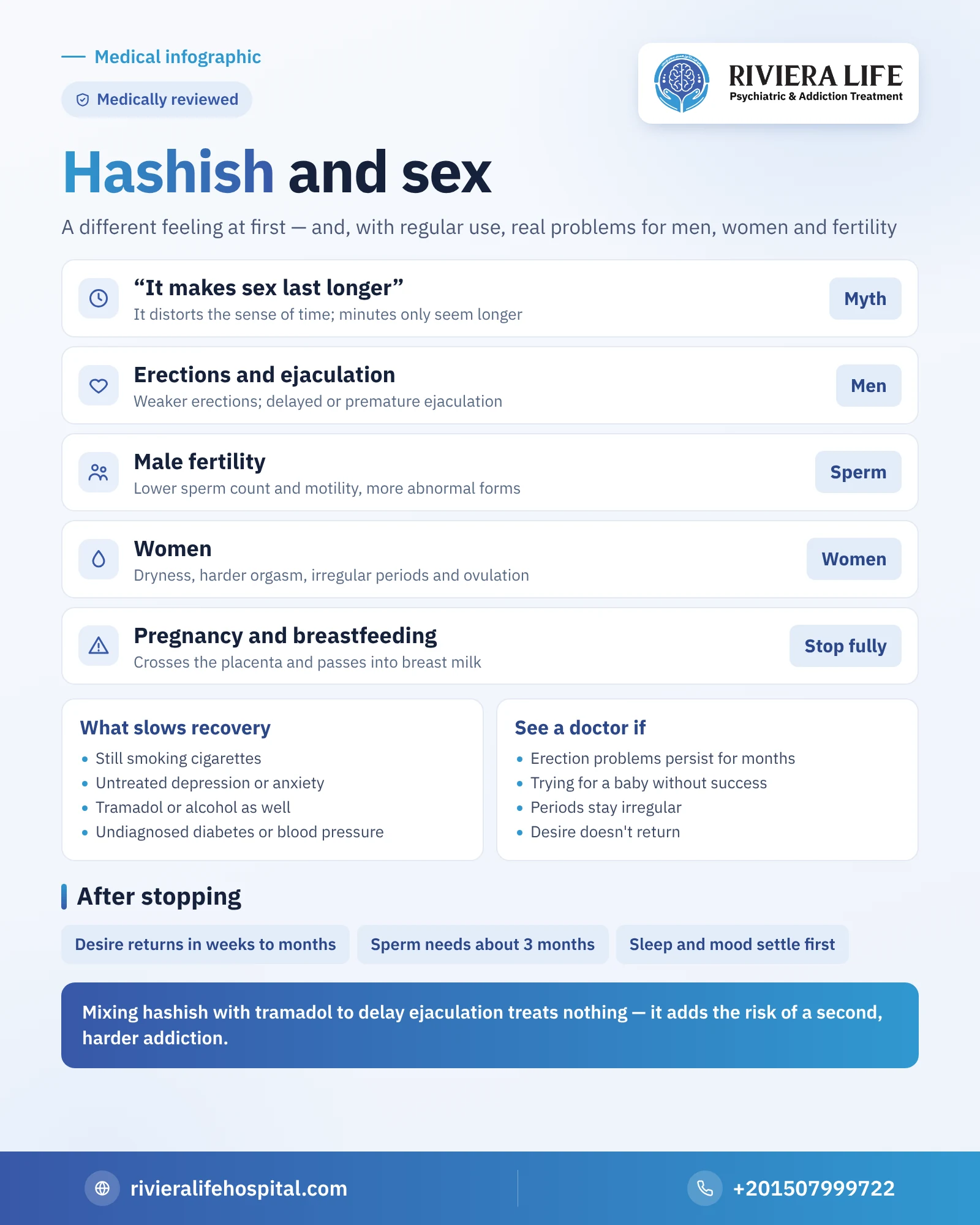
The active substance in hashish changes the brain’s sense of time, so minutes seem longer than they are, and it makes the senses more focused on the moment. In some people it also eases shyness or performance-related anxiety. This subjective experience is the origin of the idea that hashish makes sex “last longer”. But feeling that time is longer is not real lasting longer, and the psychological relaxation of the first few times doesn’t last with repetition.
This belief is part of a wider picture of “benefits” people attribute to hashish; you will find what science has confirmed and what it hasn’t in our article on the benefits of hashish.
With regular use the brain adapts, and the user needs the substance to feel what they used to feel without it — and that is where the real problems begin. On top of that, hashish raises the heart rate and triggers anxiety in some people, so the anxiety itself becomes an obstacle to performance rather than hashish being a solution to it.
The effects of hashish on men
- Erectile weakness: some studies suggest erectile weakness is more common among regular users, and it gets worse when hashish is mixed with tobacco, as is common in Egypt, because smoking damages the blood vessels responsible for erections.
- Ejaculation problems: among regular users, difficulty reaching orgasm has been observed in some and premature ejaculation in others, so the effect isn’t the same for everyone.
- Desire: it may rise temporarily at first, then cool with continued use and as general motivation for activities declines.
- Hormones: research findings on its effect on testosterone are inconsistent, so testing is better than assuming.
Hashish and male fertility
This is one of the clearest points in the research. The testes contain receptors that hashish interacts with, and in a number of studies regular use has been linked to a lower sperm count, weaker motility and a higher proportion of abnormal forms. If there is a delay in having children, stopping hashish is a basic step before any other treatment. The sperm production cycle takes roughly three months, so improvement only shows in an analysis months after stopping, as explained in our article on when the body returns to normal after quitting hashish.
The effects of hashish on women
Some women describe a temporary increase in desire or sensation, while others complain of dryness and difficulty reaching orgasm. In some studies frequent use is linked to irregular menstrual cycles and affected ovulation. But this doesn’t mean pregnancy is impossible: a woman who uses hashish can become pregnant at any time, so contraception remains necessary if a pregnancy isn’t planned.
Physical and psychological effects overlap particularly in women. Anxiety, guilt or the fear of being found out — feelings that are more common in women because of the harsher social stigma — are reflected directly in desire and enjoyment. That is why assessment needs a safe space where a woman can talk freely, and she may prefer to choose a female doctor if that is more comfortable for her.
Hashish during pregnancy and breastfeeding
The active substance in hashish crosses the placenta to the fetus, and use during pregnancy has been linked to low birth weight and risks to the baby’s brain development. The substance also passes into breast milk. That is why health authorities recommend stopping hashish completely while trying to conceive and throughout pregnancy and breastfeeding. A pregnant woman who finds it hard to stop needs specialist medical help without fear of blame, because early treatment protects mother and baby together.
The hashish-and-tramadol myth
In Egypt, mixing hashish with tramadol or other pills to “delay ejaculation” is widespread. This mix doesn’t treat any problem; it adds the risk of dependence on tramadol, which can cause seizures and weakens desire and erections over time. It often happens that a man comes for treatment for hashish and discovers that tramadol has become his harder addiction. To learn more about this substance, read our tramadol guide.
Hashish and the marriage
The sexual problem can’t be separated from the relationship as a whole. A wife notices emotional withdrawal, late nights out and money running out before she notices anything else. With heavy use, some men develop unjustified suspicion of their wife that sometimes reaches accusations of infidelity — a symptom that deserves serious attention, explained in our article on hashish addiction and suspicion. When suspicion comes together with sexual coolness, the home becomes charged in a way that is hard for both partners to bear without help.
What happens to your sex life while you stop?
In the first weeks after quitting hashish, your sex life may go through a confusing period. Insomnia, irritability and anxiety, which are features of this stage, weaken desire temporarily, and some men feel their performance has changed because they were used to sex under the influence. This is normal and temporary in most cases, and it improves as sleep and mood settle. You will find the details of this stage in our article on hashish withdrawal symptoms.
Does sexual performance return after quitting hashish?
The good news is that most of these effects can improve. Desire and erections return gradually within weeks to months, and sperm measures improve after one full production cycle or more. But the speed of improvement is affected by several things:
- Continuing to smoke cigarettes after quitting hashish.
- Depression or anxiety that the hashish was covering up.
- Using other substances with it, such as tramadol or alcohol.
- Undiagnosed chronic conditions such as diabetes or high blood pressure.
- Tension within the relationship itself.
How can a couple talk about the problem?
Many wives notice the change and don’t know how to raise the subject without hurting their husband or pushing him into denial. It is best to start the conversation away from the bedroom, at a calm time, and to talk about the relationship as a whole rather than performance alone: “I feel we’ve drifted apart, and I miss our time together.” Then the link between smoking and what has changed can be made calmly, without accusation or mockery.
The husband, for his part, benefits from knowing that what he is going through is common and medically understood, and that admitting it to a doctor takes nothing away from his manhood — it is the shortest route to getting it back. And if talking between you has become impossible, a session with a family therapist or psychotherapist may open what has been closed.
Do sexual stimulants solve the problem?
Turning to stimulants without medical advice treats the symptom, not the cause, and can be dangerous with undiagnosed heart disease or with other substances. It also reinforces the idea that performance always needs an outside “helper” — the very idea hashish started with. This mistaken idea repeats itself with many substances, as we explain in our article on how drugs affect sexual performance.
When should you see a doctor?
If erectile or desire problems continue for more than a few months after stopping, if there is a delay in having children, or if periods stay irregular for a long time. The doctor may order hormone tests, a semen analysis, blood sugar and blood pressure checks, and an assessment of mood. At Riviera Life this assessment is part of the hashish addiction treatment plan, in complete confidence, because many men don’t talk about this complaint unless they are asked about it directly. For a free consultation: +201507999722.
More from our hashish guide
- Hashish: the complete guide
- The harmful effects of hashish on the brain, heart and body
- How long hashish stays in your system and in tests
- The causes of hashish addiction
- Tramadol and sex: the truth about delayed ejaculation and its effect on desire and erections
Questions many people ask
Hashish changes the sense of time so minutes seem longer, but this is not real lasting longer, and regular use is linked to problems with erections and ejaculation.
In most cases it doesn't cause permanent infertility, but regular use is linked to a lower sperm count and weaker motility, which usually improve several months after stopping.
Frequent use may be linked to irregular periods and ovulation in some women, but pregnancy remains possible.
No. This mix adds the risk of tramadol addiction and seizures, and it weakens desire and erections over time.
Desire and erections usually improve within weeks to months, and a semen analysis needs about three months to reflect the improvement.