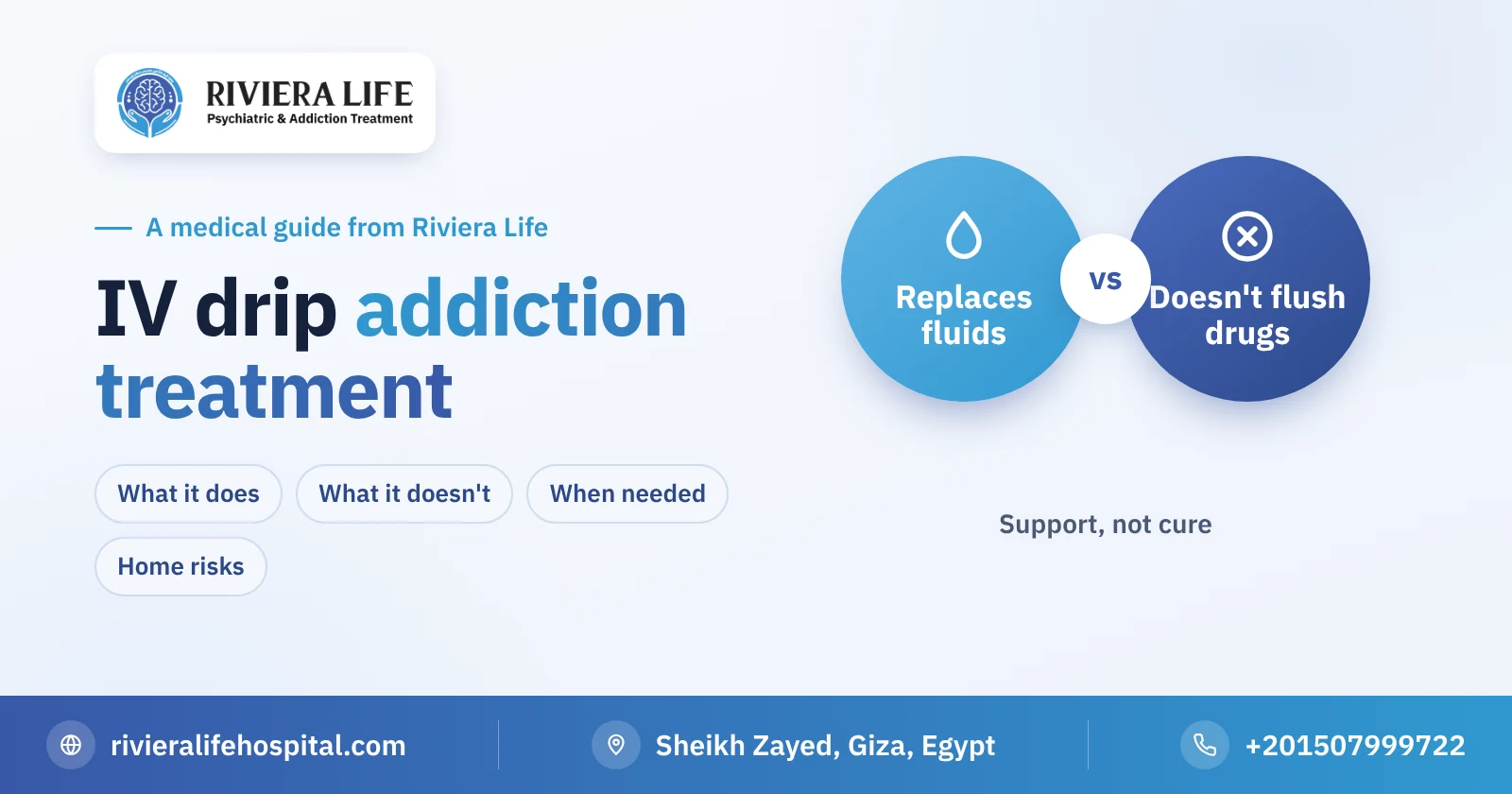
IV drip addiction treatment is one of the most widespread phrases in drug detox adverts, and many families understand it to mean that the drip “washes” the substance out of the blood. The truth is that intravenous drips don’t pull the drug out of the body, as the liver and kidneys clear it at their natural speed. But the drip has a real medical role during withdrawal: it replaces the fluids and salts the patient loses through vomiting, diarrhea and sweating, and it is a way of giving some medicines when swallowing isn’t possible. This article separates the real role of drips from exaggerated promises, and explains when they are necessary and when they are just a front for incomplete treatment.
What does IV drip addiction treatment mean?
It usually means fitting a cannula in a vein and giving the patient a saline or glucose solution or a mix of the two, with vitamins or medicines added according to what the doctor decides. This usually happens in the first days after stopping, when withdrawal symptoms are at their peak. Some places offer separate “drip sessions” at home or in a clinic, presenting them as addiction treatment in three days or a week.
The difference is great between a drip fitted within a detox plan supervised by a doctor, and a drip offered as if it were the treatment itself. The first is a known supportive procedure, and the second is a promise science doesn’t back.
Do drips pull drugs out of the blood?
No. The drug is mostly broken down in the liver, then its products leave with the urine and stool. Adding fluids doesn’t make the liver work faster, and doesn’t shorten how long the substance stays in the body in a way that changes the course of withdrawal. That is why no drip makes withdrawal pass in a single day, and no drip makes a test negative. Someone who tries drinking huge amounts of water or receiving many drips without medical need may expose themselves to a dangerous drop in blood salts.
What really gets the substance out of the body is time. This period differs from one substance to another, as the article on when the body returns to normal after quitting drugs explains.
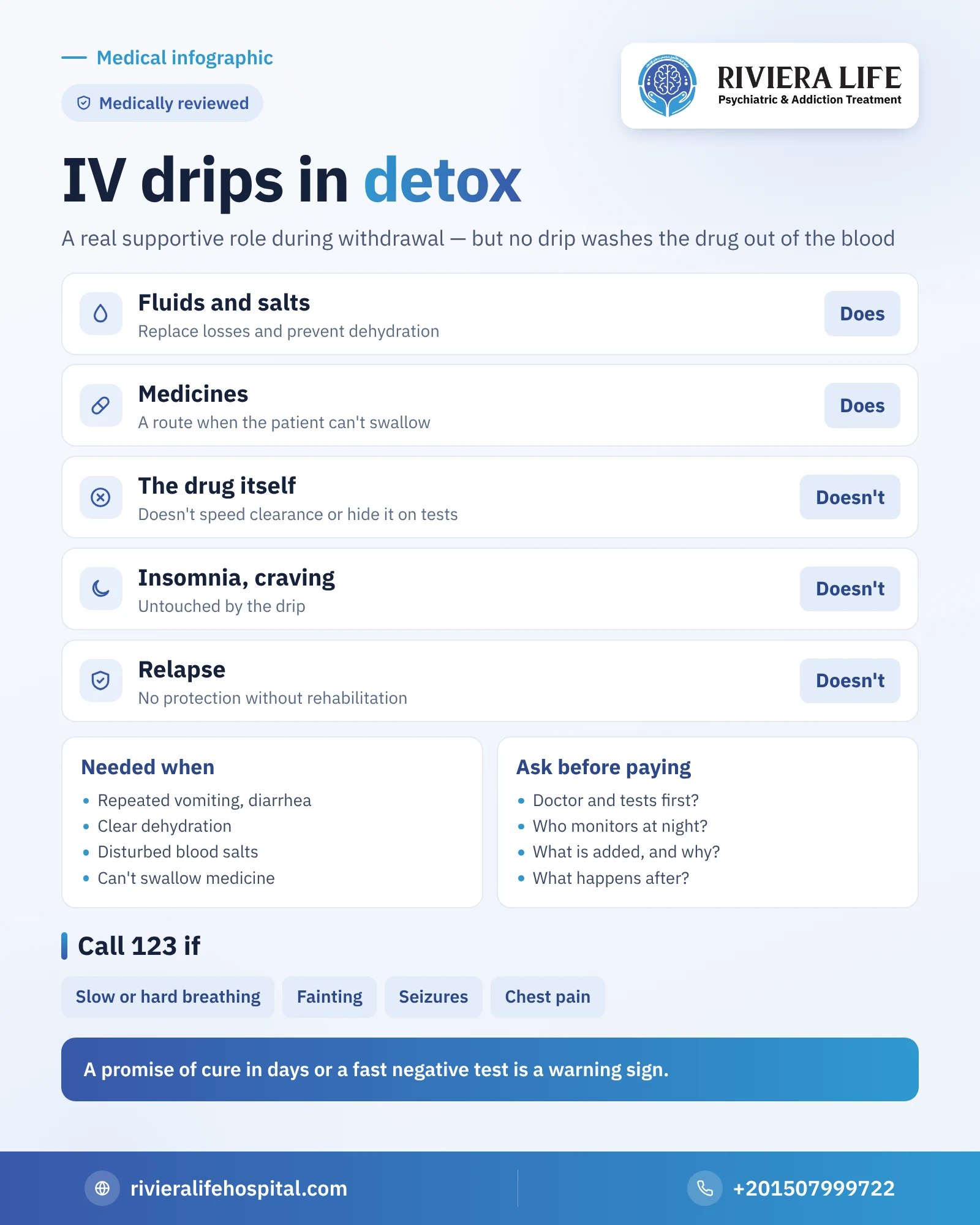
When does the patient really need a drip?
The doctor decides on a drip when they see signs that call for it, not just because the patient has entered withdrawal. Among the most common of these situations:
- Repeated vomiting or diarrhea that stops the patient drinking or loses them a lot of fluid, which is common in withdrawal from opioids such as heroin and tramadol.
- Clear signs of dehydration: dizziness on standing, little urine, a dry mouth and a fast pulse.
- A disturbance in blood salts appearing on tests, such as low potassium or sodium.
- Severe malnutrition after a long period of use, which is common with alcohol and stimulants.
- The need to give a medicine intravenously because the patient can’t swallow or vomits everything they take.
What goes into the drip?
The drip itself is simple: sterile water with salts or sugar in calculated proportions. What is added to it differs according to the case, and is a medical decision after examination and tests. An alcohol patient, for example, may need thiamine before sugars to protect the brain and nerves, and the article on alcohol withdrawal symptoms explains why this withdrawal specifically needs careful monitoring. Another may need a medicine for vomiting or to ease cramps. There is no “secret formula” that treats addiction, and anyone promoting a special drip that pulls out drugs is selling an illusion.
Why is the drip linked in people’s minds with drug detox?
Because the patient feels a noticeable improvement after the drip if they were dehydrated: headache and dizziness ease, fatigue lessens, and they may sleep better. This improvement is real, but its cause is replacing fluids, not the substance leaving. Then the other withdrawal symptoms, such as insomnia, anxiety and urgent craving, return, because the drip doesn’t come near them. Hence the disappointment of families who paid for “detox by drips” and then found their son going back to using after days.
The risks of drips given without supervision
A drip is a medicine with its own risks, especially when fitted at home or by a non-specialist hand:
- Inflammation or infection at the cannula site, more likely in someone who injects and whose veins are damaged.
- Fluid overload on the heart or kidneys in patients with chronic diseases, which may cause shortness of breath or swelling.
- Salt imbalance if an unsuitable solution is given, or in an uncalculated amount without tests.
- Delaying real treatment, because the family is reassured that “the drip worked” and doesn’t start rehabilitation.
- Most dangerous is when a strong sedative is added to the drip without monitoring breathing, especially if the patient has used opioids or other sedatives.
Call an ambulance on 123 immediately if you see
During withdrawal or after a drip has been fitted at home:
- Difficulty breathing or very slow breathing
- Fainting or difficulty waking
- Seizures
- Chest pain or severe palpitations
- Confusion or hallucinations with a high temperature
IV drip addiction treatment at home: when is it dangerous?
Services that come to the home and fit the drip are spreading, and seem a comfortable solution for a family that fears scandal or the cost of admission. But the home doesn’t allow round-the-clock monitoring of blood pressure, pulse and breathing, quick salt tests, or immediate intervention in a seizure. The risk becomes greater in withdrawal from alcohol and sedatives such as Rivotril and Xanax, and when more than one substance is mixed. If home treatment is being considered, it is more correct for it to be within a medical program that first assesses the case and decides whether it suits the home or not, as in the home addiction treatment program.
Drips are part of detox, not a substitute for it
| Question | What drips do | What they don’t do |
|---|---|---|
| Fluids and salts | Replace losses and prevent dehydration | Don’t replace follow-up and tests |
| The drug | Nothing worth mentioning | Don’t speed its exit or hide it from tests |
| Withdrawal symptoms | Ease the dizziness and fatigue caused by dehydration | Don’t treat insomnia, anxiety and craving |
| Medicines | A route for giving them when swallowing isn’t possible | Aren’t a treatment in themselves |
| Relapse | No connection | Don’t prevent return without rehabilitation |
If you want to know how medical detox proceeds day by day, and where the drip comes within it, see the 7-day detox program.
Questions to ask before paying for “detox by drips”
- Will a doctor examine the patient and ask for tests before fitting any drip?
- Who will monitor breathing and blood pressure at night, and what happens if a seizure occurs?
- What medicines will be added, and why?
- Does the plan cover all the substances the patient uses?
- What happens after the drips end: is there psychological rehabilitation and follow-up?
Any answer that promises you a cure within days or a quick negative test result is a warning sign, not a sign of reassurance.
So what treats addiction?
Detox, with or without drips, treats the body in its first days only. The addiction itself needs psychological treatment that deals with the causes and triggers of use, a relapse-prevention plan, and sometimes a medicine that reduces craving. That is why many attempts that stop at withdrawal fail, as the article on why addiction treatment fails explains.
How can Riviera Life help you?
At Riviera Life, drips are used when the doctor decides on them within a detox supervised by the medical team around the clock, after examining the patient and their tests, and they aren’t presented as a treatment in their own right. Consultants in psychiatry and addiction treatment set a plan for every substance the patient uses, then psychological rehabilitation, the family program and aftercare begin. The hospital is licensed by the Ministry of Health, has fourteen years of experience, and protects the patient’s confidentiality. The first consultation is free on +201507999722 at any time, and the hospital is in Sheikh Zayed, Giza.
More from the detox guide
- The 7-day detox program
- Rapid detox under anesthesia
- Opioid withdrawal symptoms
- Drug addiction: the complete guide
Questions many people ask
No. The liver and kidneys clear the substance at their natural speed, and the drip only replaces fluids and salts. No drip shortens how long the substance stays or makes a test negative.
With repeated vomiting or diarrhea, signs of dehydration, disturbed salts on tests, or when they can't swallow medicine. The decision is the doctor's after examination.
That may be dangerous, because home doesn't allow round-the-clock monitoring of breathing, blood pressure and salts. The risk grows in alcohol and sedative withdrawal and when substances are mixed.
Because replacing fluids eases the headache, dizziness and fatigue caused by dehydration. But insomnia, anxiety and craving remain, because the drip doesn't treat them.
No. Drips are a supportive part of detox, and the addiction itself needs psychological rehabilitation, follow-up and a relapse-prevention plan.