Lamotrigine, one of whose best-known trade names is Lamictal, is classified as an antiepileptic but has become one of the most important preventive medicines in bipolar disorder, especially against depressive episodes. Its advantage is that it doesn’t cause heavy drowsiness or significant weight gain in most patients. Its price is that it is started in very slow steps set by the doctor, because starting quickly may cause a rare but serious skin rash. Here we explain its uses, the rash warning and its interactions, without mentioning doses, as starting, titrating and stopping are done under the doctor’s supervision only.
What is lamotrigine?
Lamotrigine calms overactive nerve cells by reducing the release of glutamate, an excitatory neurotransmitter. That is why it is useful in epilepsy, and it seems to ease severe mood swings in some patients. It is dispensed as ordinary tablets, tablets that dissolve in the mouth, and extended-release tablets in some markets. It isn’t considered a sedative or a medicine that causes dependence. As for its trade name and availability in Egypt, ask the pharmacist, as names vary between the original and alternatives.
Uses of lamotrigine
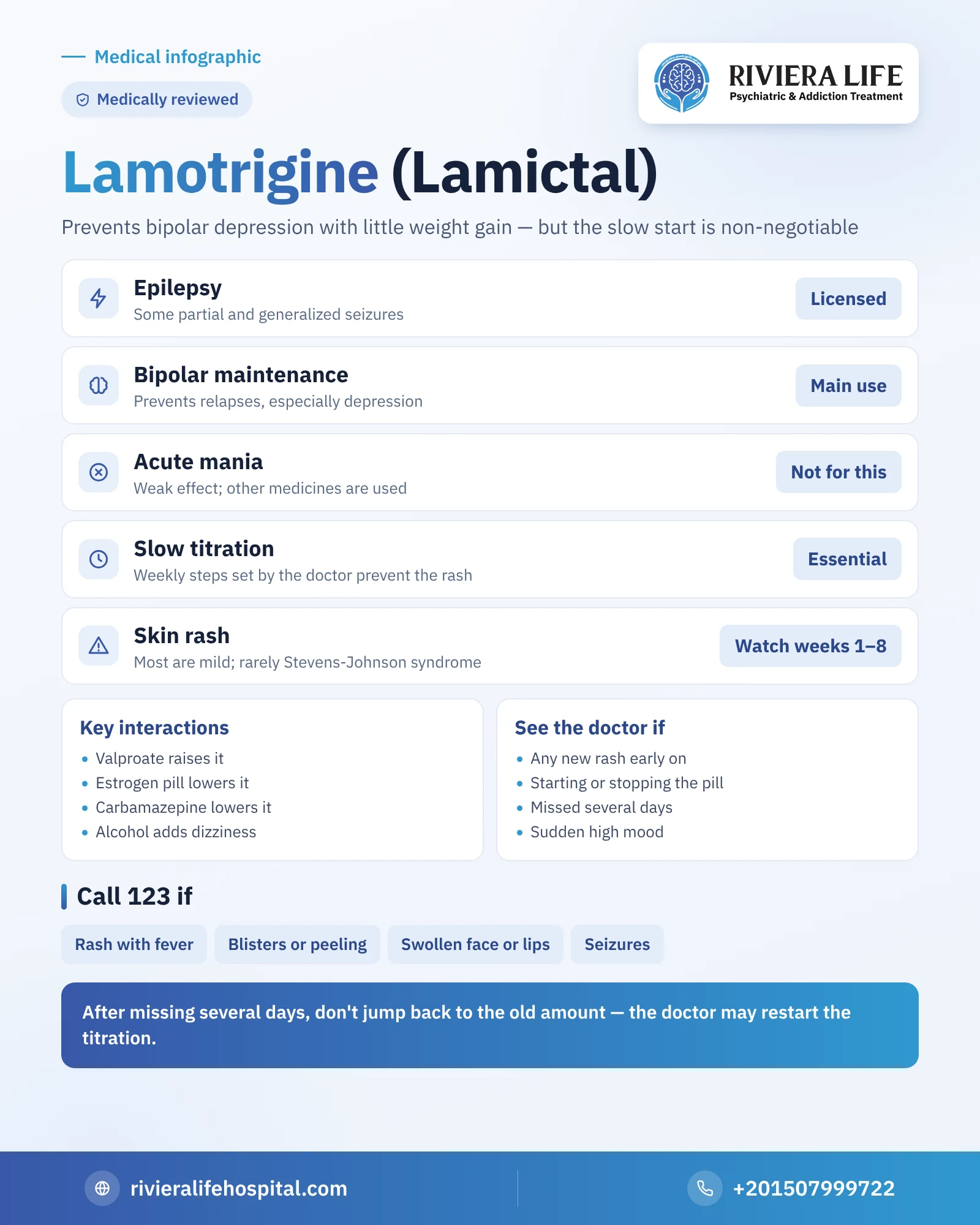
- Epilepsy: some types of partial and generalized seizures, for adults and children as the doctor judges.
- Bipolar disorder: to prevent the return of episodes, and especially depressive episodes.
- Bipolar depression: doctors use it in some plans even though its effect in acute mania is weak.
- Other uses: the doctor may sometimes prescribe it for nerve pain or other disorders, according to his individual assessment.
Its role in bipolar disorder
In this disorder mood swings between episodes of elevation and episodes of depression. What sets lamotrigine apart is that it tends to prevent the downward side, that is depression, more than the upward side. That is why it isn’t used alone to treat acute mania; that is what other medicines such as lithium and antipsychotics do.
After the condition stabilizes, lamotrigine enters the long-term maintenance plan for those who have recurring depressive episodes. Some doctors prefer it because it is relatively light on weight, sex and concentration. The full plan includes psychotherapy, regulating sleep and knowing the triggers, as we explain in our article on bipolar disorder treatment. If you live with a patient, read how to deal with a bipolar patient.
Why does it start so slowly?
This is the most important rule with this medicine. The doctor starts with a very small amount and increases it in weekly stages, and this titration isn’t a minor detail but the main prevention of the serious skin rash. A patient who rushes and skips stages, or starts with a larger amount than prescribed, puts himself at risk. That is why the road can’t be shortened however bad your mood is and however eager you are to improve; the full effect needs weeks, and this is its nature. Don’t take a tablet from a relative’s or friend’s pack, and don’t change the order of the tablets in the strip the pharmacist prepared.
Skin rash: the sign that isn’t ignored
Most rashes with lamotrigine are simple and disappear, but a very small proportion develop into Stevens-Johnson syndrome or toxic epidermal necrolysis, two life-threatening skin reactions. Most of these cases appear in the first eight weeks, and the risk may rise when starting with a large amount, increasing the amount quickly, or combining it with valproate. That is why any new rash in this period is treated seriously until the doctor decides otherwise. Things that call for contacting the doctor immediately:
- A new rash anywhere on the body, especially if it spreads or hurts.
- Fever, swollen glands or unusual tiredness with the rash.
- Ulcers in the mouth, eyes or genitals.
- Swelling of the face, lips or tongue.
- Blisters or peeling of the skin.
Don’t try to tell a simple rash from a serious one yourself; that is the doctor’s job. And any patient who has had a serious rash with lamotrigine usually doesn’t try it again.
If you forget the medicine or stop it
If the patient stops lamotrigine for several days in a row, he doesn’t return to the previous amount on his own. The doctor may need to restart with slow titration, because the body has lost the tolerance it built, and because jumping to the previous amount is the same mistake that raises the risk of rash. If you forget a tablet or two, ask the doctor or pharmacist about the right course. Organizing medicines in a weekly box or with a phone reminder is advised.
Other side effects
- Headache and dizziness.
- Double or blurred vision, especially when combined with other epilepsy medicines.
- Nausea and stomach pain.
- Insomnia or disturbed sleep in some people.
- Poor balance or a slight tremor sometimes.
- Very rarely: non-infectious meningitis, a blood disorder, or immune overactivity.
It is good that lamotrigine doesn’t usually need routine periodic blood tests as a medicine such as carbamazepine does, but the doctor may request a test if symptoms appear.
Drug interactions
- Valproate: raises the blood level of lamotrigine, so the doctor needs a very slow plan and a smaller amount when combining them.
- Birth control pills containing estrogen: may lower its level, and when they are stopped it rises, so the doctor adjusts the plan. Tell him if you start or stop the pill.
- Carbamazepine, phenytoin and rifampicin: reduce its level and so weaken its benefit.
- Alcohol: increases dizziness and drowsiness and worsens mood swings.
Tell every doctor and pharmacist that you take lamotrigine, even when they prescribe you an antibiotic or hormones.
What to expect in the first weeks?
A woman of thirty, who has recurring depressive episodes between periods of excessive activity, was started on lamotrigine by her doctor. In the first weeks she feels almost nothing, and asks why it is so slow. This is normal: the medicine doesn’t lift mood in days, but reduces the likelihood of it dropping later.
What is required of her at this stage is to check her skin every day, keep a mood and sleep tracking chart, and not add new medicines or supplements before telling the doctor. After a few months the doctor compares the number and severity of episodes with what they were before the medicine, and decides on continuing. Regular follow-up with the family also helps, as they are the first to notice an early rise in mood.
When should you see the doctor without delay?
- When a rash appears, even if it seems simple, during the first weeks.
- When starting or stopping birth control pills.
- When you have missed the medicine for several days.
- When mood rises or sleep decreases suddenly, as it may be the start of mania.
- When depression worsens or harmful thoughts appear.
Pregnancy and breastfeeding
Some guidelines prefer it when a mood stabilizer is needed for a woman of childbearing age, because it is considered less risky to the fetus than some other mood stabilizers, though the matter isn’t free of weighing up. It is known that its blood level may fall as pregnancy progresses and then rise after delivery, so the doctor follows the case. Don’t stop the medicine when you discover the pregnancy, as a relapse may be more dangerous; instead call your doctor immediately to arrange the plan.
Call an ambulance on 123 immediately if you see
While using lamotrigine:
- A skin rash with fever or ulcers in the mouth or eye
- Blisters or peeling of the skin
- Swelling of the face or lips, or difficulty swallowing
- Seizures or loss of consciousness
- Severe palpitations or fainting
- Thoughts of self-harm or ending life, and the mental health line 16328
How can Riviera Life help you?
Bipolar disorder is an illness that needs long follow-up, not a single prescription. At Riviera Life, psychiatry consultants assess your condition, set a medication and psychological plan, and follow you and your family within the family program and aftercare, in complete confidentiality. Your first consultation is free on +201507999722.
More from our bipolar disorder guide
- Bipolar disorder: the complete guide
- Symptoms of bipolar disorder
- Causes of bipolar disorder
- Quetiapine
Questions many people ask
Because starting quickly raises the risk of a rare but serious skin rash. The slow titration the doctor sets is the main prevention.
Its effect in acute mania is weak, and it is more useful in preventing depressive episodes in bipolar disorder. Mania is usually treated with other medicines.
Call the doctor immediately, and if it is accompanied by fever, ulcers in the mouth or eye, or blisters, go to the emergency department. Don't try to tell the difference yourself.
Estrogen pills may lower its blood level, so the doctor needs to adjust the plan when starting or stopping the pills.
In most patients it doesn't cause noticeable weight gain or heavy drowsiness, which is why some doctors prefer it, but response differs from person to person.