The effect of mental health on a marriage is real and understandable: depression, anxiety, bipolar disorder, OCD, ADHD and trauma change the way a partner talks, desires, shows patience, trusts and asks for support, and the other partner may read these changes as coldness, neglect or stubbornness. A tense relationship in turn raises the pressure on both and weakens recovery. This article explains how symptoms appear at home, common mistakes couples make, what really helps, and when the matter goes beyond illness and needs protection.
How mental health affects a marriage: when illness turns into a daily disagreement
Most spouses don’t say “my husband has depression” but: he’s become distant, he doesn’t talk, he doesn’t care about me. And most of those affected don’t say “I’m depressed” but: I don’t know what’s wrong with me, you’re pressuring me. This is where the problem begins: symptoms are understood as personal positions.
A wife who asks how things are and receives silence feels rejected, and a husband who hears reproach after reproach withdraws further. Over time a whole home of misunderstanding is built on top of an illness that hasn’t yet been named. The first step to breaking this cycle is for each of you to ask: is this temperament, or a change that has appeared in recent months? A recent change is the closer to illness.
How do disorders appear within a marriage?
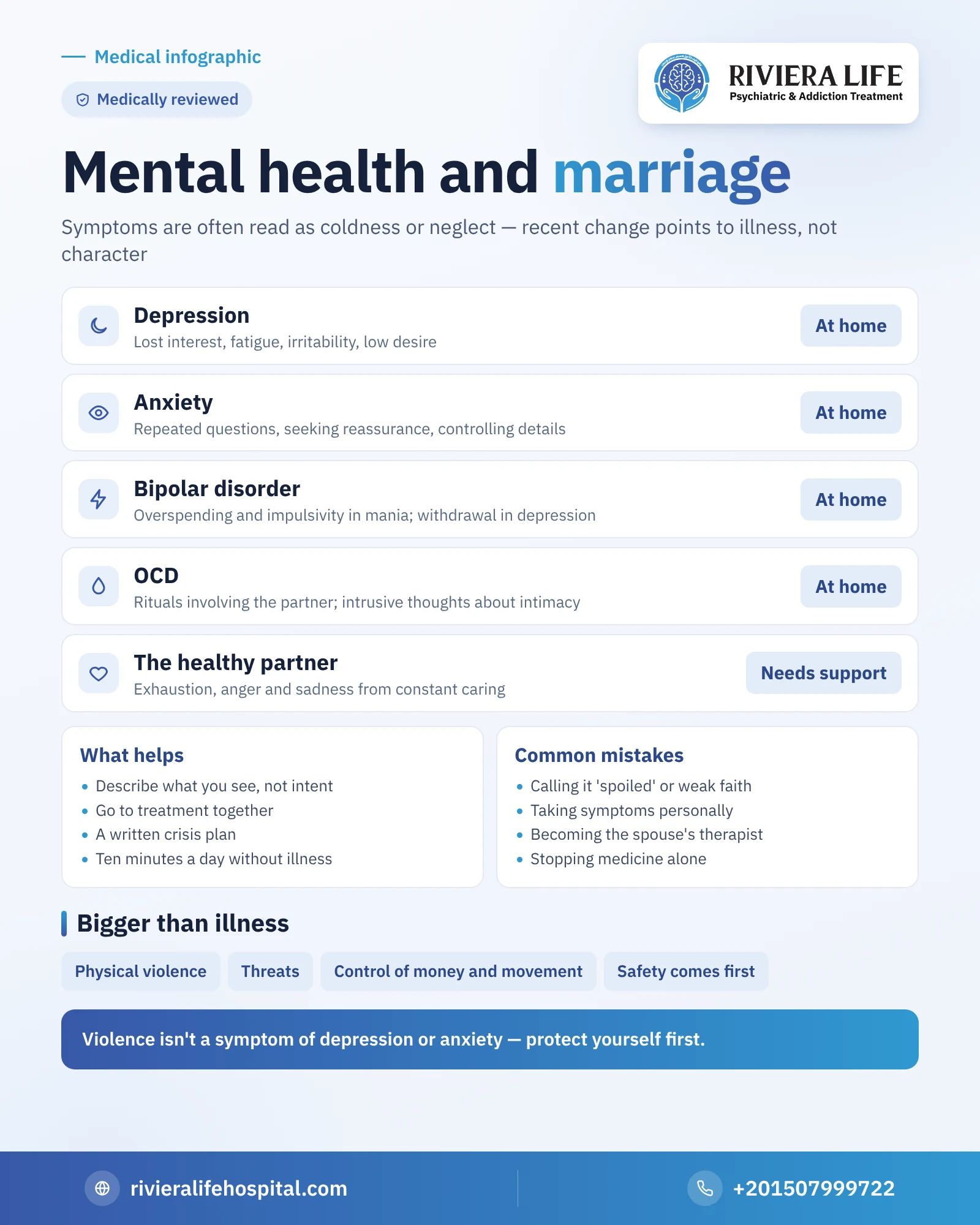
- Depression: lost interest, constant fatigue, sometimes quick anger, lowered desire, and a sense of guilt. The partner feels alone in the home. The picture changes in women depending on hormonal stages, as in depression symptoms in women.
- Anxiety: repeated questions and requests for reassurance, fear for the children or health, and trying to control every detail. The other partner feels watched and hemmed in.
- Bipolar disorder: in mania, overspending, little sleep, irritability, impulsivity and dangerous decisions; in depression, severe withdrawal. This may leave debts and wounds that are hard to repair; for details see how to deal with someone with bipolar disorder.
- OCD: cleaning or checking rituals that the partner is drawn into, and intrusive thoughts that may touch intimacy and cause shame and withdrawal, as our article on sexual OCD explains.
- ADHD: forgetting agreements, lateness, disorganization and impulsive speech, so the partner thinks it is disregard for them.
- Post-traumatic stress disorder: avoidance, numbness, jumping at surprises, nightmares, and difficulty with physical closeness.
- Personality disorders: such as borderline personality, in which the relationship swings between intense attachment and quick anger; these are problems that need a specialist assessment, not a label from the partner.
The effect on intimacy and desire
The physical relationship is one of the first things affected and one of the last talked about. Depression and anxiety lower desire and make relaxing difficult, and some antidepressants may delay ejaculation or weaken desire, a side effect to report to the doctor, not to treat by stopping the medicine on one’s own. OCD and trauma may make closeness a source of tension. But the partner doesn’t know the cause is illness, so interprets the coldness as aversion or infidelity. A calm conversation at a time away from the bedroom eases much of this suspicion.
And what about the healthy partner?
The partner who stands by the patient carries a burden rarely seen: running the home and the children, managing the relatives, watching the mood, and fearing that a word will cause a relapse. After months, exhaustion, anger and sadness appear, and perhaps symptoms of anxiety or depression. This doesn’t mean they are selfish or weak. A tense relationship and living with an ill partner are well-known risk factors for psychological distress. So they have the right to seek support too, from a trusted friend or a therapist, and to keep part of their life outside the role of nurse.
Common mistakes that make things worse
- Dismissing the symptoms as being spoiled, weak faith or idleness, so treatment is delayed for years.
- Turning every disagreement into illness: every partner gets angry sometimes without there being a disorder.
- Taking symptoms personally and responding with reproach or the silent treatment.
- The partner becoming their spouse’s therapist, so emotion gets mixed with direction.
- Hiding the matter from everyone for fear of stigma, so the couple carry the burden alone.
- Relatives interfering with contradictory opinions, or the illness being used in disputes in front of the children.
- Stopping medicine by individual decision because the patient “got better” or because the family fears it.
What really helps?
Separate the person from the illness
A sentence such as “I’ve noticed that for weeks you haven’t been sleeping or eating, and I’m worried about you” opens the conversation more than “you’re neglectful and don’t care”. Describe what you see, not what you think of their intentions, and talk at a calm time, not in the middle of an argument.
Go into treatment together
The partner attending a session or two with the psychiatrist or therapist explains the illness to them, the length of treatment, the expected symptoms, and the symptoms that call for contacting the doctor. Some disorders need couples or family therapy, because the home is part of the plan. You can learn about treatment approaches in our depression guide and anxiety guide.
Agree on rules for crises
Write a short plan together at a calm time: what the early signs are, who to call, what is done and what isn’t said. A simple example: during outbursts of anger, both go to separate rooms for half an hour and then come back to talk. These agreements protect the relationship more than good intentions.
Keep small shared things
Illness swallows time. Setting aside ten minutes a day in which neither illness nor problems are mentioned, tea, a walk or a program, reminds the couple that they are partners before they are a patient and a companion.
When is it bigger than illness?
Mental illness explains much pain, but it doesn’t justify every behavior. Physical violence, threats, control of money, movement and communication, or constant humiliation aren’t symptoms of depression or anxiety, even if they happen during a period of illness.
If you fear for your safety or your children’s safety, safety is the priority before any treatment: move to a safe place and ask for help from your family or a specialist body. On the other hand, a relationship involving exploitation, addiction or repeated infidelity needs a different assessment, and some of it relates to what our articles on the effect of addiction on married life and how to deal with an addicted husband explain.
Seek urgent help immediately if you see
Call an ambulance on 123 or go to the nearest emergency department, and you can call the mental health line on 16328 if:
- One spouse expresses thoughts of ending their life or harming themselves
- There is violence or a real threat to the spouse or children
- Strange ideas, voices or intense suspicion appear that cut the person off from reality
- The person hasn’t slept for days, with impulsivity and dangerous behavior
The effect on the children
Children pick up on tension even when nothing is said to them. You don’t need to explain the details of the illness, but a simple, age-appropriate sentence is enough: “Dad is unwell and taking treatment, and it’s nobody’s fault”. Complete silence leaves them with worse explanations. Avoid arguing in front of them and protect them from becoming go-betweens between the parents, and it is advisable to have the child seen by a specialist if they show anxiety or a notable decline at school, which our article on mental illness in children covers.
Can the relationship recover?
Yes, in many cases. Studies and clinical experience indicate that relationships that receive treatment for the illness and support for the couple usually improve, and that a family aware of the illness reduces the risk of relapse. The aim isn’t for the pain to disappear immediately, but for the couple to know what is happening, and for each to stop blaming the other for what they can’t control. And when treatment begins, there is more room to return to things that were beautiful between them.
How can Riviera Life help you?
At Riviera Life we assess the patient’s mental state in complete confidentiality and involve the family in a program of its own, then continue follow-up after treatment ends. The first consultation is free on +201507999722, and you can come alone if you are the worried partner.
More from our mental health guide
- Pre-marriage depression
- How to deal with someone with bipolar disorder
- Psychological stress: its signs and effect on the body
- Depression: the complete guide
Questions many people ask
Illness alone doesn't settle that; many couples recover and continue after treatment. Violence or threats, however, are a matter of safety and require protection regardless of the diagnosis.
Start by describing what you have noticed about sleep, eating and fatigue in a tone of concern, not accusation, choose a calm time, and offer to go with him to the first appointment. Avoid words like crazy or spoiled.
Yes, depression and anxiety are causes of reduced desire, as are some medicines. It should be mentioned to the doctor because there are solutions, and it doesn't necessarily mean aversion to the partner.
Children may be affected more by tension at home than by the illness itself. A simple age-appropriate explanation, protecting them from arguments and treating the patient all ease the effect.
Yes, constant caring and tension may cause exhaustion, anxiety and sadness. The partner has the right to seek psychological support for themselves too.