If you are asking yourself “my father is addicted to drugs, what do I do?”, you may feel fear, anger, shame and love at the same moment, and this is completely normal. The first thing you need to know: what is happening isn’t your fault, you aren’t the one who can cure him, and you aren’t living this alone. We are writing here for you, son or daughter, young or adult, to explain what is happening, how to protect yourself, who to trust, what you can do and what you don’t have to do.
My father is addicted: what is happening to him?
Addiction is an illness that changes how the brain works, so the person becomes unable to stop even though they know the substance harms them and those around them. Your father may truly love you and still act in a way that hurts you, because the illness makes him put the substance before everything, not because you don’t deserve to come first.
This doesn’t mean his behavior is acceptable. You can love him, be angry with him and be in pain; all are valid feelings and can exist together.
Am I the reason?
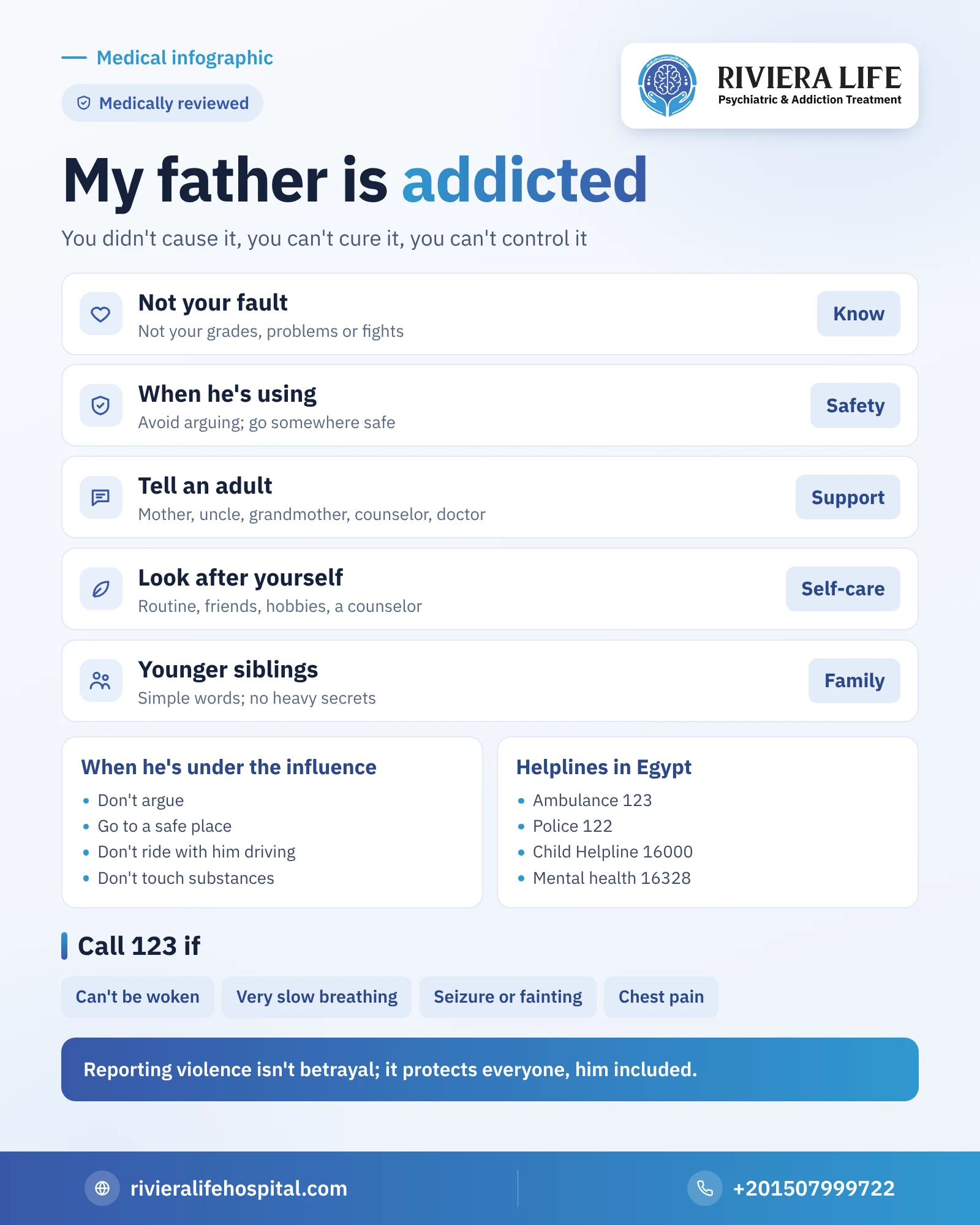
No. You didn’t cause his addiction with your grades, your problems, your fights with your siblings or anything you did or didn’t do. Specialists repeat three things to children: you didn’t cause the illness, you can’t cure it, and you can’t control it.
You may notice that you try to be the perfect child so he doesn’t get angry, or hide your mistakes, or work hard to keep the atmosphere calm. This is an attempt to protect the home, but it is a load heavier than your age, and fixing it isn’t your job.
How do I know he is under the influence of a substance?
The signs differ by substance, but among the things children notice: long sleep or strange late nights, heavy or slurred speech, a sudden change in mood between extreme calm and anger, money disappearing, absence from home or work, and many lies. For the details of what families see, there is a guide in the article on how to know if there is someone addicted to drugs in your home.
Some of these signs appearing doesn’t mean the diagnosis is certain, but they are reason enough to talk with an adult you trust.
What do I do when he is under the influence?
- Stay away from arguing: talking with him while he is under the influence doesn’t help, and may turn into a fight.
- Go to a safe place: your room, or the home of a grandmother, uncle or neighbor you trust.
- Don’t try to wake him or stop him from something by force: it isn’t your job to guard him.
- Don’t drive with him or ride with a driver under the influence of a substance: ask someone else to take you.
- If you find substances or equipment at home: don’t touch them, and tell an adult you trust.
- Keep the number of an adult you can call at any time.
Call an ambulance on 123 immediately if you see
In these situations don't wait and don't be afraid of punishment, as acting quickly may save his life:
- Severe drowsiness he can’t be woken from, very slow breathing or blue lips
- A seizure or loss of consciousness
- Chest pain, a very high temperature or severe confusion
What if he is violent or threatening us?
Your safety matters more than anything. If he hits someone, threatens or breaks things, leave the place for a neighbor or relative, and call the police on 122 if there is immediate danger. In Egypt, children and teenagers can call the Child Helpline on 16000 for help. And don’t try to defend your mother or siblings yourself; your role is to move away and ask for help.
Reporting violence isn’t a betrayal of him, but protection for everyone, including him.
Who is the adult I can tell?
Choose someone you feel safe with; they don’t have to be from inside the home: your mother, uncle, aunt or grandmother, a teacher or school counselor, an older family friend, or a doctor. And if you can’t find anyone around you, there are mental health and children’s helplines.
You can start with a simple sentence: “I need to talk to you about something worrying me at home”. You aren’t required to give proof or explain everything from the beginning.
Should I tell my friends or relatives?
You decide. It is better to talk with one or two people you really trust and know won’t speak badly, rather than telling everyone or hiding everything. Complete silence increases loneliness, and telling everyone you meet may bring painful comments. Choose someone who listens without judging.
How do I look after myself while living through this?
Children of people with addiction carry pressure beyond their age, so they need special care:
- Keep a routine: regular sleep, study and meals, as routine gives you steady ground.
- Continue your activities, friends and hobbies, and don’t let home swallow all your time.
- Tell yourself: “What is happening isn’t my responsibility”. Repeat it whenever you need to.
- Talk to a counselor or therapist, as this eases anxiety, anger and guilt.
- If you feel intense sadness or a wish to harm yourself, ask for help immediately from an adult or from the mental health hotline on 16328.
What do I tell my younger siblings?
Children notice more than we think, and silence leaves them with frightening explanations or the feeling that they are the cause. You or your mother can tell them in simple words: “Your father is ill with an illness that sometimes makes him act strangely. This isn’t because of you, we care about you, and there are adults trying to help”.
Don’t load them with heavy secrets or ask them to lie to protect their father. And if possible, keep a fixed time for them for play, sleep and study, as something regular protects them more than any explanation.
What if I am an adult and my father is addicted?
The burden is the same, but the options are wider. You can set limits on money and visits, refuse to cover up for him or pay his debts, and offer him specific help, such as one consultation with a doctor. For talking with him and ways of persuading, the article on how to help someone addicted to drugs will help you. And if he refuses, the legal and medical options are explained in the article on involuntary addiction treatment.
And remember that helping him doesn’t mean sacrificing your health or your family. Sometimes the best thing you can do is look after yourself first.
Feelings you may have, and they are normal
You may love him and hate him on the same day, feel embarrassed in front of your friends, be angry with your mother because she forgives him or because she doesn’t protect you, and feel a cautious joy when he is clear-headed and then fear he will go back. You may also find yourself acting as if you are the eldest in the home and taking responsibility for your siblings. None of this is strange; all are usual reactions for someone living with a person ill with addiction. And if they weigh on you, talk with the school counselor or a therapist, as they are used to hearing such stories.
Can my father recover?
Yes, many recover and return to their families calmer, but that requires real treatment and his own wish. It may take time and perhaps several attempts, and guaranteeing its success doesn’t fall on anyone in the home. You need to live your life and look after yourself whether he recovers or not, and if he recovers, the article on dealing with someone in recovery explains how trust returns gradually.
And if you are a mother or responsible for children living with a father who uses, the guide on the effect of a father’s addiction on children is written for you, and explains how to talk with them according to their ages.
How can Riviera Life help you?
If someone in your family wants to ask for help for your father, the first consultation at Riviera Life is free and completely confidential. Consultants in psychiatry and addiction treatment assess the case, and round-the-clock medical supervision, a family program and aftercare are available. Tell one of the adults in your home the number +201507999722; we are based in Sheikh Zayed, Giza.
Read also
- How to help someone addicted to drugs
- How to know if there is someone addicted to drugs in your home
- The effect of addiction on married life
- The family rehabilitation program for addiction treatment
Questions many people ask
No. You didn't cause the illness, you can't cure it and you can't control it, and what is happening isn't your fault.
Choose someone you trust, such as your mother, uncle, grandmother, school counselor or a doctor. Start with a simple sentence like: I need to talk to you about something worrying me at home.
Move away to a safe place or to a relative or neighbor, and call the police on 122 if there is immediate danger; children can call the Child Helpline on 16000.
Call the ambulance on 123 immediately and don't wait. Acting quickly may save his life.
Yes, many recover with treatment, but that requires his wish, effort and time, and the responsibility for his success doesn't fall on you. Take care of yourself whether he recovers or not.