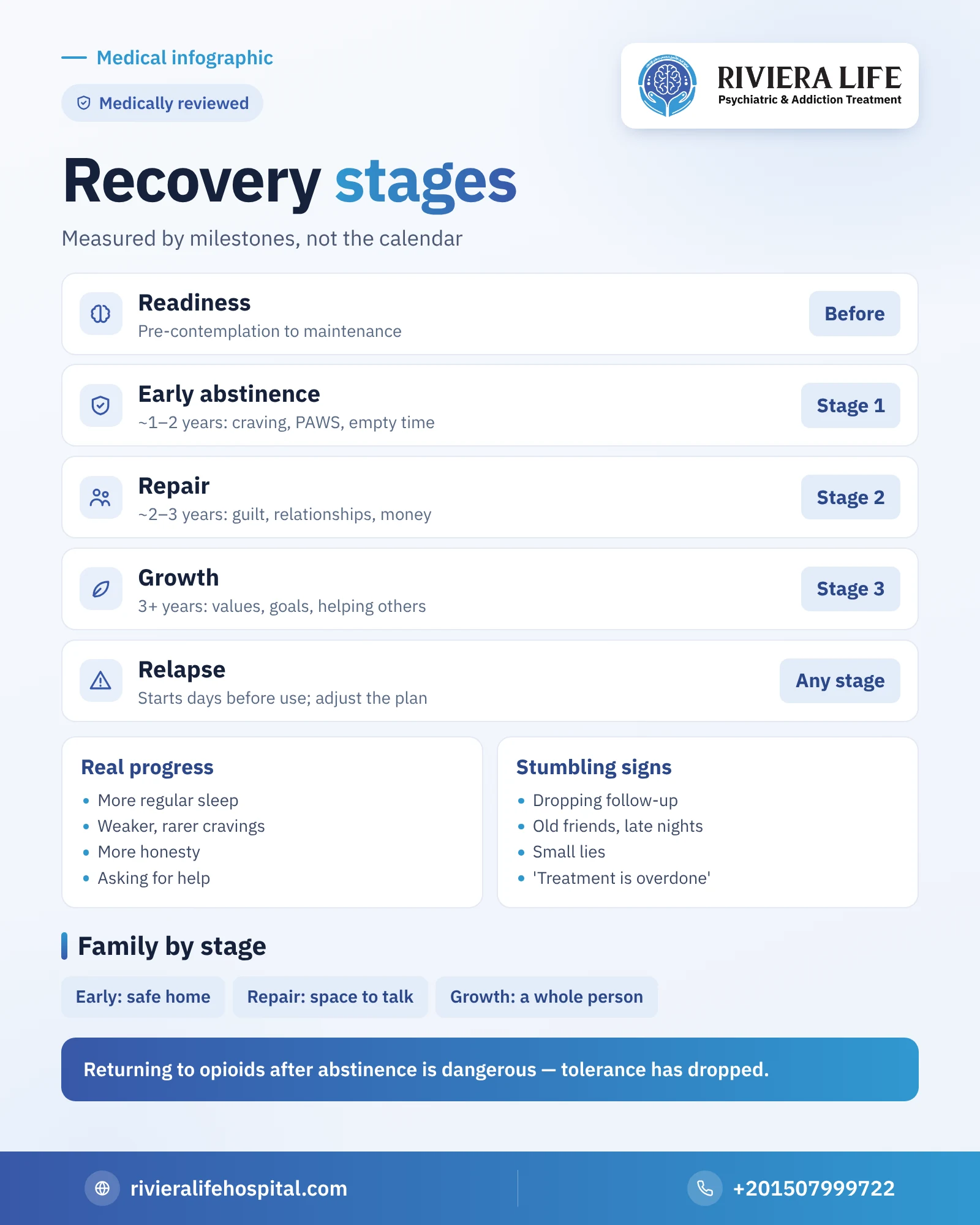
The stages of addiction recovery don’t end at the hospital door; intensive treatment stops use and lays the foundation, while recovery is a longer journey in which a person rebuilds their body, mind, relationships and way of living. Many specialists describe this journey in three major stages: early abstinence, then repair, then growth, and before them all, psychological stages of readiness for change. Each stage has its challenges and signs of progress, and knowing them makes the person in recovery and their family less afraid of expected difficulties and more alert to real danger. Here we explain each stage, roughly how long it takes, and how you know you are making progress.
Stages of treatment or stages of recovery?
Many confuse the two. The stages of treatment are what happens inside the program: assessment, then detox under medical supervision, then psychological rehabilitation, then aftercare, and you will find them explained on the page for the residential addiction treatment program.
The stages of recovery, on the other hand, are what happens inside the person themselves, and continue for years after the program ends. A person may leave treatment after weeks while still at the beginning of their recovery, and another may start their psychological journey before even entering hospital.
Before the beginning: the stages of readiness for change
The researchers Prochaska and DiClemente described a well-known model called the “stages of change”, which explains how a person moves from denying the problem to maintaining change. It helps the family understand why the person doesn’t respond to the same advice at every time:
| Stage | What happens in it | What helps |
|---|---|---|
| Pre-contemplation | Doesn’t see a problem or denies it | Calm information and avoiding preaching |
| Contemplation | Admits the problem but is hesitant | A conversation about pros and cons |
| Preparation | Intends to change soon | A clear plan and a set date |
| Action | Has stopped and starts treatment | Intensive support and medical supervision |
| Maintenance | Keeps the change for months | Follow-up and relapse prevention |
Moving between these stages isn’t a straight line; a person may go back a step and then move forward again, and this is part of change, not evidence of its failure.
The first stage: early abstinence
It begins after acute withdrawal ends, and in some specialists’ description may last roughly a year to two years. The goal in it is simple in words and hard in practice: staying without the substance day after day.
The challenges of this stage
- Strong craving: comes in waves, strongest with tiredness, loneliness or passing the old place of use.
- Post-acute withdrawal symptoms: insomnia, mood swings and poor concentration that may last weeks or months.
- Empty time: hours that use used to fill have suddenly become empty.
- Old friends: cutting ties with them is necessary and painful at the same time.
What helps here is a fixed daily routine, follow-up sessions, staying away from triggers, and asking for help at the first sign of danger. The page for the aftercare program explains how this follow-up is organized in practice.
The second stage: repair
After abstinence stabilizes, the stage of repairing what addiction damaged begins, usually lasting roughly two to three years. Here the question moves from “how do I not use today?” to “how do I live a life in which I don’t need the substance?”.
The challenges of this stage
- Facing guilt and shame about the past, and dealing with them without self-flagellation.
- Repairing relationships with the partner, children and family, a slow process.
- Returning to work or study, or building a new career path.
- Paying off debts and sorting out finances.
- The danger of overconfidence: “I’m fine now, a little bit won’t hurt”.
This stage often reveals psychological problems that were hidden under use, such as anxiety or depression, and treating them here protects the whole recovery.
The third stage: growth
It usually begins after three years or more of abstinence, and doesn’t end. Addiction is no longer the center of life, but has become part of the person’s story that they learned from. The person in recovery focuses here on their goals, values and relationships, and may help others who are starting the road.
The challenge in this stage is calmer but real: that old patterns such as escaping feelings or overworking don’t turn into a substitute addiction, and that the person keeps taking care of themselves even when they feel the danger has gone. Many people in recovery at this stage keep simple habits that protect them, such as a regular meeting with a support group or an annual review with their therapist, not because they are in constant danger, but because they have learned that prevention is easier than cure.
Where does relapse fit in these stages?
Relapse isn’t a sudden event as it seems; it usually begins days or weeks before use with neglecting sleep and sessions, then with thoughts that justify going back. It may happen at any stage, though it is more likely in the first months.
Its occurrence doesn’t mean going back to zero, but means the plan needs adjusting. And if it recurs, the page for the relapse treatment program explains how a new plan is built. It must be noted that returning to an opioid or sedative after a period of abstinence is dangerous, because the body’s tolerance has fallen, and the amount previously used may cause an overdose.
How long does addiction recovery take?
There is no single length that applies to everyone. The body usually improves within weeks to months, and the details are in the article on when the body returns to normal after quitting drugs. Psychological and social recovery, on the other hand, usually needs a year or more of stable abstinence before the chances of relapse clearly fall.
The length is affected by the type of substance and years of use, the presence of an accompanying mental illness, family support, and commitment to follow-up. And any party that promises you final recovery within set days is promising what can’t be guaranteed.
It is better to measure the journey by its milestones, not the calendar: the first month without the substance, the first crisis got through without using, and the first time the trust of someone close was regained. These milestones are truer than any general number, because they tell you what has actually been achieved in your own life.
Signs of real progress
- More regular sleep and clearer energy during the day.
- Cravings that are less frequent and weaker, and a greater ability to get past them.
- Growing honesty, and admitting mistakes without denial or attack.
- Keeping appointments, work and responsibilities at home.
- Asking for help when distressed instead of isolating.
- Enjoying simple things that were tasteless in the days of use.
Signs that the journey is stumbling
On the other hand, there are signals that deserve early intervention: dropping follow-up sessions, going back to late nights and old friends, lying about small things, constant tension, and talk that “the treatment is exaggerated”. One or two signs don’t mean relapse, but they are enough reason to review with the treatment team immediately.
What does the family need to know about these stages?
The needs of the person in recovery from their family change with each stage, and what suits the first month may smother them in the second year:
- In early abstinence: a home free of substances, a fixed routine, and patience with mood swings and insomnia without interpreting them as relapse.
- In repair: space to talk about the past without a trial, and readiness to give them more responsibility with money and the home as they prove their commitment.
- In growth: treating them as a whole person, not a permanent patient, while keeping an eye out for danger signs without constant worry.
And the family itself needs support in all of this, because the years of addiction have left wounds in it too that don’t heal on their own.
How does Riviera Life help you?
We accompany the person in recovery at every stage, not only in the weeks of treatment. After safe withdrawal and rehabilitation under the supervision of consultants in psychiatry and addiction treatment, the aftercare program and family program continue to help them get through early abstinence and repair with the fewest losses, in complete confidentiality. The first consultation is free; contact us on +201507999722 at any time; we are based in Sheikh Zayed, Giza.
Read also
- Does an addict return to normal after treatment?
- The aftercare program
- Dealing with a recovering addict
- The relapse treatment program
- Psychological and physical addiction: the difference and how each is treated
- Self-confidence after addiction recovery: how is it rebuilt?
- Drug craving: why it appears and how to deal with it
Questions many people ask
The stages of treatment happen inside the program, such as detox and rehabilitation, while the stages of recovery are an inner change in a person's life that continues for years after the program ends.
Many see early abstinence as the hardest because of strong craving and disturbed sleep and mood, and the chances of relapse are highest in it.
The stages aren't rigid steps, but skipping the repair of relationships and treating psychological problems leaves recovery fragile and prone to relapse.
No, listlessness and loss of pleasure are common in the first months and improve gradually with time, activity and support.
Recovery is an ongoing process with no end date, but stable abstinence for years with a balanced life and healthy relationships is a strong sign of established recovery.