Psychological IBS isn’t an illness different from irritable bowel syndrome, but the face that appears when anxiety and stress are what ignite the symptoms: bloating, abdominal pain, and diarrhea or constipation that follow an exam, a disagreement or a crowded week. The bowel here is healthy on examination and endoscopy, but it works with extra sensitivity, and the brain talks to it all the time. This article explains the relationship between the bowel and mood, how you know that what you are living follows this pattern, what calls for immediate examination, and what actually helps beyond medicines alone.
Is it really psychological? What exactly does that mean
When the doctor says the colon is “irritable”, they aren’t accusing you of imagining. What is meant is that the function of the bowel is disturbed without inflammation, a tumor or a germ explaining the symptoms. Doctors classify it among disorders of gut–brain interaction. The pain you feel is real, and the contractions that cause diarrhea are real, but the reasons they happen are linked to nervous and hormonal signals that can be affected by the psychological state.
This doesn’t mean every case of IBS is caused by anxiety. Some are set off by certain foods, a previous intestinal infection, or hormonal changes. But studies show that a large proportion of those affected suffer from accompanying anxiety or depression, and that symptoms intensify in periods of pressure.
How does the brain talk to the bowel?
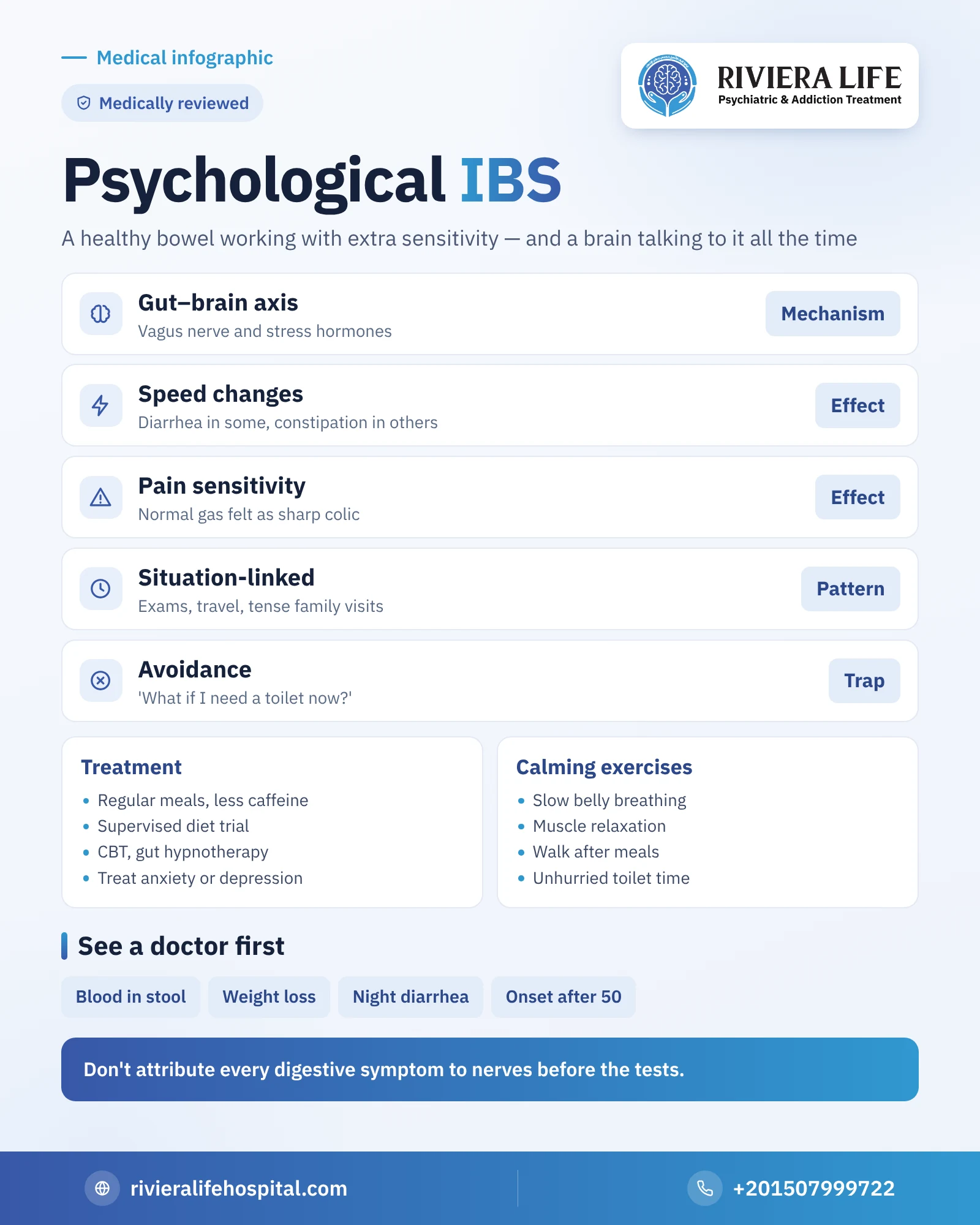
In the bowel wall there is a huge nervous network sometimes called “the second brain”, linked to the brain through the vagus nerve and through stress hormones. When you are anxious, the brain sends signals that change the speed of bowel movement: in some people it speeds up so diarrhea and a rush to the toilet come, and in others it slows down so constipation and bloating come. At the same time the bowel’s sensitivity to pain rises, so ordinary gas is felt like sharp colic.
Then the cycle begins: pain increases anxiety, and anxiety increases pain. And someone who fears leaving the house for fear of a diarrhea attack adds new pressure to the bowel. We explained how adrenaline works in the body in the article on adrenaline and anxiety.
Symptoms that give the picture a psychological character
IBS symptoms are similar whatever their cause, but some features indicate that the mind has a big role:
- Symptoms increase before specific situations: a job interview, travel, a tense family gathering, or exam day.
- Diarrhea or colic appears in the morning or when leaving the house then almost disappears on holidays.
- The condition improves after passing gas or a bowel movement, then returns with the first wave of anxiety.
- It is accompanied by palpitations, sweating, tension in the shoulders and difficulty sleeping.
- The patient’s thoughts revolve around “what if I need a toilet now?” so they avoid many places and activities.
This last one specifically deserves attention, because avoidance turns a digestive problem into a life problem. A psychological assessment at this stage may be an essential part of treatment, not an optional extra.
IBS and other psychological stomach disorders
The link isn’t limited to the large bowel. Anxiety also causes what doctors call functional dyspepsia: heartburn, early fullness, nausea and belching without a visible ulcer, and it causes “morning nausea” before exams and situations of fear, and some people suffer painful swallowing or a feeling of a lump in the throat with tension. All are examples of a digestive system affected by the psychological state, part of the broader picture we explain in the article on psychosomatic disorders.
Signs not to attribute to anxiety before examination
The most dangerous mistake is attributing every digestive symptom to nerves. These signs call for visiting the doctor and having tests before assuming any psychological cause:
See the doctor quickly if you see
These signs aren't from IBS and aren't postponed.
- Blood in the stool or black stool
- Clear weight loss without a reason
- Diarrhea that wakes you from sleep at night
- Severe, continuous or increasing abdominal pain, or repeated vomiting
- Pallor, anemia or persistent fever
- Symptoms starting for the first time after the age of fifty or a relative with colon cancer
In any case the doctor may ask for blood and stool tests, and sometimes an endoscopy, to rule out gluten sensitivity, bowel inflammation and others. In case of sudden severe abdominal pain or continuous vomiting, go to the nearest emergency department or call an ambulance on 123.
What ignites the symptoms? One diary may clarify the picture
It helps a lot to keep for two weeks a simple notebook in which you record: what you ate, your psychological state, your sleep, and the strength of the symptoms. A clear pattern that a person doesn’t see from memory often appears. You may discover that the colic comes after meetings, not after food, or that the diarrhea increases with lack of sleep. On the dietary side, some patients notice that caffeine, some sweetened sweets and fatty meals increase symptoms, and here the article on caffeine and energy drink addiction helps those who consume them heavily.
Treatment: the bowel and the mind together
There is no single treatment, and the best is a plan combining several elements that the doctor arranges according to the dominant symptoms:
- Regulating lifestyle: regular meals, slow chewing, reducing stimulants, and moderate physical activity that improves bowel movement and mood together.
- Supervised diet adjustment: the doctor or dietitian may try a temporary plan to reduce certain types of carbohydrates, then reintroduce them gradually, and a long, harsh diet without follow-up isn’t advised.
- Psychotherapy: cognitive behavioral therapy and gut-directed hypnotherapy have proven useful in many patients, because they retrain the brain to read the bowel’s signals without panic.
- Symptom medicines: the doctor may prescribe medicines that ease cramps or regulate bowel movements, and in some cases low doses of antidepressant medicines are used for their effect on bowel pain, with the doctor alone deciding their type and duration.
- Treating accompanying anxiety or depression: when either is clear, treating it sometimes eases the digestive symptoms more than any stomach medicine.
Don’t start or stop any medicine on your own, and don’t take laxatives or anti-diarrhea medicines daily without supervision.
Exercises that calm the bowel from within
Slow, deep breathing, so that the belly rises with the inhale and falls with the exhale, activates the vagus nerve and slows the stress response. Try it for ten minutes morning and evening and at the first feeling of colic. Progressive muscle relaxation, walking after meals, and setting a fixed time for the toilet without rushing also help. These things seem simple, but they change the signals that reach the bowel from the brain.
When do you need a psychiatrist?
Ask for a psychiatric assessment if anxiety is continuous most days of the week, or you have started avoiding work and occasions for fear of the symptoms, or sadness and loss of interest appear with the symptoms, or they haven’t improved after suitable digestive treatment. Some patients see ten gastroenterologists before one of them asks about their psychological life, and there is no need for that. See the article on when to see a psychiatrist, and to go deeper into anxiety itself the complete anxiety guide.
How does Riviera Life help you?
The consultant psychiatrists at Riviera Life assess the psychological side of physical symptoms after medical examination has ruled out organic causes, and set a treatment plan for anxiety and depression if present. The first consultation is free and confidential, and you can contact us on +201507999722 in Sheikh Zayed, Giza.
More from the psychosomatic disorders guide
- Psychosomatic disorders: when the body speaks
- Psychological stress and its effect on the body
- Anxiety symptoms: psychological and physical signs
- Anxiety: the complete guide
Questions many people ask
No, it is a functional disorder in how the bowel works. But anxiety and tension ignite it in many people, which is why psychotherapy helps alongside digestive treatment.
No, IBS doesn't turn into cancer and doesn't cause inflammation. But blood in the stool, weight loss or night-time diarrhea calls for tests to rule out other causes.
Because the tense brain changes the speed of bowel movement and raises its sensitivity to pain, so ordinary signals are felt as colic and the need for the toilet increases.
Many cases improve by regulating diet, sleep and activity and with cognitive behavioral therapy. The doctor is the one who decides whether there is a need for medicine.
When anxiety is continuous, you avoid going out and work for fear of the symptoms, sadness accompanies them, or they haven't improved after suitable digestive treatment.