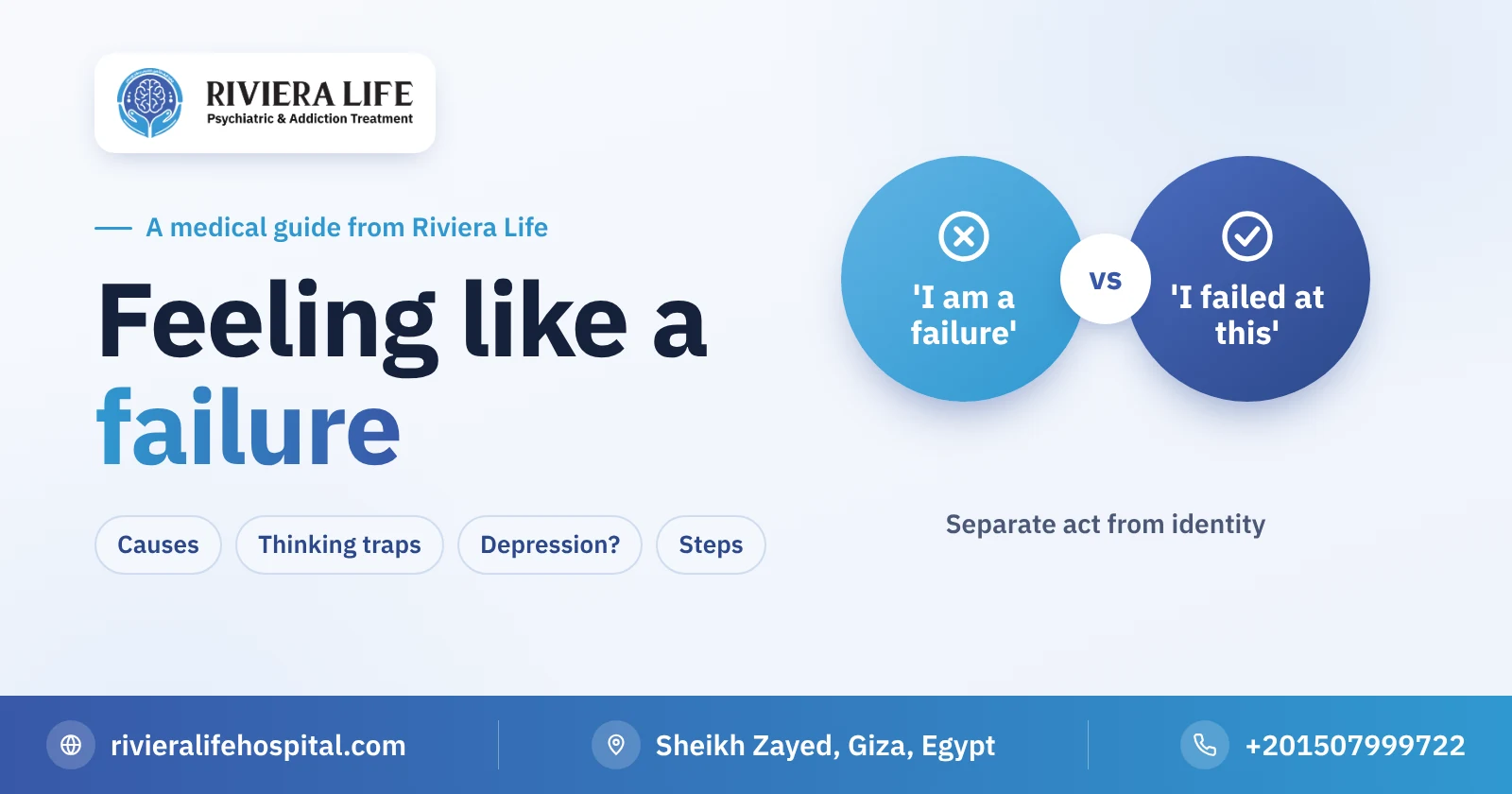
Feeling like a failure is a deep sense that you haven’t achieved what you should have, and that what others have achieved is real life. It differs from failure itself: one person may fail an exam and then get back up, while another may be successful by any external measure and live with a constant sense of failure. This feeling isn’t an illness in its own right, but it is one of the things most often said by those seeking psychological treatment, and it is often a symptom of or fuel for depression and anxiety. Here we explain where it comes from, which thoughts feed it, how to separate the event from your identity, practical steps, and when it calls for a specialist.
Failure is an event; feeling like a failure is a judgment
Failure is an event with a beginning and an end: failing an exam, a losing project, an engagement that ended, a job lost. Feeling like a failure is the judgment you pass on yourself because of it: “I am a failure”. The event hurts in proportion to its size, but the judgment multiplies the pain and spreads to every area. That is why one person may collapse after a small loss while another gets over a big one. The difference usually lies in the interpretation, not in the size of the event.
Where does it come from?
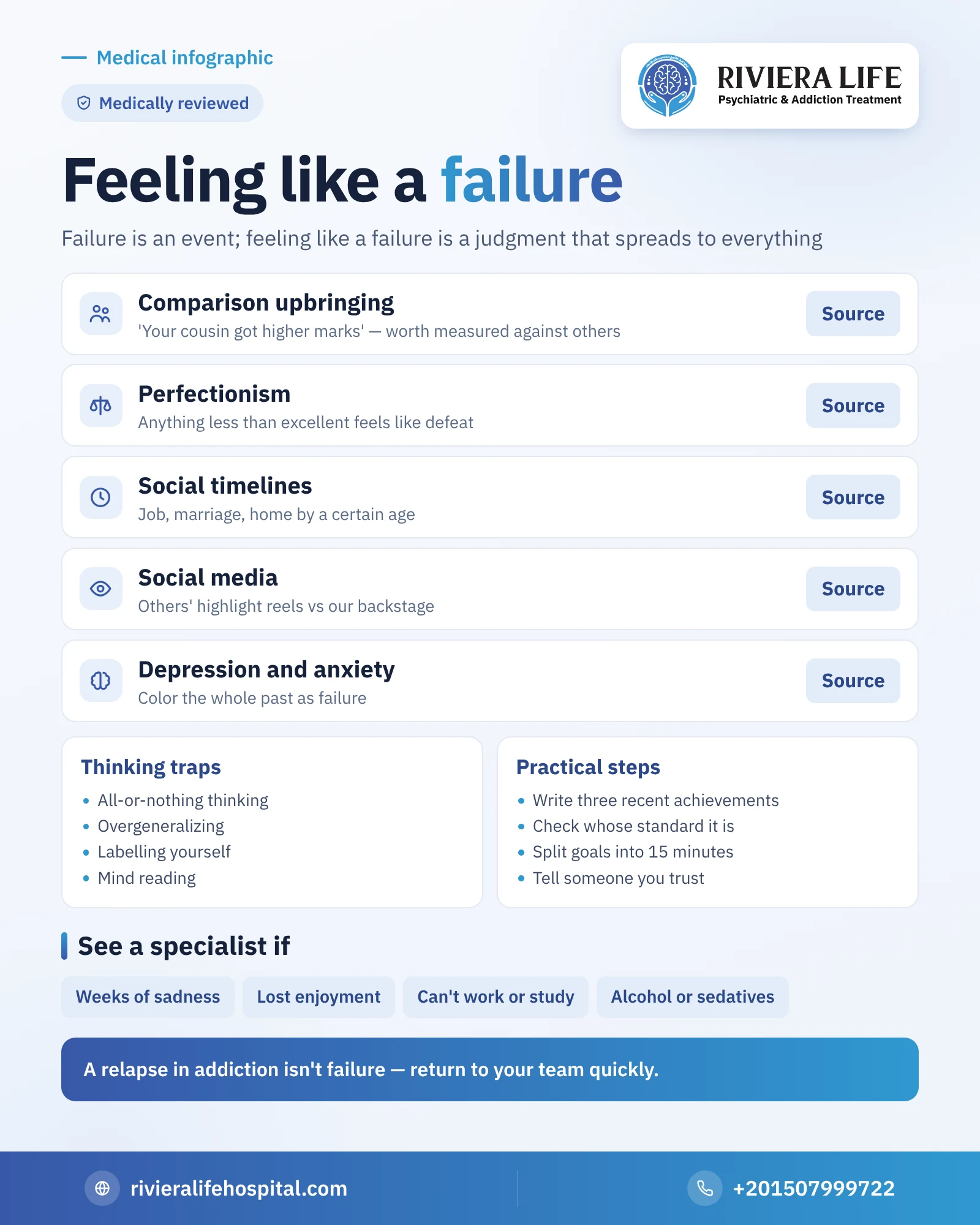
- An upbringing based on comparison: “Your cousin got higher marks”. The child learns that their worth is determined by comparison with others.
- Perfectionism: someone who accepts only “excellent” experiences every lesser result as a defeat.
- Social expectations: a job, marriage and a home by a certain age. Every delay is read as a personal shortcoming, even though economic circumstances may be the cause.
- Social media: where we see others’ selected moments of success and compare them with our own backstage.
- Depression and anxiety: color the whole past with failure, and the feeling of failure may appear before the person knows they are depressed. You will find this in depression symptoms.
- Previous experiences of humiliation: bullying or harsh criticism from a parent or teacher leaves an inner voice that repeats the same judgment.
Thoughts that feed the sense of failure
Cognitive therapists call some thinking patterns “cognitive distortions”, the most prominent here being:
- All-or-nothing thinking: “If I don’t succeed completely, I’ve failed completely”.
- Overgeneralizing: “I failed one subject, so I fail at everything”.
- Labelling: turning an act into an identity: “a failure” instead of “I stumbled at this”.
- Discounting the positive: dismissing what you achieved on the grounds that it is “ordinary”.
- Mind reading: “Everyone sees me as a failure”, without evidence.
And if most of what goes on in your head is loops of this kind, our article on overthinking helps you understand how the mind goes round the same circle.
How does it show in life?
- Putting off trying for fear of repeating the failure, so avoidance itself becomes the failure.
- Beating yourself up after any mistake, and apologizing for things that aren’t your fault.
- Feeling ashamed in front of relatives and friends, and withdrawing from occasions.
- Physical symptoms: headache, insomnia, fatigue and loss of appetite or overeating.
- Jealousy or bitterness at others’ success, then guilt about these feelings.
- Excessive preoccupation with work or study to prove your worth, which may lead to burnout.
The difference between feeling like a failure and depression
Feeling like a failure may be a painful assessment of a real situation, and it eases when circumstances improve or the interpretation changes. Depression, however, extends to sleep, appetite, energy, enjoyment and almost every day for two weeks or more, even when there is no visible failure. If you notice the feeling of failure comes with emptiness, exhaustion and loss of interest, depression may lie behind it and need treatment. Our article on the difference between sadness and depression explains the criterion that separates them.
Practical steps for dealing with it
Change the meaning, not the event
- Separate the act from the identity: say “I failed in this attempt” instead of “I am a failure”. The first leaves a door open to learning.
- Write down the counter-evidence: three things you achieved in the last month, however small.
- Review the standard: is this my goal, or an expectation I inherited from people? Is it realistic for my current circumstances?
- Ask what this taught me: one honest question is more useful than an hour of blame.
Move with small steps
- Split the goal: a step that takes a quarter of an hour is better than a huge plan that gets postponed.
- Celebrate the small achievement: your mind needs a sign of progress.
- Reduce comparison: cut down scrolling time, and follow those who inspire you rather than those who hurt you.
- Protect sleep and movement: exhaustion magnifies every sense of helplessness.
- Talk to someone you trust: failure grows in silence and shrinks when it is told.
When the failure is real and harsh
Talk of positive thinking doesn’t ease the pain of being dismissed from work, bankruptcy, repeated exam failure or losing a school year. In these circumstances sadness is legitimate. What is needed isn’t denying it, but not letting the loss turn into a final verdict. Rearrange your priorities and look for practical support: a careers adviser, a relative who opens a door, or a short course. And if the failure comes with financial pressure, ask for help without shame; no one on this road is alone.
Study, work and marriage: where do we feel failure most?
In our environment, pressures gather around particular milestones: the high school results, getting a job after graduation, engagement and marriage, and sometimes a mother carrying responsibility for her children’s behavior. When one of these milestones fails, the person feels their whole life has stopped, while in reality it is usually the beginning of another path. Just as a reminder: failing a subject, a delayed job or a broken-off engagement isn’t a judgment on your worth, but information about a stage that needs a different plan.
How do you help a relative who feels like a failure?
Don’t compare them with others, and don’t say “it’s all minor” or “what matters is that you’re fine”, as these sentences reach them as if you don’t understand. Listen, name the efforts you see, and offer specific practical help: reviewing a CV, going with them to an interview, or splitting up a task. And if signs of depression or thoughts of self-harm appear, encourage them to see a specialist, and go with them if they need you.
Addiction and relapse: are they failure?
Many people recovering from addiction feel like failures at the first relapse or slip. In psychiatry, relapse is considered a stage that can occur in the course of a chronic illness, not the end of treatment or evidence of a weak personality. The real danger is that the sense of failure turns into “since it’s like this, there’s no point”, which brings the person back to using. Returning quickly to the treatment team is the right step. Our article on depression and addiction explains how the two feelings intertwine.
When do you need a specialist?
Ask for a psychological assessment if the sense of failure continues for weeks with sadness and loss of enjoyment, prevents you from working, studying and maintaining relationships, comes with severe insomnia or a clear change in appetite, or if you have turned to alcohol or sedatives to bear it. Cognitive behavioral therapy is one of the well-studied approaches for modifying these thoughts, explained in our article on cognitive behavioral therapy. And the psychiatrist decides whether there is room for medication for accompanying depression or anxiety.
Seek urgent help immediately if you see
Call an ambulance on 123 or the mental health hotline on 16328, or go to the nearest emergency department.
- Thoughts that everyone would be better off without you
- Thinking about ending your life or harming yourself
- Refusing to eat, talk or leave the room for days
And if these thoughts start to come closer, read suicidal thoughts and tell someone you trust today.
How can Riviera Life help you?
At Riviera Life, a consultant psychiatrist meets you and listens to your story, determines whether the sense of failure is linked to depression, anxiety or the effect of pressures and old experiences, then sets a treatment plan that suits your situation. The first consultation is free and confidentiality is complete, and we have a family program when needed.
More from our mental health guide
- Depression: the complete guide
- Feeling guilty
- Burnout
- Overthinking
- Midlife crisis: the signs, causes and how to get through it
Questions many people ask
Failure is an event with a beginning and an end, while feeling like a failure is a judgment you pass on yourself because of it, which extends to other areas.
It may be, especially if it lasts two weeks or more with loss of enjoyment and changes in sleep and appetite. An assessment with a doctor settles it.
The standards you hold yourself to may be higher than realistic, or perfectionism, anxiety or depression may lie behind the feeling.
Cut down scrolling time, follow those who inspire you rather than those who hurt you, compare yourself with yourself a month ago, and set goals that are your own.
No, relapse can happen in the course of a chronic illness and is treated. What matters is returning quickly to the treatment team.