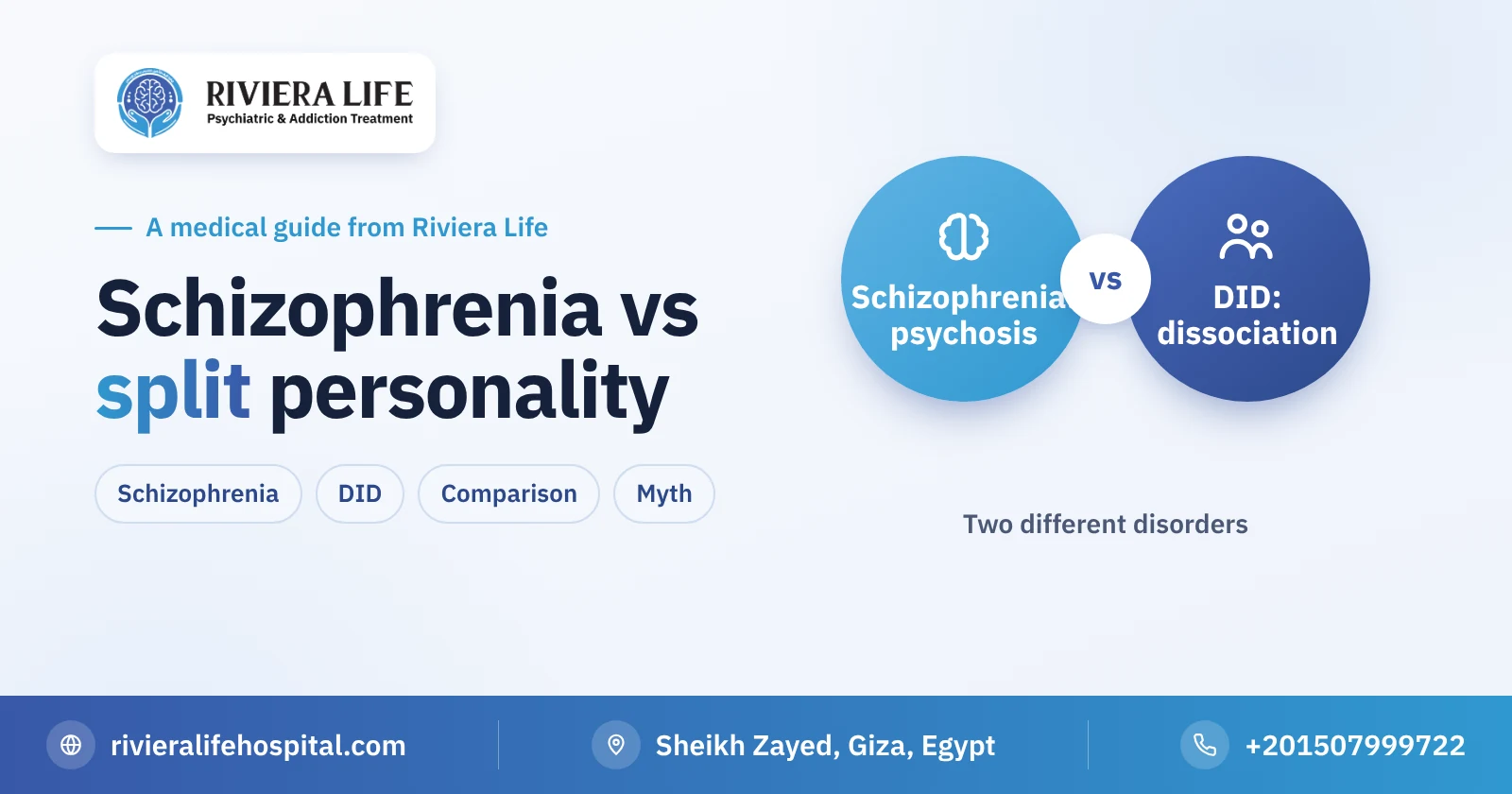
The difference between schizophrenia and “split personality” is that the first is a medically recognized illness and the second is a popular name for another condition, so they aren’t two names for one illness despite everyday speech mixing them up. Schizophrenia is a chronic psychotic disorder that affects thinking and perception, with hallucinations, delusions and withdrawal. What people call “split personality” or “two personalities” is scientifically closest to dissociative identity disorder, which is linked to childhood trauma and in which the person feels more than one identity inside them, with gaps in memory. The third common meaning is describing someone who swings between two positions or moods as “split”, and this isn’t a medical diagnosis. Here we detail the differences and correct the myth.
Where did the confusion come from?
The word “schizophrenia” is taken from the idea of a “splitting” of the mind’s functions: thinking, feelings and behavior don’t work in harmony. People took the word literally and imagined that the patient has two personalities. Films and series that portray the killer or mysterious figure with two personalities added to this. The reality is that a person with schizophrenia has one personality, but its perception of reality is disturbed.
Schizophrenia: what is it?
A chronic disorder of thinking and perception. The patient hears voices, or is gripped by fixed convictions such as being watched, their speech may be incoherent, and negative symptoms such as blunted emotion and withdrawal appear. It usually starts in late adolescence or the early twenties, and needs regular treatment. Its details are in schizophrenia symptoms and types of schizophrenia.
“Split personality” in its scientific sense
The medical name is dissociative identity disorder. In it the person suffers from “dissociation”, a disconnection between memory, identity and the sense of self, so they feel two or more states of self taking turns in control, accompanied by gaps in memory that aren’t explained by ordinary forgetting. It is usually linked to severe, repeated trauma in childhood, and this condition is regarded as a defense mechanism of the mind. It is much less common than schizophrenia. It is detailed in our article on dissociative identity disorder.
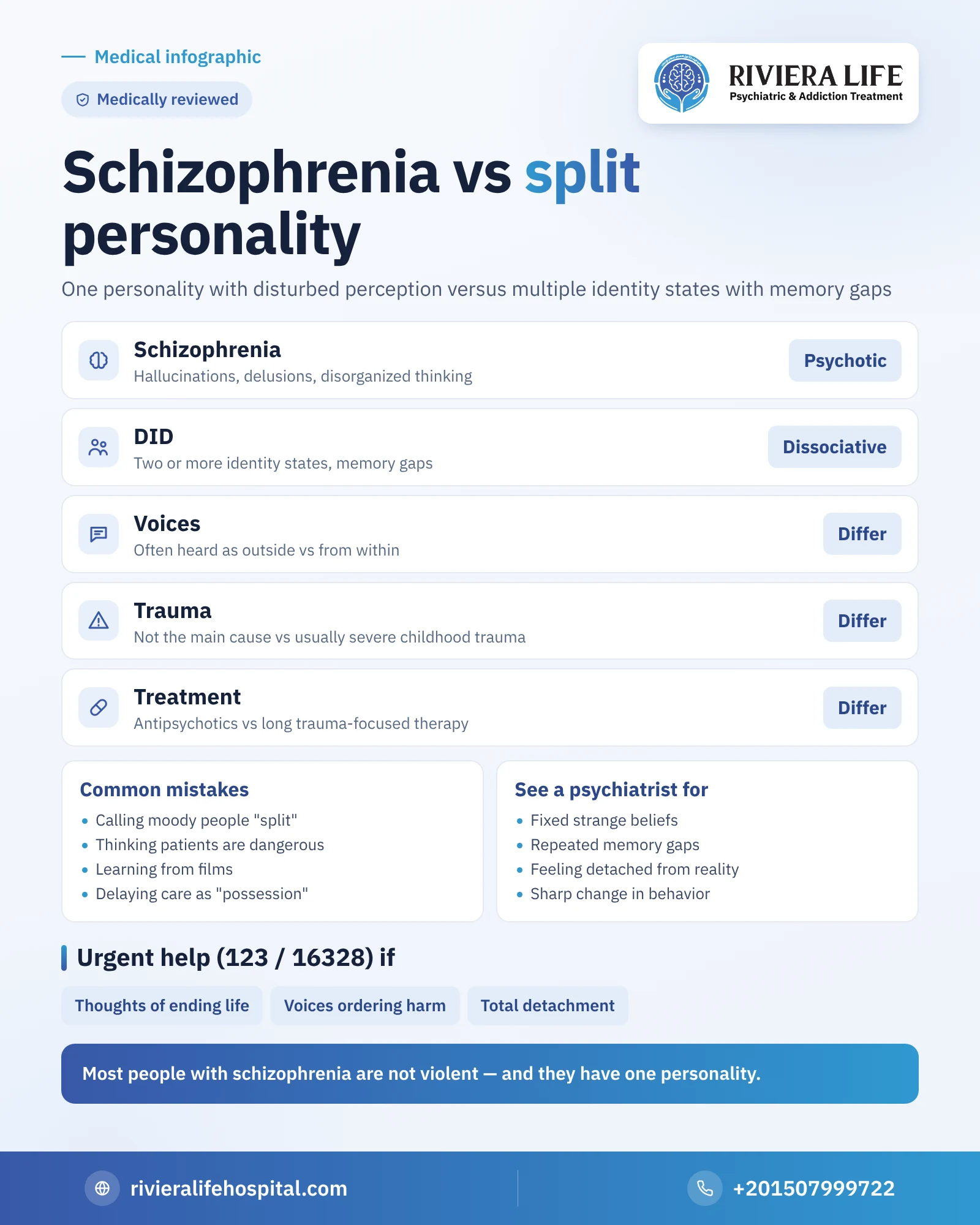
The difference in a table
| Aspect | Schizophrenia | Dissociative identity disorder (the common “split personality”) |
|---|---|---|
| Classification | A psychotic disorder | A dissociative disorder |
| The core of the problem | Disturbed perception and thinking: hallucinations and delusions | A disconnection between memory and identity: multiple self-states |
| Personalities | One personality with disturbed perception | A sense of multiple identities or states with memory gaps |
| Voices | Often perceived as external or alien | Often perceived as coming from within the person |
| Link to trauma | Not the main cause; genetics and the brain matter more | Usually severe, repeated childhood trauma |
| Main treatment | Antipsychotics with rehabilitation and support | Long psychotherapy focused on trauma and integration of the self |
| Frequency | More common | Less common |
A third meaning: “split” in everyday speech
A person who suddenly changes their position or mood is said to be “split” or to have a “split personality”, and this is a figurative expression. Mood swings may be temperament, stress or a mood disorder such as bipolar disorder, and may be linked to borderline personality disorder. This is neither schizophrenia nor an identity disorder. For the difference between the last two, see bipolar disorder vs borderline personality.
On the other hand, if a person’s behavior changes between home and work, this is usually ordinary social adaptation; we all behave with our manager differently from how we behave with our friends, and this has nothing to do with any illness.
Voices: where is the difference?
Voices appear in both conditions, but the way they are described usually differs. In schizophrenia the patient describes voices that comment on their actions, converse with each other or give orders, and may think they come from outside. In the dissociative disorder the patient describes internal voices that feel as if they belong to a part of the self, and may be the voices of “children” or “a critic”. Even so, telling them apart is the doctor’s job, as it can confuse a non-specialist. To read more about the phenomenon itself: types of hallucinations.
Can the two disorders occur together? Rarely, but it is possible, and one person may suffer from schizophrenia and a dissociative disorder or post-traumatic stress disorder together. That is why diagnosis needs a long assessment in which the doctor takes their time and listens to the full history, including childhood.
The difference in treatment
Schizophrenia relies on antipsychotics with psychotherapy, rehabilitation and family support, and treatment continues for a long time by the doctor’s decision. We have explained its details in our article on schizophrenia treatment. The dissociative disorder’s main treatment is long-term psychotherapy in stages: building safety, then processing traumatic memories, then integrating the self; accompanying anxiety and depression may be treated with medicine as the doctor judges, and there is no pill that treats dissociation itself. In both cases no one adjusts medicine on their own.
Common mistakes
- Calling every moody person “split”, which hurts the feelings of real patients and increases stigma.
- Believing that a person with schizophrenia is “dangerous” because they are “two personalities”, when in fact they have one personality and most patients aren’t violent.
- Relying on films as a source for understanding disorders.
- Delaying the doctor with excuses such as “God will guide him” or “it’s possession”.
When should you ask for help?
See a psychiatrist if voices or fixed strange convictions appear, repeated gaps in memory that exhaustion doesn’t explain, a feeling of detachment from the body or reality, or a sharp change in behavior and relationships.
Seek urgent help immediately if you see
Call an ambulance on 123 or go to the nearest emergency department if you see:
- Thoughts of ending life — you can also call the mental health hotline on 16328
- Voices ordering harm to oneself or others
- Self-harm or threats of it
- Severe confusion or complete detachment from reality
How do families live with each condition?
The family of a person with schizophrenia needs to understand psychotic symptoms and deal with them calmly, and to keep to medication and a relapse-prevention plan, and we have devoted our article on dealing with a person with schizophrenia to this. The family of a person with dissociative identity disorder needs to know that the switches aren’t “acting” or “being spoiled”, that safety, stability and patience are part of treatment, and that pressure and harsh questioning increase dissociation. In both cases, what is needed is listening without mockery or alarm.
What role does trauma play in each condition?
Among the questions families ask: why does this one get ill and not that one? Science doesn’t have a complete answer, but the general picture is that schizophrenia is linked to genetics, brain development and environmental factors, while dissociation is linked more to a history of trauma.
Severe childhood trauma is an important factor in the dissociative disorder, and is also among the known risk factors in some people with schizophrenia, but it isn’t its main cause. Post-traumatic stress disorder is a third condition that may include dissociative symptoms and intrusive memories, and may be confused with psychosis. These fine differences are an additional reason to take the problem to a psychiatrist instead of random labeling among family and friends.
How do we talk about illness without stigma?
The language we use shapes the image in people’s minds. When we say “so-and-so is split” mockingly, the real patient is ashamed to seek treatment, and their family is afraid to disclose. It is better to say “has a disorder” and to name the disorder by its medical name when it is known, and not to link illness with danger or crime. Anyone who wants to share information about these illnesses should first make sure it comes from a medical source, as much of what circulates on social media is exaggerated or wrong.
How can Riviera Life help you?
At Riviera Life in Sheikh Zayed, psychiatric consultants carry out a comprehensive assessment to identify the real disorder behind the symptoms, with complete confidentiality, a family program and aftercare. The first consultation is free on +201507999722.
More from our schizophrenia guide
- Schizophrenia: the complete guide
- Dissociative identity disorder
- The causes of schizophrenia and its risk factors
- Schizophrenia symptoms and when to ask for help
Questions many people ask
No. A person with schizophrenia has one personality, but their perception of reality is disturbed by hallucinations, delusions and disorganization.
Dissociative identity disorder, which is usually linked to severe childhood trauma.
Genetics has a clear role in schizophrenia, while dissociative identity disorder is linked more to trauma and early experiences.
Medicine is essential, but the most effective treatment combines psychological support, rehabilitation and family support, by medical decision.
No. It is a figurative expression that offends patients, and mood swings mean neither schizophrenia nor an identity disorder.