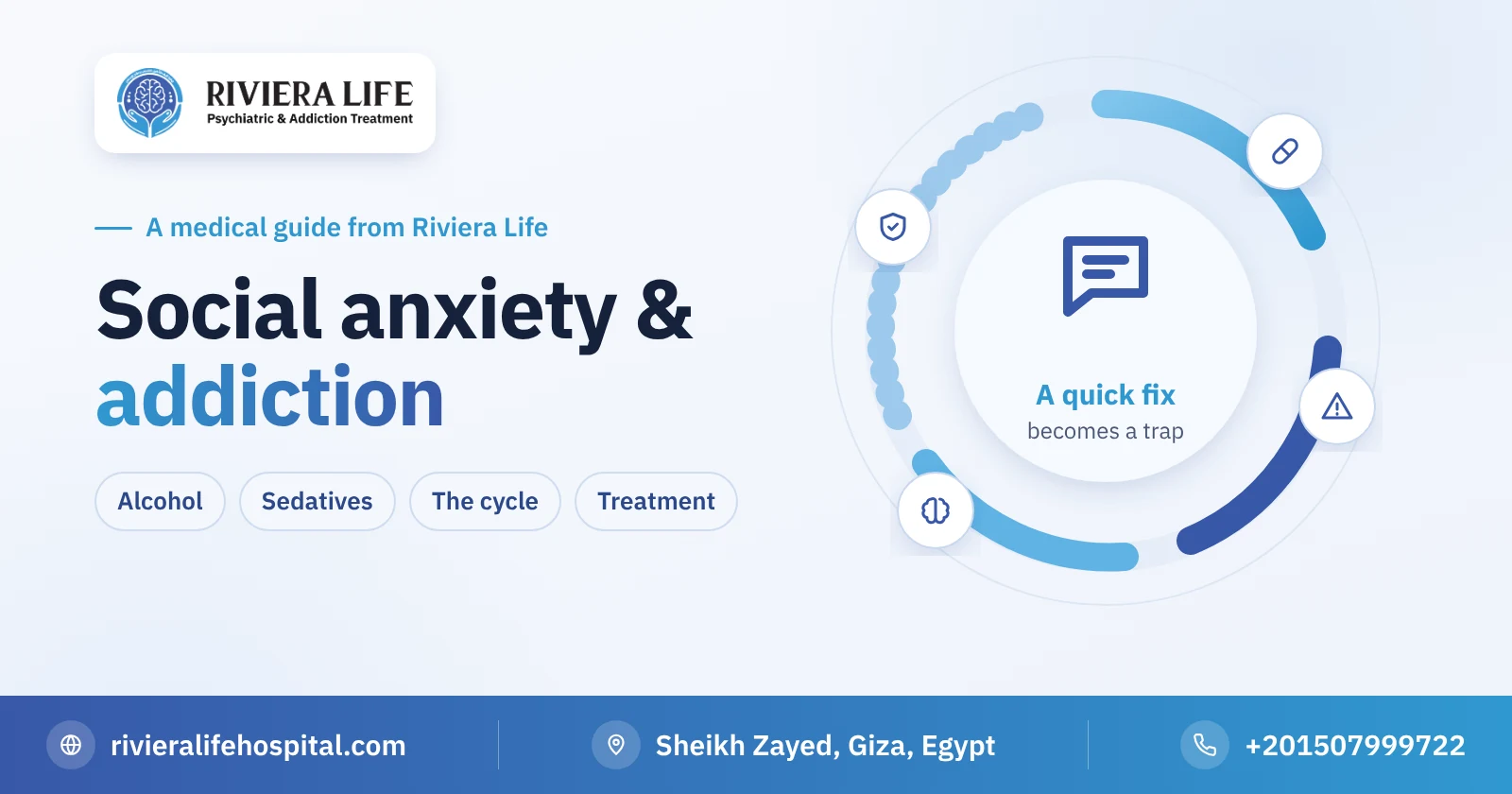
Social anxiety and addiction meet in a familiar scene: a person who fears talking, attending and being judged discovers that a glass, a pill or a joint makes the situation easier, so they go back to it on every occasion until they lose the ability to face people without it. Studies indicate that social anxiety is among the anxiety disorders most linked to alcohol and sedative use. This article explains how the “temporary solution” turns into a second problem, which substances sufferers turn to, why anxiety increases in the following days, and how medicine treats both conditions together. The diagnosis is only made by a psychiatrist after a direct assessment.
Why does someone with social anxiety turn to substances?
Social anxiety isn’t ordinary shyness, but an intense fear that others will judge the person and see them as embarrassing or weak, so they avoid situations or endure them painfully. When they find a means that eases this fear quickly, the brain learns to link the situation with the substance. Then the matter turns from “I need it at parties” to “I can’t go without it”. This feeling is fed by the fact that social fear usually starts in adolescence, the same stage in which the first experiences with smoking and drug use begin. You will find a description of the disorder in social anxiety symptoms.
The substances most linked to social anxiety
- Alcohol: the best known globally because it temporarily eases embarrassment, but it raises the risk of dependence on it quickly; for more see the alcohol guide.
- Sedatives and benzodiazepines: ease anxiety quickly, but cause dependence, tolerance and dangerous withdrawal, so none of them is used except with a prescription and medical supervision.
- Hash: may calm some people for the moment, but in others it increases anxiety and suspicion, and doesn’t solve the problem. See the cannabis guide.
- Tobacco and nicotine: some turn to it to fill awkward moments with an activity.
- Misused prescription medicines: such as pregabalin, gabapentin and others in those looking for calm, and they aren’t safe from dependence.
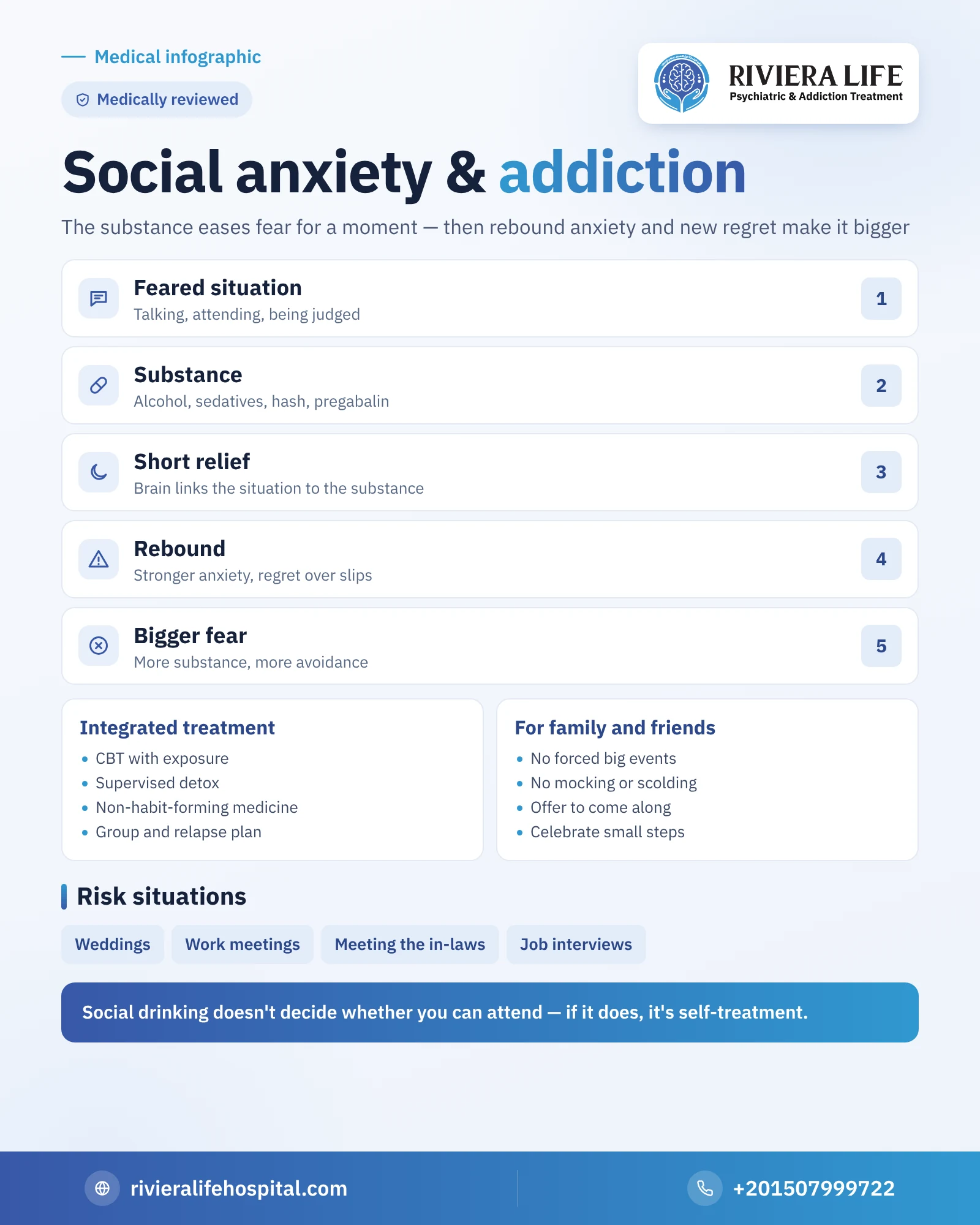
The cycle of social anxiety and addiction that closes on its owner
The cycle usually goes like this: a frightening social situation, then a substance that eases the fear, then short relief, then a rebound the next day: stronger anxiety and regret over what was said and done, then greater fear of the next situation, so more substance. Worse, the person doesn’t learn that the situation can be borne without help, so the fear stays as it is or grows. This is what makes real improvement require learning to bear the feeling, not avoiding it.
What does addiction make worse in social anxiety?
- Rebound anxiety after the substance’s effect wears off, which the person may take as proof that they need it.
- Social slips during use: words or actions they regret, which feed the fear of being judged.
- Gradual isolation, because the person avoids any place where they can’t use.
- Problems at work, study and in relationships, which are the very things they fear.
- Depression, as social anxiety and addiction both raise its risk. The details are in depression and addiction.
How are the two treated together?
Research supports treating both conditions at the same time, and the main things doctors rely on, without doses or self-prescriptions, are:
- Cognitive behavioral therapy: the foundation for social anxiety. In it the person learns to test their thoughts about how people see them, and is gradually exposed to frightening situations without a substance. The introduction to the therapy is in cognitive behavioral therapy.
- Detox under medical supervision: important especially with alcohol and sedatives, because stopping them suddenly may be dangerous.
- Medicine when needed: the doctor may prescribe types of antidepressants to treat social anxiety, which don’t cause dependence like sedatives, and need weeks for their benefit to appear. No medicine is started, stopped or changed in dose except with the treating doctor.
- Communication skills and group therapy: practicing being present with others who suffer from the same thing eases the feeling of isolation.
- Relapse prevention: a plan for risk situations such as parties and attending occasions, and people to call when needed. The details of treating social anxiety are in social anxiety treatment.
Practical steps in the first days
- Ask yourself honestly: in which situation do I need the substance? Write the situations down.
- Start with very small situations you face without a substance, such as a short call or sitting with one person.
- Don’t stop alcohol or sedatives suddenly if you use them regularly; consult a doctor first.
- Tell one person you trust, as secrecy is the reason the cycle stays.
- Avoid judging yourself after an embarrassing situation; improvement comes with repetition, not perfection.
Common illusions about the substance and confidence
- “I’m more fluent after a drink”: you may seem so to yourself, but others usually don’t notice the improvement, and sometimes notice the opposite.
- “I’ll never be able to without it”: the belief itself is part of the cycle; a planned experiment with the therapist’s support usually proves the opposite.
- “This is normal social drinking”: social drinking is the kind that your ability to attend doesn’t depend on; if your ability depends on it, it is self-treatment.
- “The sedative medicine is better because it’s prescribed”: the prescription doesn’t cancel the risk of dependence, and the duration and amount of sedatives are set cautiously by the doctor.
Common risk situations
Every person has situations that raise the likelihood of going back to the substance, and in social anxiety most are linked to people: weddings, work meetings, first meeting the fiancée’s or fiancé’s family, job interviews, and big family gatherings. The days before these situations are the hardest, because anticipatory anxiety rises. It helps for the person to write with their therapist a list of these situations ordered from easiest to hardest, and to set a plan for each situation: who will accompany them, what they will say if offered what they are avoiding, and when they can leave.
When is it more than shyness?
- If the person has started refusing to attend, work or study because they can’t use in the place.
- If they need the substance even for a call or a simple meeting.
- If withdrawal symptoms appear when trying to stop, such as trembling, insomnia or severe anxiety.
- If the anxiety is accompanied by continuous sadness or loss of hope.
These signs aren’t a judgment on the person, but an indicator that the matter deserves assessment by a psychiatrist, and that delay increases the difficulty of treatment.
For family and friends
- Don’t force the person into big social situations “so they get used to it”, as exposure is gradual and planned.
- Don’t mock their shyness or respond to drug use with scolding; shame increases fear.
- Offer to accompany them to a doctor or therapist without imposing it.
- Celebrate small steps such as attending for minutes or speaking in front of two people.
Ask for urgent help immediately if you see
Call an ambulance on 123 or go to the nearest emergency department, and don't leave the person alone.
- Talk of ending life or feeling that life is meaningless
- Trembling and seizures or hallucinations after suddenly stopping alcohol or sedatives
- Severe drowsiness or slow breathing after alcohol or sedatives
You can also call the hotline of the General Secretariat of Mental Health on 16328.
How does Riviera Life help you?
At Riviera Life in Sheikh Zayed we know that the hardest step is to call while you fear being judged. That is why the consultants in psychiatry and addiction start with a calm and completely confidential session, then set a plan that treats the anxiety and the drug use together under round-the-clock medical supervision, with a family program and aftercare. The first consultation is free: +201507999722.
More from the social anxiety guide
- Social anxiety: the complete guide
- The causes of social anxiety
- The dual diagnosis program
- Avoidant personality
Questions many people ask
Because they ease fear for the moment, so the brain learns to link social situations with the substance until it becomes hard to attend without it.
Usually yes, as anxiety rebounds more strongly after the effect wears off, and social slips during use add new regret and fear.
No if you use them regularly, as stopping suddenly may be dangerous and medical supervision is needed.
Cognitive behavioral therapy with gradual exposure, supervised detox when needed, a suitable medicine chosen by the doctor, and relapse prevention.
Yes, the consultants in psychiatry and addiction treat both conditions together in complete confidentiality in Sheikh Zayed.