Tapentadol is a relatively new opioid painkiller that combines two effects: binding to opioid receptors and increasing noradrenaline in pain pathways. It is prescribed for moderate to severe pain, and some of its forms are marketed for chronic diabetic nerve pain in certain countries. People compare it to tramadol because it resembles it in concept but is stronger and clearer in effect. This doesn’t make it safer. This article explains how it works, how it differs from tramadol, its risks, and when dependence on it turns into a problem that needs treatment.
What is tapentadol?
It is a chemically synthesized medicine that appeared in the United States in about 2008, and is known commercially as Nucynta in America and Palexia in other countries. It is classified as a strong controlled opioid medicine in most countries. It is usually available in two forms: immediate-release tablets for acute pain, and extended-release tablets for chronic pain that needs continuous relief. It is only used with a prescription and follow-up.
How does it work: two mechanisms in one medicine?
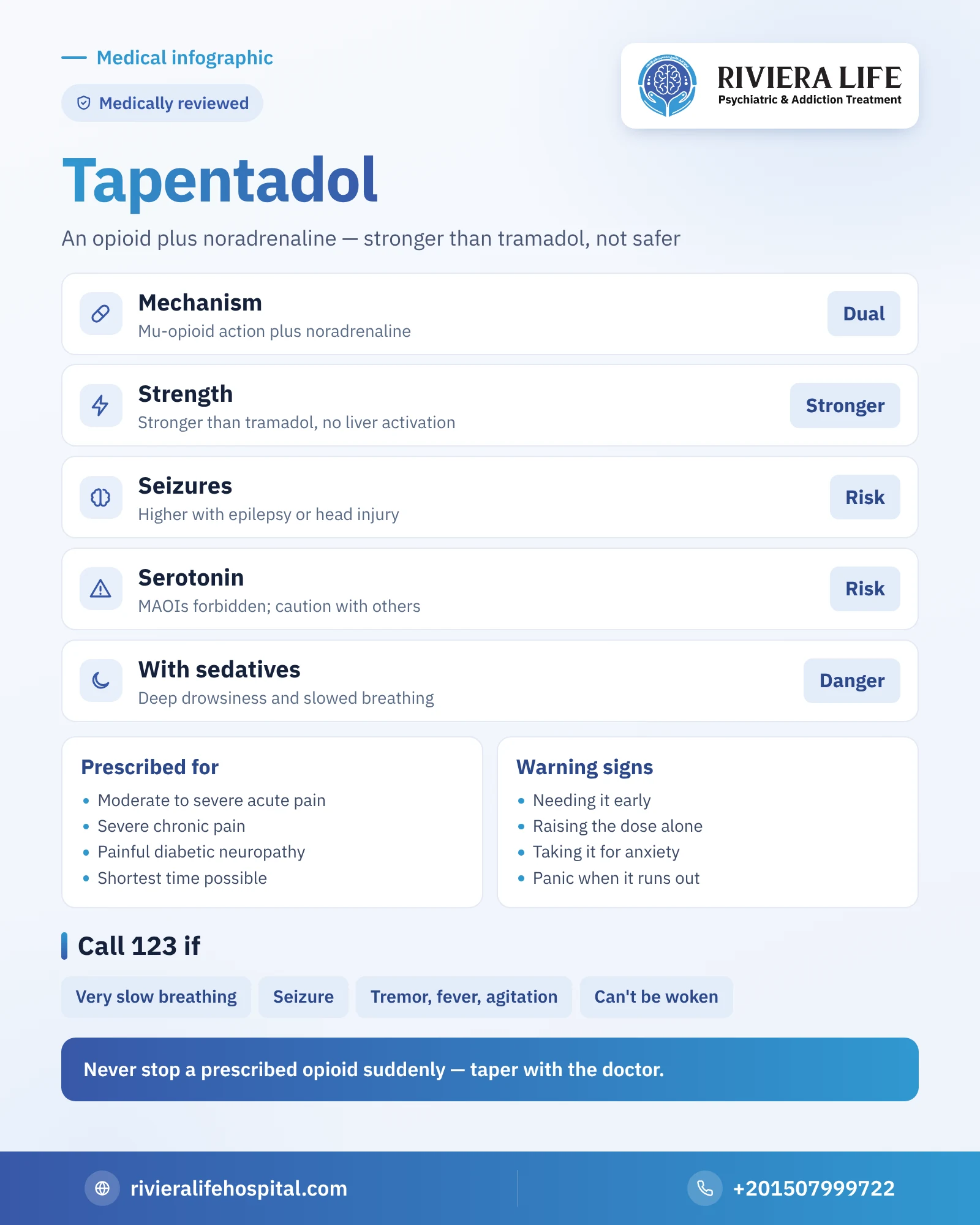
Tapentadol binds to the mu-type opioid receptor, like morphine, but it also blocks the reuptake of noradrenaline in the nerves. Noradrenaline is a substance that helps the body suppress pain signals in the spinal cord. In this way it relieves pain through two doors. Researchers believe this gives it less opioid strength than many strong opioids for the same level of relief, and reduces some of its effects on the bowel compared with them. But the result isn’t the elimination of risks: breathing slows, dependence happens, and overdose remains possible, especially when mixed with sedatives.
Tapentadol doesn’t need to be converted in the liver into another substance to work, unlike codeine and tramadol, whose effect varies between people depending on their genes. This makes its effect more consistent in those who take it.
When is it prescribed?
- Moderate to severe acute pain, as after surgery or injuries, when weaker painkillers aren’t enough.
- Severe chronic pain that needs continuous treatment where other alternatives don’t help.
- Painful diabetic neuropathy, in the extended-release form approved for this in some countries.
In all cases use is limited to the shortest possible time, and the doctor reviews its benefit periodically. To compare other options by type of pain, see the article on the strongest painkiller alternative to tramadol.
Tapentadol and tramadol: what is the difference?
| Point of comparison | Tapentadol | Tramadol |
|---|---|---|
| Mechanism | Opioid with increased noradrenaline | Weak opioid with increased serotonin and noradrenaline |
| Needs conversion in the liver | Doesn’t need it | Needs it for its opioid strength to appear |
| Strength | Generally stronger | Weaker |
| Serotonin effect | Weak, but present in the warnings | Clear and causes interactions |
| Prevalence in Egypt | Unfamiliar or unavailable in many places | Very widespread and much misused |
The bottom line is that tapentadol is stronger, not weaker, and someone switching to it from tramadol is dealing with a more potent medicine that needs closer follow-up, not a “milder alternative”. You will find the picture of tramadol and its dangers in the article on the harms of tramadol.
Common side effects
Nausea, vomiting, dizziness, drowsiness, headache, constipation, sweating, dry mouth and itching. Constipation and nausea are relatively less common with it than with many strong opioids according to some studies, but they remain possible, and can’t be relied on to consider the medicine safe. Blood pressure or pulse may rise in some patients, which is why heart patients need extra caution.
Risks specific to tapentadol
Seizures
Like tramadol, the drug leaflet mentions the risk of seizures, which is higher in those with epilepsy or a previous head injury, or who take other medicines that lower the seizure threshold.
Serotonin syndrome and interaction with antidepressants
Combining it with monoamine oxidase inhibitors, which include some antidepressants, is forbidden, and caution is needed with other medicines that raise serotonin. The syndrome appears as shivering, sweating, agitation, diarrhea and high fever.
Alcohol and sedatives
Combining it with alcohol, benzodiazepines, pregabalin or sleeping pills increases the risk of deep drowsiness and slowed breathing, and this can be fatal.
Call an ambulance on 123 immediately if you see
After taking tapentadol, especially with alcohol, sedatives or an antidepressant.
- Very slow or irregular breathing
- A seizure
- Severe shivering, high fever and heavy sweating with agitation
- Difficulty waking the person or loss of consciousness
Does tapentadol cause addiction?
Yes, it is an opioid medicine that health regulators classify among medicines with a high risk of addiction. Physical dependence may appear after weeks of regular use, even when taken as prescribed. Opioid use disorder, on the other hand, means taking the medicine for something other than pain, fearing it running out, seeking it from more than one source, or continuing despite harm. The article on the causes of opioid addiction explains the factors that raise the likelihood of this shift.
Tapentadol withdrawal
On stopping suddenly, the usual opioid withdrawal appears: anxiety, sweating, cramps, diarrhea, muscle aches, insomnia, yawning and a runny nose. Tapentadol has another side because it affects noradrenaline, so in some people it may be accompanied by extra symptoms such as agitation, tremor and palpitations, and symptoms resembling withdrawal from some antidepressants. Our article on opioid withdrawal symptoms describes the stages and general duration. What matters is not to stop a prescribed medicine suddenly, but to agree a gradual reduction with the doctor.
How is dependence on it treated?
Treatment depends on the cause: if the original pain is still present, the doctor sets a plan to reduce the medicine gradually and provides suitable alternatives for the pain. If it has turned into addiction, the patient is assessed psychologically and physically, then a medical withdrawal is carried out that eases symptoms with supporting medicines, and dependence treatment medicines such as buprenorphine may be used depending on the case. After withdrawal comes psychotherapy to prevent relapse. You will find the full steps in the article on opioid addiction treatment.
Questions the patient asks before starting
- What is the expected length of treatment and what is the stopping plan?
- Do my current medicines, especially antidepressants and sleeping pills, interact with it?
- Do I have epilepsy, a previous head injury, or kidney, liver or heart disease that changes the choice?
- What signs call for contacting the doctor immediately?
Changing the amount or stopping the medicine is always done with the doctor who prescribed it.
Is tapentadol available in Egypt?
We don’t have a fixed list of what is registered and traded in Egypt, and the lists change from time to time, and it is expected to be much less widespread than tramadol. That is why you shouldn’t trust any tablet offered to you as tapentadol from a source other than a licensed pharmacy; unknown tablets may not contain the stated substance at all, and may contain a more dangerous one. If a doctor prescribes it for you, ask them about the available brand name and its official source.
Groups that need extra caution
The elderly are more sensitive to drowsiness, dizziness and falls, and need a slower plan with more monitoring. Patients with kidney and liver disease clear the medicine more slowly, so its effects build up. In pregnant and breastfeeding women the medicine is only used by a careful medical decision, because opioids may affect the fetus and may cause withdrawal symptoms in the newborn. Children and teenagers are only prescribed it in very limited cases decided by a specialist. And if you drive a car or work with machines, avoid this until you know how the medicine affects you.
When does treatment turn into a problem?
Watch for these signs in yourself or a relative: needing the medicine well before its time, increasing the amount without consulting, taking it because of anxiety, insomnia or boredom, hiding how much is taken, panic at the pack running out, or looking for a copy of another prescription. One sign is worth a call to the treating doctor, and more than one sign is worth an assessment by an addiction treatment specialist.
More from the opioids guide
Questions many people ask
Generally yes, as it acts on opioid receptors directly without needing conversion in the liver. This means it isn't a milder alternative.
Yes, it is a controlled opioid medicine and can cause physical and psychological dependence, even with prescribed use if it goes on long.
Some antidepressants, especially monoamine oxidase inhibitors, are forbidden with it, and others require caution. Tell the doctor about all your medicines before starting.
Yes, the risk of seizures is mentioned in its leaflet, and it is higher in people with epilepsy or head injuries or with other medicines that lower the seizure threshold.
No. Stopping suddenly causes opioid withdrawal, and extra symptoms may appear because of its effect on noradrenaline. Agree a gradual reduction with the doctor.