A toxic personality isn’t a medical diagnosis, and you won’t find it in any manual of mental illness; it is a popular description of a person who leaves those around them exhausted, confused and feeling guilty whenever they come close. They may be a colleague, a relative, a partner or a lifelong friend.
What matters is that you distinguish between someone going through a bad period and someone who repeats harm in a fixed pattern, and that you know how to protect yourself without labeling them with an illness that no one but a doctor can determine. In this article: the signs of toxic behavior, the real disorders it gets confused with, practical steps to protect yourself, and a frank question for those who fear they may be the toxic party.
What do we mean by a toxic personality in relationships?
Toxicity describes the effect of a relationship, not the essence of a person. A toxic relationship is one in which psychological harm, neglect or control repeats, so that you come out of it worse than you went in: more anxious, less confident in yourself, and further from your friends. A passing disagreement doesn’t count, nor does a sad friend who complains a lot in a hard week, nor someone who makes a mistake, then apologizes and changes.
The most important criterion is repetition and the absence of self-review. We all hurt others sometimes, but a toxic person rarely sees themselves as the cause of anything, so every problem turns into your fault.
Signs of toxic behavior
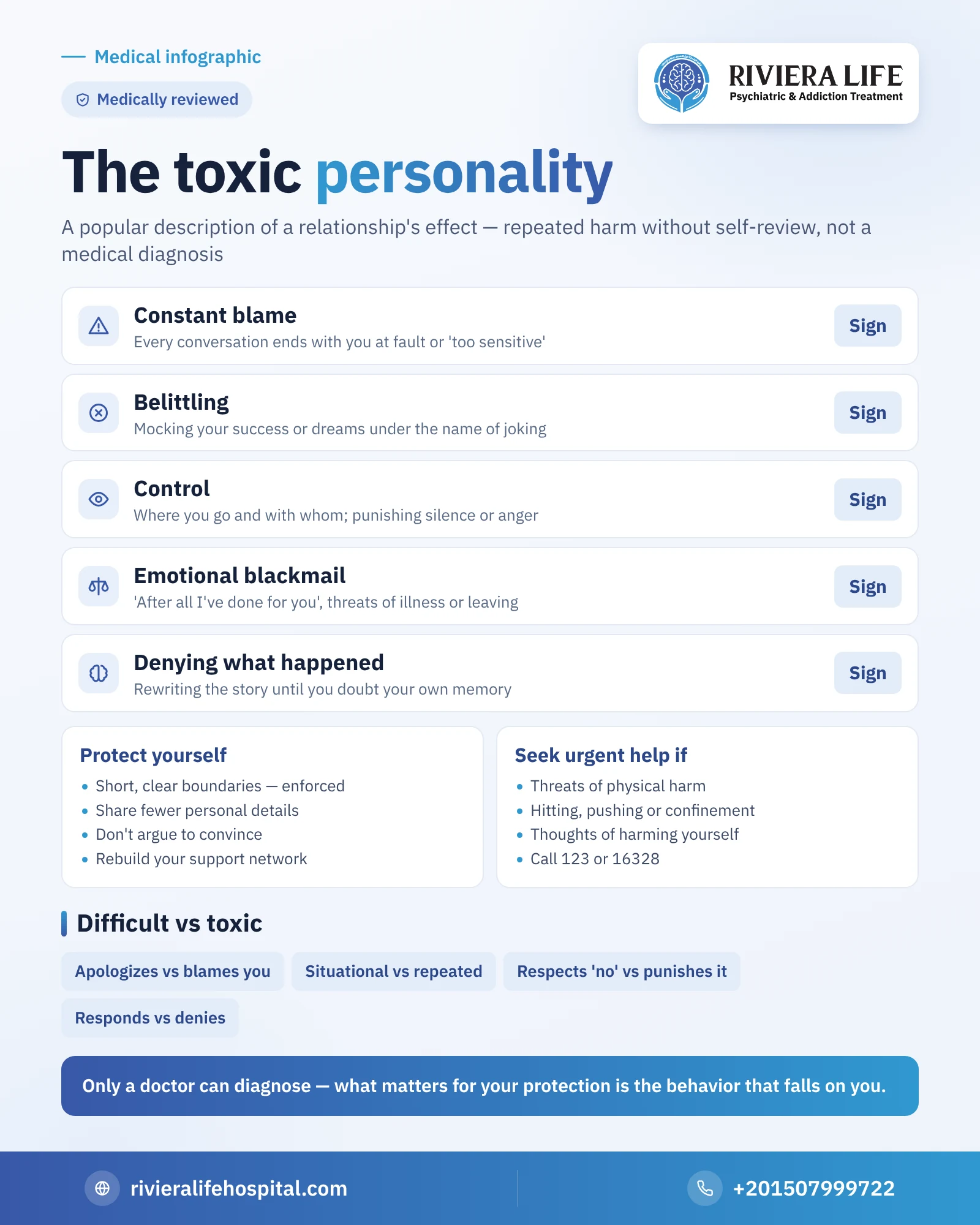
- Constant blame: whatever the situation, the conversation ends with you being wrong or more sensitive than necessary.
- Constant belittling: mocking your success, appearance or dreams under the name of joking, and if you object you are told you can’t take a joke.
- Control: they want to know where you go and with whom, object to your friends and family, and punish you with silence or anger if you disagree.
- Confusing swings: intense warmth then sudden coldness for no reason, so you spend your time trying to win back their approval.
- Emotional blackmail: phrases such as “after all I’ve done for you”, or threats of illness or abandonment until you give in.
- One-sided draining: the whole relationship is taking; you listen, help and endure, and when you need something you find no one.
- Denying what happened: changing the story until you doubt your memory and your judgment.
- Envy of your success: they aren’t happy for you, and try to dampen your enthusiasm or take credit for themselves.
A sign about you, not them
Look at your state after meeting them. If you get tense before calling, review your words several times for fear of their reaction, and apologize for things you didn’t do, this is a signal no less important than any behavior that comes from them.
A difficult person or a toxic person?
Not everyone who annoys you is toxic. Here is a simple table to help you sort:
| Aspect | A difficult or temporarily tiring person | Repeated toxic behavior |
|---|---|---|
| Apologizing | Apologizes when they realize their mistake | Justifies and turns the blame on you |
| Pattern | Linked to a particular circumstance such as illness or stress | Repeats in every circumstance and with many people |
| Respecting boundaries | Accepts it when you say no | Punishes or pursues you when you refuse |
| Effect on you | You get fed up but keep your confidence | You doubt yourself and drift away from others |
| Willingness to change | Responds if you are frank with them | Denies, gets angry, or pretends and then goes back |
Toxic behavior isn’t the same as a mental disorder
The popular label is often used to point to real disorders, but the match isn’t automatic. You may notice harmful behavior resembling what happens in some personality disorders, such as the arrogance and lack of empathy in narcissistic personality, the intense swings and fear of abandonment in borderline personality, or the disregard for others’ rights in antisocial personality.
But a struggling person may behave toxically for other reasons: untreated depression that makes them quick to anger, addiction, severe stress, or a parenting style they learned at home. Conversely, many people with a personality disorder suffer themselves and seek treatment. That is why you shouldn’t write anyone a diagnosis or confront them with one; what matters for your protection is the behavior that falls on you, not the name that fits it.
Why is it hard to walk away?
Many ask: why did I stay so long? The answer is that toxic relationships don’t start toxic. They start with closeness, attention and beautiful moments, so you become attached, then the harm creeps in gradually until it seems normal. Added to this are other reasons: fear of loneliness, a family or work tie that can’t be cut, hope that the person will return to how they were at the start, or confidence shaken after months of criticism. So don’t blame yourself for staying, and start from where you are.
How do you protect yourself?
Set clear, short boundaries
A boundary isn’t a long discussion. Say calmly, “I won’t continue the conversation if voices are raised,” then actually carry it out. A toxic person tests boundaries, and if they aren’t enforced they are words with no effect.
Reduce the details you give
Every piece of personal information may come back to you as a weak point. Keep the conversation on general matters, and keep your secrets and fears for those who have proven they deserve them.
Don’t justify or argue to convince them
Trying to persuade draws you into an endless circle. It is enough to state your position once and then leave the conversation.
Rebuild your support network
Old friends, supportive family members and good colleagues are your reference for confirming that what you are living isn’t your imagination. If the exhaustion is severe, talking with a psychotherapist rearranges the picture and explains why you are attached to a relationship that hurts you. It also helps to understand psychological stress and its effects so you catch its signs in your body early.
Reduce contact or end the relationship
If the relationship is optional, end it; if it can’t be avoided, as with family or work, set the times, length and topics of meetings, and keep communication written as far as possible so the story doesn’t change. In the workplace, document what happens calmly. For dealing with narcissistic patterns in particular, read how to deal with a narcissist.
Seek urgent help if it reaches
Repeated psychological harm can escalate, so don't wait until physical harm happens. Call an ambulance on 123 in immediate danger, or the mental health line on 16328.
- Threats of physical harm to you or your children
- Hitting, pushing or being prevented from leaving
- Thoughts of harming yourself because of what is happening
What if I am the toxic person?
The mere fact that someone asks themselves this question honestly is a good sign, as the thoroughly toxic rarely ask. Review yourself: do people keep drifting away from you? Do you speak harshly and then justify it as frankness? Do you see everyone else as wrong in every disagreement? Change is possible when it starts with admission, then learning to manage anger, listen and genuinely apologize, and treating the deeper cause if there is one, such as depression, addiction or an old trauma. Cognitive behavioral therapy may help you notice your thoughts and change your responses.
When do you need specialist help?
Ask for an assessment from a psychiatrist or therapist if persistent anxiety, sadness, insomnia or loss of self-confidence appear because of a particular relationship, if you rely on a substance to cope with the stress, or if you find yourself repeating the same relationships with different people. The doctor is the one who distinguishes passing stress from a disorder, and decides what suits your case.
How can Riviera Life help you?
Riviera Life’s consultant psychiatrists listen to what you have been through without judgment, and assess whether there are psychological effects that need treatment, in complete confidentiality. The first consultation is free, and you can call +201507999722.
More from our relationships and personality guide
- Personality disorders: types, symptoms and treatment
- How to deal with a narcissist at work, in the family and in friendship
- Narcissistic personality and marriage: the relationship cycle and its effects
- Psychological stress: its signs and effect on the body
Questions many people ask
No. It is a popular description of behavior that hurts others, not a medical diagnosis. Toxic behavior may sometimes be linked to a personality disorder, addiction or depression, but only a doctor can determine that after assessment.
Watch the relationship's effect on you: constant blame, belittling, control over your decisions, and tension before every meeting. If you leave the relationship more anxious and less confident, that is a signal worth attention.
They may change if they admit their behavior hurts others and choose treatment and ongoing self-review. You can't force them to; your role remains protecting yourself, not fixing them.
Shorten meetings and limit topics, set clear boundaries and apply them calmly, and don't share sensitive information. It helps to keep the support of other people and to consult a therapist if the effect is significant.
Yes. It happens to people who learned harsh ways or are going through stress, depression or addiction. Honest questions about your effect on people, and asking a therapist's opinion, are a good start to change.