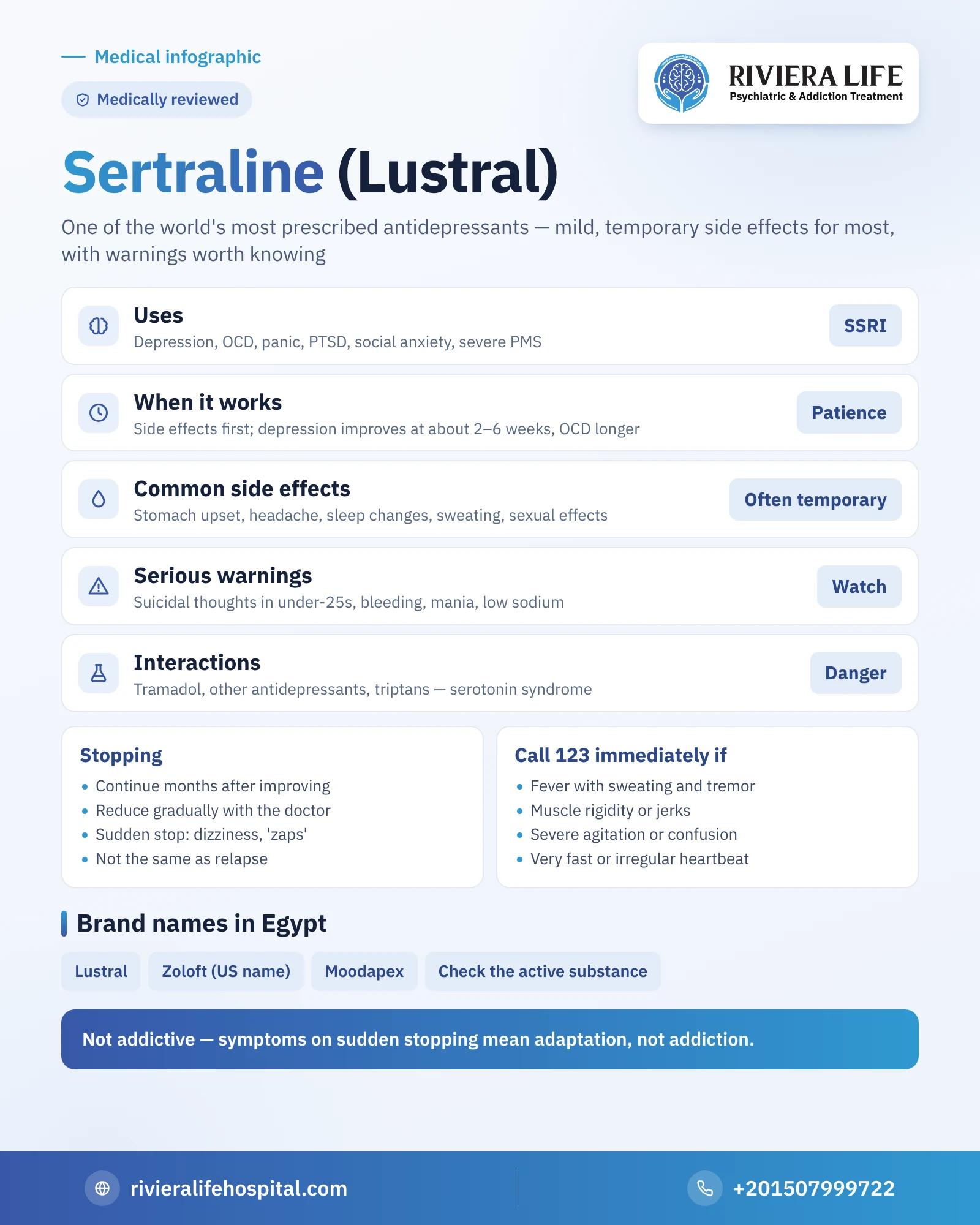
Sertraline is one of the most prescribed antidepressants in the world, and belongs to the selective serotonin reuptake inhibitor (SSRI) class. The psychiatrist prescribes it for depression, as well as for a number of anxiety disorders such as obsessive-compulsive disorder, panic attacks, post-traumatic stress disorder and social anxiety. It usually needs weeks for its effect to appear, and its side effects are mostly mild and temporary, but it carries warnings the patient and family should know. In this guide you will find what sertraline does, who it is prescribed for, and when to call the doctor or an ambulance. The article includes no doses or directions for use, as starting, changing and stopping the medicine is done with the psychiatrist only.
What is sertraline?
Sertraline appeared in the 1990s as part of the generation that changed how depression is treated: instead of the old medicines that act on many receptors and cause dryness, sleepiness and heart risk, came medicines focused on a single transmitter, serotonin. This focus made its side effects less troublesome, and made an overdose less dangerous than with medicines such as Anafranil and Tryptizol. That is why it became one of the first choices many doctors start with. Our article on antidepressants shows where it sits among the other classes.
Sertraline’s brand names in Egypt
The original name in use in Egypt is Lustral, made by Pfizer, the same name used in Britain. Zoloft is the medicine’s brand name in the United States, which is why you often read it on foreign websites. Egyptian pharmacies also carry equivalent names containing the same substance, including Moodapex. The simple rule: look at the name of the active substance on the box, don’t combine two brand names thinking they are two different medicines, and don’t replace one name with another without asking the doctor or pharmacist.
What is sertraline used for?
Depression
This is the best-known use. It helps in moderate and severe depressive episodes, and works better when psychotherapy is added, as we explain in our article on depression treatment.
Anxiety disorders
Medicine regulators have approved it for obsessive-compulsive disorder, panic disorder, post-traumatic stress disorder and social anxiety. The breadth of this list is one reason for its popularity, as many patients have depression and anxiety together.
Premenstrual dysphoric disorder
A severe form of mood swings before the period that goes beyond the usual discomfort; the doctor may prescribe it for this after assessment.
How does sertraline work in the brain?
When a nerve cell releases serotonin to deliver its message, it then reabsorbs part of it through a special pump. Sertraline partly closes this pump, so serotonin stays available between cells for longer. But the rise in serotonin happens within hours, while the improvement is delayed by weeks; the reason is that the real benefit comes from slow adaptation in the receptors and neural circuits responsible for mood and fear. That is why its effect isn’t like sedatives, which give quick relief that then fades. To learn about the role of this transmitter in mental state, read about the symptoms of serotonin deficiency.
When does sertraline start working?
In the first two weeks you may notice the side effects before the benefit, which is what frustrates patients most. Improvement in depression usually starts at around the second to sixth week, and becomes complete over a longer period. In OCD it may take two or three months before the response can be judged. A well-known observation in panic patients is that tension may increase slightly in the first days before calming down, which is why the doctor starts cautiously and follows closely. If the period your doctor set passes without a difference, the solution is to see them, not to double the amount or abandon it.
Common side effects
Most of the following ease within two to four weeks as the body gets used to it:
- Stomach upset: nausea, diarrhea or loose stools, among the most noticeable with sertraline in particular.
- Headache and dizziness.
- Sleep disturbance: insomnia in some and sleepiness in others.
- Excessive sweating and dry mouth.
- Weak sexual desire, delayed ejaculation or difficulty reaching orgasm.
- Weight change in some patients with long-term use.
Sexual effects don’t always disappear with time, and many are embarrassed to mention them, so they quietly abandon the medicine. It is better to tell your doctor, who has several options.
Serious warnings you should know
- Suicidal thoughts in young people: antidepressants carry an official warning of increased suicidal thoughts and behavior in children, teenagers and young people up to about twenty-four, especially in the first weeks or after a dose change. Any worrying change calls for contacting the doctor immediately, or the mental health hotline on 16328, or an ambulance on 123.
- Bleeding: it slightly increases the chance of bleeding and bruising, and this rises with blood thinners, aspirin and anti-inflammatory painkillers.
- Bipolar disorder: it may reveal a manic episode in someone predisposed, which is why the doctor asks about family history.
- Low sodium: clearer in older people, appearing as headache, confusion and weakness.
- The heart: its effect on heart rhythm is small compared with some members of its class, but the doctor takes heart history into account.
- Other illnesses: such as epilepsy, narrow-angle glaucoma and liver disease.
Serotonin syndrome and overdose
An overdose of sertraline alone is less dangerous than with older antidepressants, but it remains a medical condition that needs a hospital, especially if mixed with other medicines or alcohol. The clearest danger is serotonin syndrome, which usually occurs when combined with other things that raise serotonin, such as tramadol, other antidepressants and triptan medicines for migraine. The details are in our article on serotonin syndrome.
Call an ambulance on 123 immediately if you see
After taking an excess amount of sertraline, or when combining it with another medicine that raises serotonin:
- A high temperature with heavy sweating and tremor
- Muscle rigidity or repeated involuntary jerks
- Agitation, severe confusion or hallucinations
- A very fast or irregular heartbeat
- Seizures or loss of consciousness
Sertraline, alcohol and drugs
Alcohol doesn’t interact violently with sertraline in everyone, but it increases dizziness and sleepiness, works against depression treatment, and makes judging the medicine impossible. Hashish may increase anxiety and psychotic symptoms in some people. Tramadol, which is widespread in Egypt, brings two dangers with sertraline: serotonin syndrome and an increased chance of seizures.
Stimulants such as cocaine and ecstasy raise serotonin and blood pressure together. Sertraline is not combined with monoamine oxidase inhibitors, St John’s wort, or certain medicines your doctor knows about. Be frank with your doctor about everything you take; they aren’t judging you but protecting you. If depression is accompanied by substance use, our article on depression and addiction explains how the two are treated together.
Sertraline, pregnancy and breastfeeding
There is no single answer that suits every woman. Untreated depression during pregnancy carries its own risks for mother and fetus, and the medicine also has possibilities that are discussed, including passing symptoms in the newborn if used in the last weeks. Sertraline is one of the most studied antidepressants in pregnancy and breastfeeding, but the decision remains the doctor’s after weighing things up. If you discover you are pregnant while taking it, don’t stop suddenly; call your doctor first. For those struggling after birth, our article on postpartum depression will help.
Stopping sertraline
Improvement doesn’t mean treatment is over. The doctor usually continues the medicine for several months after symptoms disappear to reduce the chance of relapse, then reduces it gradually. Stopping suddenly may cause dizziness, nausea, irritability, sleep disturbance and a feeling like electric zaps, which we explain in our article on antidepressant withdrawal symptoms. These symptoms are unpleasant but usually not dangerous, and they differ from the illness itself returning.
Is sertraline addictive?
No. Sertraline gives no high, doesn’t push you to increase the amount in search of an effect, and isn’t sought on the street as sedatives are. Symptoms on sudden stopping mean the body has adapted to it, not that you have become addicted. Even so, sertraline isn’t a medicine to take on a friend’s advice; diagnosing anxiety and depression and choosing the right medicine is the doctor’s work.
How can Riviera Life help you?
If weeks have passed on sertraline without improvement, its effects bother you, or you want to stop it safely, a consultant psychiatrist at Riviera Life reviews the diagnosis and medicines with you and sets a clear plan combining medicine and psychotherapy. The first consultation is free, and follow-up is completely confidential.
More from our psychiatric medicines guide
- Psychiatric medicines: the complete guide
- Antidepressants: types and how they work
- Escitalopram (Cipralex)
- The best medicine for depression and anxiety
- Prozac vs Lustral: how long they stay, side effects and interactions
- Antidepressants and sex: the effect of the medicine, the effect of the illness and what can be done
- Citalopram (Cipram): uses, the heart warning and how it differs from Cipralex
- Fluoxetine (Prozac): uses, side effects and interactions
Questions many people ask
No. It is an antidepressant from the selective serotonin reuptake inhibitor class. It may cause sleepiness in some patients and insomnia in others, but it isn't prescribed for quick calming.
Yes. Both are brand names for sertraline; Lustral is the name used in Egypt and Britain, and Zoloft is the American name.
Weight may change in some patients with long-term use, and it varies from person to person. If you notice troublesome gain, discuss it with your doctor instead of stopping the medicine.
Don't take a double amount to make up for what you missed. Ask your doctor or pharmacist how to return to your plan.
Some patients are prescribed more than one medicine together after assessment, but combining them on your own increases sleepiness and dizziness and may hide a substance-use problem. The decision belongs to the doctor who knows all your medicines.