Venlafaxine is an antidepressant from the serotonin and norepinephrine reuptake inhibitor class, and its well-known brand name is Efexor. The psychiatrist prescribes it for depression, generalized anxiety disorder, social phobia and panic disorder, and it is one of the medicines turned to when a medicine from the serotonin class alone isn’t enough. But this medicine has two faces everyone who takes it should know: dose-related raised blood pressure, and strong discontinuation symptoms if it is stopped suddenly or repeatedly forgotten. We explain the picture here without doses; starting, adjusting and stopping are with the psychiatrist only.
What is venlafaxine?
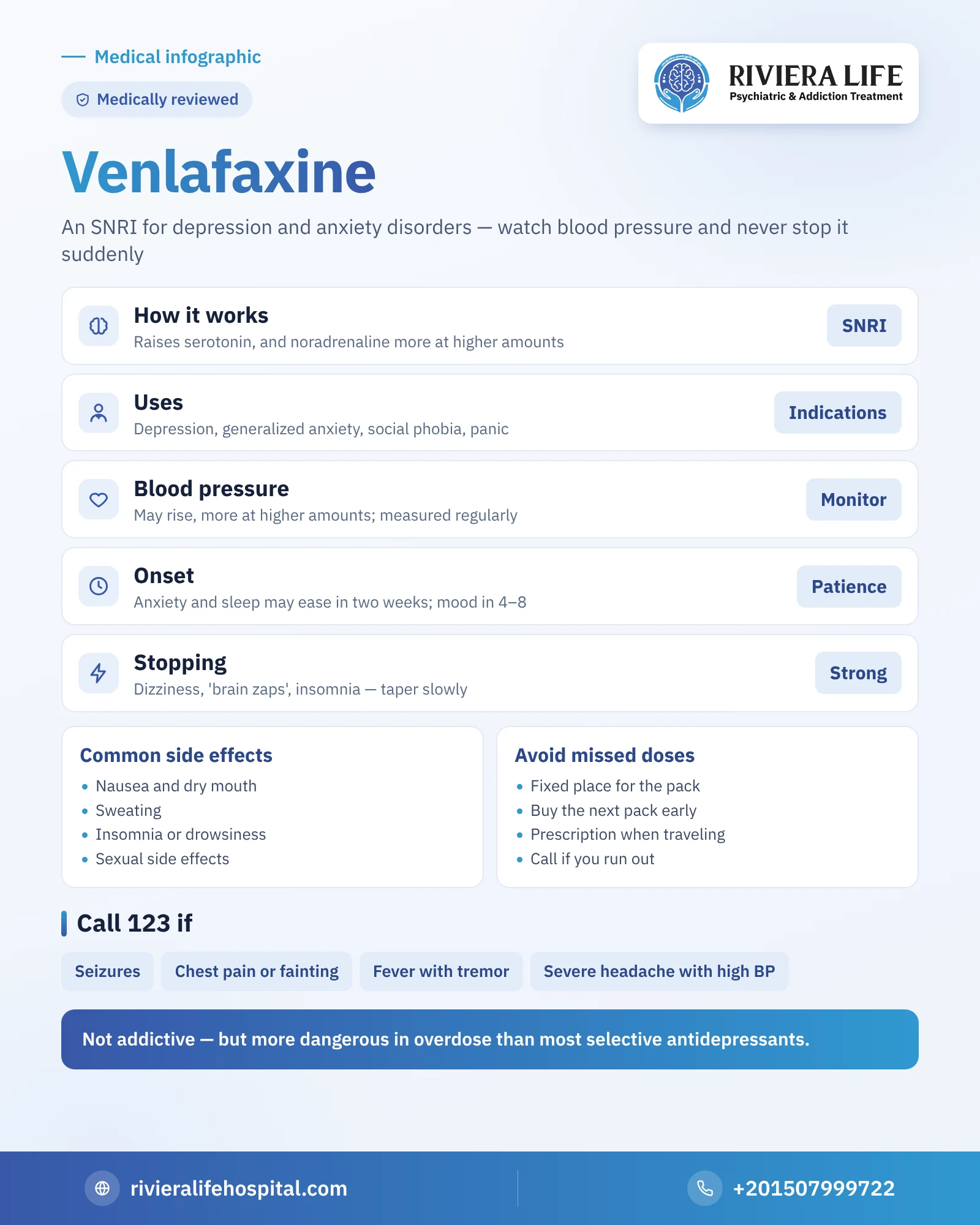
Venlafaxine prevents serotonin and norepinephrine from returning into nerve cells together, so the activity of the two transmitters rises in areas of mood and anxiety. Interestingly, it behaves as a serotonin-only agent at low amounts, and the involvement of norepinephrine becomes clear at higher amounts, which is part of why blood pressure is linked to the amount. In Egypt it is known by the original name Efexor and local equivalents, and is usually prescribed in an extended-release form taken once a day; the pharmacist will tell you what is available. To learn where it fits among the other types, see antidepressants.
What is venlafaxine used for?
- Depression: a common option, sometimes when a previous medicine wasn’t enough. The full plan is in depression treatment.
- Generalized anxiety: it lowers baseline tension and is used in approved guidelines for this purpose. Details are in anxiety treatment.
- Social phobia and panic disorder: recognized by guidelines in many countries. To tell panic from a heart attack, read panic attacks.
- Other uses by the doctor’s decision: including some types of nerve pain and hot flushes; these aren’t unrestricted uses.
What does the doctor ask before starting?
He asks about blood pressure and heart disease, any previous episode of mania or overactivity, epilepsy and eye problems, and all medicines and supplements. He asks about alcohol and stimulants. He may ask for a blood pressure reading and simple tests. Some of these may not seem related to mood, but they determine the safety of the choice, so answer accurately.
When does it start working?
Some patients notice improvement in anxiety and sleep within two weeks, but a difference in mood usually needs roughly four to eight weeks. At the start, nausea, tension or insomnia may increase; this is common and usually eases. Most importantly, don’t judge the medicine by one week.
Common side effects
- Nausea, dry mouth and loss of appetite.
- Dizziness, headache and mild tremor.
- Insomnia or drowsiness.
- Excessive sweating, one of the things that bothers patients most.
- Constipation.
- Lower sexual desire, delayed ejaculation and difficulty reaching orgasm.
- A faster pulse or palpitations in some.
Most of these effects recede over time. If sweating or sexual effects remain bothersome, raise them frankly with the doctor; there are options.
Venlafaxine and blood pressure
Raised blood pressure is a known effect of this medicine, clearer at higher amounts. This doesn’t mean every patient’s blood pressure will rise, but the doctor measures it before starting and then periodically, and takes more care with those who already have high blood pressure or heart disease. If a severe headache at the back of the head, dizziness, blurred vision or chest pain appears, don’t postpone measuring. It helps the doctor if you measure your blood pressure at home and record the readings, as several readings on different days give a truer picture than one clinic measurement.
Why are discontinuation symptoms strong?
Venlafaxine leaves the body relatively quickly, and its active derivative leaves a few hours later. So if it is stopped suddenly or you miss several tablets in a row, the brain feels a sudden absence of the transmitters. Within days the following may appear:
- Dizziness, nausea and headache.
- A feeling of electric shocks in the head and limbs.
- Insomnia and disturbing dreams.
- Irritability, anxiety, mood swings and crying.
- Sweating, tremor and flu-like symptoms.
These symptoms aren’t addiction; there is no high, no craving and no social harm. They are the body’s response to a rapid change. That is why the doctor reduces the medicine very slowly, sometimes using an intermediate stage. And if you suspect the symptoms are a return of the illness rather than discontinuation, the comparison is in antidepressant withdrawal symptoms.
How do you avoid the mistakes of unintended stopping?
Most of the distressing setbacks with this medicine don’t come from a decision to stop, but from ordinary things: a trip on which you forgot the pack, a pack that ran out before the doctor’s appointment, or a misunderstanding that improvement means you can do without. Put the medicine in a fixed place, buy the next pack days before the current one runs out, and carry a written prescription when traveling. And if a gap happens, call the doctor or pharmacist and don’t try to make it up yourself.
Important warnings
- Young people: an official warning for antidepressants of increased suicidal thoughts in those under about twenty-four, especially at the start. If a worrying change appears, call the doctor, the mental health hotline 16328 or an ambulance on 123.
- Bipolar disorder: it may reveal a manic episode in those predisposed, and the doctor discusses this risk before starting.
- Heart disease and high blood pressure: need assessment and follow-up.
- Epilepsy: the seizure threshold may fall.
- Narrow-angle glaucoma: needs an eye examination.
- Bleeding and low sodium: clearer with blood thinners and in older people.
- Pregnancy and breastfeeding: an individual decision with the doctor; blood pressure may rise in late pregnancy and a passing effect may appear in the newborn, and the medicine isn’t stopped suddenly.
Overdose and interactions
Overdose of venlafaxine is more dangerous than with others in the selective serotonin class; it may cause seizures and heart rhythm disturbance alongside symptoms of excess serotonin. The risk increases with alcohol and other medicines. Serotonin syndrome occurs when it is combined with tramadol, other antidepressants, triptans, St. John’s wort or monoamine oxidase inhibitors, and you will find the signs in serotonin syndrome.
Call an ambulance on 123 immediately if you see
After taking too much venlafaxine, when combining it with a medicine that raises serotonin, or if blood pressure rises severely:
- Seizures or loss of consciousness
- Severe palpitations, fainting or chest pain
- High fever with heavy sweating and tremor
- A sudden violent headache or blurred vision with very high blood pressure
- Agitation, severe confusion or hallucinations
Venlafaxine, alcohol and drugs
Alcohol increases drowsiness and dizziness, weakens the effect of treatment and strains blood pressure. Tramadol adds the risk of seizures and serotonin syndrome, and stimulants multiply blood pressure and palpitations. The medicine isn’t taken without a prescription or shared with others. And for someone with both depression and substance use, the most effective treatment is treating both together, as in depression and addiction.
Venlafaxine or duloxetine?
The two medicines are similar in that they act on the same two transmitters. Duloxetine has clear approval in nerve pain, and venlafaxine is more widely used in phobia and panic, and with both, blood pressure needs follow-up. The choice between them is made according to the diagnosis, other medicines and previous side effects. For comparison read duloxetine.
If you are taking venlafaxine and worried about blood pressure, suffering sweating and effects you can’t bear, or made a mistake with timing and discontinuation symptoms appeared, book your free first consultation with a psychiatry consultant at Riviera Life, and we will review the whole plan in complete confidentiality.
More from our psychiatric medicines guide
- Psychiatric medicines: their types and what each family treats
- Duloxetine
- Antidepressant withdrawal symptoms
- Antidepressants: their types and how they work
Questions many people ask
It may raise it in some patients, more clearly at higher amounts. That is why the doctor measures blood pressure before and after starting, and takes extra care with those who have high blood pressure or heart disease.
Because it leaves the body relatively quickly, so the brain feels a sudden absence of the two transmitters, and dizziness, nausea, electric shocks, insomnia and irritability appear. The doctor reduces it slowly.
No medicine is absolutely stronger. The choice depends on the diagnosis, side effects and other medicines, and venlafaxine is usually tried when other medicines aren't enough or for reasons specific to the case.
Yes, it is more dangerous than most selective antidepressants, and may cause seizures and heart rhythm disturbance. Any excess amount calls for an ambulance on 123.
It doesn't cause addiction, but stopping it suddenly causes strong discontinuation symptoms, which is why it is only stopped with the psychiatrist.