No food draws drugs out of the body or speeds their exit; that is the job of the liver and kidneys. But the right food and drinks help the body bear the days of withdrawal, easing dehydration, dizziness, constipation and exhaustion, and preventing drops in blood sugar that increase irritability and craving. This article explains what the patient eats and drinks in the first days of withdrawal and the weeks of early recovery, what is better cut down on, how this differs by substance, and why some decisions, such as vitamin B1 after alcohol, remain in the doctor’s hands alone.
Is there food that draws drugs out of the body?
This is one of the questions families ask most, and the frank answer is no. A substance leaves according to how fast it is broken down in the liver and excreted in the urine, and lemon, vinegar, garlic or herbs don’t change this speed meaningfully. What good food does is something else, no less important: it gives the body what it lost during use, eases exhausting symptoms, and gives the brain steady fuel at a time when mood is fragile. To learn how the organs themselves recover over weeks and months, read when the body returns to normal after quitting drugs.
Why does eating go wrong during withdrawal?
Most patients come to withdrawal in a poor nutritional state. Someone who has used for a long time eats little and at random times, relying on tea, cigarettes and sweets. Then withdrawal comes with symptoms that make things worse:
- With opioids: nausea, vomiting, diarrhea and stomach cramps, so the body loses fluids and salts quickly.
- With stimulants: intense hunger after days of lost appetite, with a craving for sweets and long sleep.
- With alcohol: accumulated malnutrition and vitamin deficiencies, especially vitamin B1.
- With hashish: poor appetite and mild nausea in the first days in some people in recovery.
The first days: small, easily digested meals
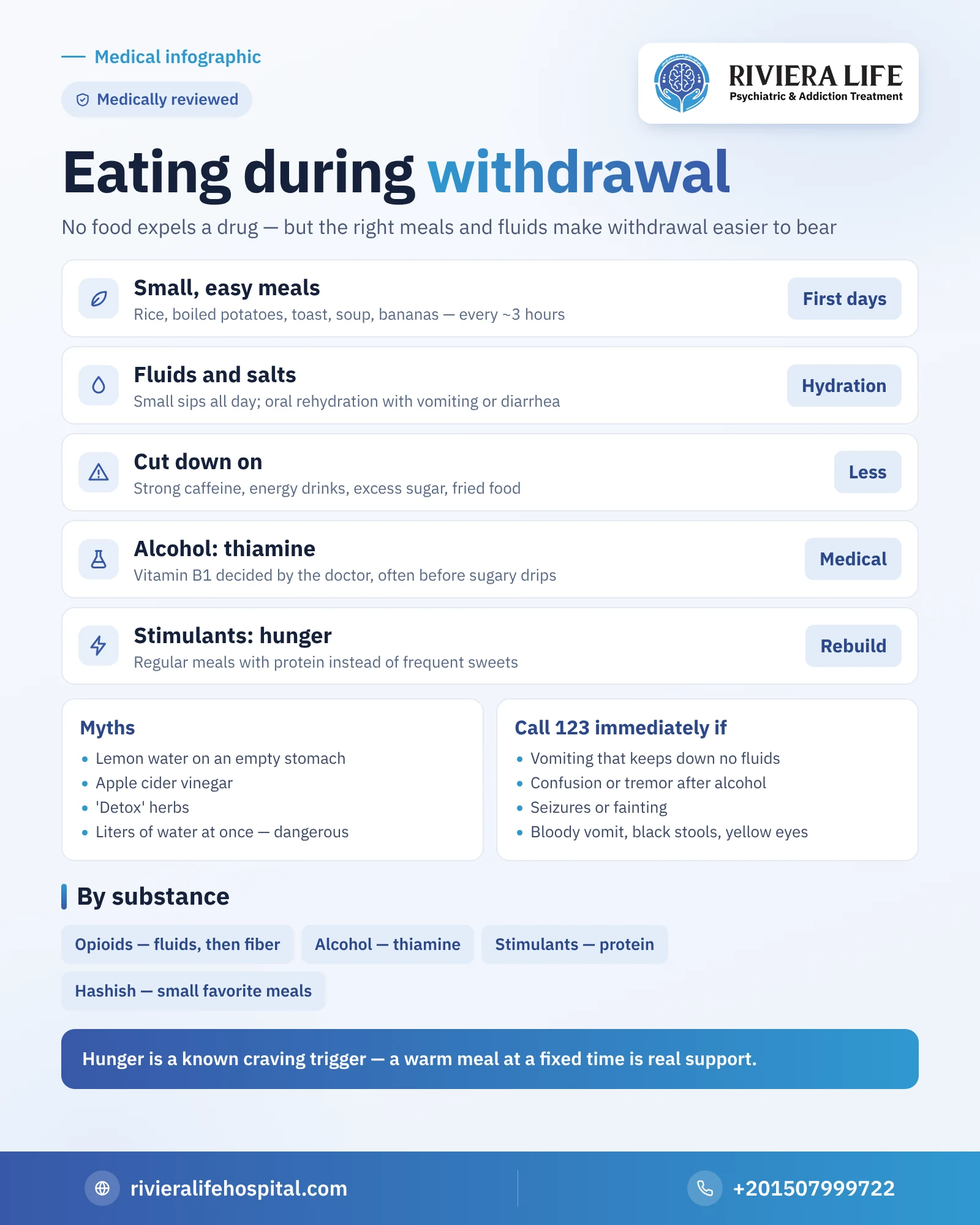
In these days the stomach can’t take a large meal; the idea is for the patient to eat a little roughly every three hours instead of two heavy meals. Foods most patients tolerate include:
- White rice, boiled potatoes, toast and plain biscuits when there is nausea.
- Warm soup, whether vegetable, lentil or chicken, because it combines fluids, salts and food.
- Bananas and cooked apples, which are gentle on the stomach and replace potassium.
- Yogurt, if the patient tolerates it.
- Boiled eggs, mashed fava beans and oats when appetite improves.
Don’t force the patient to eat while they are vomiting. At first, sips of fluid are enough, then light food when the nausea settles.
Drinks: water and what replaces salts
Dehydration is one of the things that most increases dizziness, headache and tiredness in withdrawal. It is best to drink water in small amounts throughout the day, with drinks that replace salts when there is vomiting or diarrhea, such as the oral rehydration solution available in pharmacies, soup, or diluted natural juice. Light warm herbal drinks such as anise and mint can be added to soothe the stomach, as long as they aren’t understood as a treatment for addiction.
If the patient can’t keep down any fluids for hours, or urine output falls clearly, this is no longer a kitchen matter; they need a doctor who may decide on an IV drip.
The myth of drinks that cleanse the body of drugs
Many recipes are widespread: lemon water on an empty stomach, apple cider vinegar, “detox” herbs, or drinking many liters of water at once. None of them cleanses the body of the drug. The last one in particular is dangerous, because drinking huge amounts in a short time can lower blood sodium to a level that causes confusion and seizures. The real purpose of these recipes is often the drug test, which is another subject explained in our article on cheating a drug test. What we care about here is the patient’s comfort and safety, not the result on a piece of paper.
What is better cut down on during this period?
- Caffeine: strong tea and a lot of coffee increase anxiety and palpitations and spoil already disturbed sleep. It is better to cut down after the afternoon.
- Energy drinks: a mix of caffeine and sugar whose effect resembles a stimulant boost, unsuitable especially for someone recovering from stimulants. Details are in our article on caffeine and energy drink addiction.
- Excess sugar: sweets give quick relief and then a drop that increases irritability. There is no need to ban them completely, but it is better for them to come after a meal, not instead of one.
- Fried food and heavy fats: increase nausea, tire the stomach, and burden the liver further after alcohol.
How does eating differ by substance?
Opioids and tramadol
The priority is fluids and salts on days of vomiting and diarrhea, then fiber, vegetables and water later, because constipation is one of the best-known problems for those who used opioids for a long time. The withdrawal symptoms themselves are explained in our article on opioid withdrawal symptoms.
Alcohol
Here food becomes part of the medical treatment. Vitamin B1 (thiamine) deficiency is common in those who drank for a long time, and can cause a serious neurological problem that shows as confusion, an unsteady walk and disturbed eye movement. That is why the doctor decides on giving thiamine and how, usually before any drip containing sugar. Don’t rely on vitamin tablets from the pharmacy as a substitute for this decision, and don’t start alcohol withdrawal at home without a doctor, as explained in our article on alcohol withdrawal symptoms.
Stimulants
The hunger that comes days after stopping may lead to eating a lot of sweets. Regular meals with protein, starches and vegetables are better, with enough water, because the body will have lost weight and muscle.
Hashish
Poor appetite is usually temporary. Small meals the patient likes are enough until appetite returns within days to weeks.
Vitamins and supplements: when do they help?
Many families buy boxes of vitamins and supplements as soon as treatment begins. It is more correct for tests to come first, so the doctor knows what is actually lacking, such as iron, vitamin D, B12 or salts. Some supplements interact with addiction treatment medicines or strain the liver, and some “body cleansing” products contain stimulants or undeclared substances.
Food, mood and craving
Hunger is one of the known triggers for the urge to use, just like anger, loneliness and tiredness. Someone in their first weeks of recovery may interpret the discomfort that comes with hunger as a longing for the substance. That is why regular meals, and a real breakfast rather than a cup of tea and a cigarette, ease mood swings and irritability, and reduce the number of waves of craving they have to resist each day. The family can help with something simple: a warm meal at a fixed time, and light food ready in the fridge for the night hours when insomnia and hunger are common, instead of the person going out to buy something and passing old places.
When does the patient need a doctor rather than a change in diet?
Call an ambulance on 123 immediately if you see
These signs during withdrawal aren't treated by food:
- Continuous vomiting that prevents keeping down any fluids
- Confusion, hallucinations or severe tremor after stopping alcohol
- Seizures or fainting
- Vomiting blood or black stools
- Yellowing of the eyes or severe abdominal pain
On the role of IV fluids when vomiting or dehydration prevents eating and drinking, and what they can’t do, read IV drip addiction treatment.
How can Riviera Life help you?
At Riviera Life, nutrition, fluids and salts are monitored daily during detox, under round-the-clock medical supervision. Consultants in psychiatry and addiction treatment order the necessary tests and decide on vitamins or drips when needed, especially with alcohol. After discharge, the family program and aftercare help build a regular day that supports recovery. The hospital is licensed by the Ministry of Health, has fourteen years of experience, and confidentiality is complete. The first consultation is free on +201507999722, in Sheikh Zayed, Giza.
More from our recovery guide
- When the body returns to normal after quitting drugs
- The stages of addiction recovery
- Exercise and addiction treatment
- Medicines to avoid in addiction recovery
Questions many people ask
No. How fast a substance leaves is determined by the liver and kidneys, and these recipes don't change it meaningfully. Food helps by supporting the body during withdrawal, not by expelling the drug.
No, and drinking many liters in a short time can lower blood sodium dangerously. It is better to drink in small amounts throughout the day, replacing salts if there is vomiting or diarrhea.
Small, frequent, easily digested meals such as rice, boiled potatoes, toast, soup and bananas, with sips of fluid. Don't force them to eat while vomiting.
Thiamine is very important after long drinking, but the doctor decides whether and how to give it, because some cases need it by injection under monitoring. Alcohol withdrawal shouldn't be left to home.
Stimulants suppress appetite, so when they stop, appetite returns strongly, often with a craving for sweets. Regular meals with protein, vegetables and starches are better than frequent sweets.