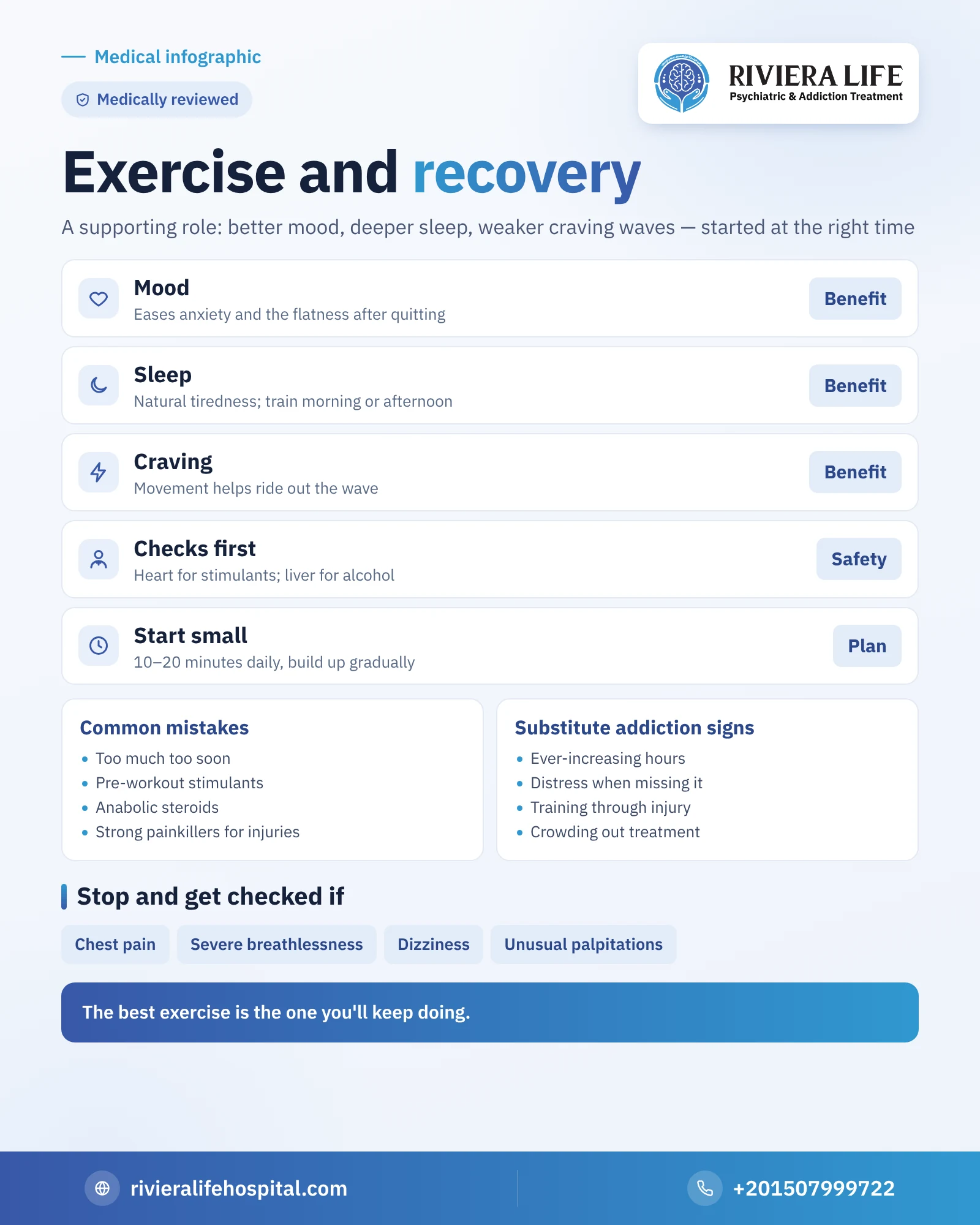
Exercise isn’t a treatment for addiction on its own, but it is one of the most useful additions to treatment. Regular physical activity improves mood and eases anxiety, helps deeper sleep, reduces the intensity of craving waves, and fills the hours of free time that use used to occupy. What matters is starting at the right time after withdrawal, after a medical check for those who used stimulants or alcohol, and building up gradually so movement doesn’t turn into an injury or a new attachment. This article explains the benefits of exercise in recovery, how to start safely, which activities suit best, and the mistakes that spoil the experience.
Does exercise play a real role in addiction treatment?
Yes, but a supporting one. Research indicates that physical activity improves symptoms of depression and anxiety and helps regulate sleep, which are among the most important causes of relapse. As for exercise alone being enough to quit drugs, there is no evidence for that. The correct picture is for it to be part of a plan with psychotherapy, medical follow-up and family support, just as diet is placed alongside medicine in other chronic illnesses. People recovering from alcohol, stimulants, opioids and hashish all benefit from it, with differences in the starting point and what checks they need.
What does exercise do for mood and anxiety?
After quitting drugs, many go through a period in which they feel nothing gives them pleasure, because the brain’s reward system is still regaining its balance. Movement is one of the few safe means that gradually activate this system, with details in how to increase dopamine naturally and how to increase endorphins naturally. What matters practically for someone in recovery is that half an hour of brisk walking or swimming may ease tension for hours, and that keeping it up for weeks makes heavy days lighter. A simple achievement, such as completing a longer distance than last week, also gives a sense of capability that someone who has lost their self-confidence needs.
Exercise and sleep
Insomnia is one of the most common complaints in the first weeks after withdrawal, and may push the person in recovery towards a sleeping pill or the substance itself. Daytime physical activity helps the body get naturally tired and sleep more deeply. It is better for training to be in the morning or afternoon, because intense training close to bedtime may delay sleep in some people.
Exercise and urgent craving
A wave of craving to use rises and then falls within minutes to hours. Any activity that occupies the body and attention at its peak helps get through it, such as going out for a walk immediately, climbing the stairs, or a few minutes of simple exercises in the room. You will find this idea and others in our article on urgent craving to use. The extra advantage is that exercise keeps the person in recovery away from places and times linked to use, and introduces them to new people. The evening hour they used to spend with using friends can become an hour at the club or on the pitch, and this is a change in environment, not just in the body.
When do you start exercising after quitting drugs?
In the days of acute withdrawal the body is exhausted, and may suffer dehydration or disturbed pulse and blood pressure, so there is no place here for hard training. Moving around indoors or a short walk is enough if the doctor allows. After the symptoms calm down, you can start gradually. As for someone who went through a difficult withdrawal from alcohol or sedatives, or who lost a lot of weight, their doctor decides when to start and at what intensity.
Checks before starting, by substance
| Substance | What the doctor is interested in checking |
|---|---|
| Stimulants (ice, Captagon, cocaine) | The heart, blood pressure and an ECG, because these substances may strain the heart and vessels |
| Alcohol | The liver, heart, peripheral nerves and balance, and bone density when needed |
| Opioids | Weight, nutrition and anemia, and infections at injection sites if present |
| Hashish and smoking | The lungs and breathing on exertion |
This doesn’t mean the check prevents exercise; it determines its type and intensity. And if chest pain, severe shortness of breath, dizziness or unusual palpitations appear during training, stop immediately and seek a medical assessment.
How do you start in the first weeks?
- Start small: a daily walk of ten to twenty minutes at a comfortable pace.
- Increase gradually: add a few minutes each week, or make the pace a little faster.
- Give it a set time: the same time daily, because regularity matters more than intensity.
- Head towards the general goal: the World Health Organization recommends adults do about 150 to 300 minutes of moderate activity a week, a goal you reach after weeks, not in the first days.
- Don’t train alone if possible: a supportive friend or family member makes commitment easier.
Which sport suits someone in recovery?
The best exercise is the one you will keep doing. Walking is the easiest start and needs no equipment. Swimming and cycling are gentle on the joints. Team sports, such as football, add a social circle away from using friends. Stretching and light yoga help with calm breathing, and can be combined with meditation in addiction recovery. Weight gyms are fine, provided you are wary of the culture of anabolic steroids and stimulant supplements common in some of them.
When exercise turns into a substitute addiction
Some people in recovery move from a substance to another compulsive behavior, and exercise is one of them. Watch out if training becomes daily hours that keep increasing, missing it causes severe distress, it continues despite injury, or it starts taking the place of work, family and therapy sessions. This picture is explained in our article on exercise addiction. The goal is for movement to be part of a balanced life, not its only center.
Common mistakes with exercise after recovery
- Starting with excessive enthusiasm: hard training in the first week, then an injury or exhaustion that stops everything.
- Pre-workout and energy drinks: many are full of stimulants, and may awaken craving in those recovering from stimulants.
- Anabolic steroids: they open the door to new dependence and problems with mood and the heart. Their details are in our article on anabolic steroids.
- Numbing injuries with strong painkillers: a sports injury may end with a prescription for an opioid painkiller, so always tell your doctor your history with addiction.
- Comparing yourself with others: your body is recovering from years of use, and its progress is measured against you.
How can the family encourage movement in someone in recovery?
The family can help a lot without turning into a coach chasing the person with orders. The simplest thing is for one of them to join them walking after dinner or on Friday morning, so movement becomes family time, not a duty. Small steps can be celebrated, such as a full week of commitment, instead of commenting on weight or appearance. And if they refuse at first, don’t pressure them; the first days after withdrawal are heavy, and apathy in them is an expected symptom, not laziness. And watch calmly if exercise becomes an obsession or they start taking supplements or steroids no doctor prescribed.
And don’t forget that movement doesn’t replace sessions and follow-up, but makes them easier. Someone in recovery who sleeps well and goes out every day comes to their session better able to talk and change.
How can Riviera Life help you?
At Riviera Life, consultants in psychiatry and addiction treatment follow the patient’s physical and psychological condition during and after withdrawal, and determine when physical activity becomes safe for them and what needs checking first. In aftercare, a balanced daily plan is built with the person in recovery and their family, including sleep, work, movement and sessions. The hospital is licensed by the Ministry of Health, has fourteen years of experience, and its medical supervision is continuous around the clock, with complete confidentiality. Book your free first consultation on +201507999722; the hospital is in Sheikh Zayed, Giza.
More from our recovery guide
- The stages of addiction recovery
- Food that helps during drug withdrawal
- Meditation in addiction recovery
- The aftercare program
Questions many people ask
No, exercise is an important supporting factor but doesn't replace psychological and medical treatment and follow-up. Its greatest benefit comes when it is part of an integrated plan.
After acute withdrawal symptoms have calmed, limiting themselves before that to light movement if the doctor allows. Someone who went through a difficult withdrawal or lost a lot of weight has their doctor decide when to start.
It is preferable, as stimulants may strain the heart, and alcohol may affect the liver, heart and nerves. The check determines the suitable type and intensity of exercise.
Many are full of stimulants, and may awaken craving, especially in those recovering from stimulants. It is better to avoid them and consult the doctor before any supplement.
If training hours keep increasing, missing it causes severe distress, it continues despite injury, or it takes the place of work, family and treatment, these are signs worth discussing with the therapist.