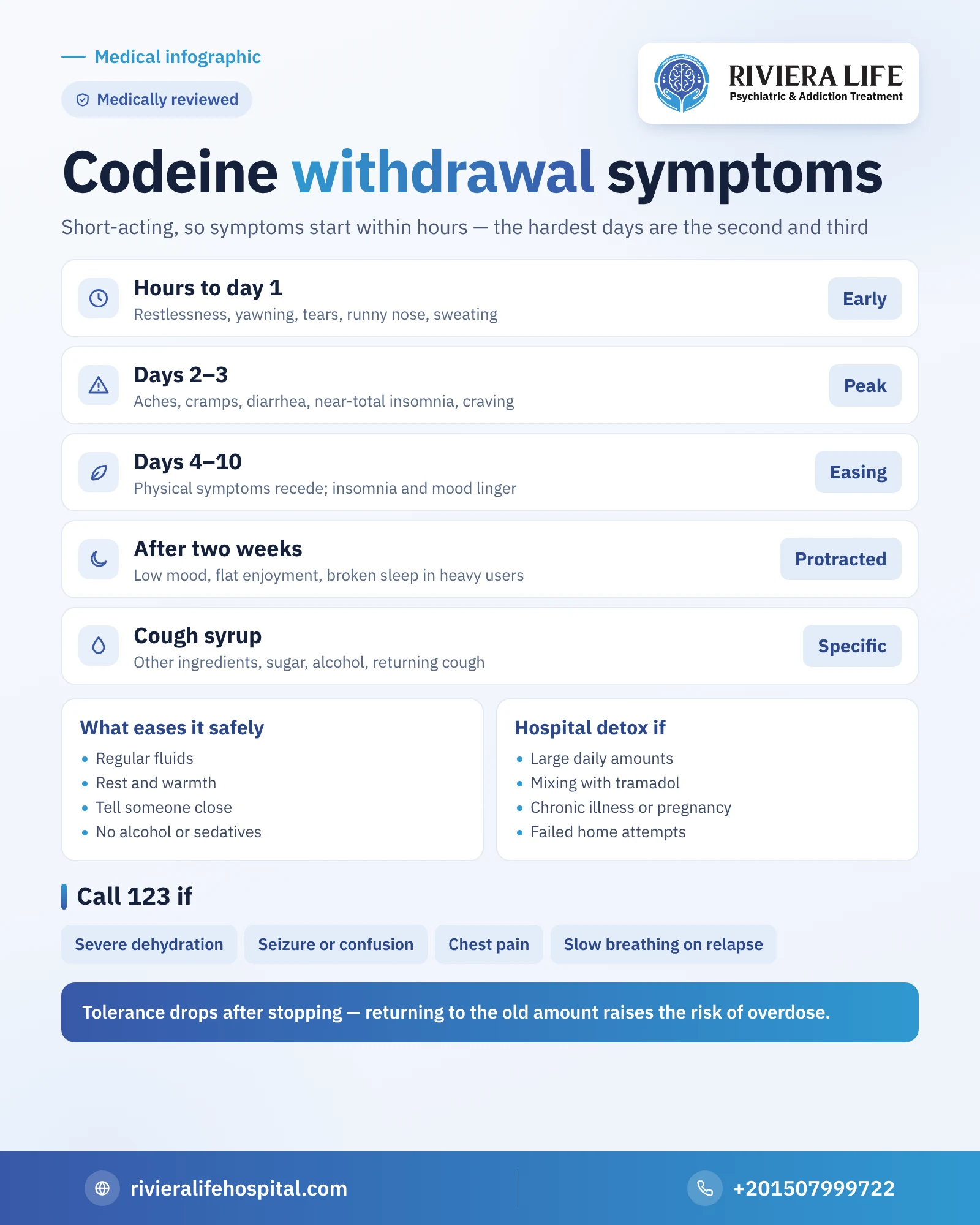
Codeine withdrawal symptoms usually begin a few hours after the last dose, because the medicine is short-lived in the body, peak around the second or third day, then recede gradually over a week to ten days. The most prominent are anxiety, insomnia, sweating, a runny nose, muscle aches, cramps and diarrhea, with a pressing craving that may stay with the person for weeks. Someone used to a bottle of cough syrup every day may be surprised by these symptoms because he didn’t consider himself dependent on an opioid. The article explains the timeline, what sets codeine withdrawal apart, what eases the symptoms safely and when a doctor is needed.
Why does codeine cause withdrawal in the first place?
Codeine is a weak opioid, but it is partly converted in the liver into morphine, and morphine is what acts on the opioid receptors in the brain. With regular daily use, the nervous system adapts to the presence of this opioid, reducing its own production of natural painkillers and increasing the activity of stress pathways. When the medicine disappears suddenly the balance flips: everything that was suppressed in pain, anxiety and stomach upset becomes evident. It doesn’t matter here whether the source of codeine was painkiller tablets or cough syrup, as the active substance is the same. For a general understanding of its use and safety you can read our article on codeine.
How long do they take to appear?
Codeine is one of the short-acting opioids, so its life in the body is measured in a few hours. That is why symptoms usually start within about half a day to a day after the last dose. They aren’t delayed as they are with long-lived medicines such as methadone. The following figures are approximate and vary with the duration of use, the daily amount, age and general health.
The codeine withdrawal timeline
The first hours to the first day
The early symptoms start mild: restlessness, anxiety, repeated yawning, tears, a runny nose, sweating and a feeling of chills. The person may feel he has a cold, a comparison repeated by many who have been through it.
Days two and three: the peak
This is usually the hardest period. Pain in the muscles, joints and back, cramps, diarrhea, nausea and vomiting, almost total insomnia, irritability and tremor, chills with sweating, and a slight rise in pulse and blood pressure. The craving for the medicine reaches its highest levels.
Days four to ten
The physical symptoms recede gradually. The cramps settle and appetite returns, but insomnia, anxiety, mood swings and mild muscle aches may remain. The body feels exhausted.
After two weeks
In those who used large amounts or for a long time, protracted symptoms may continue for weeks: low mood, reduced enjoyment of things, broken sleep and tiredness. These symptoms don’t mean stopping has failed, but are the nervous system recovering. If they are long and heavy, they need a medical assessment.
What sets cough syrup withdrawal apart?
Many codeine users in Egypt take it as syrups or combination tablets, and this adds details that don’t appear in withdrawal from pure tablets:
- The syrup may contain other substances such as an antihistamine, a decongestant or an expectorant, some of them sedating or stimulating, so on stopping the person feels disturbed sleep and attention because these substances are also absent.
- Some syrups contain sugar or alcohol in varying proportions, so blood sugar and appetite change on stopping.
- Syrup makes it easy to continue in large daily amounts without the person feeling they are “doses”.
- The original cough may return after stopping, so he thinks withdrawal is the cause, when in fact the original illness needs separate treatment.
To learn the risks specific to syrups and how this pattern of dependence is treated, see our article on codeine addiction treatment.
Is codeine withdrawal dangerous?
Opioid withdrawal rarely threatens life in healthy people, but it is exhausting, and has complications: dehydration from vomiting and diarrhea, salt imbalance, and worsening of heart disease or diabetes in those who have them. The situation becomes more complicated if the person takes sedatives or alcohol in parallel, because their withdrawal may be more dangerous and need supervision. And the greatest danger isn’t during withdrawal but after it: someone who returns to his usual amount days after stopping has lost part of his tolerance, so the chances of overdose rise.
Call an ambulance on 123 immediately if you see
During withdrawal or after it, especially if the person takes other medicines or alcohol. You can also call the mental health hotline on 16328.
- Vomiting or diarrhea that won’t stop with signs of severe dehydration or fainting
- A seizure, severe confusion or hallucinations
- Chest pain or severe palpitations
- Talk of self-harm or that life has no value
- Slow breathing or deep drowsiness if the person returns to the medicine after stopping
What eases the symptoms safely?
The goal is to get through the hard days without them turning into a relapse, and these are general supportive measures that don’t replace a doctor:
- Drink fluids regularly and eat light food in small portions.
- Rest and warmth, and change activities so the day doesn’t turn into hours of waiting.
- Tell someone close what you are going through, as loneliness magnifies craving.
- Avoid alcohol, sedatives and sleeping pills, as they swap one dependence for another.
- See a doctor to assess the situation before stopping if the amount is large or the duration long.
What does the doctor offer?
The doctor can ease the symptoms with supportive medicines suited to the case: there are medicines that ease sweating, palpitations and tension, others for nausea, diarrhea and cramps, and he may prescribe a temporary treatment for sleep without it becoming a new dependence. He also decides whether a gradual reduction at home with follow-up suits you, or withdrawal inside a hospital because of a health condition, mixing substances or a history of relapses. In some cases medicines for treating opioid dependence such as buprenorphine are used. The general stages of opioid withdrawal are explained in our article on opioid withdrawal symptoms.
Why do attempts to stop suddenly at home fail?
Because the peak of symptoms comes on the second or third day, when the home is unsupervised, the medicine is close and the bottle is at the nearest pharmacy. Many hold out for two days then return at the first wave of intense craving, and some return to a larger amount thinking their body can no longer cope without it. That is why a plan prepared in advance is advised: the start date, who will accompany the person, who will keep the medicine away, and a doctor who can be called.
After withdrawal: why isn’t it enough?
Withdrawal is the least difficult step of the journey, even if it seems otherwise. After it, the reasons that led to codeine the first time remain: untreated pain, anxiety, insomnia, depression, stress or company. Without treating these reasons, the craving returns at the first occasion. Psychotherapy and behavioral sessions, follow-up with a psychiatrist and family support help prevent relapse. It helps for the family to know the signs of opioid addiction so they don’t miss any early return.
How can Riviera Life help you?
If you or a family member take codeine daily and fear withdrawal, a medical assessment before stopping saves you a lot. The psychiatry and addiction treatment consultants at Riviera Life in Sheikh Zayed, Giza, offer a managed withdrawal plan under round-the-clock medical supervision and in complete confidentiality, with a free first consultation on +201507999722.
When should withdrawal be in hospital?
Supervised withdrawal in hospital is preferred if the person has been taking large daily amounts for months, mixes codeine with tramadol, sedatives or alcohol, has a chronic heart, kidney or liver disease or diabetes, is pregnant, has severe depression, or his previous attempts at home have failed. The benefit here is twofold: medical safety and a place free of the medicine during the hardest days.
More from our opioids guide
- Opioids: the complete guide
- Codeine addiction treatment
- The difference between tramadol and codeine
- How long opioids stay in the body
Questions many people ask
The physical symptoms peak around the second or third day and then ease within a week to ten days. Insomnia and low mood may remain for weeks in those who used large amounts.
The active substance is the same, but the syrup may contain other substances, sugar and alcohol, so the symptoms of their absence overlap with withdrawal. Added to that is the return of the original cough.
It rarely threatens life in healthy people, but dehydration, salt imbalance, heart disease and combining with sedatives or alcohol can make it dangerous and in need of supervision.
It may be possible for someone who used small amounts for a short time and with a doctor's follow-up. Long daily use or mixing it with other substances needs an assessment before starting.
Because the brain has linked the medicine with situations, places and feelings, so the craving returns with triggers. Its effect lessens with psychotherapy and a relapse prevention plan.