Hallucinogen addiction treatment differs from the treatment of substances that cause severe physical withdrawal; the problem here is usually in the mind, not the body. Treatment starts by securing the acute state if present, meaning calming the bad trip or psychosis that followed use, then a comprehensive assessment that reveals other substances and accompanying psychiatric disorders, then psychotherapy that addresses the motives for use and deals with its perceptual effects. If the substance is from the dissociative family, such as ketamine, physical care for its harms is added. This article explains each stage, when admission is needed, and how to choose the right place.
Who needs hallucinogen treatment?
Not everyone who has tried a hallucinogen once needs a long program, but specialist assessment is necessary in clear cases: someone who repeats use despite bad trips, someone who keeps having suspicions, voices or visual changes after the substance has worn off, someone who combines hallucinogens with hash, ecstasy or alcohol, and someone whose study, work or relationships have declined. It is also needed by anyone with a family history of schizophrenia or bipolar disorder, because the risk to them is greater. To understand the types of these substances and their effects before talking about treatment, see the article on hallucinogenic pills.
The stages of hallucinogen addiction treatment
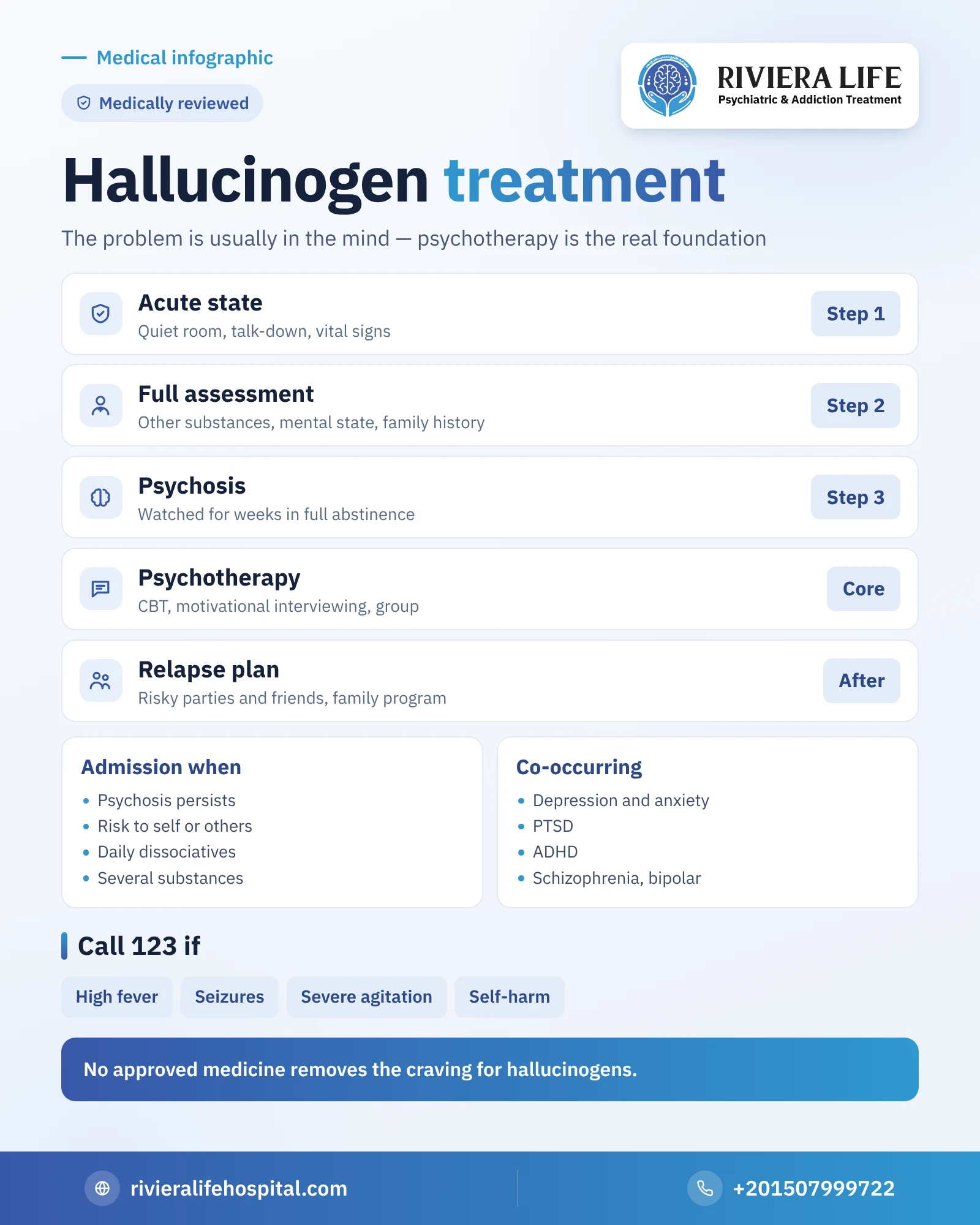
- Securing the acute state: a quiet environment and medical monitoring until the trip ends or the psychosis calms.
- Comprehensive assessment: the substances used, the psychological and physical state, and the family history.
- Treating psychotic and perceptual symptoms: if they continue after the substance has worn off.
- Psychotherapy: cognitive behavioral, motivational and group.
- Treating co-occurring disorders: depression, anxiety, trauma and others.
- Relapse prevention: a written plan, a family program and follow-up.
Handling a bad trip in hospital
When someone arrives in a bad trip, the first thing they need is a quiet place with little light and noise, and one person who talks to them in a steady voice and reassures them that what is happening is caused by the substance and will end. Doctors call this approach “talking down”, and it is enough in many cases. At the same time the team measures temperature, pulse and blood pressure, and looks for signs that the problem isn’t a simple hallucinogen: very high temperature and seizures may mean another substance such as stimulants, synthetic cannabinoids or anticholinergics, each with a different treatment.
If agitation intensifies and the person becomes a danger to themselves or others, the doctor may turn to a short-acting sedative, and in cases of clear psychosis may use an antipsychotic. The doctor decides this depending on the case, avoiding violent restraint as much as possible because it increases panic and raises body temperature.
When psychosis continues after the substance has worn off
Most trips end within hours, but some patients keep having persecutory thoughts, voices or incoherent behavior days after the last use. Here the question changes: is it psychosis caused by the substance that will fade with abstinence, or the beginning of a psychotic illness that the substance revealed?
It can’t be settled on the first day, so the doctor observes the patient during complete abstinence, treats the symptoms with antipsychotics when needed, and follows their course for weeks. If they continue or recur, the patient is treated as an independent psychotic condition that needs a long plan, as the psychosis guide explains. Early intervention at this stage makes a big difference to the patient’s future.
Dealing with persisting perceptual disturbance
A patient followed by halos of light and twinkling dots months after stopping lives with real anxiety, and the anxiety itself often increases the intensity of what they see. Treatment starts by making sure the symptoms aren’t due to another neurological or visual cause, then explaining their nature clearly to the patient, and this explanation alone greatly eases the panic. They are asked to abstain completely from hallucinogens and hash because both may increase the symptoms, and the doctor may prescribe treatment that eases anxiety or visual symptoms depending on the case. Psychotherapy helps them live with the symptoms until they gradually ease in many patients.
Are there medicines to treat hallucinogen addiction?
There is no approved medicine that removes the craving for hallucinogens or prevents a return to them. Medicines in this treatment have specific roles the doctor decides: calming acute agitation, treating psychosis if it appears, and treating accompanying depression, anxiety or sleep disorder. In the case of ketamine specifically, the patient sometimes needs follow-up for bladder and kidney damage, which is detailed in the article on ketamine addiction treatment. The real foundation of recovery is psychotherapy.
Psychotherapy for hallucinogens
Many who use hallucinogens are looking for something specific: an escape from a suffocating reality, meaning or a spiritual experience, belonging to a circle of friends, or numbing an old trauma. Psychotherapy targets these motives directly:
- Cognitive behavioral therapy: exposes the thoughts that justify use, such as “it expands consciousness” or “it isn’t addictive”, and builds alternative skills; it is detailed in the article on cognitive behavioral therapy.
- Motivational interviewing: very suitable here, because many patients don’t see themselves as addicted, so it helps them weigh what they gain and what they lose.
- Processing frightening experiences: some patients came out of a bad trip with terrifying memories and ongoing anxiety, and need a safe space to process them.
- Group therapy: breaks the idea that the problem is unique or doesn’t deserve treatment.
- Building a new lifestyle: regular sleep, activity, and social circles away from the parties linked to use.
Co-occurring psychiatric disorders
Hallucinogen use often occurs together with other psychiatric disorders, and one may be a cause or a result of the other. Depression and anxiety are common, and use may be an attempt to self-treat them. Post-traumatic stress disorder pushes some to look for a way out of their memories. Attention-deficit/hyperactivity disorder is linked to sensation-seeking. Schizophrenia and bipolar disorder may be revealed or worsened by hallucinogens.
Treating addiction without treating these disorders leaves the door open for going back, which is why the team treats them in one plan as in the dual diagnosis program. If thoughts of self-harm appear at any stage, call the ambulance on 123 or the mental health hotline 16328 without hesitation; help is available, and these thoughts are treatable.
Hospital admission or outpatient follow-up?
Admission is needed when psychosis continues after the substance has worn off, or there is a risk to oneself or others, or use is daily of dissociative substances with strong craving, or the patient combines more than one substance. Outpatient follow-up suits someone who used intermittently without ongoing psychological symptoms, and who has a supportive family and the motivation to stop. In both cases follow-up continues for months after stopping to watch for any late symptoms.
The family’s role and relapse prevention
The family can be the team’s eyes outside the hospital: noticing the return of suspicions, isolation or late nights linked to parties, encouraging attendance at appointments, and attending the sessions of the family program to understand the illness away from blame. The patient leaves with a plan that identifies risky situations, such as particular parties or particular friends, and what to do when something is offered to them.
The right hospital for hallucinogen addiction treatment: how to choose
The right hospital for hallucinogen addiction treatment is the one that provides what this patient specifically needs: the ability to handle a bad trip and psychosis safely, strong psychiatry that distinguishes the effect of the substance from the start of an illness, and in-depth psychotherapy. Before you decide, ask:
- Is there round-the-clock medical supervision able to calm agitation and acute psychosis safely?
- Does the team include consultant psychiatrists who follow psychotic symptoms for weeks, not days?
- Are co-occurring disorders such as depression, trauma and ADHD assessed and treated?
- Is cognitive behavioral therapy and motivational interviewing offered regularly?
- Does it deal with the harms of dissociative substances such as ketamine if present?
- Does the program include the family and aftercare after discharge?
And beware of any place that promises you a guaranteed cure or ending the addiction in a few days.
How Riviera Life meets these standards in hallucinogen addiction treatment
Riviera Life applies these criteria as follows:
- Official license: a hospital licensed by the Ministry of Health for psychiatry and addiction treatment.
- Specialist psychiatry: consultants in psychiatry and addiction treatment who distinguish substance psychosis from psychotic illness.
- Round-the-clock supervision: 24-hour medical care to calm bad trips and agitation safely.
- Treating co-occurring disorders: one plan for addiction, depression, anxiety and trauma.
- Fourteen years of experience: and thousands of cases recovered from addiction to different substances.
- Complete confidentiality: the data of the patient and their family is protected at every stage.
- A family program and aftercare: follow-up after discharge that watches for late symptoms and prevents relapse.
The first consultation is free, and you can get in touch around the clock on +201507999722; we are based in Sheikh Zayed, Giza.
More from the hallucinogens guide
- The paper drug: the complete guide
- Hallucinogenic pills: types and risks
- Paper drug addiction treatment
- Treating hallucinations according to their cause
- Magic mushrooms: what they are, how they affect the brain and are they addictive?
Questions many people ask
Mostly there are no severe physical withdrawal symptoms with classic hallucinogens, so treatment focuses on the psychological state, while dissociative substances may need closer follow-up.
Stay with them in a quiet place and speak in a reassuring voice, don't restrain them violently, and call an ambulance immediately if their temperature rises, their agitation intensifies, they have a seizure or try to harm themselves.
It goes away in many people with abstinence and treatment, but persists in some and reveals a psychotic illness that needs a long treatment plan and regular follow-up.
It varies with the substance, psychological symptoms and co-occurring disorders, and follow-up usually extends for months to watch for any late symptoms and prevent relapse.
Look for round-the-clock supervision able to calm acute agitation and psychosis safely, psychiatrists who follow psychotic symptoms for weeks, treatment of co-occurring disorders, CBT and aftercare. Riviera Life in Sheikh Zayed, Giza meets these criteria.