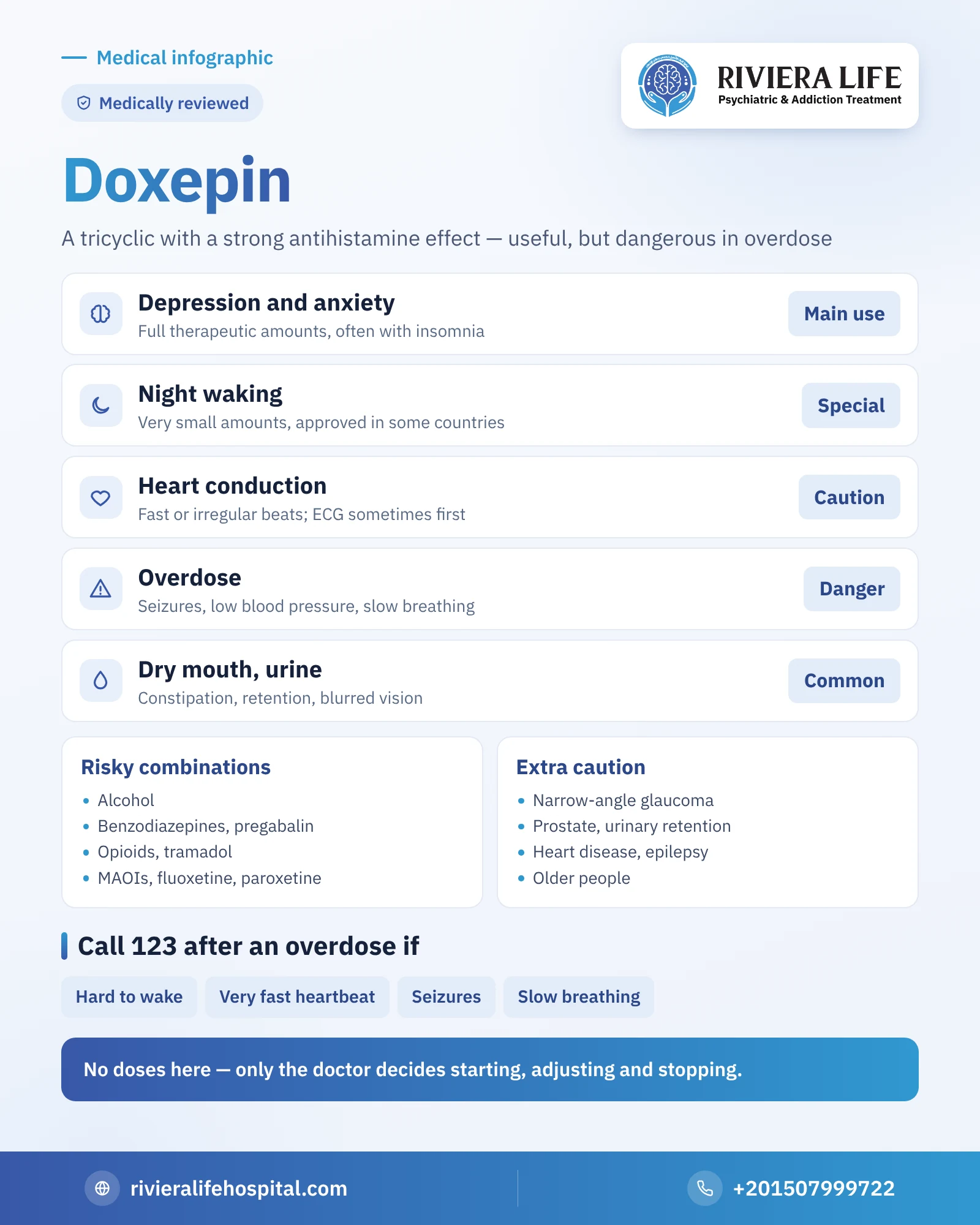
Doxepin is a tricyclic antidepressant, and it has two faces: in higher therapeutic amounts it is used for depression and anxiety, and in very small amounts set by the doctor it is used in some countries for people who wake often during the night. This difference confuses patients, who think the pill that puts a friend to sleep is suitable for them. The truth is that the medicine has a strong effect on histamine so it brings drowsiness, but it belongs to a class that demands respect, especially in overdose, because its effect on the heart may be dangerous. Here we explain how it works, when it is prescribed and its most important warnings. No doses here; only the doctor decides starting, adjusting and stopping.
What is doxepin?
Doxepin is a tricyclic, a class that appeared in the 1950s and includes Tryptizol (amitriptyline). They work by raising noradrenaline and serotonin, but they also block other receptors, which explains many of their side effects. What most distinguishes doxepin is how strongly it binds to histamine receptors; it is one of the strongest antihistamines among antidepressants, hence the drowsiness. Our article on antidepressants places this class among the other classes.
Brand names and availability
The internationally known brand name for doxepin is Sinequan, and the small-dose tablets for sleep carry the name Silenor in some countries. Its presence in the Egyptian market changes and can’t be stated with certainty, so ask your doctor or pharmacist, and don’t rely on a name you find on the internet. There is also a topical doxepin cream for treating itching in some countries, a separate use not covered by this article.
What is it used for?
- Depression and anxiety: in full therapeutic amounts, often when insomnia and tension dominate.
- Insomnia of the frequent-waking type: in very small amounts different from the therapeutic amount for depression; an approved use in some countries but not all.
- An option after other medicines have failed: the doctor may turn to it in certain forms of depression.
The difference between the two uses is fundamental: the very small amount gives an almost purely sedating histamine effect, while the therapeutic amount works on all the neurotransmitters. The patient doesn’t switch between the two uses on their own. And insomnia has causes and behavioral treatments that usually come first, as in our guide to insomnia.
How does it work in the brain and body?
By blocking the reuptake of noradrenaline and serotonin, their concentration rises so mood improves after weeks. By blocking histamine receptors the patient becomes drowsy. By blocking acetylcholine receptors the mouth dries, urine is retained, bowel movements slow and vision blurs. And by blocking alpha receptors blood pressure drops on standing. Understanding this picture makes the side effects understandable and less frightening, and explains why some cases need great caution.
Common side effects
- Drowsiness, morning heaviness and dizziness.
- Dry mouth, constipation and urinary retention, especially with an enlarged prostate.
- Blurred vision and increased pressure inside the eye in those predisposed.
- A fast heart rate and a drop in blood pressure on standing.
- Weight gain and increased appetite.
- Sweating, a slight tremor and sexual dysfunction in some patients.
The heart and overdose: why are doctors afraid?
Tricyclics are among the most dangerous antidepressants when a large amount is taken, because they affect the heart’s electrical conduction, lower blood pressure and may cause seizures. In some people this danger doesn’t need a huge amount, especially children, older people and those who mix the medicine with sedatives. That is why doctors avoid prescribing large quantities to anyone with suicidal thoughts, and sometimes ask for an ECG before starting. The medicine must be kept out of children’s reach, and excess quantities shouldn’t be stored at home.
Call an ambulance on 123 immediately if you see
After taking an excess amount of doxepin, or if a child or another person swallows it:
- Deep drowsiness or difficulty waking
- A very fast or irregular heartbeat
- Seizures
- Slow or difficult breathing
- A severe drop in blood pressure or fainting
- Severe confusion or hallucinations
Who needs caution or shouldn’t take it?
The doctor avoids it or uses it with great caution in those with narrow-angle glaucoma, urinary retention, heart disease such as a conduction disorder or a recent heart attack, epilepsy, or liver disease. Older people are a special group, as some guidelines list it among the medicines whose higher amounts should be avoided in them because of the risk of confusion and falls. And in someone with bipolar disorder, mood may switch to mania, which the doctor monitors.
Interactions: alcohol, sedatives and tramadol
Doxepin is a sedative, so alcohol multiplies its effect and raises the risk of falls and depressed consciousness. Combining it with benzodiazepines, pregabalin or opioids increases the risk of slowed breathing. Tramadol raises the risk of seizures and serotonin syndrome when combined with tricyclics; read about serotonin syndrome. Combining it with monoamine oxidase inhibitors is warned against. And some antidepressants such as fluoxetine and paroxetine raise the level of the medicine in the blood. If you use substances, write down everything you take for your doctor honestly, and see the dual diagnosis program.
Why isn’t it suitable as a “sleeping pill” without supervision?
People hear that doxepin in a small amount makes you sleep, so they ask for it at the pharmacy or take it from a relative. The problem is that the small amount is made in dedicated tablets and splitting other tablets to imitate it isn’t right, and that insomnia sometimes hides causes that should be looked for, such as sleep apnea, depression, anxiety or substance use. Older people are the most harmed because of confusion, falls, dry mouth and urinary retention. Insomnia that continues for weeks deserves an assessment, not a new pill every night.
And if the insomnia is part of withdrawal from substances or alcohol, the treatment is completely different and needs direct medical supervision, because some sedating medicines may do more harm than good.
Pregnancy and breastfeeding
There is no single answer. The doctor weighs the risks of leaving depression or anxiety untreated against what is known about the medicine, and may choose an alternative. Doxepin passes into breast milk in amounts that may cause drowsiness in the infant, so breastfeeding is discussed with the doctor before starting. Don’t stop the medicine suddenly when you discover a pregnancy; contact your doctor instead.
Stopping it
Stopping suddenly after continuous use may cause headache, nausea, insomnia, disturbing dreams, irritability and muscle aches. That is why the doctor sets a gradual reduction suited to the length of treatment. Don’t confuse these symptoms with the return of depression. Read about antidepressant withdrawal symptoms.
Does doxepin cause addiction?
It isn’t considered an addictive substance; it doesn’t give a high. But physical dependence in the sense of stopping symptoms is possible, and it differs from addiction as we explain in are psychiatric medications addictive? Anyone who gets the medicine without a prescription to sleep exposes themselves to risks without follow-up.
Questions before you start
Ask your doctor about three things before agreeing: why this medicine specifically and not a newer, less risky alternative? Is an ECG or tests needed before starting? And what do I do if dizziness, palpitations or urinary retention appear? Tell him everything you take in medicines, supplements and alcohol, and about any heart, eye or prostate disease. These questions cut out many problems, and make the decision shared, not imposed.
If you take doxepin or are considering it for sleep or depression, book your free first consultation with a consultant psychiatrist at Riviera Life, Sheikh Zayed, Giza, in complete confidentiality, to review the medicines and diagnosis before any decision.
More from our guide to psychiatric medicines
- Psychiatric medications: the complete guide
- Tryptizol (amitriptyline): uses and side effects
- Mirtazapine: drowsiness, appetite and warnings
- Sleeping pill addiction
Questions many people ask
In very small amounts set by the doctor it is used for one type of insomnia in some countries, but it is an antidepressant with a strong antihistamine effect that causes drowsiness.
Because it affects the heart's electrical conduction, lowers blood pressure and may cause seizures, especially in children and older people.
It needs great caution because of confusion, falls and urinary retention, and the doctor may prefer alternatives.
The combination raises the risk of seizures and serotonin syndrome, and is only done by the doctor's decision.
It doesn't give a high, but stopping suddenly may cause withdrawal symptoms; this is physical dependence, not addiction.