
The naltrexone addiction treatment program is an organized treatment path that uses the medicine naltrexone to prevent relapse after detox ends, alongside psychotherapy, family participation and regular follow-up. It mainly suits someone who has recovered physically from opioids, or is being treated for alcohol addiction, and wants extra protection in the first, most dangerous months. Riviera Life Hospital offers this program under the supervision of consultants in psychiatry and addiction treatment. On this page: who the program suits, how it works step by step, how the case is followed up, how it prevents relapse, and the family’s role in it.
What is the naltrexone addiction treatment program?
The idea is simple: naltrexone closes the opioid receptors in the brain, so if the patient goes back to heroin or tramadol they don’t get the effect they were looking for, and with alcohol the pleasure of drinking and the craving for it decrease. The program is what surrounds the medicine: assessment, safe preparation, a start at the right time, psychotherapy, tests, follow-up, and a plan for after stopping.
And if you are looking for information on the medicine itself, such as how it works, its forms, side effects and precautions, you will find it in the naltrexone guide. This page explains the treatment program and how it is managed in practice. Naltrexone is a supporting medicine within an addiction treatment plan, not a treatment in itself.
Who does this program suit?
- Someone who has finished detox from heroin, tramadol or morphine, and wants protection from relapse without depending on a substitute opioid medicine.
- Alcohol addiction patients who suffer an urgent craving or repeated episodes of heavy drinking.
- Someone who has left a full residential program and is going back to an environment with many triggers.
- Someone with a real motive for abstaining, who accepts follow-up and periodic tests.
- Someone who prefers not to continue on methadone or buprenorphine, or whose work circumstances don’t allow them, after discussing this with the doctor.
And who may it not suit?
The program usually doesn’t suit someone who is still using opioids and can’t complete detox, someone who needs opioid painkillers for chronic pain, or patients with acute liver disease. Pregnant women also need a special assessment, as another medication path is preferred for many of them. In these cases the doctor suggests an alternative, and the article on opioid addiction treatment explains the other options.
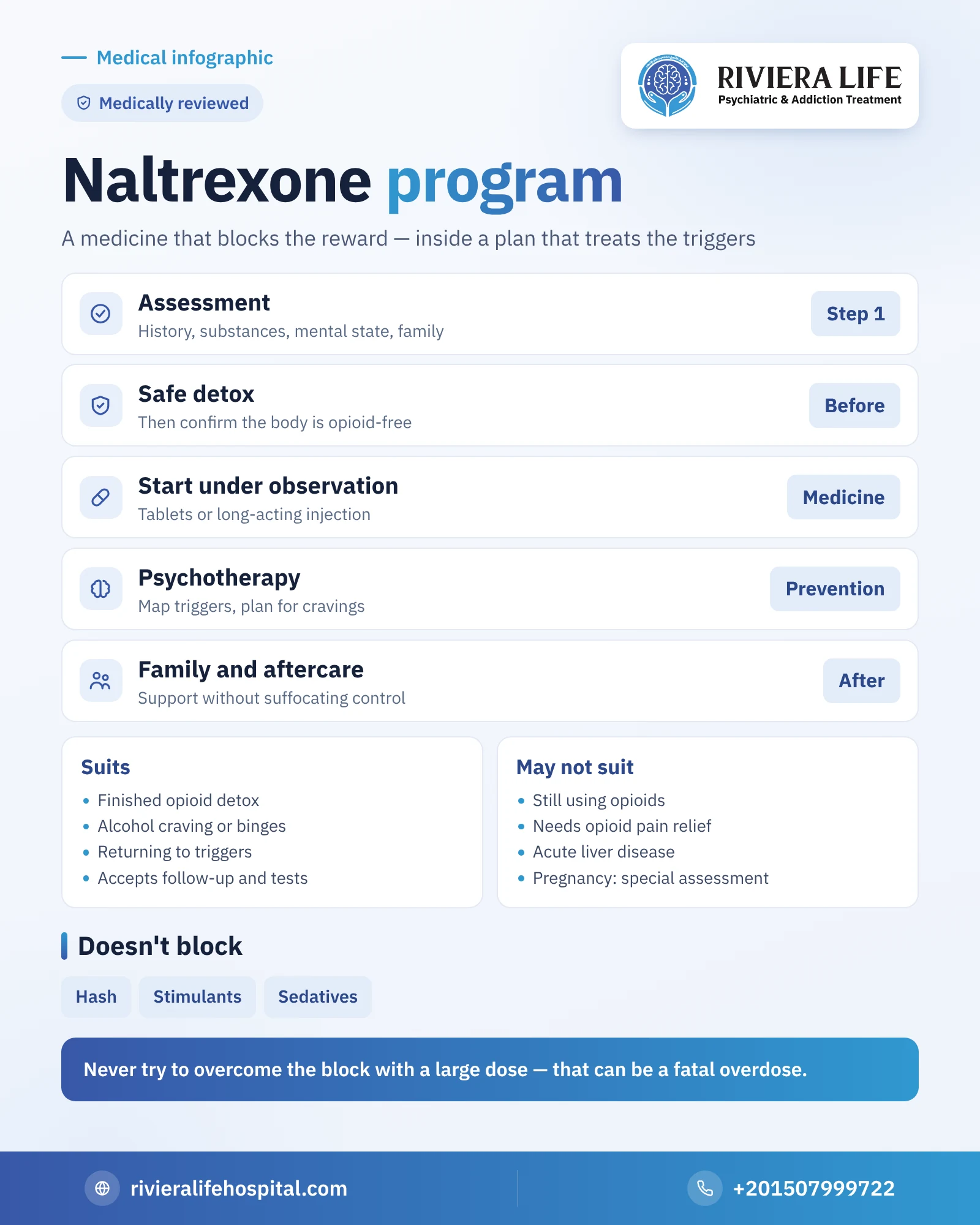
How does the program work step by step?
- Comprehensive assessment: the history of use, the substances used, the psychological state, accompanying illnesses, current medicines, and the family situation.
- Safe detox: getting through the withdrawal stage under medical supervision, which may take place in the full residential program depending on the case.
- Confirming the body is free of opioids: by examination and tests before the first dose, because starting early causes a sudden acute withdrawal.
- Basic tests: liver and kidney function and anything else the doctor asks for.
- Starting naltrexone under observation: and choosing the suitable form, tablets or a long-acting injection where available.
- Psychotherapy: individual and group sessions focusing on triggers and the skills to deal with them.
- Family sessions: in which the family learns how to support the patient without control that suffocates them.
- Follow-up and aftercare: regular appointments, review of the plan, and a considered decision about continuing or stopping.
How is follow-up done during the program?
Follow-up isn’t just the question “are you taking the medicine?”. It usually includes:
- Commitment to the medicine: the biggest challenge with tablets, which is why it may be agreed that the patient takes them in front of a family member.
- Periodic tests: to confirm abstinence and detect any use of another substance early.
- Liver function: at intervals set by the doctor, especially for alcohol patients.
- Mood and sleep: because depression and insomnia are among the best-known ways into relapse, and the patient may need the dual diagnosis program if an accompanying psychological disorder is present.
- Craving and triggers: what is stirring the craving this week? And how did he deal with it?
How does the program prevent relapse?
Relapse usually doesn’t start with the dose, but with a small chain: a sleepless night, then an argument at home, then passing by the old place, then a call to a using friend. Naltrexone cuts the last link in this chain, because the substance won’t give its effect, while psychotherapy works on the first links.
In the sessions the patient draws a map of their personal triggers, and writes a clear plan for what they do when the craving comes: who they call, where they go, and what they occupy the first hour with. And as weeks pass without the substance giving them what they expected, the link between trigger and craving weakens in many patients.
What if a slip happens during the program?
A slip doesn’t mean the end of the program, but it is a signal that must be dealt with quickly and frankly. The most dangerous thing that may happen is for the patient to try to overcome the block with a large amount of the drug, and this may cause a fatal overdose. The risk also rises after stopping the medicine because the body’s tolerance is low. That is why the team agrees with the patient and family on a clear plan: tell the team immediately, review the plan, and know the signs of overdose and call an ambulance on 123. The relapse treatment program offers a path for those whose relapses have recurred.
What is the family’s role in the program?
The family is an essential partner, but its role isn’t inspection and monitoring all the time. Its members learn in the family rehabilitation program how to support commitment to the medicine without humiliation, how to notice early danger signs, and how to act if they sense an approaching relapse. They also learn to protect themselves from exhaustion, as a balanced family is more able to support than an exhausted one.
Is the program done inside the hospital or as outpatient follow-up?
That depends on the stage. Detox and confirming the body is free of opioids are safer inside the hospital for most opioid patients, especially with mixing substances or previous failed attempts. After the medicine starts and the case stabilizes, the program usually continues as outpatient follow-up, so the patient goes back to work or study with regular appointments. In some cases the half-residency program is a suitable middle solution.
How long does the program last?
There is no single duration that suits everyone. Naltrexone treatment usually continues for several months at least, and may extend longer depending on stability, the patient’s circumstances and the level of relapse risk. The decision to stop is made in agreement with the doctor, not suddenly, with follow-up continuing after it through the aftercare program. The cost is set after assessment depending on the place of treatment, its duration and the medicine form used.
The right hospital for naltrexone addiction treatment: how to choose
The right hospital for naltrexone addiction treatment is the one that provides what this patient specifically needs: safe detox before the medicine, careful confirmation of the timing, and medical and psychological follow-up after it. Ask before you choose:
- Does the place manage detox itself under medical supervision before starting naltrexone?
- How does the team confirm the body is free of opioids before the first dose?
- Are liver tests done before starting and during follow-up?
- Is the medicine given within regular psychotherapy, or dispensed alone?
- Is the family involved in the plan for commitment and relapse prevention?
- Is there a clear plan for after the medicine is stopped and tolerance falls?
And beware of any place that promises you a guaranteed cure rate or offers an “injection” as a final cure for addiction within days.
How Riviera Life meets these standards in naltrexone addiction treatment
Here is how these criteria are met at Riviera Life:
- Official license: a hospital licensed by the Ministry of Health.
- Fourteen years of specialization: in addiction treatment, and thousands of recovered people who have been through our programs.
- Consultant assessment: consultants in psychiatry and addiction treatment examine each case to decide whether naltrexone suits it or not.
- Safe detox: round-the-clock medical supervision until starting the medicine becomes safe.
- Accompanying psychotherapy: a relapse prevention plan that works on triggers, not on the medicine alone.
- A program for the family: helps it support commitment without clashes.
- Aftercare: follow-up after discharge and after the medicine is stopped.
- Complete confidentiality: for the data of the patient and their family.
To find out whether naltrexone suits you, book a free first consultation or call us night or day on +201507999722. We are in Sheikh Zayed, Giza.
Read also
- Naltrexone: uses, harms and warnings
- Does Revia cause addiction?
- Alcohol addiction treatment
- Heroin addiction treatment