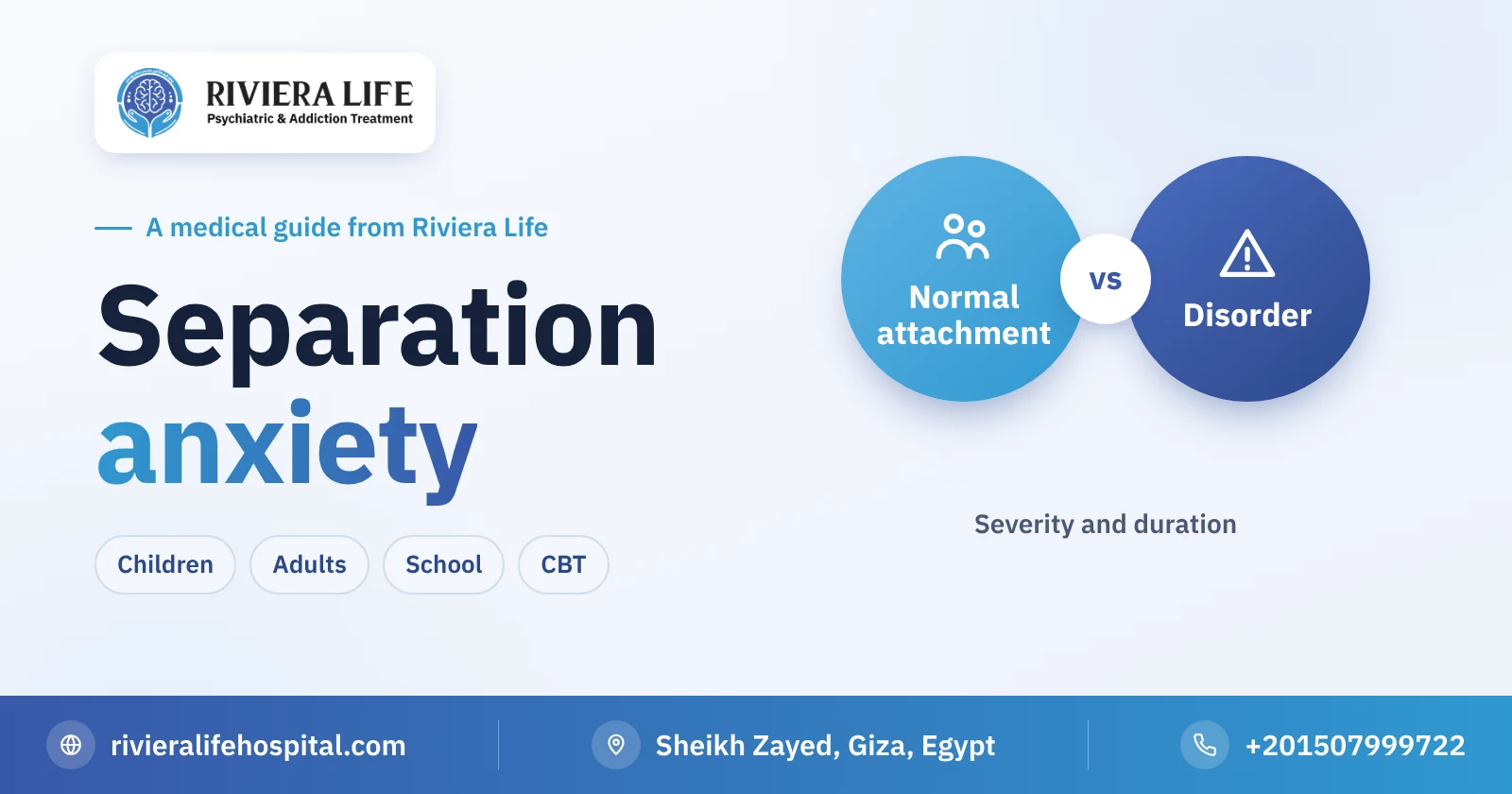
Separation anxiety is an intense and disproportionate fear of being away from a person one is emotionally attached to, or that harm will come to that person during their absence. Many think it is a children’s problem that ends with the first days of school, but it may continue into adolescence, and may appear for the first time in adults. The difference between normal attachment and the disorder is severity, duration and the effect on daily life, not the presence of fear itself. In this article we distinguish between the two in young and old, and explain the causes, what the family does and the treatment methods available.
When is fear of parting normal?
An infant who cries when their mother leaves the room isn’t suffering from a disorder, but showing that their attachment to her is working as it should. This stage begins roughly in the second half of the first year, peaks in the second year, then eases gradually. Some of it may return when entering nursery or school or after moving to a new home or the birth of a younger sibling.
It is normal for a child to cry at goodbye and then calm down within minutes and get busy playing. What is worrying is for them to cling to you for hours, refuse to go to school for consecutive weeks, or complain of stomach pain every morning that goes away when they are allowed to stay home.
What does the disorder look like in children?
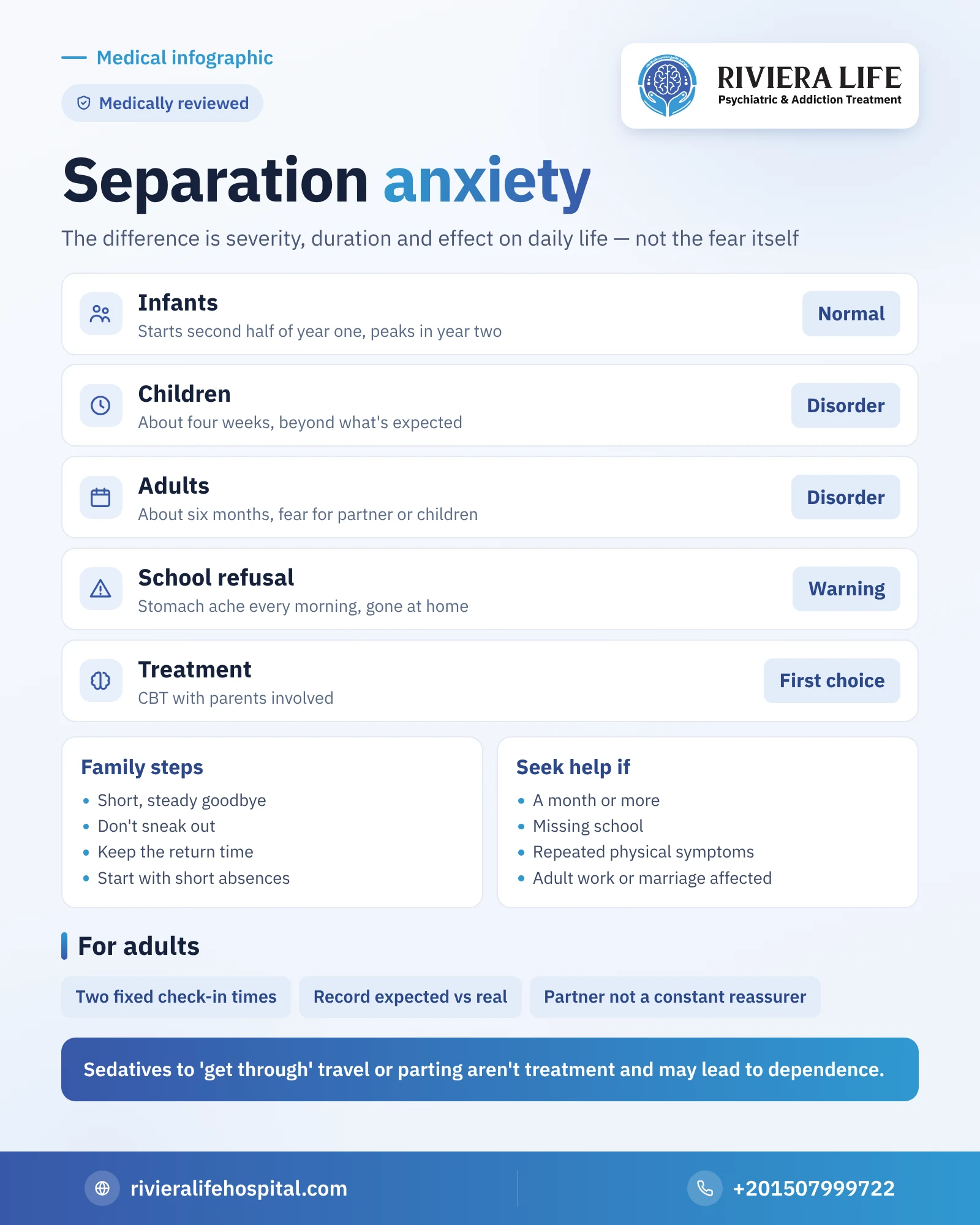
Separation anxiety disorder is diagnosed when the fear continues for about four weeks in a child and about six months in an adult, and exceeds what is expected for their age. Pictures such as these usually appear:
- Severe distress when thinking about parting or when it actually happens.
- Constant worry that one of the parents will have an accident or illness, or that the child themselves will get lost or be kidnapped.
- Refusing to sleep away from the parents, or moving to their bed every night.
- Refusing to go to school, a friend’s house or an occasion without one of them.
- Nightmares revolving around parting or losing the parents.
- Physical symptoms before an expected separation: headache, nausea, abdominal pain, dizziness.
- Monitoring the parent at home by following them from room to room.
Note that a child who doesn’t talk about their fear may express it with tantrums, crying and stubbornness at the door. These are attacks of fear, not bad manners. You will find a broader picture of the signs of psychological disorders at this age in the article on mental illness in children.
Separation anxiety in adults: when no one notices
Many don’t know that adults also get this disorder, and that some of them lived their childhood with a mild form of it. The subject here isn’t only about the mother, but the husband or wife, the children or close loved ones.
Situations such as these appear in the adult: repeated calls to check even if the reply is a few minutes late, imagining accident scenarios if the partner is late, difficulty traveling on a work trip or traveling without the family, refusing to leave the children with anyone even for an hour, and severe tension on evenings when the partner is away. This pattern may bring marital disagreements, because the other side feels monitored and suffocated, while the anxious person feels they are only asking for safety.
And there is a common situation after the birth of a child or the loss of a loved one: fears of loss stay high, so every temporary absence becomes a rehearsal for permanent loss. Here it is hard to separate normal grief from pathological anxiety, which is why it needs a specialist assessment.
Why does it happen? Causes and risk factors
There is no single cause, but several factors come together:
- A cautious temperament: children born more sensitive to change and slower to adapt to strangers.
- Genetics: anxiety in general is more common in some families, and this doesn’t mean it is inevitable fate.
- Stressful events: the death of a relative, illness in the family, divorce, a change of school or home, or a frightening accident.
- Parenting style: overprotection that prevents the child from experiencing being apart, or the opposite: inconsistency in presence and absence that makes the child unsure of the parent’s return.
- Accompanying disorders: general anxiety, a specific phobia or depression, and one of them may be present before the problem appears.
It is important for parents to know that this disorder doesn’t result from “spoiling” the child alone, and that self-blame doesn’t help. It is more useful to ask: what made being apart seem dangerous in their eyes?
How does the family help a child who is afraid of parting?
The aim isn’t to prevent anxiety, but to teach the child that they can tolerate it and that loved ones come back. Try these steps:
- A short, steady goodbye: a sentence, a hug and leaving. A long, hesitant goodbye sends the message that there is a real danger.
- Don’t sneak out: leaving without telling destroys trust, so their monitoring of you increases.
- Keep the return time: say “I’ll be back after lunch” and really come back. Credibility here is the treatment.
- Start with short absences: ten minutes at the neighbor’s, then an hour at grandma’s, then a full school day.
- Name the fear and don’t deny it: “I know you’re worried, and I’m sure you’ll manage.” Then don’t cancel the plan.
- Reward courage: praise for the attempt, not only for the result.
- Cooperate with the school: a teacher or specialist who receives the child calmly, and avoids calling the parents at the first tear.
As for keeping the child at home because “their state of mind is bad”, it relieves them for a day and strengthens the fear for a week. Repeated absence from school is the most dangerous thing that makes the matter worse.
Helping yourself if you are an adult
The same steps apply with adjustment: start by reducing the number of calls to check in, by agreement with your partner, and choose two fixed times in the day instead of calling whenever something comes to mind. Practice a short absence not occupied with monitoring, and record what you expect and what actually happened, as the gap between the expected and reality is the strongest evidence. And ask your partner not to turn into a “constant reassurer”, as constant reassurance is like drinking salt water: it quenches for a moment and makes you thirstier.
Treatment of separation anxiety
The disorder is treatable to a good degree, especially if intervention starts early:
- Cognitive behavioral therapy: it is the first option for children and adults. The patient learns to recognize and examine their frightening thoughts, then gradually faces situations of being apart according to a ladder set with the therapist. For details see the article on cognitive behavioral therapy.
- Involving the parents: the parents learn how to reduce excessive reassurance and support the gradual steps, and this is an essential element with children.
- Play therapy: the therapist uses it with young children who find talking difficult.
- Medicine: it isn’t usually used at the start. The doctor may consider antidepressant medicines in severe cases or when psychotherapy isn’t enough, and the decision belongs to the treating doctor and it isn’t started or stopped without their supervision.
As for the sedatives some adults resort to in order to “get through” travel or parting, they aren’t treatment and may lead to dependence on them, and you can learn about the other forms of the disorder in the article on types of anxiety.
When should we seek specialist help?
- The fear has continued for a month or more and exceeded what is normal for the child’s age.
- The child is missing school or has stopped their usual activities.
- Repeated physical symptoms have appeared with no organic cause after examination by the pediatrician.
- The adult’s fear has affected their work, marriage or ability to travel.
- The fear is accompanied by deep sadness, panic attacks or thoughts of despair.
Seek urgent help immediately if any of these appear
Call the ambulance on 123 or go to the nearest emergency department, and you can contact the mental health hotline 16328 when there is:
- Talk of wanting to die or self-harm, even from a child or teenager
- A severe panic attack with shortness of breath or chest pain
- Complete refusal of food or drink because of fear
How does Riviera Life help you?
Riviera Life in Sheikh Zayed provides an assessment by psychiatry consultants that distinguishes between normal attachment and the disorder, and between anxiety accompanying an event such as loss or divorce, with a family program that trains parents to support without overprotection, and complete confidentiality. The first consultation is free and you can get in touch via +201507999722.
More from the anxiety guide
- Anxiety: the comprehensive guide
- Anxiety symptoms: psychological and physical signs
- Anxiety treatment: psychotherapy and medicines
- Exam anxiety: how it affects concentration and sleep
- Attachment disorder: the difference between a child’s disorder and adult attachment styles
Questions many people ask
It begins roughly in the second half of the first year, peaks in the second year, then eases. A child crying when their mother moves away is a sign of a healthy attachment to her, not of illness.
Yes, it may appear for the first time in adulthood as intense fear for the partner or children and difficulty traveling or being away. This affects work and marriage if not treated.
Staying at home relieves them for a moment but strengthens the fear, so it is better to agree with the school and therapist on a gradual return. Repeated absence is among the most important factors keeping the problem going.
Cognitive behavioral therapy involving the parents is usually the first option. The doctor may consider medicine in severe cases only, and the decision is the treating doctor's.
Look for a place where psychiatry consultants assess the case and the family is involved in treatment. Riviera Life in Sheikh Zayed meets these criteria, with an assessment, a free first consultation and a family program in complete confidentiality.