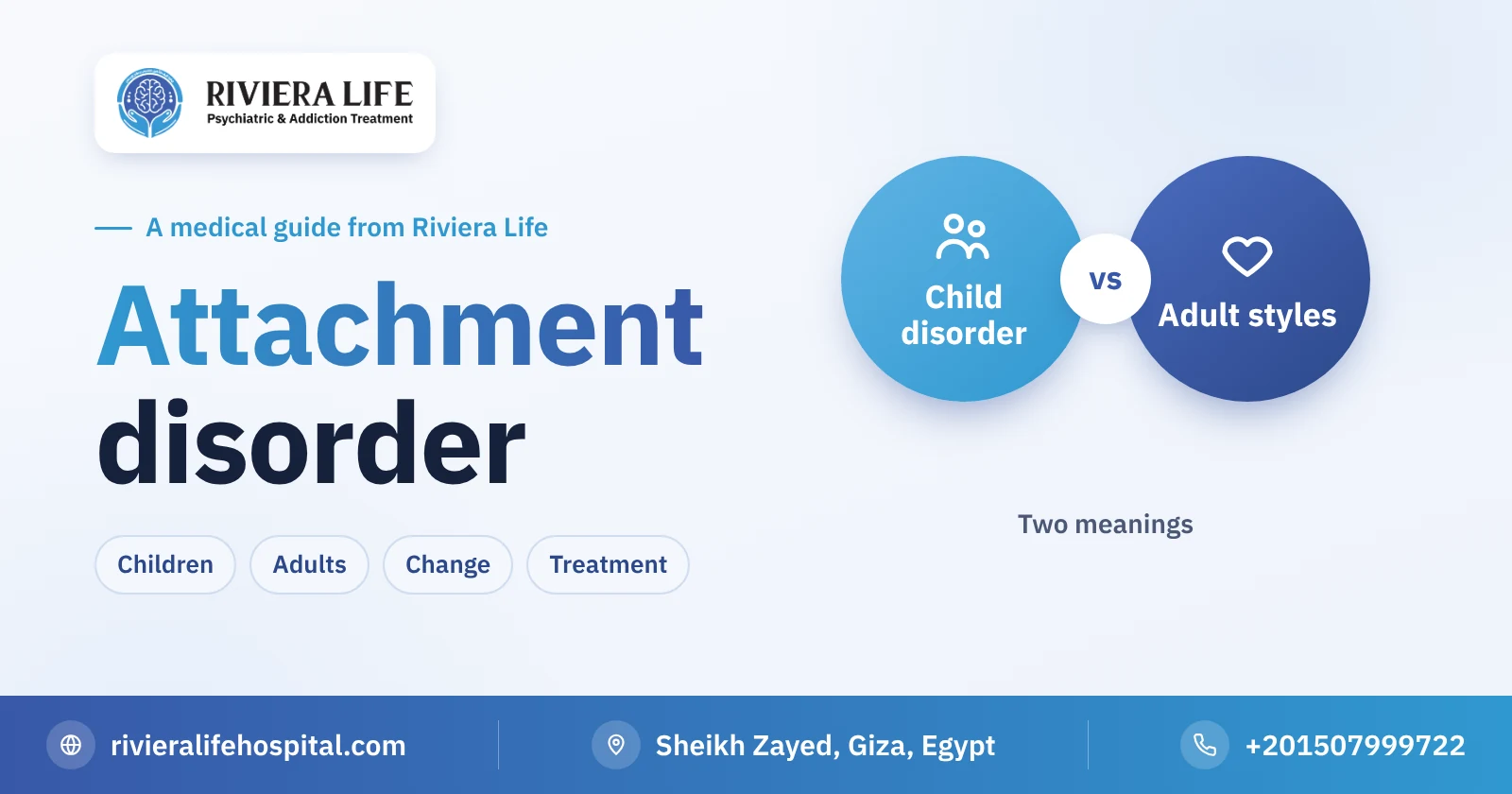
Attachment disorder is an expression that carries two different meanings, and people’s confusion between them causes unnecessary anxiety. The medical meaning is reactive attachment disorder in young children who lived with neglect or repeated change of the person caring for them, a rare condition. The common meaning on the internet is adult attachment styles: anxiety about abandonment, or running from closeness. These styles are a useful description but aren’t pathological diagnoses. This article explains the difference, the signs of the disorder in a child, how childhood experiences affect adult relationships, and what can be changed.
What is attachment?
Attachment is an emotional bond the infant builds with whoever cares for them in the first months. When they cry they are picked up, when hungry they are fed, and when afraid they are reassured, so they learn that the world is a safe place and that people can be relied on. From it an “internal map” of relationships forms that affects how they deal with people later.
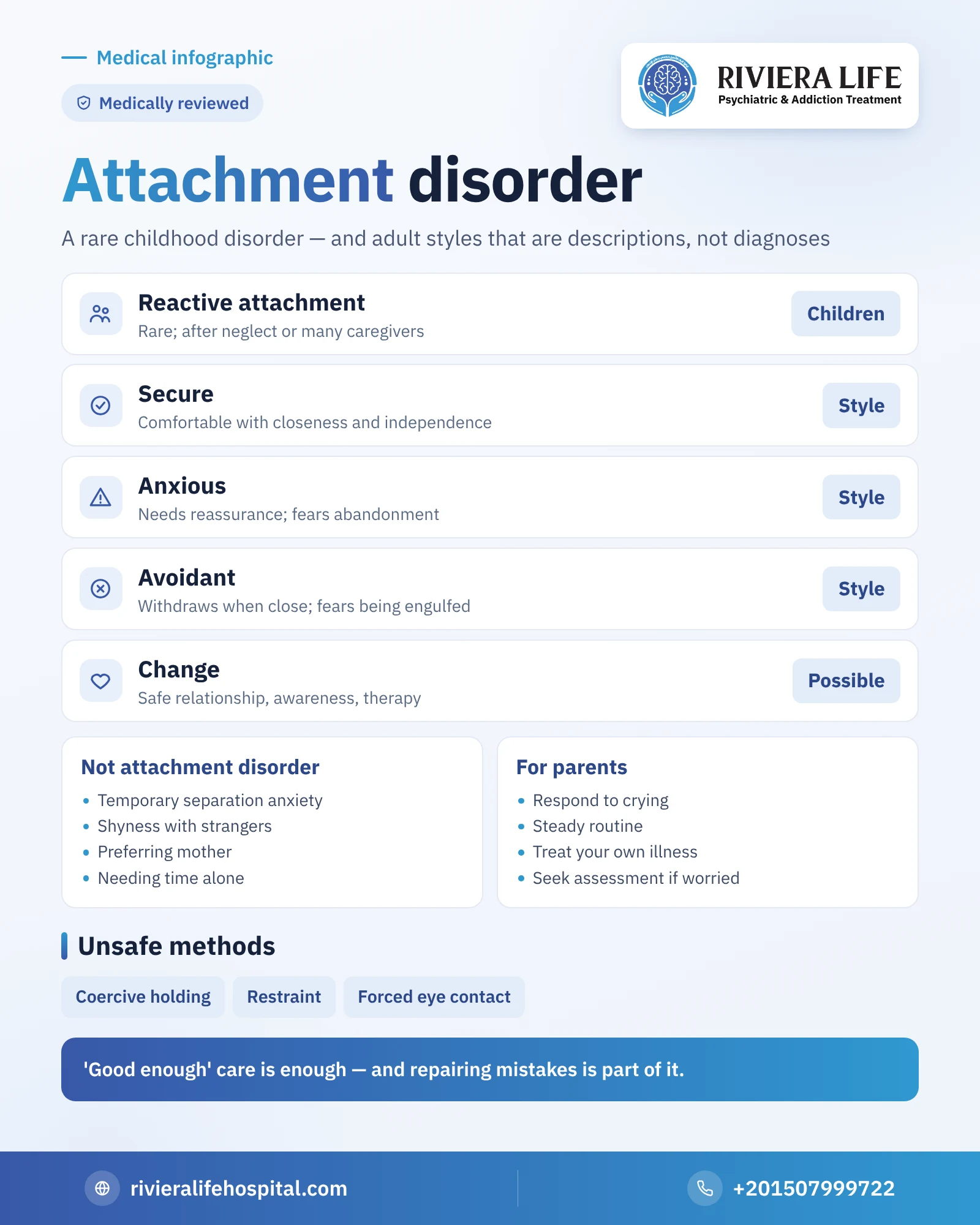
This isn’t achieved by perfect parents, as no one is perfect. “Good enough” care is enough, with repair of the mistakes that happen. The page on mental illness in children details the place of these conditions among childhood disorders.
The medical meaning: reactive attachment disorder
It is diagnosed in a child who was deprived of basic emotional care, such as severe neglect, moving between care homes and many caregivers, or an environment in which the child’s signals aren’t attended to. This disorder isn’t usually diagnosed before the child reaches about nine months of age, and its signs begin in the first five years. Medical references describe it as rare, though its rate is higher among children who lived in care institutions.
How does the child appear?
- The withdrawn pattern: little emotional responsiveness, doesn’t seek comfort when hurt, and rarely smiles or interacts.
- Indiscriminate interaction: a close condition classified separately (disinhibited social engagement disorder), in which the child approaches strangers without caution.
- Accompanying signs: delayed development or language, outbursts of anger, or difficulty regulating emotion.
Some of these signs may resemble autism, which is why assessment needs a pediatrician or child psychiatrist who listens to the whole story of care and observes the child with their caregiver.
Adult attachment styles: what people talk about
Psychologists use the concept of attachment styles to describe the way of approaching others. They are tendencies, not rigid categories, and they change with circumstances and relationships:
| Style | How it appears in the relationship | The underlying fear |
|---|---|---|
| Secure | Comfortable with closeness and independence together, and talks about their needs | No particular fear dominates |
| Anxious | Asks for a lot of reassurance, and interprets a delay in replying as rejection | Being abandoned |
| Avoidant | Withdraws when the partner comes close and prefers self-reliance | Being engulfed or disappointed |
| Disorganized | Wants closeness and fears it at the same time, so swings between approach and aversion | Being hurt by whoever they love |
These styles aren’t diagnoses in medical manuals, and no internet test gives a final verdict. But they help in understanding the repetition of the same disputes: one pursues and another flees, and both fear the same thing from two angles.
When is the style a problem?
When it turns into a constraint that repeats in every relationship: harsh jealousy or monitoring, inability to get close to anyone, or repeated attraction to partners who hurt. Here the matter may be close to personality disorders that the doctor specializes in diagnosing, such as borderline personality, in which fear of abandonment stands out, avoidant personality, or dependent personality. And not everyone with an anxious or avoidant style has any of them.
Can an attachment style be changed?
Yes, and research says styles aren’t a final verdict. Among the reasons for change:
- A safe relationship: a steady partner, friend or therapist who responds calmly teaches you through experience that closeness doesn’t mean harm.
- Awareness of the pattern: noticing the moment of aversion or insistence and naming it: “I’m afraid now” instead of acting out of fear.
- Frank communication: asking for what you need in a clear sentence instead of tests and hints.
- Psychotherapy: in its cognitive and behavioral types, and relationship-centered therapy, to examine the old picture of people and build a more flexible alternative.
How is reactive attachment disorder treated?
The basis of treatment is a stable and predictable care environment, and therapy that includes the child’s caregiver to learn to read their signals and respond to them consistently. The plan usually includes the child’s psychotherapy, play, early intervention in development and language, and treating the problems of the parents or caregivers when present. There is no medicine that treats attachment itself; if accompanying anxiety, depression or hyperactivity appears, the medication decision is made by the specialist doctor.
A warning about unsafe methods
Some websites promote what is called “coercive holding therapy” or methods based on restraining the child’s movement, forcing them into eye contact or subjugating them. Associations specializing in child psychiatry warn against such methods because they may harm the child physically and psychologically. Safe treatment rests on warmth, regularity and patience.
What do parents do?
- Respond to your infant’s crying and don’t be afraid of spoiling them; responding doesn’t spoil a child.
- Keep a steady routine and a main caregiver as much as possible, especially in the first years.
- If you are going through an illness, depression or addiction that prevents you from caring for your child, seek your treatment; your treatment is part of their care. For families suffering from addiction, the effect of addiction on married life explains how the crisis moves into the home.
- Ask for an assessment if you notice that the child has no emotional expression, approaches strangers without fear, or refuses all forms of comfort.
What doesn’t count as attachment disorder?
- Temporary separation anxiety: a child crying when their mother goes to work or they enter nursery is normal at specific stages of development and eases gradually.
- Shyness with strangers: a child who clings to their parents in front of new guests isn’t affected; they distinguish the familiar from the strange, and this is healthy development.
- A child who prefers their mother: preference doesn’t mean a defect in the other bonds.
- A person who needs time alone: independence isn’t pathological avoidance as long as they can be close when they want.
Adoption and alternative care
Children who moved to a new family after difficult beginnings may need longer to trust, and may test the family’s patience with confusing behaviors. This doesn’t mean the family has failed or the child is spoiled. Calm persistence and holding to limits with warmth are the strongest things parents have, along with seeking a child psychology specialist when needed, not waiting for the crisis to explode.
When do you seek help?
See the pediatrician or psychiatrist if the child has lived through neglect or moving between caregivers and the signs above have appeared. And for adults, seek psychotherapy if relationships repeat in the same painful pattern, or the fear of abandonment is accompanied by outbursts of anger, self-harm or reliance on substances that ease the pain.
How does Riviera Life help you?
The psychiatry consultant at Riviera Life listens to the history of relationships and childhood without blame, and determines whether what you suffer from is a pattern that can be modified or a disorder that needs wider treatment. The first consultation is free and confidential.
More from the mental health guide
- Personality disorders: the complete guide
- Symptoms of borderline personality
- Emotional trauma
- Mental illness in children
Questions many people ask
No, they are a psychological concept describing tendencies in relationships and aren't considered an official diagnosis, and they change with experiences. Diagnosis is the psychiatrist's specialty.
A rare disorder in young children who were deprived of basic emotional care, appearing as emotional withdrawal or difficulty seeking comfort and interacting.
Yes, through a safe and steady relationship, awareness of the pattern, frank communication, and psychotherapy when needed.
There is no medicine that treats attachment itself. Treatment rests on stable care and therapy that includes the caregiver, and the doctor may treat accompanying anxiety or depression.
No, specialist associations warn against methods that restrain or force the child, because they may harm them. Safe treatment rests on warmth and consistency.